What's the difference?
Look, personally I found it amusingly weird when German car companies started sloping the roofs on sedans and calling them “coupes”, despite the fact that they had four doors. Their ability to imagine segments, and find buyers in them, that have no reason to exist is almost something to admire.
But turning SUVs, like the already very capable X3, into coupes? Frankly, it’s like turning an ass into an elbow. Lower the roof to reduce headroom and shrink the boot? Why? Because it will look so sexy people won’t be able to resist it. That’s BMW’s approach with the X4 and, somehow, it seems to work.
And, to be fair, sporty SUVs are not a BMW thing: the Range Rover Evoque, Audi Q5 Sportback, and Mercedes-AMG’s range of GLC Coupé models have all taken off, each contributing toward an unlikely trend that doesn’t seem to be going away any time soon.
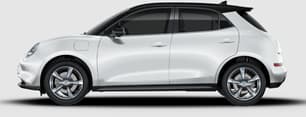
When the GWM Ora showed up in Australia last year, it seemed to rely somewhat on its divisive cutesy looks and sub-$40K entry price to draw attention - and to some extent it worked.
Convincing Australians to buy an electric car is hard enough for any car company, let alone one that doesn’t have the brand cachet of Tesla or the traditional companies.
But an entry price under $40,000 doesn’t apply here, this is the GWM Ora GT: the top of the range for the small electric car.
It’s just had a massive price cut, but is it worth paying more than $10,000 over the price of a base Ora for some extra goodies when simplicity and fun styling was the original selling point?
Okay, so the BMW X4 xDrive30i is neither an ass nor an elbow, to be fair, it's more of a bulky shoulder muscle, or two.
I can't say I'll ever love the X4, the idea of it is a bit too weird for me, but I can't help admiring the way it looks and the way it drives.
It's a bit like a sedan on steroids - or an SUV on a diet, depending on your perspective - but that doesn’t take away from the fact that it’s fun to drive, comfortable and retains just enough coolness, and just enough practicality, to make it worthwhile.
The GWM Ora is a solid electric car for the city with an extremely competitive price, balanced with some flaws that might frustrate some - Android phone owners especially. But the GT variant doesn’t offer enough to justify how much more expensive it is than the variants below.
It has a slightly lower range, no more performance (not that it needs more power), a features list almost identical to the Ultra and arguably loses its appealing cutesy looks.
While the rest of the Ora line-up has its strengths and a cute but daring design, the GT effectively offers only its bark-over-bite styling changes.
If the Ora is on your shopping list, it’s certainly worth checking out the $43,990 Ultra, or even the $40,990 Extended Range if its list of features suits you. But if you for some reason enjoy the GT’s styling, that extra spend might be worth it.
So here's the thing. Obviously I have a personal beef with the existence of vehicles like this, but my eyes cannot deny the facts - the X4 looks fantastic. It's muscular, imposing and smooth all at once. Unlike the X6, a bigger and less visually successful attempt to play the same styling tricks with an X5, it doesn't have a ridiculous rear view that looks like it shoulders and buttocks have been fused (although it's hard to miss just how small the rear window is).
Even more impressively, there's no denying it looks better than the X3 that gave birth to it, so I can easily see why someone in a BMW showroom could be drawn to it. At least until they sit inside.
If the exterior style and eye-catching Sophisto Grey metallic paint don’t make an immediate impression then your eyes will surely widen at the interior, resplendent with bold Tacora Red seats, Aluminium Rhombicle trim finisher and the kind of sleek, classy styling that BMW excels in.
Both the adjustable ambient lighting on the doors (we were partial to lilac) and door projectors that shot out what looked like robot wings onto the ground every time we hopped out of the X4 at night walked a fine line between futuristic cool and “parked out the front of a nightclub entrance” chintz, but over time the scales tipped more to the former.
The big differentiator between the X4 and X3, of course, is the sloped coupé roof, a design feature that may make the X4 look a little cooler, but at the expense of cabin space, but more of that in a moment.
Yep, as a step-up from the Ora Ultra, the GT’s main selling point is its styling. For a car with a 400km driving range, it’s so non-threatening it looks like it would get beaten up and have its lunch money stolen by dual-cabs if it left the city - but cute works, just ask Mini or Fiat.
Its headlights have a splash of Porsche 911 in them. There are some angles that even look a little like someone had an Abarth explained to them then tried to draw it. More than one friend has told me it reminds them of a VW Beetle.
None of that bothers me in particular, but the GT-specific additions to the Ora make it feel like a deeply unserious car.
The fake carbon trim is tacky on a car that has no performance improvement over its base variant sibling, the red strip under the number plate looks like a tongue poking out under an overbite, the wheels look like Tony Stark designed them, and the rear ‘wing’ and diffuser just don’t feel at home.
One thing that didn’t bother me as much as I thought it would was the lack of ‘traditional’ tail-lights, instead a light bar under the rear window takes that role.
The rest of the Ora range is cute, fun, and looks at home in the city where the Ora is at its best. The GT’s features are mostly the same as the Ultra, so the extra $3000 for the GT exterior doesn’t really feel like value.
Inside, however, the design is less in-yer-face. A tidy set-up features a Mini-style row of switches (for some of the climate control) under a bar that spans the dash with the vents integrated.
The steering wheel is big, arguably too big, behind it is the 10.25-inch driver display attached to the central multimedia display. Everything’s very tidy and minimalistic inside, even the gear selector is a round dial.
It looks like a reasonably fashionable interior, but when it comes to the functionality, it starts to fall apart.
For a car that is very much a mid-sized SUV on the outside, the interior can feel a bit too snug, like you’re driving a compact car that’s tried on a suit a few sizes too big (for reference, I’m 175cm tall - above-average height drivers may find the snugness soon turns to claustrophobia).
While comfortable - it is BMW we’re talking about, after all - there’s not an overly abundant amount of headroom available, a feeling that becomes more pronounced should you shut the big moon roof.
My two children felt slightly too close to “you’re annoying me” distance from one another, which is to say this isn’t really the kind of car you should be getting if you plan on regularly ferrying about passengers in the rear who are bigger than a child. But I really don't think many people with kids would choose the X4 over the X3.
Boot space also takes a hit when compared to the X3 (550 litres versus 525-litres in the X4 - I was surprised the difference wasn't larger - although that expands to 1430-litres with the rear seats folded down.
The boot opening is also mouth-shaped, which makes packing in wide-load items more of an issue.
Cupholders are plentiful - two in the front, two in the rear, and bottle holders in each door - and there’s a decent-sized storage cubby in between the front two seats.
The sloped roof, and big fat A pillars, also result in the X4 being a bit more pinched at the rear, which is not especially great for visibility, with the vehicle’s blind spots taking some getting used to.
I can see the appeal of the Ora, but there are some glaring issues that I suspect many will find frustrating over time during ownership.
I’ll start with the big one - Android Auto. Or the lack thereof. Apple CarPlay is available however, even wirelessly.
Being a car journalist in 2024 involves a lot of playing around with in-car tech, and it’s been an awfully long time since I wasn’t able to mirror my phone to a car’s central screen where those with an Apple iPhone could. About 70 per cent of the world uses a phone running Android, by the way. Mostly Samsungs, like mine, but pretty much anything else that isn’t an iPhone too.
It wouldn’t be as major an issue if there was a navigation function in the car’s native multimedia system, but there isn’t. Having only a Bluetooth connection and no map felt a little like taking a step back in time, with an old iPad tacked onto the dash. No Fruit Ninja though.
Smaller things come down to basic ergonomics. The touchscreen itself and the system on it are simple and easy enough to use, if a little unresponsive. The driver display is fairly simple and doesn’t fall too far into the trap of sub-menus on sub-menus.
Physically, the cabin is almost there - the seat and steering wheel adjustment, however, made it a little tricky for me to find a comfortable driving position.
I’m pretty much dead-on the average height of an Australian man, and the lack of tilt for the base of the seat meant no under-thigh support if I was to be the right distance to have a proper hold on the steering wheel - not telescopically adjustable, by the way.
Another interesting ergonomic fail is the placement of the drive mode select button (one of the GT’s few unique features) being to the right side of the steering column, near where you’d expect rarely-used controls like the headlight height adjust to be - or in this case a couple of centimetres from the button that kills the power to the battery if pressed while not in motion.
This caused severe embarrassment at a set of lights while searching for the drive mode switch, with no obvious way to start the car again, short of opening and closing the driver door.
Oh, and switching through the drive modes elicits a unique videogame-style chime or jingle for each mode. Gimmicky at first, potentially rather irritating after some time.
A positive of the interior layout, however, is the space in the rear seats is fairly generous for a small car - at almost six-feet tall behind my own seating position, I wasn’t lacking space to move and the seat itself is comfortable enough for a decent trip.
Behind that, a relatively limited 228-litre boot is probably less useful for a decent trip, though its 858L of space with the rear seats folded down is more handy in a pinch.
Cost-wise, the X4 is roughly in the same ballpark as the other cars in this strange sub-segment, but when you add in optional extras - metallic paint, panorama glass sunroof and BMW Laserlight headlights among them - the base price of $95,900 plus on-road costs sneaks up to $101,800, which is is no small figure.
It’s also a considerable $8000 more than the SUV-shaped X3, meaning you’re essentially getting the same car, but with less cabin and boot space, for more money. To be fair, this is just part of a long tradition of the style-conscious buyer being willing to pay more for less, one that the invention of the coupe pretty much invented.
That kind of money also makes exclusions like adaptive cruise control, heated seats and wireless charging a bit of a head-scratcher.
Still, there’s plenty to love, including an M Sport kit that comes standard with the X4 (a suspension/brake package and various styling embellishments), butter-soft Tacora Red Vernasca leather seats (Sport adjustable for the driver and front passenger), 20-inch M light alloy double-spoked wheels, a head-up display, adaptive LED headlights, and an automatic tailgate.
There’s also a generous high-resolution 12.3-inch control display and digital 12.3-inch instrument display, the former operated by touch or via the rotary iDrive Touch Controller.
Cable-free Apple CarPlay and Android Auto are also available, but BMW allows you the option to use its iDrive system instead, just in case you're some kind of mad Munich fanboy - or you hate Apple.
The GWM Ora GT was once a mid-$50K car, once you got it on the road. Its former sticker price of $51,990 before on-roads has, along with every other variant in the range, been dramatically knocked into a more budget-friendly shape: $46,990 drive-away.
That’s pretty cheap for a top-spec electric car, or for an electric car in general in Australia, but it’s still $11,000 more expensive than the entry-level Ora Standard Range ($35,990 DA).
The Ora GT also shares most of the key draw cards on its features list with the Ultra.
Its panoramic sunroof, electric tailgate, heated and ventilated seats with massage function and its heated steering wheel are all available in the Ultra for $3000 less.
One of the only things the GT has in terms of functionality in the cabin is a light for the driver visor vanity mirror.
There are a couple of differences when it comes to driving functionality, and we’ll get to that in a later section of this review, but the rest of the tech in the cabin is standard across the range.
The 10.25-inch touchscreen and same-sized driver display, six-speaker sound system, wireless phone charger, electrically adjustable synthetic leather seats - it’s all in the base-level Ora.
What is missing, very notably, is Android Auto functionality. The Ora does however feature wireless Apple CarPlay.
Now, prepare to be confused. In the past, the 3.0 in the xDrive3.0i nomenclature might have led you to believe you'd bought a BMW with a 3.0-litre straight six engine. But in this case, you have not, the 3.0 just means you have a more exciting version of the 2.0; a TwinPower turbo 2.0-litre inline four-cylinder engine, making 179kW and 353Nm that the xDrive system delivers to all four wheels.
The claimed zero to 100km/h time of 4.9 seconds feels completely realistic as this engine has plenty of poke. Put it in the Sport setting and you'll get some serious shove. Indeed, the switch between Comfort and Sport is very noticeable and changes the character of the car entirely.
The transmission is an eight-speed conventional torque converter automatic gearbox that’s both smooth and responsive.
All four variants of the Ora have the same outputs from its front-mounted electric motor - 126kW and 250Nm. Yes, even the GT.
What the GT does have over at least the base model is a larger battery shared with the Long Range and Ultra variants, but despite having the same weights and outputs, the GT is, on paper, claimed to be a tenth of a second slower to 100km/h than the rest of the range: 8.5 seconds versus 8.4sec for the cheaper models.
The X4’s 65-litre tank needs to be 95-octane at a minimum, and BMW’s claimed combined fuel consumption is 7.9 litres per 100km. The temptation to use its rorty little engine is going to push you higher, though - you chose the one with the 3.0 badge on it after all - and we averaged 10.9 litres per 100km in our week together, which was mainly city driving, to be fair.
That aforementioned larger battery is a 63kWh lithium-iron phosphate (LFP) battery, over the 48kWh unit in the Standard Range base variant.
According to GWM’s brochure, the GT’s electric driving range under WLTP is 400km, 20km less than the Long Range and Ultra (and like the acceleration time, for no obvious reason).
With a 400km claimed range and 63kWh battery, the Ora GT should return a power consumption figure of around 15.75kWh/100km, though on test we saw 16.4kWh.
GWM claims charging with 11kWh AC power will take 6.5 hours to jump from 10 to 80 per cent charge, while 80kW DC charging takes 50 minutes to do the same.
The impressive trick that BMW continually pulls off with its SUVs is giving them the same sensual, muscular steering as its sedans, and an impressively similar ride and handling balance.
The steering is the highlight here, but it's also noticeable how planted to the road it feels.
The X4 speaks to its looks, in fact, by feeling sportier and more alive to drive than you'd expect an X3 to be.
This is less an SUV for soccer mums and dads, and more a bastard love-child that’s into loud leather and bright neon - a CEO who dressed punk rock-lite on weekends, if you will.
If those weekends are bereft of child taxiing and loading up the boot with several tons of kid stuff, then you’ll have a blast in the X4.
As is the case with the GT’s outputs and features, there’s nothing to suggest the GT would be fundamentally better to drive than any other variant. Unless all those kids at school were right about red bits making cars go faster.
The Ora’s front-drive layout paired with relatively immediate electric torque delivery, however, means you probably wouldn’t want it to be much more powerful with this particular mechanical setup.
The Ora, as a city car, does its job reasonably well in standard drive modes, though its sport mode is possibly a little too eager for day-to-day affairs - and the way it quite conservatively understeers on corners suggests there’s not much ‘sport’ driving to be done in this cute EV.
The steering itself feels fairly numb (again, fine day-to-day) and becomes heavier or lighter in different drive modes, but with no real advantage - the wheel itself is also a little on the large side.
Its suspension tune is comfortable enough for the low-speed streets on which this car is likely to find itself most often, where most city cars aren’t exactly riding on clouds, though can more obviously start to feel a little underdone on rougher roads at high speed.
It’s not a light car, after all, a hatchback that weighs 1580kg and has a short wheelbase isn’t going to be a dynamic masterpiece, though it does at least feel stable enough through corners thanks to its low centre of gravity.
It’s not going to encourage any heroic driving, but it’s also more likely to deter rather than outright punish any silly behaviour behind the wheel.
A 2018 test gave the X4 a five-star ANCAP safety rating, and an easily located button on the dash brings up the vehicle’s safety suite if you’re the kind of driver who likes to make a few adjustments.
A 360-degree camera offers multiple viewpoints and is a godsend when parking the X4, since the cabin makes the car feel smaller than it actually is on the outside, and the range of safety features on offer are more than adequate.
Those include autonomous emergency braking, dynamic braking lights, dynamic stability and traction control, rear-cross traffic alert, speed limit information and hill descent control.
The GWM Ora’s safety features are almost all standard across the range, which is great even if you don’t opt for the GT.
This means its seven airbags (dual frontal, side chest, curtain and centre) are all standard, as well as autonomous emergency braking, secondary collision avoidance, rear cross-traffic alert and forward collision warning, lane keep assist, traffic jam assist and even a surround-view parking camera. The Ultra and GT are the only variants with a front parking sensor and auto parking assist.
The features are all there, but some finer tuning when it comes to some driver assistance could be looked at - thus the slightly lower side of the scoring scale for a car that’s ticking all the boxes on paper.
Despite all the brouhaha about other car manufacturers offering more generous warranty periods - seven years for Kia, for example - BMW has not shifted its stance, still offering its standard three-year unlimited-kilometre warranty. Frankly, it's just not good enough.
BMW also offer a Service Inclusive package for $2010 that covers owners for five years, or 80,000km.
GWM offers a seven-year/unlimited kilometre warranty, as well as an eight-year/unlimited kilometre battery warranty. The former is quite decent for the industry, the latter relatively par when it comes to battery warranties.
Five years or 150,000km of roadside assistance is also included.
The Ora’s first five services, each coming in at 12 month/15,000km intervals, are capped price, all at $99.