What's the difference?
BMW has recently launched its fourth-generation (G45) X3 range, which comprises three petrol variants including the entry-level 20 xDrive, mid-grade 30e xDrive PHEV and top-shelf M50 xDrive.
The new trio brings revised powertrains, new exterior and interior styling, increased standard equipment, enhanced technology and an emphasis on the use of sustainable materials.
We recently trialled the five-seater flagship to see if it has the right mix of performance and practicality to maintain the X3’s enduring appeal for Aussie families.
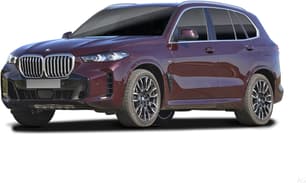
It may be getting on, but the outgoing, G05-series X5 remains Australia’s third best-selling BMW this year, is second only to the Land Rover Defender 4x4 amongst larger premium SUV volume overall, and an enduring critical success to boot.
Not bad for an old timer.
Any change, then, is a challenge. Does the new, fifth-generation, G65 move the game on?
With the electrified versions still some months away, we drive the petrol and diesel models to find out.
This is a highly competent all-rounder, given that it has the comfort and practicality for urban family duties yet with its revered M breeding can produce a level of performance which, in competent hands, could hold its own at a track day where its capabilities could be safely explored.
Expectations run high every time BMW rolls out a new-generation X5. Luckily for the brand, the fifth iteration more than rises to the challenge.
Along with bold design, it advances the breed with a truly innovative interior presentation, while maintaining excellent performance and class-leading dynamics. And even the ride quality bugs have been ironed out.
Inevitably, entry prices are also elevated, and desirable options do not come cheap, but the 2026 X5 40 xDrive petrol and its 40d xDrive diesel counterpart deliver on most counts with alluring conviction.
We cannot wait to drive the electrified versions coming next year.
Note: CarsGuide attended this event as a guest of the manufacturer with travel, accommodation and meals provided.
The fourth-gen X3, which has a lighter but stiffer body, shares the same wheelbase as its third-gen predecessor but at 4755mm end-to-end it's 34mm longer and it's 29mm wider.
It’s also 25mm lower, which combined with front and rear track-width increases and adaptive suspension damping to sharpen the handling underlines its sportiness and driver appeal, despite a substantial 2055kg kerb weight.
The new exterior design is characterised by short overhangs, flush door handles, a larger ‘split kidney’ grille, new LED taillights and L-shaped light elements for the LED headlights.
The new interior design is a classy mix of soft-touch materials and high-gloss hard surfaces in tastefully contrasting tones. The seats are upholstered in a new synthetic leather called 'Veganza' ('Espresso Brown' in our example) which according to BMW requires 85 per cent fewer CO2 emissions to produce than genuine leather (which is still available as an extra-cost option).
Combined with subtle use of ‘Magnolia’ fine-wood trim inserts, satin chrome, piano black, blue/red M highlights and slender ambient light-strips, it’s a cabin that exudes opulence.
Built in the United States, the latest X5 uses the platform from the previous version, known as Cluster Architecture, or CLAR. One of the best in the business, if it ain’t broke…
There have also been changes and modifications throughout, of course, including to the double wishbone front and five-link independent rear suspension systems.
For the G65, the wheelbase is longer by 60mm (to 3030mm) and the vehicle overall by 72mm (to 4998mm), while width and height remain largely the same at 2000mm and 1761mm respectively. Ground clearance is 226mm.
The lightest of the lot, the 40 xDrive, weighs 200kg more than before at 2365kg (kerb).
Visually this is the model’s biggest departure since launch the 1999 original. Blocky and aggressive, BMW describes the styling as ‘monolithic’, and though the quiet grace of proceeding models is gone, it is still somehow X5, thanks to proportioning and a great stance. The rear is the SUV’s best angle.
Any aero traps caused by the tall bonnet line and boxed-out arches are negated by ultra-smooth surfaces and attention to design details, including the strange yet effective door handles.
The Neue Klasse design language translates better inside the slightly roomier interior, dominated by the Panoramic Vision display below the windscreen, bizarre-looking steering wheel, trapezoidal central touchscreen and smaller display ahead of the passenger.
Inside and out, the G65 is the most modern looking X5 ever.
This would make a great family weekend escape machine, for which BMW quotes a 645kg payload rating. It’s also rated to tow up to 2500kg of braked trailer, which could pose a challenge given the relatively low 100kg tow-ball download limit (TBD is typically around 10 per cent of trailer weight).
BMW also does not publish a GCM figure (how much it can legally carry and tow at the same time) so we can’t confirm if it can carry its maximum payload while towing its maximum trailer weight.
Even so, the M50 has a useful-sized luggage area which offers up to 570 litres (or 0.57 cubic metres) of load volume with the rear seat upright.
This expands to 1700 litres (or 1.7 cubic metres) with the rear seat folded flat, which can be handy for a multitude of tasks like transporting a mountain bike or hauling home flat-pack furniture.
There’s comfortable space for the driver and front passenger, along with useful storage including large bottle-holders and bins in each front door.
The centre console has two small-bottle/cupholders plus wireless phone-charging and a pair of USB ports. There's also a glove box plus another box at the rear of the console with a padded lid that doubles as an elbow rest.
The rear bench seat is surprisingly spacious, given that I’m 186cm tall and when seated behind the driver’s seat in my position I still have about 40mm of knee clearance, which is optimised by the concave shape of the front seat backrests.
The spacious and airy feel is enhanced by the ‘panorama’ glass roof which spans the full length of the seating area and allows generous headroom even for tall people.
However, shoulder room is tight for three adults and the centre passenger’s feet must contend with the transmission tunnel, so even though it would be fine for three kids we’d suggest a limit of two adults for longer trips.
Rear passengers get privacy glass and pull-up roller sunshades, large-bottle holders and bins in each door plus net-type pockets and anchorage points for media devices on each front seat backrest. There are also two small-bottle/cupholders in the fold-down centre armrest.
The rear of the centre console has two USB ports, adjustable air-vents plus controls for zone temperature, airflow preferences and seat-heating.
The bench seat features a 40/20/40 split, which allows the centre backrest to fold forward independent of the two outer backrests to allow long loads like snow skis, home hardware etc to be carried if securely fastened.
A power tailgate provides access to the luggage area, which is equipped with a handy 12-volt accessory socket plus load-anchorage points front and rear, extra storage nooks for small items on either side and a retractable roller-type load cover. Overall, this vehicle offers good practicality for family duties.
At just under five metres long, the X5 is properly packaged to be an effective and inviting five-seater family car.
Big doors open up wide into an elevated, spacious yet cosy environment that treads a fine line between functional and minimalistic.
BMW seats are among the industry’s best, offering an elevated level of comfort and support, with ample adjustability. Even hours sat in them didn’t result in aches or pains.
The driving position is first class, offering unimpeded views of the road ahead. And although there are fewer buttons than before, at least there are physical switches for most of the major controls – starter, seating, gear selection, mirrors and volume – and all within easy reach.
That said, while the touchscreen has one of the better permanent climate control islands, its pinch-and-slide air-flow director is a bit hit-and-miss. The ventilation system itself works a treat.
Even if you’re not used to the BMW’s configurable Panoramic Vision display, it does not overwhelm, thanks to the large, clear figures and symbols that are easy to read.
Take the time to learn the menu and you’ll find endless configuration possibilities, including for the Panoramic Vision, including colour coding it to drive settings and prioritising the info you want.
And remember, there’s a head-up display directly ahead of the driver if that all becomes too much for you.
Still, will BMW ever return to the magnificent analogue dials it used to do so well?
Most of the X5’s contrasting textiles and finishes are fresh and pleasing, and include slate stone and glass trim options for a real upmarket look. Note, though, that a few squeaks and the odd misaligned panel were detected in a couple of examples, detracting from the overall quality feel.
Further back, the BMW is just as user friendly. The 40/20/40 split/fold seats are firmly inviting, with sufficient space for legs and knees due to some clever scalloping of the front seats in the example we tested.
Rear climate-controlled directional ventilation, ample storage and lovely ambience are all plus points. And most amenities are present, including a centre armrest, cupholders, USB ports and even magnetised smartphone holders. The Germans have done their homework properly here.
The same goes for the luggage compartment, offering from 655 litres (VDA) of capacity, extending out to a lush 1850L with the second-row seatbacks folded. Some extra storage exists underneath the high but flat floor, and in ICE-powered X5s, low-and-behold, you’ll find a space-saver spare wheel. Thank you, BMW.
Our X3 M50 xDrive test vehicle, finished in new 'Dune Grey Metallic', comes standard with a 3.0-litre turbocharged inline six-cylinder petrol engine incorporating 48-volt mild-hybrid technology, plus an eight-speed automatic and permanent all-wheel drive for a list price of $128,900.
You’d expect a high performance prestige vehicle costing six figures would be packed with desirable standard features and the M50 xDrive delivers, starting with big 21-inch 'M' lightweight alloy wheels shod with wide 285/35R21 tyres.
However, there’s no room for a spare (not even a space-saver) so you get a tyre repair kit instead.
The standard equipment list also includes adaptive LED headlights (with matrix high-beam and blue design detailing), a power tailgate, an ‘Iconic Glow’ illuminated kidney grille with M-specific elements, quad exhaust outlets, a panorama full-length (fixed) glass roof, a choice of six premium metallic paint colours and more. The 'M Sport Pro' visual enhancement package is also included.
Step inside and the driver is treated to a head-up display and an elegantly curved digital dash display, which spans about two-thirds of the cabin's width. It seamlessly incorporates a 12.3-inch driver’s instrument display (made from recycled polyester) and 14.9-inch multimedia display controlled by BMW’s latest 'iDrive System 9' software.
Premium audio is provided by a 15-speaker 750-watt Harman Kardon surround sound system, which includes digital radio and wireless Apple/Android connectivity. There’s also wireless phone charging.
The driver gets a thick leather-rimmed and heated 'M Sport' flat-bottom steering wheel and the driver and front passenger are also treated to sumptuous bucket seats with multiple power adjustments and heating/cooling.
Up to three passengers can share the rear bench seat and indulge in the luxury of three-zone automatic climate control, heating for the outer seating positions, privacy glass, roll-up sunshades, two USB-C ports and lots more.
By mid 2027, there will be four distinct powertrains available, with an X5 50e plug-in hybrid electric vehicle (PHEV) early in the second quarter and the iX5 60 EV some weeks later.
The latter aside, it’s six-cylinder internal combustion engines all the way, starting with the X5 40d xDrive diesel from $143,900 before on-road costs, with the X5 40 xDrive petrol version kicking off from $145,900. Electrified prices are to be announced shortly.
Here’s what comes as standard, on top of the usual array of luxuries expected at this price point:
BMW reckons that, while the base models jump $4000 from the previous-gen grade equivalents, there's more than $12,000 worth of extra features, including:
BMW also offers three-years of free access to its multimedia subscription service called Digital Premium. Air suspension with rear-wheel steering is a $7000 combo option. Wheel sizes rise up to 23 inches.
Choosing the factory tow-bar option also ups braked towing capacity to 3500kg.
So, is the X5 good value for money?
It’s certainly competitively priced and equipped against the Audi Q8, Range Rover Sport, Porsche Cayenne and Mercedes-Benz GLE grade equivalents, and probably the next-gen Audi Q7 coming sometime next year too, as that shall also receive a sizeable tech upgrade.
But other rivals offer less expensive entry points, such as the current Audi Q7, Volvo XC90, Volkswagen Touareg, Genesis GV80 and Lexus RX.
According to BMW, the M50 xDrive features the most powerful inline six-cylinder petrol engine fitted to an M Performance model.
This 3.0-litre unit clearly benefits from BMW’s twin-scroll turbocharging technology, which combined with variable valve timing and an extra 13kW/200Nm from the 48V mild-hybrid technology produces a stomping 293kW of power at 5500rpm and 580Nm of torque at 1900rpm.
It also has a ‘boost’ function, which provides an extra burst of power for short periods when maximum acceleration is required when overtaking etc.
It’s activated by the left paddle-shifter on the steering wheel and automatically optimises transmission/chassis settings to suit. There’s also a drive mode selector, with ‘Sport’ offering the most responsive and engaging experience.
The eight-speed torque converter automatic is a refined and efficient transmission well suited to this full-time all-wheel drive application. Rapid-fire manual shifting is also available using the steering wheel paddles.
Every G65 X5 40 xDrive is powered by a 3.0-litre in-line six-cylinder turbo engine, with 48-volt mild-hybrid technology featuring a 13kW/200Nm electric motor and 0.9kWh battery.
The B57 40d (for diesel) version makes 230kW of power at 4000rpm and 670Nm of torque from 1500-2500rpm, sent to all four wheels via an eight-speed ZF torque-converter automatic transmission BMW calls Steptronic.
The 2430kg 40d’s 0-100km/h sprint time requires 6.1 seconds, on the way to a top speed of 230km/h.
Not a fan of diesel? The 65kg lighter B58 40 petrol alternative produces more power (294kW between 5200-6500rpm) but less torque (580Nm from 1980-5000rpm), slashing the 0-100km/h acceleration time to 5.3s while upping top speed to 250km/h.
BMW claims an official average combined consumption of 8.2L/100km but the dash display was showing 9.9 at the completion of our 210km test, which included a mix of suburban, city and highway travel.
Our own figure, calculated from fuel bowser and tripmeter readings, came in slightly higher again at 10.5L/100km, which given our test vehicle’s two-tonne-plus weight and performance capabilities is still reasonable economy.
So, based on our figures, you could expect a realistic driving range of around 600km from its 65-litre tank, which prefers premium 98 RON petrol.
Using European WLTP data, BMW says the X5 40d xDrive should average around 7.3 litres per 100km, translating to 193 grams/km of carbon dioxide emissions.
Brimming its 75L tank with diesel should give over 1020km of range.
Meanwhile, the X5 40 xDrive ups those respective figures to 9.3L/100km and 213g/km, for over 890km between petrol refills of its 87L tank.
Our circa-200km launch drive from Sydney’s CBD down to the south coast of NSW saw the X5 40d xDrive diesel indicate a consumption average of 7.3L/100km, against the 40 xDrive petrol’s 10.4L/100km.
That’s not bad at all given how enthusiastically both BMWs were driven.
First, the fun stuff. It certainly feels like ‘the ultimate driving machine’ when you slide behind the chunky leather-rimmed flat-bottom steering wheel and hold it in your hands.
The driver’s seat offers not only powered adjustment of backrest and base-cushion rake, but also four-way lumbar support and side-bolsters that can tighten their embrace of your upper torso to contend with high cornering loads.
There’s also manual extension of the base-cushion length for greater thigh support and a big left footrest to brace against, so you could not ask for a more accommodating and purposeful driving position.
The steering is perfectly weighted and the quartet of enormous disc brakes provide ample bite with superb pedal feel. Combined with its adaptive suspension and wide grippy tyres, the X3 is a family car that’s also invigorating to drive, particularly when you select the ‘Sport’ mode.
The enhanced engine response and sharper steering that result (even the instrument panel display changes) make any twisting mountain road an engaging experience, enhanced by an intoxicating exhaust note that only a BMW M six can deliver.
The turbocharged engine offers an unyielding surge of acceleration from well below peak torque at 1900rpm to maximum power at 5500rpm, making BMW’s claim of 0-100km/h in a scant 4.6 seconds sound credible.
You can also manually change gears using the steering wheel paddles, but we found the gearing and shift calibrations so good that we preferred to leave it in auto mode.
However, the X3 M50 has two distinct personalities, as in more relaxed drive modes it’s just as happy serving as practical family transport during the week for grocery shopping, daily school runs and other common tasks.
It’s also a comfortable tourer for family getaways, with long gearing that requires only 1500rpm to cruise at 100km/h where low engine, tyre and wind noise allow highway conversations at lounge room levels.
BMW pretty much invented the premium performance SUV with the original E53 X5, chiefly because it was based on the E39 5 Series. Every generation since has leveraged that reputation.
The latest version remains the driver’s choice, not least because it uses BMW’s excellent CLAR platform from before. It’s a great base for any vehicle.
The carryover bits, albeit evolved, only enhance the G65, starting with the powertrains.
Another brand pillar, the pair of in-line sixes available do offer surprisingly varied driving experiences, and not quite in the way you might expect.
Take the X5 40 xDrive petrol.
This is more typically classic BMW, with a turbine-smooth, elastic sensation to the performance on offer as it launches away, especially in Sport mode.
The real sensation of speed happens when the (imagined) rev needle swings past north, meaning that the B58 is in full flight. With so much mass to move quickly, it needs to inhale all the way in before the cobwebs are truly blown away, singing a soaring mechanical melody as it exhales.
The petrol X5 melds precision with discipline, thanks to fabulously flowing steering, terrifically deft handling and solid body control. Few road conditions seem to faze this BMW. And not once did the ADAS tech intervene or interfere with progress.
We tested two petrol variations – one with the standard adaptive dampers and the other with the air suspension/four-wheel steering combo; with both wearing optional 22-inch wheels, the differences are fairly subtle at speed on the rural backroads of southern NSW, questioning the value of spending more on the cushier set-up. The normal X5’s ride quality is firm yet comfortable enough. On the other hand, steering assistance from the rear axle would certainly benefit tight parking manoeuvres.
A more profound contrast can be found when switching to the X5 diesel, since it trades rousing crescendos for tremendous low-down grunt.
Packing an almighty wallop that makes small work of moving 2.5 tonnes of SUV the moment the throttle is tickled, the 40d xDrive strides forward with reassuring, relaxed calm, emitting a baritone murmur that will have occupants second guessing the type of fuel in the tank.
Remarkably, the diesel’s effortless pace made it the preferred performer during our two days with the new X5.
Whether the 40d would feel as dynamically dextrous as the petrol is doubtful, though in isolation, both are sporty, invigorating drives, offering a largely serene travelling experience.
Largely? Some road noise coursed through inside the plush cabin regardless of fuel type, and the sheer weight of the BMW was evident when those massive wheels thumped over larger bumps. But there is a real sense of elevated engineering going on within.
In other words, what you hope for but do not always get in a luxury SUV.
The X5 remains at the top of its game.
No ANCAP rating as yet but this X3 comes with a long menu of standard safety features including multiple airbags, AEB with pedestrian/cyclist/junction detection, front collision warning with brake intervention, lane-keeping, active cruise control, head-up display with speed sign recognition, front and rear cross-traffic alert, tyre pressure monitoring and lots more.
There are also ISOFIX and top tethers for the two outer rear seating positions.
There is currently no ANCAP crash-test rating. But associates Euro NCAP has recently awarded the latest X5 the full five stars.
Here’s what they stated: “The BMW X5 emerges with a thoroughly well-deserved 5-star rating. With consistently good performance in all four stages of an accident, the car demonstrates excellent all-round safety.”
The G65 comes with a high level of advanced driver-assist safety (ADAS) technologies, including front and rear autonomous emergency braking (AEB), lane departure collision features such as emergency lane keep and blind-spot monitoring, as well as cyclist dooring mitigation and adaptive cruise control.
Six airbags are fitted, including side head curtain and a front-centre item, along with a pair of ISOFIX and child-seat tether anchorage points in the rear seats.
It comes standard with a five-year, unlimited km warranty.
Scheduled servicing is determined by BMW’s vehicle monitoring system which advises when a service is needed, typically around 12 months/15,000km.
A capped-price servicing package covering five years/80,000km (whichever occurs first) totals $2475, or an average of $495 per service.
BMW offers a five-year/unlimited kilometre warranty, along with three years of roadside assistance.
This is average for a premium brand, but behind most mainstream manufacturers, some of which run to seven and even 10-year conditional coverage.
Servicing intervals are ‘condition based’, meaning the vehicle will indicate when servicing is due. We recommend pre-empting any issues with a visit to a dealer every 12 months or 10,000km.
While there is no capped-price servicing, BMW does offer pre-paid servicing packages: a five-year/80,000km schedule at $3570, or $5710 for a full brake disc/pad overhaul during that time frame.
Currently there are 48 BMW dealers throughout Australia.