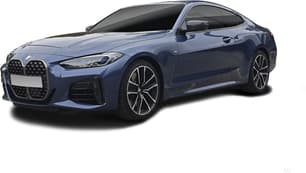
What's the difference?
Without a whole lot of fanfare BMW has slipped yet another model into its Australian line-up.
Sitting alongside existing coupe and convertible variants, the new 4 Series Gran Coupe follows the template established by the previous gen version.
A sports luxury four-door with a sleek, fastback twist, it provides a more adventurous alternative to its close 3 Series cousin.
Offered in three grades, this is the M440i xDrive, the 3.0-litre, six-cylinder, all-wheel drive 4 Series Gran Coupe flagship.
It competes with premium all-wheel drive four-doors like Audi’s S5 Sportback, the Jaguar XF P300 R-Dynamic HSE, and the Mercedes-AMG C 43.
When I say this is a rare review, I’m talking about the kind of rare that means you can’t even buy the car you’re reading about.
The 2026 Audi RS6 Avant GT you’re looking at in the pictures around this story is number 248 of 660. That’s six-hundred and sixty worldwide.
In Australia, there are only 22 RS6 GTs, and they’re all sold - at exorbitant prices, mind you, but we’ll get to that.
The RS6 GT is essentially a production version of the Audi RS6 GTO concept, built in 2020 and inspired by the Audi 90 quattro IMSA GTO race car, which means the RS6 GT carries a lot of ‘90 GTO’ in the way it looks. More on that shortly.
Aside from its extremely limited availability and its design package, there are some mechanical changes to increase the appeal of the RS6 GT, though whether any of its owners will put the on-road (or on-track) ability of this special wagon from Ingolstadt to the test remains to be seen.
A couple of days to live with one of the few RS6 GTs in Australia should reveal how special this car feels, and result in at least one example of the rarity being driven good and proper.
The BMW M440i xDrive Gran Coupe manages to combine sleek design with a fun-to-drive personality and surprising practicality. It’s a rapid premium, four-door, five-seater offering extra flair, and in this part of the market, good value. But more than anything else it’s got a cracking in-line six under the bonnet.
You’ll notice a number out of 10 on this review, you should ignore it.
Not only is it irrelevant because you can’t buy one, but the RS6 Avant GT isn’t a ‘brain’ car, it’s a ‘heart’ car. As much as a five-seat wagon can be, anyway.
Whether you think it’s overkill, overpriced, or overhyped, the GT is a celebration of a car that’s become such an icon for petrolheads. It’s also probably a marker for the end of an era, because we don’t see many V8 family cars getting about anymore.
Well done to Audi, the accounting team in particular, and if anyone who owns an Avant GT is willing to let me have another drive, my in-box is open.
Or I’ll just keep an eye out.
So, how does this four-door 4 Series differ from a four-door 3 Series? The answer is as plain as the nose on this car’s face.
BMW’s head of design, Adrian van Hooydonk, has been expanding the brand’s signature ‘kidney grille’ in every conceivable direction, and this is the much talked about interpretation adorning all 4 Series models (petrol, hybrid and electric) as well as the M3 sedan.
The new Gran Coupe is longer, wider, and taller than the outgoing model, and the track is broader, front and rear. The wheelbase has also been extended, now a whole 5.0mm longer than the 3 Series.
The DRLs and headlight main beams are LED with laser high beams, immense gills square up the edges of the front clip, while a vent and the strake attached to it stand the car apart. Plus, of course, the doors are frameless.
One niggle, though. I’m not in love with the slender door handles. It’s hard to get a good grip on them, especially in the wet.
Standard 19-inch alloy rims are shod with Pirelli P Zero rubber 245/40 fr / 255/40 rr), the roofline slopes distinctly towards the rear, a lip spoiler on the trailing edge of the tailgate is classic BMW, darkened LED tail-lights wrap around the rear corner, and a diffuser-type panel is flanked by large exhaust apertures.
Our car’s ‘Aventurine Red’ finish is a $3850 option, but to my eyes anyway it looks superb.
Exterior trim including the grille frame, front air intake inserts, mirror upper housing, model designation badges, and tailpipe are finished in ‘Cerium Grey’, which I reckon 99.9 per cent of people will see as black.
The interior will be familiar territory for any current BMW owner, the 12.3-inch digital instrument screen sitting in a compact, hooded binnacle, and partnering with a 10.25-inch multimedia display standing proud of the dash above the broad centre stack.
The seats are trimmed in top-shelf leather with blue contrast stitching, plus the grippy sports wheel is also wrapped in genuine hide.
BMW calls the finish on the main buttons and controls ‘Galvanic’ which translates to a slick silver metallic look and feel. Configurable ambient interior lighting is a nice touch, and the broad console enhances the driver-focused feel, with a sprinkling of carbon-fibre around the centre console and dash lifting the sense of occasion.
Overall, the interior feels clean and classy with an obvious attention to detail.
“It looks like a toy car you’d get in a Kinder Surprise” was the first comment from my housemate upon seeing the $400K collector's item on wheels.
Harsh, but to anyone unfamiliar with the Audi 90 quattro IMSA GTO racer, there’s arguably too much going on with the RS6 Avant GT.
The red, grey and black decals, the chunky white 22-inch wheels, the flared and vented front fenders and the wing over the rear window… all of it is a lot to take in, but it’s very faithful to the IMSA car.
As pictured, the 90 quattro IMSA has the red around the bottom lip of the car, on the bonnet, and even its rear wind, the same as the red on the rear of the Avant GT.
Some of the black at the front of the car, where the bonnet and fenders are, is just exposed carbon-fibre rather than a black decal.
Short of the sponsors and racing numbers, the Avant GT does a fabulous job of paying homage to the 1989 race car. It just means you’re going to be the centre of attention anywhere you drive. Or park.
On that note, an alternative paint and graphic scheme in 'Mythos Black' (this car is 'Arkona White') was available to customers and is decidedly more ‘under the radar’. You have to wonder, though, if you opted for the subtle version of a car that pays homage to a fire-breathing IMSA car, would you feel like you took the coward's option?
Besides, you’re either keeping this car in some kind of temperature-controlled bubble, or (hopefully) spending most of your time around it in the driver’s seat. From there, you don’t have to grapple with the question of garishness.
The interior is, while elevated past standard RS6 vibes, a lot more subtle. Dark materials of microfibre, carbon, leather and the smudge-prone piano black (an Audi favourite) are joined by a relatively restrained serving of red in the contrast stitching and seatbelts.
At close to 4.8m long the 4 Series Gran Coupe is a sizeable machine. Up front, the feeling is airy and comfortable, and the rear is surprisingly spacious, especially in light of the car's sloping roofline.
At 183cm I have to fold myself tightly to fit under the low roof, but once inside I have enough room to sit behind the driver’s seat set for my position with more than enough legroom and adequate headroom. Put three full-size adults across the back row, though, and there will be breathing difficulties.
Kids will be fine, however, and individual vents with adjustable temp in the rear was a big plus during a particularly hot test week.
For storage there are generous door bins in the front with room for large bottles, a decent glove box, dual cupholders in the centre console, a reasonable lidded bin (which doubles as a centre armrest), and the wireless device charging bay (forward of the gearshift) makes a handy oddments space when not in use.
In the rear, again the doors feature pockets with room for (medium-size) bottles, there’s a fold down centre armrest with two cupholders, but thanks to the one-piece shells on our test car’s optional M Sport front seats there are no map pockets.
Power and connectivity runs to a USB-A socket and a 12V outlet in the front centre console, as well a USB-C port in the front storage bin, a pair of USB-Cs in the rear, and a 12V outlet in the boot.
Speaking of which, lift the tailgate and with the rear seat upright we were able to fit all three of our suitcases or the beefy CarsGuide pram into the healthy 470-litre (VDA) boot space.
Lower the 40/20/40 split-folding rear seat down and 1290 litres of volume is at your disposal. Plus there are handy bag hooks and tie-down anchors to help secure loose loads.
You can also tow a braked trailer up to 1.8 tonnes (750kg unbraked), but don’t bother looking for a spare of any description, a repair/inflator kit is your only option.
You’ve bought a $400K collectible sports car capable of effortlessly deleting kilometres of highway with your family and enough luggage for a week. Usually a special edition driver's car at this price point is doing well if it has a place to put a phone and a water bottle, let alone phones and water bottles for four people - five if you really need.
Yes, in the performance car world, the Audi RS6 Avant has long been king of the convenience game and the GT holds onto that.
The seating position and ergonomics remains comfortable, the driver’s seat being manually adjustable means it can sit even lower, there’s decent storage in the door cards, cupholders are able to be hidden, the phone charger is under the armrest, there’s a spot for small items like keys, change or glasses and the rear seats have mostly the same alongside their own individual climate controls and heated seats.
Behind those, a 548-litre boot puts most performance cars to shame, but its 1658L space when the rear seats are folded down is unbelievable for something that you’d want to take to a race circuit.
We’re in a zone some way North of $100K here with cost-of-entry running to $115,900, before on-road costs. So, as well as the included powertrain, suspension, and safety tech you should rightfully be expecting a lengthy standard features list.
And the M440i Gran Coupe goes toe-to-toe with its heavyweight Euro competition, featuring three-zone climate control air, adaptive cruise control, ‘Laserlight’ headlights, that 12.3-inch ‘BMW Live cockpit Professional’ instrument display and 10.25-inch ‘Control Display’ multimedia touchscreen managing navigation, the 16-speaker/464W harmon/kardon Surround Sound audio system (with Apple CarPlay and Android Auto integration) and a host of other on-board functions.
There’s also the ‘Vernasca’ Black leather trim, an electric glass sunroof, the leather-trimmed sports steering wheel, the electric sports front seats are heated and there’s wireless charging for compatible devices.
I’ve been told I’m not allowed to swear in CarsGuide reviews, so add your own expletive when I say, at $399,000, before on-road costs, the RS6 GT is expensive.
A ‘standard’ Audi RS6 Avant Performance costs $252,600, so you would really, really hope that warm feeling you get from owning one of only 22 GTs in the country is worth around $146,400. It’s very hard to imagine the physical changes to the car amount to that much money.
Of course, there’s plenty of kit in the RS6, anyway. But unique to the Avant GT is a carbon bonnet, carbon wing mirrors and carbon front fenders, a restyled spoiler, tailgate, and rear diffuser, 22-inch Audi Sport six-arm ‘Avus’-inspired alloy wheels (in white or black), RS ceramic brakes and black badging.
Inside, there are RS front bucket seats trimmed in leather, synthetic suede and carbon, contrast stitching in red, red seatbelts, black synthetic leather along the dashboard with open-pore carbon, rear window sunshades and a Bang & Olufsen 3D sound system from the 'Sensory Package' as standard.
There’s also ‘RS6 GT’ scuff plates, floor mats, puddle lighting and the individual number for each of the 660 cars on the centre console.
There’s also manually adjustable coil-over suspension and a GT-specifically-tuned quattro sport differential.
It’s cool, but is it an extra $146K cool?
For the price, you’re almost in Ferrari territory, or you’re ticking some options boxes on your Porsche 911 Carrera T. Suppose neither of those can comfortably take a family of four on a holiday to the snow and even feel safe driving on icy roads, though.
It does happen to be about the same price as the Mercedes-AMG GT63 S 4 Door, though whether that looks as good as the RS6 is debatable.
Under the bonnet is BMW’s (B58) all-alloy 3.0-litre twin-scroll turbo intercooled, in-line six-cylinder engine, driving all four wheels via an eight-speed automatic transmission and electronically controlled clutch pack, as well as an electronic limited-slip differential at the rear.
It features high-pressure direct-injection and BMW’s ‘Valvetronic’ system managing air flow to the intake side, to produce 285kW at a relatively high 5800-6500rpm. But the big punch is 500Nm of peak torque from just 1900rpm all the way to 5000rpm.
The M440i is also a mild-hybrid with a 48-volt starter motor-generator and supplementary battery able to give an 8.0kW kick at low engine speeds.
Audi’s venerable 4.0-litre, twin-turbo V8 engine remains at the heart of the RS6, though in the GT there’s no more power than the RS6 Avant Performance.
That means 463kW of power and 850Nm of torque delivered to all four wheels via an eight-speed torque converter automatic and Audi’s ‘quattro’ all-wheel drive system, making the RS6 Avant GT capable of a 3.3-second sprint to 100km/h, according to Audi. Top speed is a blistering 305km/h.
All this in a car I took to Coles.
BMW’s official fuel economy figure for the M440i xDrive Gran Coupe, on the ADR 81/02 - urban, extra-urban cycle, is 8.2L/100km, the 3.0-litre turbo six-cylinder emitting 187g/km of C02 in the process.
Stop/start is standard, and we saw an average of 11.1L/100km over city, B-road and freeway running during a week with the car.
With the 59-litre tank brimmed (with minimum 95RON premium unleaded) that real-world test number translates to a range of around 530km.
Do you care about this section of the review if you’ve bought one? Surely not.
Anyway, Audi claims 11.8L/100km in terms of fuel consumption and you’d better believe it’s 98 RON minimum.
It’s got a 72-litre fuel tank, which was depleted rather rapidly on test. While driving conditions weren’t ‘fair’ in terms of the test given the content demands of a short-term loan, there’s probably a realistic figure somewhere between the claim and the 17.9L/100km I achieved over a few days.
BMW says the M440i xDrive Gran Coupe will accelerate from 0-100km/h in 4.7sec, and I reckon the threshold for a properly quick car is sub-five seconds.
The 3.0-litre turbo six develops its peak power of 285kW between a relatively lofty 5800-6500rpm, but the big number is a solid 500Nm punch of pulling power delivered between 1900-5000rpm.
Squeeze the throttle pedal pretty much anywhere in the rev range and the response is glorious. Rapid acceleration accompanied by raucous engine noise and rorty exhaust note (albeit with some synthetic support). Various pops and bangs in the Sport settings add extra entertainment..
The eight-speed auto gets some electric support from the mild-hybrid system to fill the torque gap on up shifts, and the result is a conventional torque-converter transmission that behaves like a dual-clutch.
Shifts are seamless in general driving, and satisfyingly quick in a more aggressive mode, the wheel-mounted paddles dialing up the fun in manual changes.
Suspension is double wishbone front and multi-link rear with the standard ‘Adaptive M Suspension’ built around an adaptive damper set-up.
The change between the ‘Comfort’ setting to the ‘Sport’ or ‘Sport+’ calibration is close to instant and makes a discernible difference, especially in terms of ride comfort.
I found the best ‘Individual Sport’ arrangement to be damping in Comfort, with the steering engine and transmission in Sport. The car flows so beautifully through corners with urgent response from the powertrain.
By all means dial up the suspension if you’re having a real crack, but the car feels superbly balanced, stable and predictable in Comfort (front to rear weight distribution is 50:50).
The electrically-assisted variable-ratio steering is nicely weighted with good road feel, and the grippy sports steering wheel is a nice point of contact.
The xDrive AWD system’s default setting is rear-biased, although it will push most of the drive forward when required. But the RWD feel is unmistakable.
The M440i weighs in at around 1.9 tonnes but feels lighter and more nimble than that figure would typically indicate.
A standard electronically-controlled M Sport limited-slip differential puts the power down confidently. I have a favourite LSD test corner on my regular evaluation drive, a sharply twisting and rising left-hander.
Rolling into it in a low gear before planting the throttle mid-corner, the car simply hunkers down without a hint of fuss (or traction loss) as it rockets out the other side.
Optional M Sport front seats ($2000) provide comfort and firm location in equal measure and in terms of ergonomics BMW knows how to focus on the driver and set-up an efficient environment. Key controls are perfectly positioned and simple to operate.
I have an issue with the ‘Lane Departure Warning’ function, however, which is too quick to intervene and overly intrusive when it does so. I turned the ‘Steering Intervention’ function off. You can dial down steering wheel vibration warnings, too.
The standard M Sport brakes feature big vented rotors front and rear, with fixed four-piston front calipers doing the bulk of the work. They’re strong but don’t bite or release too aggressively. It’s easy to grease in a smooth application.
There’s something unfortunate about how good the Audi RS6 Avant GT is from behind the wheel. That’s knowing how few people will properly get to enjoy it.
Not just because only 660 were built, but also because the majority of those 660 owners will be too worried about how much they’ve just spent on an automotive rarity to properly take it for a burn on a road, or even a track.
The RS6 was always an icon of Germany's penchant for subtle-looking cars that just happen to be capable of embarrassing much more brash vehicles, but the GT does away with the pretence and sharpens its teeth a little.
The specifically tuned rear differential makes for a more rear-biased driving experience in Dynamic mode, which means more agile cornering and a more natural balance compared to the way the RS6 sometimes feels - like a family wagon.
Its rival, the BMW M5 Touring, can go full rear-drive, but the Audi doesn’t need that as an option. It feels more capable and composed; ready to obey commands without fuss. A set of Continental SportContact 7 tyres (285/30) help there on the grip front.
The suspension underneath, adjustable coil-overs with three settings, is unique to the GT and lowers the ride height by 10 millimeters. It’s stiffer, 30 per cent at the front and 80 at the rear, and you notice it.
There’s more control and much less body roll, but the trade-off is the RS6 Avant GT is a little less comfortable on Australia’s particularly rough roads. Its 22-inch wheels don’t help.
It’s not, however, crashy or rattly. The suspension still does a fine job of stopping the driver being jostled around, but there’s a decidedly firmer response to the surface underneath. Again, still very composed.
With the new suspension, steering the GT feels easier than memory would suggest and the baseline was already good. There’s no unnecessary weight, but there’s still decent feedback from the front wheels and accuracy is bang-on.
Throttle adjustment in the corners, too, is easier with the rear differential, and it means anyone who still had reservations about Audi and understeer can be proven wrong.
The drivetrain remains unchanged from the Performance, which is a good thing. The effortless acceleration, even in the more aggressive 'Dynamic' setting with the transmission set to 'Sport' is smooth but seemingly unending.
Fortunately, the 4.0-litre V8 under the carbon bonnet sounds delightfully burbly, so getting to the speed limit or overtaking is a little treat every time. While the steering wheel paddles are there if you really need to drive in anger, the eight-speed is fine left to its own devices.
A 2.0-tonne family wagon with a V8 up front, easy communicative steering, and sporty suspension that settles well over bumps but allows enthusiastic corner attacks?
The RS6 Avant GT is in limited company.
Active crash-avoidance tech in the M440i xDrive Grand Coupe is impressive with AEB standard, as well as lots of assistants and warnings, namely: ‘Steering and Lane Control Assistant’, ‘Cross Traffic Warning’ (front and rear), ‘Lane Keeping Assistant’ (with ‘Lane Departure Warning’ and ‘Lane Change Warning’), ‘Crossroads Warning’, ‘Evasion Assistant’, and ‘Parking Assistant Plus’ (including ‘3D Surround View and Reversing Assistant’).
If an impact is unavoidable there are six airbags on-board (driver and front passenger front and side, plus side curtains) as well three top tethers and two ISOFIX positions for child seats in the second row.
Plus an ‘Intelligent Emergency Call’ function automatically dials back-to-base if the car has been involved in a crash, and a comprehensive first aid kit is on-board.
The BMW scored a maximum five-star ANCAP assessment in 2019.
There’s no current rating from ANCAP for the A6 in general, let alone this specific RS6, but there’s a decent suite of safety equipment and tech to keep you worry-free in the GT.
Eight airbags and more than 30 driver assistance systems from the RS6 are of course present in the GT, including adaptive cruise control, lane-keep and warning, emergency brake assist and cross-traffic alert.
Audi’s also got surround view cameras for parking, which also includes warnings for approaching vehicles or objects, plus there are preemptive measures the car can take in an impact like tightening the seatbelts or braking to avoid a second collision.
The second row also has three top tethers and ISOFIX anchor points on the outboard seats for mounting child seats.
The M440i Gran Coupe is covered by BMW’s three-year/unlimited km warranty (including paintwork), as well as 12-year/unlimited km anti-corrosion (perforation) cover.
That’s off the premium market pace now with Genesis, Jaguar, and Mercedes-Benz at five years/unlimited km and Lexus set to join them from January 1st, 2022.
That said, roadside assistance is provided for the duration of the main warranty, but it’s worth noting “rattles and squeaks” are only covered for one year.
Service is condition-based, the car telling you when maintenance is required, and a range of service packages are available. The basic plan covering a 4 Series for five years/80,000km comes in at $1750.
Audi’s five-year/unlimited kilometre warranty is below industry par, though most premium brands are in the same boat.
Twelve years of bodywork warranty against corrosion is also included, as is a five-year run of free Audi roadside assistance.
Five-year service plans can be purchased, or customers can buy back-to-back two-year extensions for the warranty, servicing and roadside assistance.