What's the difference?
Few cars carry the burden of expectation more than the BMW M3 – and, by association – the two-door versions latterly rebadged M4. Porsche 911 definitely. Mazda MX-5 probably. Ford Mustang maybe. Icons all.
Since the arrival of the left-hand-drive-only – thus it never officially came to Australia – E30 3 Series two-door original in 1986, it’s become the benchmark for which all others follow, and regular finalist in any given ‘greatest sports car of all time' listings.
Except… it hasn’t always turned out that way.
After the visceral E30 M3, it’s been a rollercoaster ride of disappointment and elation: by 1992’s patchy E36 arch enemies Audi and Mercedes-Benz were chiming in, only to be swept aside by the exquisite E46 M3 from 2000. But then its 2007 E90 and 2014 F80 successors both missed their marks for reasons we’ll go into later, leaving us with 2021’s G82/3 generation.
Does the latest two-door M-car return to form? We take a look at the M4 convertible, which simultaneously rediscovers the fabric roof and adopts all-wheel drive (AWD) for the first time.
Glorified blow dryer or glorious mind blower? Let’s see.
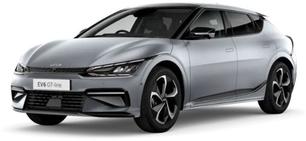
Kia’s EV6, launched in 2021, was an early signal from Kia that its talk of rearranging car-buyers’ perceptions was more than an idle boast.
Sure, the South Korean brand had gone from budget also-ran a couple of decades ago to a brand that represents reliability and quality in a very short space of time.
But a brand that was technically innovative and EV-savvy? Or capable of family cars with supercar performance? Let’s wait and see, we all said.
And now the latest member of the all-electric EV6 family has arrived, and with it Kia’s big chance to prove its point, as well as convince us that its flagship products are worthy of a six-figure price-tag.
With shattering straight-line performance and all the hallmarks of a thoroughly modern take on the electric vehicle concept (including all-wheel-drive and electronic control of everything from the suspension to the rear differential) the EV6 GT makes the technical statement it needs to.
But does it have the quality, the specification and the overall appeal to justify a price-tag that was unimaginable in a South Korean car until very, very recently?
The fact is that technical merit is not enough – never has been – when it comes to making a macro price-point shift in the minds of consumers.
Any model seeking to reset the value proposition of an entire brand needs to be more than the sum of its parts. But does the EV6 GT achieve that rare distinction? That’s what we’re here to find out.
We cannot think of a faster or more invigorating four-seater luxury convertible for the money than the new M4 Competition.
Finally, after years of devastatingly fast droptops with remote steering and an unforgiving ride, the G83 generation discovers refinement and sophistication to go with its supersonic speed.
There’s terrific talent on tap here that no rival can even come close to right now. BMW is on a roll and this is the first M4 convertible that can sit proudly alongside the best of its classic M3 ancestors.
A hundred thousand dollars used to be big money. And for a family SUV, it still is. But don’t make the mistake of confusing the Kia badge with pedestrian motoring. The EV6 GT is proof that Kia can make high performance cars that work, and make the most of modern EV tech in the process.
We’re a bit disappointed in the real-world range of the car, and there’s no doubt the vast majority of drivers neither need nor want a car as focussed as this one. But as an example of how a modern, digital electric car can feel more like an old-school analogue performance car, the GT is Exhibit A. And for those of us for whom it’s about the journey, not the destination, this is indeed good news as EVs continue to take over the world.
Note: CarsGuide attended this event as a guest of the manufacturer, with meals provided.