What's the difference?
BMW has been incredibly smart with its electric vehicle (EV) offerings in Australia to date.
Ever since the Fringe Benefits Tax (FBT) exemption was introduced for novated lease buyers of EVs under the Luxury Car Tax (LCT) threshold, the German brand strategically introduced versions of its EVs that qualify.
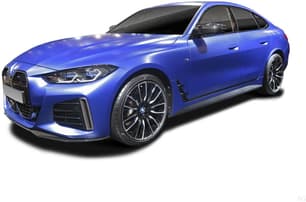
The BMW i4 eDrive35 electric liftback, which is based on the locally defunct 4 Series Gran Coupe, is one of these cars.
It recently received a mid-life update that brought more range and features, while remaining under the LCT threshold for fuel-efficient vehicles.
However, the plot thickens. BMW is soon set to launch its new i3 electric sedan which is based on the company’s Neue Klasse dedicated electric architecture.
BMW hasn’t given the i4 an official production end date, however overseas reports indicate it’ll end as soon as next year to make way for the new i3.
Should you hold out for this new-generation car, or does the i4 still hold up? Read on to find out.
Five-cylinder fury is still kicking!
Audi has just launched the mid-life updated version of its RS3 hatch and sedan in Australia.
With new looks inside and out, the German carmaker has also made a number of subtle tweaks under the skin via software updates. Thankfully, however, the five-cylinder beast lurking under the bonnet remains untouched.
As the viability of pure internal combustion engines in the hot hatch segment dwindles in the age of ever-tightening emissions regulations, will this be the last hurrah for the five-banger RS3?
Read along to see how this latest version stacks up.
The BMW i4 balances a solid, old-school feel with the beauty and stunning looks of high-end technology. It feels like the end of an era for the German brand before it leaps into the screen-heavy age of software-defined vehicles.
While BMW hasn’t publicly announced an end-date for i4 production just yet, the new i3 is bound to overshadow it once it arrives. It offers more than double the claimed range and will likely address a number of this car’s flaws.
In the meantime however, the i4 is definitely worth considering if you value driving dynamics and a quality feel in a car that you can drive daily.
The Audi RS3 is a special hot hatch and sedan I’m so glad I experienced before its five-cylinder engine is inevitably retired due to emissions regulations. Full of character and charisma, this car is far from a rational purchase, pitched at boy racers who don’t want to grow up just yet.
From a value perspective, too, while the asking price has crossed the six-figure threshold and the option prices add thousands, it’s still much cheaper than the Mercedes-AMG A45 S. Make of that what you will.
Note: CarsGuide attended this event as a guest of the manufacturer, with meals provided.
The BMW i4 is firmly at the end of its lifecycle, however its exterior design is ageing like fine wine. This is apt given our tester was finished in delicious-looking 'Fire Red' metallic paint.
The overall proportions of this car are gorgeous, especially towards the rear where the roofline is drawn out, accentuating the liftback look.
This latest update only brought minor tweaks to the design, including refreshed headlight and tail-light signatures. As mentioned above, the M Sport package is now also standard which does give this car a subtly sporty look.
Inside the design marries together the best of the old and new worlds. A major highlight is the curved display housing not only the 12.3-inch digital instrument cluster, but also a 14.9-inch touchscreen multimedia display. It’s a stunning setup that looks ultra modern.
On the flipside however, there is still a lot of physical switchgear on the centre console, including a rotary iDrive controller that allows you to control the content on the screen. It’s a great setup if you like to avoid getting fingerprints on the touchscreen.
While there are a few applications of glossy piano black around the cabin, it’s balanced nicely with other metallic and matt finishes. You’re able to choose from a few different trim inlays, including aluminium and open-pore wood, for no extra cost.
Lastly, the new M Sport steering wheel looks great in this car and adds a lovely sporty touch to the interior.
Audi has made some subtle tweaks to the RS3 that has somehow made this snarling hot hatch look even angrier.
Up front there’s a new fascia featuring more open sections, which in turn improves air flow. A black styling package is now standard so it almost looks like the entire front is open and ready to eat you alive.
The matrix LED headlights now have a darkened finish which adds to the menacing look. There are new signatures, including a special chequered flag one for the RS3 which looks top notch.
Around the side it surprises me just how much wider the front is compared to the rear. Both have big, muscular haunches, but it shows this hot hatch is a bit of a bulldog. I’m a big fan.
These haunches stand out even more when you opt for the new Daytona Grey Matte exterior paint. While the extra $11,400 for the privilege makes me wince, it looks sexy on this car.
The standard 19-inch ‘Y-spoke’ alloy wheel design remains unchanged from the pre-update car, though there’s a new, optional ‘cross-spoke’ design that looks delicious (and tricky to clean).
At the back there’s still the classic RS dual exhaust tip motif which looks mean and it’s surrounded by a new black rear diffuser with a motorsport-inspired vertical red reflector in the centre.
The new LED tail-light signature with the vertical slats is so clean and neat. It looks particularly great in low-light situations or at night.
Inside, the biggest change is the new RS steering wheel with the flat top and bottom. As standard it’s wrapped in perforated leather, but with the optional RS Design package it’s wrapped in 'Dinamica' synthetic suede. I much prefer the standard leather-wrapped unit as the Dinamica likely won’t last in the long run, especially if you’ve got clammy hands.
Other changes include more interior ambient lighting on the door cards through small slits, as well as a new shift-by-wire gear selector. The digital instrument cluster and touchscreen multimedia system set-up remains unchanged which is no bad thing because they look fantastic.
It’s disappointing Audi has stuck with an extensive use of piano black on the centre console because this gets dusty and grimy very quickly, and then can get scratched easily when wiped clean. It now also features on the steering wheel buttons, which are frequent touchpoints.
Hopping into the i4, it’s clear you’re getting into a low-slung vehicle. If you’ve got poor mobility, it may be worth looking elsewhere.
Once you’re in though, the cockpit is a lovely space to spend time. The driver’s seat is beautifully comfortable and offers plenty of adjustment, including extendable thigh support.
Ahead of the driver the steering wheel is rather thick in classic BMW fashion. I appreciate the physical buttons and scroll wheels as they’re easy to understand and use on the fly.
The curved display not only looks stunning, but is functional and easy to use. The digital instrument cluster has a number of layouts you can choose from and it can be paired with the head-up display, which is great to refer to at a glance.
Moving across, there is a lot going on with the central multimedia system. It can feel overwhelming with the amount of content and information to begin with, but once you start poking around, things are logically sorted.
Thankfully there are also a series of shortcut buttons always at the bottom of the screen to take you to key menus.
Adding to this, there is the flexibility of having the iDrive controller. Reaching the far side of the screen from the driver’s seat can be a bit of a stretch and being able to use the rotary dial on the move is much easier.
There is wireless Apple CarPlay and Android Auto as standard. It takes up the full touchscreen display, which looks great.
Looking around the cabin, storage space is fine but not amazing. There are two cupholders plus a wireless charger tucked behind them on the centre console, plus a shallow centre storage area under the central armrest.
Hopping into the second row, it’s clear the focus for this car is on the occupants up front. The door aperture is rather narrow, making it tricky to get in and out gracefully.
In the second row space is nothing more than adequate. At a leggy 182cm tall, my legs almost touch the seat in front when it’s set to my driving position and my head almost brushes the roofliner. I’d struggle to spend a lot of time back here.
This is compounded by the massive hump in the centre that’s a carryover from the combustion platform this car is based on.
Second-row amenities include climate control with air vents mounted on the back of the centre console, two USB-C ports, as well as a fold-down armrest with cupholders.
At the back there is a large liftback that opens and closes electronically. With the rear seats upright there is 470L of boot space, which expands to 1290L when folded.
While this is not massive in terms of outright capacity over a similarly sized sedan, the envelope is much more open and usable.
There’s also a section under the boot floor that’s generously sized for power cables, among other odds and ends.
The RS3’s standard sport front seats are deliciously comfortable and offer plenty of electric adjustment. This means people of any size and stature should be able to find their desired seating position.
Thanks to the electric lumbar there’s also a massage function for the front seats. This is pretty cool to flick on and relax into, but I wish the massage was a little stronger.
While the new steering wheel looks cool interacting with the buttons on it can be a bit of a hassle. They’re touch-sensitive but do have a satisfying click if pressed harder.
There were moments where I accidentally clicked on the buttons during intensive track driving as my hands were at the nine and three o’clock positions. Not the best thing when you’re meant to be focussing.
The digital instrument cluster offers so much configuration you won’t know what to do with yourself. There’s even a new rev counter design especially for the RS3 which looks very cool.
Moving across, the touchscreen multimedia system is classic Audi. It’s easy to navigate around and hard to get lost in the sub-menus. There’s also wireless Apple CarPlay and Android Auto connectivity which is virtually a given now.
While you need to use the touchscreen for a number of features, I appreciate how Audi has retained so much physical switchgear up front. It’s particularly handy to have physical toggle switches and a small digital display that’s separate from the touchscreen for the climate control.
Another piece of physical switchgear I like up front is the rotary dial for the media controls on centre console. It’s much like an iPod, allowing you to change the volume if you rotate your finger on it like a click-wheel. Major throwback vibes.
In terms of storage up front, it’s decent but not outstanding. There are two cupholders, a wireless phone charger, a centre console box as well as a lockable glove box.
Moving to the second row, it’s clear it’s more for the sake of it, rather than having a space you’d want to use all the time. At a leggy 182cm tall, I have minimal legroom behind my own driving position.
With headroom, it’s adequate in the hatchback and not great in the lower-slung sedan. I need to kink my neck in the latter to fit, which isn’t comfortable.
The second-row bench seat is comfortable, offering enough support for short-to-medium trips. I wouldn’t want to get stuck back there for too long, however.
In terms of amenities, there are air vents mounted on the back of the centre console with a dedicated third zone of climate control, two USB-C ports, nets on the seat backs as well as a fold-down centre armrest with cupholders.
At the back there’s a power tailgate for the hatchback, however the sedan only has a power-opening boot lid. This means you need to manually shut it, which isn’t uncommon for sedans.
Boot space in the RS3 is a weak spot due to all the componentry for the all-wheel drive system and the tricky rear clutch set-up. There’s only 282L for the hatch and 321L for the sedan, which isn’t much.
In reality, however, the boot space is still usable. It’s fairly square and there’s barely any boot lip, meaning you can slide things in and out with ease.
Boot-related amenities include a netting system to keep things from sliding around, a light, some hooks and a 12V socket. There’s also a parcel cover for the hatchback.
Unfortunately there’s no spare wheel of any kind under the boot floor in the RS3 as this is where the 12V battery lives. Instead there’s a tyre repair kit. This isn’t uncommon in performance cars, though it’s disappointing if you frequently travel in the country, away from tyre repair shops.
BMW now only offers one version of the i4 in Australia, the eDrive35. It dropped the M Performance grade when the facelift was introduced last year.
The 2026 BMW i4 eDrive35 is priced from $88,900 before on-road costs, which is $1100 more than it was in pre-update guise.
It’s worth noting that it now picks up the M Sport package as standard which gains sporty exterior and interior highlights. This was previously offered on defunct eDrive40 trim.
Critically the i4 remains under the LCT threshold which means that if you put it on a novated lease it’s exempt from Fringe Benefits Tax.
Standard features include 18-inch alloy wheels, LED headlights, power tailgate, 12.3-inch digital instrument cluster, 14.9-inch touchscreen multimedia system, wireless Apple CarPlay and Android Auto, synthetic leather upholstery and heated front seats.
It’s fairly standard on this front, though a heated steering wheel and ventilated front seats would make for a nice touch. However, this would likely tip it over the LCT threshold.
This facelift for the Audi RS3 has seen the price tag rise beyond six figures for the first time.
It’s now priced from $104,800, before on-road costs for the hatchback or $107,800, before on-road costs for the sedan. This is between $9000 and $9500 more expensive than the pre-update version, depending on body style.
While this may seem like a considerable amount of money for a hot hatch it’s worth noting the Mercedes-AMG A45 S is well over $120,000, before on-roads.
As standard there are 19-inch alloy wheels, darkened matrix LED headlights, a black exterior styling package, 12.3-inch digital instrument cluster, 10.1-inch touchscreen multimedia system with wireless Apple CarPlay and Android Auto, 15-speaker Sonos audio and RS sport seats with Nappa leather upholstery.
There’s a new RS steering wheel with a flat top and bottom, as well as touch-sensitive and shortcut buttons for the 'RS Performance' drive modes. There’s also more interior ambient lighting and a panoramic glass sunroof as standard.
Optional extras include a 'Carbon Package' ($7400 hatch, $6300 sedan), 'RS Design Package Plus' ($2150) in either red or green, ceramic front brakes ($10,800) and a new 'Daytona Grey Matte' exterior paint colour ($11,400). The latter is the first time matt paint has been offered on an RS3 locally.
While there’s a considerable amount of standard kit in the RS3, it’s easy to add tens of thousands to the asking price with the options list, but as a result you can personalise the car exactly how you’d like.
The i4 eDrive35 continues to be powered by a single, rear-mounted electric motor that produces an unchanged 210kW and 400Nm.
This is nothing revolutionary in terms of the powertrain, though it’s nice it retains a rear-wheel drive-layout like the discontinued 4 Series Gran Coupe this car is based on.
BMW claims the i4 eDrive35 can do the 0-100km/h sprint in 6.0 seconds and the top speed is 190km/h.
The Audi RS3 is still powered by a 2.5-litre turbocharged five-cylinder petrol engine which produces an unchanged 294kW of power and 500Nm of torque.
This is mated to a seven-speed dual-clutch automatic transmission with drive sent through an all-wheel drive system.
Audi claims both versions of the RS3 can do the 0-100km/h sprint in just 3.8 seconds, which is technically 0.1 seconds faster than a Mercedes-AMG A45 S. Top speed is electronically limited to 250km/h.
The electric motor is fed by a 70kWh lithium-ion battery pack that allows for up to 448km of claimed range, according to ADR 81/02 testing.
This is 18km more than the pre-update car thanks to silicon carbide semiconductor components which are claimed to reduce energy consumption and increase range.
However, the Tesla Model 3 and Polestar 2 both still offer more range for less money.
BMW claims the i4 eDrive35 consumes an average of 16.3kWh/100km, according to ADR 81/02 testing. Over my 200km of urban testing I saw an average of 17.5kWh/100km, which isn’t fantastic as EVs are predominantly more efficient in the city.
Using my as-tested consumption, this means you have a theoretical range of 379km. That’s not great, though this range issue will be addressed with the forthcoming i3 electric sedan.
AC charging is available at rates up to 11kW, whereas DC fast-charging is offered at rates up to 180kW, allowing for a 10 to 80 per cent charge in 32 minutes.
The Audi RS3 sedan is claimed to consume 8.2L/100km, whereas the RS3 hatch is claimed to consume 8.3L/100km, both on the combined (urban/extra-urban) cycle (ADR 81/02).
Both body types come with a 55L fuel tank and require a minimum of 98 RON premium unleaded petrol.
During my testing I saw an average of 9.6L/100km according to the trip computer. We did around 200km of higher speed driving heading east out of Melbourne, including some spirited sections.
Our on-test figure translates to a range of 570km on a full tank of petrol.
BMW has positioned itself as creating vehicles that are the ‘ultimate driving machine’ for decades now and this i4 is no exception.
While it’s not an outright performance powerhouse, it doesn’t need to be in order to feel engaging to drive.
The rear-mounted electric motor produces a decent 210kW/400Nm and it’s enough to get moving in frenetic urban traffic with ease. You’ll rarely want any more out on the open road either as rolling acceleration is decent.
The regenerative braking system in this car feels natural and transitions to the friction brakes with no awkward lurching or inconsistencies.
I like how you can drive this car like a regular combustion car using both the accelerator and brake pedals, or with an extra flick of the gear selector you can activate one-pedal driving. During my loan I played around with both and didn’t have a favourite as both feel well tuned and easy to adapt to.
The steering is direct and on the lighter side, making the car feel agile and nimble on the move. However, in low-speed situations you realise the turning circle isn’t fantastic…
I appreciate that BMW opted for standard 18-inch alloy wheels that are paired with tyres that have chubby sidewalls as this keeps the ride from being harsh and jittery, especially over firmer bumps.
Don’t worry if 18 inches aren’t enough though, BMW offers alloy wheel options that go all the way up to 22 inches.
This is the type of car that suits a long-distance road trip as it’s such an easy and fun car to cruise around in. That's why it’s so unfortunate that the range limits how you can travel before recharges.
In terms of noise, vibration and harshness (NVH) in the cabin, the i4 is naturally quiet given it’s an EV. However, it feels like there’s extra insulation because even at high speeds tyre and wind noise are virtually nonexistent, creating a hushed and tranquil interior ambience.
Spoiler alert, it’s a cracker.
Starting up the RS3, you’re instantly aware you’re behind the wheel of something special. Audi has made the start-up more “emotional” with this update and also “optimised” the exhaust flap control for more five-cylinder growl across a wider rev range.
When you’re on the boil, this five-cylinder sounds so fantastic. It’s the clear centrepiece of this car and I’m so happy Audi has continued to offer it.
However, thanks to the addition of a petrol particulate filter (PPF) with this latest-generation model it sounds a little muted in everyday driving. Call me a boy racer, but I want more noise.
Staying on the engine, it’s full of character and gets this small hatch and sedan moving along with ease. Even though the outputs are unchanged with this update, it’s still more than enough; 0-100km/h in 3.8 seconds shows it's more than enough.
The seven-speed dual-clutch automatic transmission in this car keeps the acceleration feeling relentless with snappy gear changes at a moment’s notice. It’s particularly fun taking control of moving between the ratios with the paddle shifters.
In slow-moving traffic, however, the dual-clutch can get a little lost and stuttery, which is a classic characteristic of this kind of transmission.
As standard the all-wheel drive system remains neutral, keeping the front and rear balanced and in check. However, if you flick to the ‘Dynamic’ drive mode you get more rear-biased action which is fun when you exit a corner with some extra heat.
There’s also still a ‘RS torque rear’ drive mode which is essentially a drift mode. Unfortunately we didn’t get to sample this during the launch program.
Additionally, there’s an ‘Individual’ mode that allows you to choose your own destiny. You could spend hours here fine-tuning your desired drive mode which is both great to see but complete nerd-core.
Like the pre-update car, there’s an electronically controlled multi-disc clutch on the rear axle which actively splits the torque between the rear wheels. However, it’s been "optimised" to allow for quicker cornering.
While this is hard to gauge without testing the pre-update and current car back-to-back, the RS3 is so dynamic it feels like you only scratch the surface on public roads. Thankfully we got to see how far we could push it on Haunted Hills, which is a fantastically complicated hill climb circuit in eastern Victoria.
In terms of the steering, there’s a progressive rack as standard which ramps up the steering intensity the more you turn the wheel. In practice, this means the lock-to-lock ratio is very short, making it easy to link up tight corners.
It also makes it easy to navigate tighter driving scenarios, like parking, though it disguises how wide the turning circle is. Expect to do three-point turns fairly often.
For the suspension, the RS3 has adaptive dampers set-up that generally errs on the sportier and firm side. There is a ‘Comfort’ mode which irons out some bumps, but larger road imperfections still transmit harshly into the cabin.
It’s also worth noting at higher speeds there’s a considerable amount of road and tyre noise that comes into the cabin. Thankfully the Sonos sound system does a great job at drowning this out.
Lastly, the safety systems in this car are generally user-friendly, though the lane-keep assist can be a little too hands-on, especially on narrow roads with poor lane markings. Thankfully you can switch this off by pressing and holding a button on the end of the indicator stalk.
The BMW i4 received a four-star ANCAP safety rating based on testing conducted by Euro NCAP in 2022.
It was held back from receiving a five-star rating due to its ‘Safety Assist’ score of 62 per cent. A car needed to receive a minimum of 70 per cent back in 2022 to achieve five stars.
It’s also worth noting that the Australian-specification BMW i4’s autonomous emergency braking (AEB) and lane support systems are claimed to be of a “higher standard” than the European-specification car tested by Euro NCAP. However, BMW never provided ANCAP with an Australian-spec i4 for verification testing.
Standard safety highlights include AEB, blind-spot monitoring, rear cross-traffic alert, lane departure warning, adaptive cruise control, front and rear parking sensors, plus a surround-view camera.
One of the few safety features that is missing is an active lane-keep assist or lane-centring function. When you drift near a marked line the steering wheel only vibrates to notify you and doesn’t physically move you back into the lane.
The regular Audi A3 received a maximum five-star ANCAP safety rating back in 2020, though this only covers front-wheel drive versions and doesn’t extend to the high-performance RS3.
Standard safety equipment includes seven airbags, autonomous emergency braking (AEB), blind-spot monitoring with exit warning, rear cross-traffic alert, adaptive cruise control, lane-keep assist, driver attention monitor, front and rear parking sensors, a surround-view camera as well as a semi-autonomous parking assistant.
AEB is active from 5.0km/h and lane-keep assist activates from 60km/h.
There’s also Audi’s 'Pre-Safe' system as standard which automatically closes the windows and sunroof, as well as pre-tensions the seatbelts if the car senses it’s going to be involved in a crash.
Additionally, all owners get three years of complimentary access to 'Audi Connected Services', including online roadside assistance and remote functions through a smartphone app. There’s also 10 years' emergency SOS call support and automatic service reminders.
Like all electric BMWs, the i4 is covered by a five-year, unlimited-kilometre warranty, whereas the high-voltage battery is covered for eight years or 160,000km.
A five-year warranty has been commonplace within the premium space for a few years now, whereas many mainstream brands have since moved up to seven years of coverage, or longer in some cases. It’s far from competitive.
Owners also receive three years of complimentary roadside assistance.
BMW offers a six-year pre-paid service package priced at $2420, which averages out to just over $400 per year.
Like all Audis, the RS3 is covered by a five-year, unlimited-kilometre warranty. There’s also five years of roadside assistance.
Logbook servicing is required every 12 months or 15,000km, whichever comes first.
You’re able to purchase a five-year pre-paid service package for $4010. That averages out to $802 per service, which seems like a lot until you see how much Mercedes-AMG charges to service an A45 S.
RS3 owners can also purchase two-year packages to extend the warranty, roadside assistance and servicing coverage. This allows new RS3 owners to have warranty coverage for up to nine years and it’s transferable to future owners.