What's the difference?
Can a car company show off? It seems absurd; the kind of embarrassing, unedifying behaviour that only ego-driven, status-obsessed human beings engage in. And yet look at BMW’s new 8 Series, with its shinily silly cut-glass gear lever, its laser headlights, its outrageously powerful V8 engine and its bullfrog-but-beautiful stance - surely this is showing off on a corporate scale?
To be fair, when a car company makes a new range-topper - and BMW only applies the number 8 to its most special vehicles, think Z8 and i8 - it really is about making a kind of look-at-me statement.
A car as obviously ostentatious as the M850i xDrive Coupe (and Convertible) has to appeal to buyers, even if it’s only a small and wealthy target market. And there is plenty that’s appealing about this old-fashioned yet modern-looking grand tourer, from the incredible way it accelerates to its luxuriant ride quality and decadent interior.
It would want to be impressive, of course, with a price tag of $272,900 (or $9000 more for the Convertible).
So, has the new 8 Series BMW got what it takes to separate the very rich from their hard-earned megabucks? We donned our shiniest shoes and went to the launch to find out.
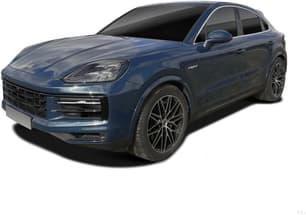
The Porsche Cayenne Turbo GT needs a better name. This is the king of Cayennes and quite possibly the ruler of all super SUVs.
Well, the Cayenne Turbo GT is the fastest SUV around the Nurburgring Nordschleife. Not just that, it has such colossal power and torque it'll be side-by-side with a Porsche 911 GT3 RS in a sprint from 0-100km/h. No, a better name for this SUV would be the Cayenne GT3.
Which is perfect for me because I'm at the point in my life where although I love full-on and noisy cars I also have a full-on and noisy family.
We lived with the Cayenne Turbo GT for a week to find out if this super SUV was also a super family car - from practicality to safety.
We're also a family with ridiculously high expectations of luxury SUVs having lived with and tested each of the Cayenne Turbo GT's rivals - from the Lamborghini Urus and Bentley Bentayga to the Aston Martin DBX and Alfa Romeo Stelvio Quadrifoglio.
Does the world really need a car as outrageously loud, over-the-top, exclusive and stupidly fast as BMW’s new 8 Series? Obviously not, but BMW clearly felt that its range, and its customers, could do with something like this. On paper, and even from the kerb, it seems a strange beast - luxurious and yet lightning quick - but from the driver’s seat it just instantly makes sense. And makes you smile. Scarily, there’s an even faster 8 Series Competition version to come…
Of all the super SUVs I've piloted, the Porsche Cayenne Turbo GT is the best all-rounder in terms of performance, comfort, cabin technology and style.
As a family car it's roomy, practical and easy to use and drive daily.
As a performance car the Turbo GT is stupidly quick, with the agility of a sports car. Sure, a 911 would leave it behind on a twisty race track, but this SUV is close to having that sportscar experience and keeping your family, as well.
In terms of improving on the car it’s replacing, the new 8 Series pretty much smacks it out of the park. Time has not been kind to vehicles fitted with pop-up headlights and the previous 8 Series, which roamed the planet in limited numbers from 1989 to 1999, with now-unimaginable V12 engines, seems a strange-looking beast, with its tiny little kidney grille almost hiding beneath a BMW badge.
The new M850i is a simply stunning looking beast, particularly in Coupe form (the Convertible is not ugly, but it just doesn’t look as complete). Extremely wide and menacingly low, it seems to loom over whatever patch of ground its parked on, giving off an air of magnificent malevolence.
It looks fantastic when followed from behind, but it’s the front view - featuring the thinnest headlight design ever seen on a BMW for a sleek, Iron Man-like face - that really grabs your attention.
Proportion, poise and big old 20-inch wheels give it plenty of presence, while the way the glasshouse tucks in at the rear only magnifies its powerful hips.
BMW has also thrown plenty of design flair at the interior, where you’ll find the unusual yet fabulous-feeling glass gear lever (there’s more of this sparkly, cut-crystal-like stuff on the volume knob, Start button and iDrive controller).
Not only does it feel truly unique and expensive in your hand, but it has an 8 buried beneath it, which shifts and shimmers as you try and see it through the many angles of the glass.
Elsewhere, the cabin is swathed in merino leather and feels undeniably classy, with a touch of modernity via its big screen, but it’s still not quite as beautiful as the cockpit you’d find in an Audi of a similar price. Close, but not quite.
This might be a personal thing but to me nearly all Porsches look better from the back than the front.
It's the wide stance and powerful haunches, the hunkered down suction-capped-to-the-road look that does it for me and the Cayenne Turbo GT, despite being an SUV, passes this important Porsche checklist item.
The GT aero kit only serves to make this SUV look more of a beast, and the gold-bronze looking satin Neodyne wheels are a Porsche theme that I've not always been a fan of, but I get the historic connection.
If only the Turbo GT could look a little less like other Cayennes from the front. This is the king of the SUV range and despite the apron and bumper already being exclusive to this model, there should be more.
Vents in the wheel arches, carbon bonnet with nostrils GT3-style perhaps? Or is that going too far? If you do want something more lairy then there's always the Urus.
The Cayenne Turbo GT's cabin is stunning in its plushness and modern surprises such as the passenger display, the hoodless instrument digital cluster, the lashings of Race-Tex upholstery everywhere. It's perfectly Porsche. High-performance meets high-end.
It's also highly practical. Let's talk about that.
At the very least, you’d have to say the 8 Series is fit for purpose. The seats are hugely comfortable for long journeys, so that’s practical, there’s a handy tray for your phone, where it will be wirelessly charged, and there are two cupholders in front of that, and storage for bottles in the doors.
No human larger than primary school age will ever sit in the back, so there’s not a lot going on back there.
In terms of boot space, it’s reasonably capacious at 420 litres, or 350 litres for the Convertible.
The Porsche Cayenne Turbo GT only makes one compromise on practicality and that's the removal of the middle seat in the back, which, with just two kids isn't used all the time but on average we might need it once a week for school mates and cousins.
Instead of a middle seat there is a shallow tray, which will fit a phone or in our case leaves and rocks found at the park.
So, yes, the Turbo GT is a four-seater only, but this is a spacious, large SUV with good head and legroom, wide-opening doors for easy entry and exit, and air suspension which can raise and lower the height for easy access.
Storage is excellent with enormous door pockets in the front and back and there are four cupholders.
There's a wireless phone charger in the front and two USB-C ports as well, plus two USB-C sockets in the back.
Four-zone climate control means the kids in the back can set their own temperatures. They also have heated seats.
I was disappointed to see there aren't sunshades for the rear windows - pretty vital in Australia where it feels like we're only about 50 metres away from the sun.
The Turbo GT's 576-litre boot just managed to fit our pram and a week's shopping, which is our minimum standard for living. Any more space is a bonus.
It can be hard to use the word “value” when talking about a car that costs north of $270,000, and keep in mind that this 8 Series is thus even more expensive than a Porsche 911. And a car has to be very good indeed to be worth more than one of those.
We would respectfully suggest that this BMW is pitched a little high in price terms.
Staggeringly, while the standard equipment list is lengthy and the inclusions are high end, you can still spend even more on options, and fairly easily push the price past $300,000 - Pure Metal Silver pain, for example, will set you back $10,400, while a pack of external carbon bits will hit you for another $7500, or $6,600 for the Convertible.
Standard equipment includes, deep breath, 20-inch M-branded light-alloy wheels, a tyre-pressure indicator, M Sport Brakes, M Sport Differential, Adaptive M Suspension Professional with Integral Active Steering, Active anti-roll stabilisation, Comfort Access including a kick-open tailgate, wireless phone charging, Soft Close Doors, BMW Crafted Clarity Glass Application, Driving Assistant Professional, Parking Assistant Plus, including 3D View and Reverse Assistant, Laserlights, a 12.3-inch digital instrument cluster and a 10.25-inch Control Display, metallics, paint, merino leather upholstery, heated steering wheel and arm rests, and seats, a 16-speaker harmon.kardon sound system, a Head-Up Display and the hugely pointless Gesture Control.
The Convertible model also gets an Air Collar, to keep your neck warm when the roof is down.
The Turbo GT is the king of Cayennes, so it shouldn't surprise anybody that it's also the most expensive with its list price of $364,700.
Lamborghini's Urus lists for $409,744 and is the Cayenne Turbo GT's not-so-subtle Italian cousin, sharing the same platform and engine.
Both are in my mind the best performance SUVs on the planet. It just depends how conspicuous you want to be.
Then there's Bentley's V8 Bentayga which isn't blessed with the Porsche's good looks but would still be all over the Cayenne if the two happened to meet at a race track.
So, why is the GT Turbo the king of the Cayennes? What makes it better? For all the reasons you'd think - it's the fastest, most powerful, most luxurious and most equipped Cayenne in the range.
We'll get into mind-bending engine and performance specs soon, but first let me take you through the standard features on a car that's anything but standard.
Coming standard and exclusively to the Turbo GT are 22-inch 'GT Design' wheels in satin 'Neodyne' with full-colour Porsche centre caps, an active rear spoiler, Turbo GT front apron, dual titanium exhaust, rear apron with diffuser, 'SportDesign' side skirts, wheel arch extensions, a lightweight carbon roof and tinted LED HD-matrix headlights.
Inside, and also exclusive to this grade, is the 'GT Interior Package' with 'Race-Tex' upholstery throughout with 'Deep Sea Blue' stitching on the front seats and centre console and the armrests and dashboard.
There's also the 'Carbon Interior Package' which includes dashboard and door trim elements.
Race-Tex trim is applied to the 'GT Sports' steering wheel, roof lining and gearshift, too.
The adaptive active air suspension, which can lower the car by 15mm, is standard and only available on the Turbo GT, too.
The soft-close doors are standard (a cost option on lower grades), as are the stainless steel pedal covers.
The rest of the features are also found on lower grades and include the 12.65-inch digital instrument cluster, head-up display, proximity unlocking, 12.3-inch multimedia touchscreen with sat nav, wireless Apple CarPlay and Android Auto, digital radio, a 10-speaker Bose sound system, heated front seats, rear privacy glass and an auto tailgate.
Four-zone climate control is standard on the GT Turbo, too, and so are heated rear seats.
Our car had several options fitted such as the front passenger display ($2860) and the Deep Sea Blue Accent Package.
The passenger display is a crowd pleaser, but as a family car my kids felt like they were missing screens in the back seats, too. Well, in my day...
Truly, there is one impressive engine sitting under that big, hulking bonnet. The M-fettled 4.4-litre V8 has two turbochargers located inside the V of the block for “immediacy of response”, and they certainly deliver that.
Peak power of 390kW is delivered between 5500rpm and 6000rpm while its hefty 750Nm of torque is on song, for effortless overtaking, from 1800rpm all the way to 4600rpm.
Looking at those rev figures it’s clear to see that you are initially launched by a huge wave of torque and then, while you’re still drawing breath, the power really kicks in.
All that grunt equates to 0 to 100km/h in just 3.7 seconds, which is very fast indeed, and you also get to enjoy a growly, guttural soundtrack, thanks to the standard Sport Exhaust.
The Convertible has the same engine with the same figures, but it’s slightly heavier and thus takes 3.9 seconds to hit the tonne. Which is still stupidly fast for this much car.
As a middle-aged parent with two children, a Porsche that I don't have to crawl into and out of like a cubby house is a great thing.
What's even better is that this ‘easy access' Porsche is every bit as brutally powerful and fast as the quintessentially ‘pure' Porsche, the 911. Actually, it's more powerful and faster.
The Turbo GT's twin-turbo 4.0-litre V8 petrol engine makes 485kW and 850Nm with drive going through an eight-speed transmission to all four wheels.
In comparison, a Porsche 911 GT3 RS, arguably the most brutal and anti-social 911, has 386kW/485Nm.
I haven't made a mistake. Those are the real numbers. And it's only when you step on the accelerator in the Cayenne Turbo GT, and it feels like somebody's sat down on your chest, that you realise what a big deal this is.
That is such a colossal amount of oomph that this 2.2-tonne family SUV can accelerate from 0-100km/h in 3.3 seconds.
The 911 GT3 RS can do it in 3.2 and it has a roll cage and a fixed rear wing the size of a bedroom door.
And yes, we're now coming into a digital age where Teslas and other electric SUVs are quick, too, but can they go around corners like a Porsche Cayenne Turbo GT?
Do they have the same rumble and roar as a twin-turbo V8 that's terrifying and enticing at the same time.
The correct answer is, absolutely not.
Good luck ever matching these figures, with all that V8 temptation beneath your right foot, but the claimed number, at least, is 10.4 litres per 100km for the Coupe and 10.6 for the Convertible. During our launch drive we would have been absolutely nowhere near those figures.
Seriously? This is a 2.0-tonne twin-turbo petrol V8 with a 90-litre fuel tank. Even the Porsche specs sheet doesn't understand the question because in the column for fuel efficiency there are three letters - tbc.
My own testing saw me record 22.5 L/100km at the fuel pump, which means I enjoyed driving the car very much.
A little digging around reveals Porsche globally claims the Turbo GT will use 12.6L/100km, over a combination of open and urban roads.
You might not have as much fun as I did but easing back a little might get you closer to the 700km of range this more frugal consumption figure appears to offer.
While efficient it isn't, I'm not going to mark the Turbo GT too much here because compared to its petrol rivals the fuel consumption is what I'd expect from such a high-output heavy SUV.
There is a sizeable distance between driving a small, lithe sports car that can sprint from 0 to 100km/h in a scorching 3.7 seconds, and then piloting something that feels as large, and louche, as a cruise ship that can do the same thing.
Accelerating in the M850i is an experience that can only be described as hilarious. There’s just so much mass attempting to move so quickly that it defies belief. The way the nose rears into the air, and the rear end seems to dip towards the ground, brings to mind a bucking bronco, although a feisty polo pony would probably be more appropriate.
It’s easy to see why this car is all-wheel drive rather than the traditional BMW rear-driven layout, because there’s just no way you could get all that grunt to the ground with two wheels, or not without some serious power oversteer issues.
For a car that weighs more than 1.8 tonnes, the 8 Series is surprisingly fluid and involving on winding stretches of road. It feels hunkered down and hammered into the road, which is less of a surprise, but the steering is so perfectly weighted and the power delivery so well calibrated that it really encourages you to push on, and rewards you sense of adventure with smile-widening pace.
It’s quite something to suggest of a car that costs a quarter of a million dollars, but the M850i actually exceeds your expectations in terms of driving joy. On paper, it looks like a straight-line bully, or merely a very grand grand tourer, and it does eat up the miles on a freeway with class and ease, but when you want to point it at a mountain pass, it excels there as well.
We drove the new 8 Series back to back with BMW’s also-new Z4, and what really stood out was not just the gulf in power and poise, but the huge difference in the ride/handling balance.
The M850i really can soak up the worst our roads can throw at it with aplomb, while still making you feel connected to the ground beneath you, and inspiring confidence, and its abilities really did make the Z4 feel very brittle and hard indeed.
To be fair, we didn’t get to throw this big luxo-barge at any sections of really sharp S-bends, or 35km/h corners, and no doubt it would be challenge for it to change direction quickly, but through fast sweepers it really does excel.
And as far as its grand-touring design brief, it absolutely nails it.
Never have I met a car this powerful and superbly athletic that is as pleasurable to drive alone on great, fast roads as it is to pilot at 50km/h in the suburbs with a family on board.
It exceeds my understanding of engineering that something this large can move so quickly. That in an instant can turn and tip into a corner with such precision and effortlessness.
Yet it can switch seamlessly and happily to coping with speed bumps and potholes, delivering a ride so comfortable it'll send babies off to sleep. And it did.
The only issue, and this is such a tiny thing, is the dash-mounted gearshift, which means having to reach up and select Drive or Reverse or Park, which, when executing a three-point turn, is necessarily frustrating.
Still, I'm giving the Turbo GT a 10 out of 10 for driving under all conditions, and we didn't even go off-road, which of course you can do, as long as it's not too wild.
There’s no ANCAP rating to go on for this car, and nor is there anything similar out of Europe to give us guidance, but you do get eight airbags - front, full-length sides and head protection on the sides and in headliner, plus knee airbags for the front seats.
The 8 Series also gets Driving Assistant Plus as standard, which includes Active Cruise with full Stop&Go function, which BMW considers to be “full AEB”, meaning it will bring the car to a standstill, automatically, when required.
The Porsche Cayenne Turbo GT hasn't been locally crash tested and so doesn't have an ANCAP rating.
That's quite normal for super high-end cars. But, when this third-generation model first arrived in 2017 it was tested by ANCAP's European equivalent, Euro NCAP, and was awarded the maximum five stars.
There's AEB which operates at city, urban and highway speeds, and lane keeping assistance, and lane change assistance which is a form of blind-spot warning, and adaptive cruise control. You can option rear cross-traffic alert, as well.
A space saver spare wheel is under the boot floor.
BMW is sticking with its not-very-industry-leading three-year, unlimited-kilometre warranty, and says its customers are happy with that, rather than the five- or seven-year warranties some other companies offer. When you’re paying this much for a car, it seems a trifle mean, frankly.
Like all modern BMWs, the servicing requirements for your M850i are controlled by the Condition Based Servicing (CBS) system, which means that “advanced algorithms monitor and calculate the conditions in which a vehicle is used, including mileage, time elapsed since its last service, fuel consumption and how a vehicle is driven”.
That information allows the car to decide for itself when an annual vehicle inspection or oil service is due.
BMW offers two fixed-price servicing plans, under its BMW Service Inclusive (BSI), which is available in two packages: Basic - $2,290 for five years/80,000km or $5,170 for Plus.
The Cayenne Turbo GT is covered by Porsche's three-year, unlimited kilometre warranty, which is lagging behind in terms of duration even compared to other luxury brands such as Mercedes-Benz, which offers five years.
Servicing is recommended annually or every 15,000km, although there isn't a capped price maintenance plan with final costs determined at the dealer level (in line with variable labour rates by state or territory).