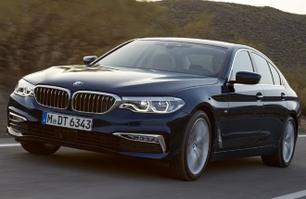
BMW 535d vs BYD Sealion 5

What's the difference?

VS
BMW 535d
BMW 535d

2017 price

BYD Sealion 5
BYD Sealion 5

$33,990 - $37,990

2026 price

Summary

2017 BMW 535d
2026 BYD Sealion 5
Safety Rating

Engine Type
Turbo 6, 3.0L

Inline 4, 1.5L
Fuel Type
Premium Unleaded Petrol

Premium Unleaded/Electric
Fuel Efficiency
7.7L/100km (combined)

4.5L/100km (combined)
Seating
5

5
Dislikes
  • Softer than petrol-powered sibling
  • Boot smaller due to batteries
  • Hard to match fuel claims in real world

  • Steering column needs more adjustment
  • Flat rear seat cushion
  • Engine can be noisy when stretched
2017 BMW 535d Summary

Eco-friendly vehicles are the leather pants of the new-car world; it takes a lot of money to make them look good (but people who own them think they look fantastic regardless). If you don't have a gazillion dollars to drop on a Tesla,  then it's a one-way ticket to Prius town. And really, who wants that? 

But what if it didn't have to be that way? Behold the BMW 530e iPerformance.

Seemingly tired of waiting for the Australian Government to introduce any sort of meaningful subsidy for green cars, BMW has made the choice simple: you can have a petrol-powered 530i for $108,900, or opt for the plug-in hybrid 530e for... $108,900. This is truly revelatory thinking.

There's no specification penalty, either, and the hybrid will power to 100km/h in an identical 6.2 seconds, so you're not even any slower. But you are sipping less fuel, emitting less C02 and basking in the general smugness, and sweet silence, that comes with feeling like you're saving the world.

So what's the catch?

View full pricing & specs
2026 BYD Sealion 5 Summary

Following the money comes pretty naturally to carmakers. It’s what happens when the product planning department smells a new direction on the breeze and then handballs that to the design and engineering folks who turn a perceived market trend into a showroom reality. And when everybody gets it right, you have a new default product. And everybody else has to keep up. Some even have to catch up.

We’ve seen it plenty of times before, too. Think about those early 1980s days when the default small car went from a sedan to the five-door hatchback. Didn’t that catch on? You might also remember more recently when a family car had to be a four-wheel drive. And what about the dual-cab ute revolution of the last 15 years?

The other strident market segment right now is the SUV, of course. And within that, most recently has been the march to electrification, starting with conventional hybrid technology and now progressing to the new must-have, a plug-in hybrid platform.

The fact is, if you’re a Chinese carmaker intending to sell on a world stage, you can’t ignore the plug-in SUV in any of its various sizes and marketing segments. There’s a good basis for this, too. Plug-in hybrids just make good sense. They offer the urban running-cost advantages of any hybrid, the option of zero tailpipe emissions, all-electric running over a normal commuting distance and – crucial for a big country like this one – they’ll keep motoring along for as long as the owner puts petrol in them.

Okay, so they can be heavy with all that tech on board, and there’s no denying that two power sources (petrol and electric) make for a more complex machine, but the advantages outweigh the downsides for many buyers.

The other graph you can plot with great certainty is that new tech will get cheaper as the industry moves forward. Which is exactly where BYD finds itself right now by being able to offer a plug-in hybrid variant of its Sealion 5 mid-sized SUV at a price that will have much of the opposition running scared. But how scared should the others be?

View full pricing & specs

Deep dive comparison

2017 BMW 535d 2026 BYD Sealion 5

Change vehicle