What's the difference?
Anyone unfortunate enough to hear me banging on about electric cars - or perhaps more accurately, electrified cars - will be aware of my undying love for the existence of plug-in hybrid electric vehicles (PHEVs).
I love them because they offer a drama-free step into electrification. You don't need a big box on the wall to make sure you're charged overnight and because there's a petrol engine under the bonnet, as long as you've got fuel in the tank, your range anxiety disappears.
You can get around town in electrified silence and emissions-free smugness while still planning that around-Australia trip you'll never go on. It's absolutely the best of both worlds for those reluctant to take the next step. A genuine win-win, if you like.
Except that very few people buy them. Their existence in the catalogues of a number of car companies feels like a weary, "We should at least do something" from product planners. BMW has been trying with PHEVs for a while, with selected offerings in the 3, 5 and X5 range. Given the 5 Series has had its mid-life facelift, what BMW calls the LCI, it's time for another look.
The Volvo XC60 has long been an understated achiever of the premium mid-size SUV crowd.
It doesn’t shout for attention like some of its rivals, but it’s built a reputation for quiet confidence and family-friendly practicality. For 2026, the XC60 Ultra B5 Dark keeps the same engine but has received a facelift in other areas. Is it enough to keep family buyers who want a mix of practicality and luxury happy?
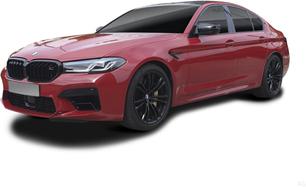
The G30 5 Series is an excellent car and unless you're looking for the serious punch of the V8 M550i, or want to run with the cops in the diesel, the 530e is a great option. No slower than the 530i, well-equipped and that rarest of things, a truly elegant BMW. Nobody buys a BMW with an eye on the budget, so at this level, the $3000 gap is nothing to worry too much about. For EV-sceptics, the range anxious or just for someone who just can't take the full EV plunge now, a PHEV is a great bridge between the two worlds.
And if nothing else, it's not a giant SUV.
The facelifted Volvo XC60 Ultra B5 Dark is the car at school pick-up that doesn’t need to brag. It just gets on with things and it looks good doing it. It offers a strong mix of family-focused features, comfortable and composed road manners and thoughtful practicality throughout the cabin.
The updated media system is crisp and responsive, though it could use a few tweaks to be truly intuitive. Overall, the XC60 mild-hybrid remains a solid choice for families who value understated luxury, comfort and safety over flash. It doesn’t reinvent the wheel, but it does what it does well.
The G30 5 Series dates back to a time when people thought the grille on this was A Bit Much. How wrong they were. The 5, like the 3, used to be part of a clutch of executive sedans that formed the backbone of the company's expansion and success from the 1980s onwards. That means the styling is never too adventurous and even Chris Bangle's E60 5 Series, while striking, was not particularly controversial.
The only problem with the G30 is that it's hard to distinguish from its predecessor, but that's not a real issue when you see how elegant this car is. Easy on the chrome, proportional grille, big wheels, it's a proper smooth operator, visually speaking.
The cabin is holding up nicely and fits with the rest of the BMW range. It's impeccably well built, full of nice materials and even the wood trim is all right. The black Nappa leather is quite lovely but I can't tell you what the standard stuff is like, so you'll have to work that one out for yourself. It's very calm in here, with a good balance of buttons and screens with which to operate the car and while it doesn't have the you-beaut wow of its E Class rival, with its two massive slabs of screen in front of you, it has plenty to offer.
The XC60 has a graceful, poised curbside presence. Its wide stance and smooth body panels give it a confident silhouette, while the redesigned grille with dark accents, integrated intake vents (both faux and real), and those sharp 'Hammer of Thor' headlights tie it all together. It’s not trying to be sexy, but it is undeniably handsome. It's the kind of SUV that turns heads quietly rather than shouting for attention.
Inside, the vibe is pure Scandi chic. There’s a refreshing lack of plasticky surfaces, with everything feeling solid and premium to the touch. The supple Nappa leather seats and expansive panoramic sunroof instantly make the cabin feel airy and refined.
Taking centre stage on the dash is a new 11.2-inch portrait-style media display. The layout is a little too reminiscent of an oversized iPad for my taste, but the crisp graphics and quick touch response are big pluses. Adding a touch of craftsmanship, the crystal Orrefors gear shifter and genuine driftwood inlays across the dash and centre console bring warmth and texture you don’t find in most rivals.
Is this facelift breaking new ground? Not really. But then, it doesn’t need to. Volvo has long been firmly planted in the premium end of the field and this update simply shows it's still cultivating all the right qualities.
The 5 is almost five metres long, so as you might expect, it's big inside. Back-seat passengers have a ton of space to play with and even three across back there is doable for a distance. The outboard seats have some nice shapes to them, too, so they hold rear passengers in if the driver gets a bit ambitious. Loads of legroom, good headroom and very importantly, a good view out through the big side windows. Properly comfortable, then.
Front and rear passengers each score a pair of cupholders for a total of four as well as the same number of bottle holders. The centre-console bin is long and shallow, but does feature a USB-C port. The wireless-charging pad also has a USB-A port for those without the functionality and/or a phone too big to fit. Both the cupholders and charging pad have a sliding cover.
The boot is smaller than the standard car's as there is a lithium-ion battery hidden underneath the now-sloping floor. With 410 litres, it's smaller than a 3 Series' but it doesn't look that small. There is also a spot for the charging cable and its bag behind the left wheel arch.
The XC60 is spacious without being sprawling. The front row is the sweet spot for comfort, with generous leg and headroom plus ergonomic seats that offer excellent under-thigh and side-bolster support. They also bring the luxury of heating, ventilation and even massage functions.
The rear row uses firmer padding, and while the backrest looks fairly flat, it’s deceptively supportive. Adults should be comfortable back there on longer journeys. Access is only slightly compromised by the wheel arch eating into the rear aperture, but otherwise it’s an easy SUV to get in and out of. My eight-year old pointed out that the rear doors are on the heavy side, though, and often need a good slam to latch properly.
Storage is well thought out throughout the cabin. Up front you get a decent glove box, cupholders, drink bottle holders, door bins, a dedicated phone tray that doubles as the wireless charging pad and a shallow centre console with two USB-C ports. One niggle. The cupholders don’t grip cups as snugly as they should.
The rear row has a 60/40 split with a 'ski-port' door and a fold-down armrest. And in the back, there are door bins with bottle holders, a fold-down armrest with cupholders and net map pockets. Rear passengers are also spoiled with dual-zone climate control, four directional air vents and two more USB-C ports.
One of the XC60’s best family-friendly features is the integrated booster seats, which have two height settings and fold neatly back into the base when not in use. They’re a lifesaver if you have kids who feel like they've 'aged out' of car seats but aren’t quite tall enough to go without. Of course, there are also ISOFIX mounts and three top-tether points if you still need to install child seats.
Out back, the boot offers a flat loading space, a powered tailgate with kick function and a healthy 613L of storage with all seats up (up to 1543L when the rear row is folded). You also get a 12-volt socket, a proper temporary spare tyre, and if you’ve got the optional air suspension (as per our test model) you can raise or lower the boot height for easier loading.
Tech usability is a bit of a mixed bag. The new 11.2-inch media display is sharp and responsive, and it comes pre-loaded with Google apps like Maps, Spotify and Assistant. But the Apple CarPlay and Android Auto isn't wireless, which feels like a miss at this price point.
The Bluetooth is patchy, with calls and music sometimes not syncing properly. A wired connection works better, especially for my iPhone 15 Pro Max, but I'm not a fan of leaving my phone on charge all the time. If you’re already familiar with Volvo or Polestar’s system, you’ll feel at home, but first-timers may need a little time to adjust.
The 530e sits almost smack-bang in the middle of a still reasonably extensive 5 Series range. While you can have an "entry" level 520i for $99,900 (before on-roads), the 530e lands at $122,900 (before on roads), which itself is $3000 more than the 530i, and the same amount less than the NSW cops' favourite, the 530d.
Given the price, you'd expect some gear and boy howdy does BMW deliver. You get 19-inch alloys, a 16-speaker stereo, multi-zone climate control, ambient LED lighting, reversing camera to go with the front and side cameras, keyless entry and start, electronic dampers, active cruise control, electric and heated front seats, sat nav, auto LED headlights, heat-insulated glass, head-up display, a mostly real leather interior, auto parking, auto wipers, digital dashboard, wireless charging and run-flat tyres.
The huge touchscreen on the dash runs BMW OS7, which accepts inputs via touch, the console-mounted rotary dial and (optional) various hand wavey-movements. The speakers have harmon/kardon badges on them and there is DAB digital radio and wireless connectivity for both Apple CarPlay and Android Auto.
In something of a classic BMW own-goal, the wireless charge pad that is designed to keep your phone snug is too snug for bigger phones like my over-compensatory iPhone. Even with the cover off, it just won't fit. Thankfully there's also a USB-C port in the centre-console bin.
The 520e I had for the week also had the $5900 Enhance package (20-inch M alloy wheels, glass sunroof and the excellent BMW Laserlight headlights), $2300 Nappa Black leather package, comfort front seats ($500) and a built-in dash cam ($390) called BMW Drive Recorder. This brought the price up to $131,990 before on-roads. Just so you know, the Laserlights are $2400 on their own.
There are two mild-hybrid variants in the XC60 line-up, and the one we’re driving here is the flagship Ultra B5 Dark. Priced at $81,990, before on-roads, it costs about $7000 more than the entry-level Plus B5 Bright, but that premium buys you a longer list of included features that makes the Ultra Dark feel like the sweet spot of the range. Especially considering Volvo also offers two plug-in hybrid XC60s, but those command up to $20K more!
In terms of market rivals, the XC60 sits right in the middle. The Audi Q5 TFSI starts at $81,000, while the Lexus NX 350h Sports Luxury AWD asks $87,900, both before on-road costs.
Standard equipment is generous. The Ultra Dark gets a panoramic sunroof and Nappa leather upholstery, with the electric front seats offering heating and ventilation functions plus a heated steering wheel for winter comfort. There's a 360-degree view camera system with surrounding parking sensors and a park-assist feature.
Tech upgrades include a new 11.2-inch media display with in-built navigation, Google apps, and wired Apple CarPlay/Android Auto, backed up by four USB-C ports, a 12-volt socket and a wireless charging pad. There's also a Volvo phone app, which allows users to pre-condition the climate prior to entry, have a digital key and program the spare key for any kids who might want to borrow the car!
Families will appreciate the thoughtful touches like a powered tailgate with kick function, built-in child booster seats in the rear row, a temporary spare tyre (a welcome feature), four-zone climate control and lots of storage throughout the cabin. Keyless entry sensors on every door add another layer of convenience.
Our test car was also fitted with just over $5000 worth of options, including the Bowers & Wilkins premium sound system, active air suspension, tinted rear windows, and even front seat massage functions. When you consider that many rivals charge extra for equipment that comes standard here, the XC60 Ultra B5 Dark makes a strong case for itself on value.
The 530e comes with a 2.0-litre four-cylinder turbocharged engine developing 135kW and 290Nm, with the eight-speed ZF automatic sending power to the rear wheels. The electric motor spins up 83kW and 230Nm, also driving the rear wheels. When everything is working together, the combined output is 185kW and 420Nm, which delivers a quick 6.1-second dash to 100km/h, which isn't mucking about.
You can choose four drive modes. EV will (mostly) drain the battery, Hybrid will keep the two working together and Sport will deliver the most power. And drain the battery, albeit more slowly. Adaptive works the averages and decides what you need or want by how frisky you're being with your driving style.
The Ultra B5 Dark tested here is all-wheel drive and has a 2.0-litre, four-cylinder, turbo-petrol mild-hybrid engine. It produces up to 183kW of power and 350Nm of torque.
The 'mild hybrid' tag comes from a 48-volt system paired with an integrated starter-generator. It’s not a full hybrid, so you won’t be gliding around silently on electric power alone, but it helps smooth out stop-start driving, boost efficiency and add a little extra shove when you put your foot down.
The result is an engine that feels lively in the city and confident out on the open road, with enough in reserve to make overtaking stress-free.
The 12kWh battery takes up the same amount of space as the old one, but has more capacity, extending its EV range. The claimed EV range is 57km on the WLTP standard.
The iDrive system has a bunch of settings that you can play with to squeeze more out of the silent-running mode and there's also a battery-charging mode button to force the ICE to charge the battery while you're on the move. Also useful is a timing system, so you can schedule when the car charges to take advantage of the cheap power available in the dead of night.
Recharging is easy but sadly a bit slow off a domestic power point. Having said that, if you plug it in after a day's commuting, you'll be topped up to 100 percent overnight. It's a long charge, but it's not as if you'll be stranded if you forget. You can get a wallbox, but there's not much point.
The fuel tank is just 46 litres. The WLTP combined cycle figure is a laughable 2.3L/100km. On that official figure, you'll cover an unlikely 2000km. My week with the car, which included 70km on EV-only power with one charge off my solar panels, got me an indicated 6.1L/100km in a mostly suburban week of driving. So based off that, you'll get about 530km from one full charge and a full tank, which is a bit confusing. Keep charging and, if you're an average Australian who travels little more than 30km per day, you won't use much petrol at all.
Having said all of that, out on the freeway, you'll probably slide towards that 2.3L/100km and make it from Sydney and Melbourne on a single tank. Just.
Volvo claims combined cycle (urban/extra-urban) fuel use of 7.6L/100km for the XC60 Ultra B5 Dark, which isn’t bad for a turbo-petrol but reminds you that this is only a mild hybrid. With a 71-litre fuel tank, you’re looking at a theoretical driving range of up to 934km which is great for a family SUV likely to see its fair share of school runs and road trips.
In my real-world testing, which included plenty of urban driving with one longer trip in the mix, I averaged 8.6L/100km. That’s a little higher than the claim, but still a respectable result overall.
The reason I like PHEVs as a tool for pushing people towards electrification is about more than the fact that it will likely cure buyers of range anxiety once they're realistic about their actual car usage. I mean it does do that, but it's more about the fact that PHEVs drive like a normal car, with few exceptions.
In EV mode, the acceleration is swift but not that brutal, YouTuber-friendly thrust EV fanboys use as proof that legacy car makers are dead. It's all very serene and very, very quiet as you move from traffic light to traffic light in near silence, while more than keeping up with traffic. The blue of the dashboard indicates your progress and the iDrive screen can keep you updated with power consumption.
The switch between EV and ICE propulsion is very smooth and it's almost like BMW has been doing this forever. You'll also discover an appreciable lift in performance, more in line with the M Sport badges. BMW's engineers have done nothing to make the 2.0-litre petrol sound better than a whirring mixmaster, though.
Slightly less M Sport-ey is the suspension. While there's absolutely nothing wrong with it, the adaptive dampers never dial things up too much for the average motorist. Granted the 5 will leave just about anything this size for dead as far as driver involvement goes, but it certainly keeps the dial closer to comfort than, say, the M550i does. Once again, it's a serene thing to get around in and passengers will love the quietness and easy flow of conversation. Or the lovely sound from the harmon kardon speakers.
You don't have to try too hard to cover a good chunk of the claimed 57km of EV range. Realistically you'll get close to 45km, even after my colleague Matt Campbell drained 20km of charge in a six-kilometre trip that he maintains was driven gently (snigger) and normally (guffaw). Without trying too hard, I managed 41km in pure EV after his attempts to ruin my numbers (not really, but I do enjoy the amusing false narrative).
There’s plenty of power on tap, with enough left in reserve when you really need to push it. Around town, the XC60 keeps up with traffic effortlessly, and out on the highway it never feels strained. The transmission is fairly punctual with its shifts, though you do need to drive it a little more assertively to avoid any lag when accelerating from a stop.
Visibility is excellent thanks to the big, wide windows and higher driving position. It’s also refreshing to have a wide rear window behind the C-pillar as it's something not all rivals manage.
On the road, the XC60 feels composed and comfortable. The cabin stays quiet even at highway speeds and the suspension soaks up the worst bumps without ever feeling floaty or disconnected. Handling is equally predictable, with steering and dynamics that feel natural and reassuring. Take a sharp corner at speed and you will notice a slight loss of composure but it rights itself quickly.
Day to day it’s also very car park friendly. Parking sensors and the 360-degree camera view make manoeuvring simple, though the video feed looks a little blurry at the edges. A more seamless stitch between camera angles would improve the presentation, but functionally it gets the job done.
The big price tag buys you a comprehensive safety package. It has seven airbags, ABS, stability and traction controls, blind-spot monitoring, active lane-departure warning, forward AEB, reversing AEB, forward collision warning, front cross traffic alert, reverse cross traffic alert, lane-keep assist, pedestrian alert in EV mode and tyre-pressure sensors.
The forward AEB works at high and low speeds. The pedestrian detection works at urban speeds and there does not appear to be cyclist detection.
There are also two ISOFIX and three top-tether anchors.
The 5 Series was last tested in 2017 and was awarded five ANCAP stars.
While the 2026 Volvo XC60 hasn’t undergone ANCAP testing yet, it continues Volvo’s long-standing reputation for safety with a comprehensive suite of features. Standard equipment includes autonomous emergency braking, blind-spot monitoring, lane keeping aid, lane departure warning, rear cross-traffic alert, front and rear collision warning, traffic sign recognition, driver attention warning and seven airbags - basically covering all of the essentials.
For families, there are integrated booster seats in the rear row, ISOFIX child seat mounts, and three top-tether anchor points. A stand-out feature is the programmable spare key, which is colour-coded in bright orange and allows you to set speed and speaker-volume limits. Which is ideal for nervous parents who share the car with teens or other young drivers.
Other practical safety touches include a protective first-aid kit and warning triangle, adaptive cruise control with stop/go function, parking assist, surrounding parking sensors and a 360-degree camera system.
BMW really needs to up its game, as do Audi and Porsche (among others). Munich is still sticking with a three-year/unlimited-kilometre warranty while German rival Mercedes is up at five years and Japanese competitor Lexus four. You do get three years roadside assist thrown in.
All 5 Series (excluding M5) are eligible for service plans. For $1950, you're covered for five years/80,000km of servicing. As with most BMWs, servicing is based on how you drive but really, if we're being honest, the car will get you into the dealer once every 12 months or 15,000km. Roughly.
The XC60 is covered by a standard five-year/unlimited-km warranty, which is okay for its class, especially at the premium end. You can pre-purchase either a three- or five-year 'Volvo Genuine Service Plan'. The five-year plan will set you back $3870, which is steeper than many rivals, though Volvo sweetens the deal with five years' complimentary roadside assistance. Services are spaced at every 12 months or 15,000 km, whichever comes first.
One thing for regional owners to keep in mind, while Volvo has a decent retail footprint, there are only 34 Volvo service centres in Australia. Depending on where you live, that can mean a long drive. In my case, the nearest Volvo service centre is almost two hours away. That adds travel time and inconvenience for regular maintenance or unscheduled work.