What's the difference?
Eco-friendly vehicles are the leather pants of the new-car world; it takes a lot of money to make them look good (but people who own them think they look fantastic regardless). If you don't have a gazillion dollars to drop on a Tesla, then it's a one-way ticket to Prius town. And really, who wants that?
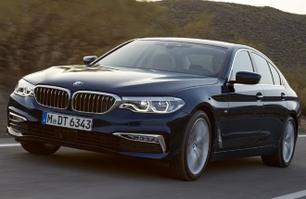
But what if it didn't have to be that way? Behold the BMW 530e iPerformance.
Seemingly tired of waiting for the Australian Government to introduce any sort of meaningful subsidy for green cars, BMW has made the choice simple: you can have a petrol-powered 530i for $108,900, or opt for the plug-in hybrid 530e for... $108,900. This is truly revelatory thinking.
There's no specification penalty, either, and the hybrid will power to 100km/h in an identical 6.2 seconds, so you're not even any slower. But you are sipping less fuel, emitting less C02 and basking in the general smugness, and sweet silence, that comes with feeling like you're saving the world.
So what's the catch?
Start occupying the top step of the World Rally Championship podium and the brand benefits are huge. Just ask Audi, Ford, Mitsubishi, Subaru, Toyota, Volkswagen and the many others which have done exactly that to great effect over the years.
And Hyundai’s most recent foray into the WRC has focused on the compact i20, and here we have that rally weapon’s civilian offspring, the much-anticipated i20 N.
It’s a lightweight, high-tech, city-sized, hot hatch designed to steer you away from Ford’s Fiesta ST or VW’s Polo GTI, and add even more lustre to Hyundai’s N performance badge.
Not all superheroes wear capes, and we're proud to report the 530e does its bit for green motoring without feeling the need to shout about it. And with no price or specification penalty, it's easier being green than ever before, and the pricing of this BMW really puts the cat amongst the canaries.
The i20 N hatch is so much fun, and not in a special occasion kind of way. It’s an affordable, compact performance car that’ll put a smile on your face no matter where or when you drive it. The Fiesta ST and Polo GTI have a worthy new playmate. I love it!
Crucially, there's nothing weird about the way the 530e looks. While some green cars look like they've been designed by one of the kids from 3rd Rock from the Sun, the 530e looks much the same as the rest of the range, save a few tiny but telltale giveaways - like the e-drive badging outside, and what looks like a bonus fuel flap tucked in behind a front wheel that houses the whole plug-in bit.
And we really, really like it. It's elegant and statesman-like from every angle, and looked especially important in the deep-blue colour of our test vehicle. It's not over-designed, with body creases used sparingly, and the occasional glint of polished silver that rings the windows and the grille adds a final sense of shininess to an understated design.
Inside, there's more going on than you might normally find in a BMW. The hugely complicated digital display screen now includes everything from battery charge, power usage to the usual assortment of speedometers and petrol readouts.
It doesn't feel overdone or crazily festooned, but there's more at play here than in your usual BMW.
The dash is busy, too, with a wide screen emerging from a centre stack that also houses a CD player and a digital aircon setup, which in turn sits above a complex centre console from which you can alter driving settings, control the multimedia or cycle through electric modes. It doesn't feel overdone or crazily festooned, but there's more at play here than in your usual BMW.
Elsewhere inside, the seats are beautifully designed, with a quilted leather highlight through the middle, while the gloss-black strip that lines the dash hides a dual strip of ambient interior lights that also runs across all four doors.
Hyundai’s current WRC challenger may be a coupe but this angry little five-door hatch absolutely looks the part.
We’re assured the N is the only current-generation i20 we’ll see in the Aussie market, and it runs with a relatively low (101mm) ground clearance, a grille pattern inspired by a chequered flag, black mirror shells, and menacing, angular LED headlights.
The ‘Satin Grey’ 18-inch alloys are unique to this car, as are the side skirts, raised rear spoiler, darkened LED tail-lights, a ‘sort-of’ diffuser under the rear bumper and a single fat exhaust exiting on the right-hand side.
There are three standard paint options - ‘Polar White’, ‘Sleek Silver’, and N’s signature shade of ‘Performance Blue’ (as per our test car) as well as two premium shades - ‘Dragon Red’, and ‘Phantom Black’ (+$495). A contrasting Phantom Black roof adds $1000.
Inside, the N-branded sports seats, trimmed in black cloth, featuring integrated headrests and blue contrast stitching, are unique to the i20 N. There’s a leather-trimmed sports steering wheel, handbrake lever and gear knob, as well as metal finishers on the pedals.
The 10.25-inch digital instrument cluster and same-sized multimedia screen look slick, and ambient lighting heightens the hi-tech mood.
As the world's motoring tastes shrink faster than a lap-banded Clive Palmer, it's easy to forget the joys of the full-size sedan, but the space for passengers and luggage in the 5 Series will have you questioning your downsizing ways.
Upfront, there's plenty of room between front-seat riders, who will also share two smallish cup holders, along with room in each front door for bottles. There's also a dedicated wireless charge pad (which, because of its tight design, is crazy difficult to actually remove your phone from), but you'll also get two USB points and a power outlet that's hidden in the sizeable centre storage bin as standard fit.
Backseat riders get heaps of space, both in width and in leg room behind the front seats. And there's twin air-con temp controls and twin power outlets, too. But middle-seat passengers will be forced to sit with their legs on either side of the raised tunnel, which will definitely impact on comfort.
The boot's still sizeable, despite shrinking slightly to house the battery/fuel tank setup
Best to ditch the fifth passenger, then, and deploy the pull-down seat divider, which also houses two cup holders. Finally, there are three ISOFIX attachment points, one for each seat in the back.
The boot's still sizeable, despite shrinking slightly to house the battery/fuel tank setup (the tank has been moved further back to accomodate the batteries), and can be adjusted to be a flat load area if you'd like, offering up to 410 litres with the rear seats in place.
Although it’s just 4.1m long, the i20N is impressively space efficient with decent room up front and a surprising amount of head and legroom in the back.
Sitting behind the driver's seat, set for my 183cm position, I had plenty of head and legroom, although, understandably, three people across the back will need to be kids or understanding adults, on a short journey.
And there are plenty of storage and power options, including the wireless device charge pad in front of the gear lever, which doubles as an oddments tray when not in use, two cupholders in the front centre console, door bins with room for large bottles, a modest glove box and a lidded cubby/armrest between the front seats.
No armrest or air vents in the back, but there are map pockets on the front seat backs, and again, bins in the doors with room for bottles
There is a media USB-A socket and another for charging, as well as a 12V outlet in the front, and another USB-A power socket in the back. Hyundai suggests the latter could be handy for powering track day cameras. Great idea!
Boot space is impressive for such a compact hatch. With the rear seats upright there’s 310 litres (VDA) available. Fold the 60/40 split-folding rear backrest and no less than 1123 litres opens up.
A dual-height floor can be flat for long stuff, or deep for tall stuff, there are bag hooks provided, four tie down anchors, and a luggage net included. The spare is a space saver.
The 530e commands a 530i-equalling $108,900 price tag, which is genuinely impressive when you consider all the extra bits and pieces that go into make a plug-in hybrid. That money buys you a well-equipped car, and only those allergic to money need reach for the options list.
As standard, you'll find leather-wrapped - and heated in the front - sports seats, 19-inch alloy wheels and a 10.25-inch touchscreen that pairs with a really very good 16-speaker Haman Kardon stereo. Wireless Apple CarPlay is available, but it'll cost you an extra $500. To be honest, though, we didn't miss it.
You'll also find adaptive LED headlights, a huge head-up display (so big, in fact, that it impedes vision when climbing steep hills), dynamic dampers, an auto opening/closing boot and a self-parking system, along with BMW's suite of self-driving tech - but we'll come back to that under the Safety sub-heading.
At $32,490, before on-road costs, the i20 N is to all intents and purposes the same price as Ford’s Fiesta ST ($32,290), and the VW Polo GTI ($32,890).
It’s offered in one spec only, and aside from the standard safety and performance tech, this new hot Hunday boasts a solid standard features list, including: climate control, LED headlights, tail-lights, daytime running lights and fog lights, 18-inch alloys, Bose audio with Apple CarPlay/Android Auto and digital radio, cruise control, nav (with live traffic updates), rear privacy glass, keyless entry and start (as well as remote start), sports front seats, the leather-trimmed sports steering wheel, handbrake lever and gear knob, alloy-faced pedals, auto rain-sensing wipers, power-folding exterior mirrors, plus 15W Qi wireless smartphone charging.
There’s more, like the 10.25-inch ‘N Supervision’ digital instrument cluster, plus a same-size multimedia touchscreen in the centre of the dash, a track maps feature (Sydney Motorsport Park is already in there), as well as an acceleration timer, g-force meter, plus power, engine temperature, turbo boost, brake pressure and throttle gauges.
You get the idea, and it goes toe-to-toe with the Fiesta ST and Polo GTI.
Drift around in pure EV mode and you'll be relying on the 530e's 83kW and 250Nm electric motor, which will provide what BMW refers to as "between 28 and 32 real-world kilometres".
Run out of range, or simply use too much throttle, and the 2.0-litre petrol engine comes into play, adding 135kW and 320Nm to the mix. All up, that's 185kW and 420Nm - respectable numbers by any measure, and enough to match the petrol-powered 530i's zero to 100km/h sprint of 6.2 seconds.
That power is fed through an eight-speed automatic transmission before being sent exclusively to the rear wheels, where it belongs.
The i20 N is powered by a turbo intercooled 1.6 litre four-cylinder petrol engine, driving the front wheels via a six-speed manual gearbox and Torsen-type mechanical limited slip differential.
The all-alloy (G4FP) engine features high-pressure direct-injection and an overboost function, producing 150kW from 5500-6000rpm, and 275Nm from 1750-4500rpm (rising to 304Nm on overboost at max throttle from 2000-4000rpm).
And the engine’s mechanical ‘Continuously Variable Valve Duration’ set-up is something of a breakthrough. In fact, Hyundai claims it as a world’s first for a production engine.
Not timing, not lift, but variable duration of valve opening (managed independently of timing and lift), to strike the optimal balance between power and economy across the rev range.
Like a Facebook relationship status, it's complicated. The 530e will sip a claimed combined 2.3 litres per hundred kilometres on the claimed/combined cycle, which is amazing for a car this size. Better still, it seems genuinely achievable - at the vehicle's launch, our own Richard Berry recorded a stunning 2.0 litres per hundred kilometres on a short test route.
But that's with a full load of battery charge on board. For our week with the 530e we were unable to actually plug it in (living in Sydney, I can't afford a garage), so once the initial battery charge had been used we were back to mostly petrol power. Unlike some other plug-in hybrids we've driven, we found it very difficult to recharge the battery to any meaningful level using regenerative braking, so once we were flat we stayed flat. If we had plugged it in, it would have been a two-hour recharge using a specialised wall unit, or about four hours using a normal plug.
As a result, though, our fuel use was closer to 7.0 litres per hundred kilometres after some considerable real-world testing.
Hyundai’s official fuel economy figure for the i20 N, on the ADR 81/02 - urban, extra-urban cycle, is 6.9L/100km, the 1.6-litre four emitting 157g/km of C02 in the process.
Stop/start is standard, and we saw a dash-indicated average of 7.1L/100km over several hundred km of city, B-road and freeway running on the occasionally ‘spirited’ launch drive.
You’ll need 40 litres of ‘standard’ 91 RON unleaded to brim the tank, which translates to a range of 580km using the official figure and 563 kays using our launch test drive number.
There's so much to like about the way the 530e sets about saving the world, and that's mostly because it doesn't shout about it, either to the driver or the outside world.
It's very much an underpants inside its pants superhero, which makes us like it even more. Set off in EV mode, and the 530e will drift silently away from the curb, burning battery power over fuel for as many as 30(ish) kilometres. But equally important, the shift from green to gas is largely imperceptible, with the petrol engine joining in willingly when you ask it to - usual via a prod of your right foot.
It is so effortlessly smooth that you need to really pay attention to notice the eight-speed 'box changing gears at city speeds, and it's commendably quiet, whichever drive mode you're in.
Downsides? Well, it doesn't feel quite as sharp as it's conventional-engined siblings. The batteries add around 230kg in weight, which never helps, and it all feels a little softer and a little less dynamic, even with Sport mode engaged. BMW assures us the adaptive suspension setup and tune is identical, but the 530e feels noticeably softer when you tackle a twisting back road. And that encourages you to use your right foot a little more, which in turn negates the whole electric thing in the first place.
One of the great joys of BMWs has always been their ability to transform from cosseting comfort to rear-drive rocket when you want them to, and you can't help but notice the 530e isn't quite up to that challenge. But if your intentions are mostly city- and freeway-based, then this plug-in BMW is almost indiscernible from its petrol-powered sibling.
Unusually for a manual car, the i20 N features a launch control system (with an adjustable rpm setting), which we found fiddly to get working, but with or without it, Hyundai claims a snappy 0-100km/h time of 6.7sec.
And it’s such a pleasure to steer a car with a slick-shifting manual gearbox. The six-speed unit features a rev-matching function accessed via the press of a racy red button on the steering wheel.
Buf for those who prefer an old-school, double-shuffle, heal-and-toe tap dance across the pedals, the relationship between the brake and accelerator is perfect.
And if you’re keen on Walter Rohrl-style left-foot braking, to help steady the car or steer it in fast cornering, the ESC is switchable through to Sport mode or completely off, allowing fuss-free simultaneous brake and throttle application.
There’s even a shift-timing indicator near the top of the instrument cluster, with colour bars closing in on each other as the tacho needle pushes towards the rev limiter. Fun.
Engine and exhaust noise is a combination of a raspy induction note and adjustable crackle and pop out the back, courtesy of a mechanical flap in the exhaust system, adjustable through three settings in N mode.
Traditionalists may not be thrilled by the addition of in-cabin synthetic enhancement of all of the above, but the net effect is thoroughly enjoyable.
It’s worth remembering in this context N stands for Namyang, Hyundai’s sprawling proving ground south of Seoul where the car was developed, and the Nürburgring where this go-fast i20 was fine-tuned.
The body has been specifically reinforced at 12 key points, along with additional welds, and “bolt-in underbody structures” to make the i20 N stiffer and more responsive.
The strut front, coupled (dual) torsion beam rear suspension has also been set up with increased (neg) camber and a revised anti-roll bar at the front, as well as specific springs, shocks and bushings.
A compact, mechanical LSD is added to the mix, and grippy 215/40 x 18 Pirelli P-Zero rubber was produced specifically for the car and is stamped ‘HN’ for Hyundai N. Impressive.
The end result is outstanding. Low-speed ride is firm, with suburban bumps and lumps making their presence felt, but that’s what you’re signing on for in a hot hatch at this price point.
This car feels balanced and well buttoned down. Power delivery is agreeably linear and at a fraction over 1.2 tonnes the i20 N is light, responsive and nimble. Mid-range urge is strong.
Steering feel is good, with assistance from a column-mounted motor taking nothing away from an intimate connection with the front tyres.
The sports front seats proved grippy and comfortable over long stints behind the wheel, and playing with the multiple N drive modes tweaking the engine, ESC, exhaust, and steering just adds to the involvement. There are twin N switches on the wheel for quick access to custom set-ups.
And that Torsen LSD is brilliant. I tried my best to provoke a spinning inside front wheel on the exit of tight corners, but the i20 N just puts its power down without so much as a chirp, as it rockets towards the next bend.
The brakes are 320mm vented at the front and 262mm solid at the rear. Calipers are single piston, but they’ve been beefed up and fitted with high-friction pads. The master cylinder is bigger than the standard i20 and the front rotors are cooled by lower control arm mounted air guides blowing through vented knuckles.
The launch i20 N fleet of around half a dozen cars copped an hours long hot lap pounding at Wakefield Park Raceway, near Goulburn NSW without drama. They’re well up to the task.
One niggle is a large turning circle. The data sheet says 10.5m but it feels like the car is carving a wide arc in U-turns or three-point turns.
A 2580mm wheelbase between the bumpers of a 4075mm car is substantial, and the steering’s relatively low gearing (2.2 turns lock-to-lock) no doubt has a lot to do with it. The price you pay for quick turn-in.
You'll want for little here, with front, front-side and full curtain airbags joining parking sensors, a surround-view camera and a self-parking system.
You can also expect active cruise control, lane control assist with lane keep assist (so it will stay between the lane markings for you), AEB and cross-traffic warning. And all of that means that, technically, the 530e can drive for you. That is, of course, if you don't mind driving like a dick - in full-autonomous mode it will swerve from lane marking to lane marking like it's playing bumper bowling.
Although it hasn’t been assessed by ANCAP or Euro NCAP, the headline on active safety tech in the i20N is the inclusion of ‘Forward Collision-Avoidance Assist’, which is Hyundai-speak for AEB (city and urban speed with pedestrian detection).
And from there it’s assist city, with ‘Lane Keeping Assist’, ‘Lane Following Assist’, ‘High Beam Assist’, and ‘Intelligent Speed Limit Assist.’
Followed by all the warnings: ‘Blind Spot Collision Warning’, ‘Rear Cross-Traffic Collision Warning’, ‘Driver Attention Warning’, and ‘Parking Distance Warning’ (front and rear).
The i20 N also features a tyre pressure monitoring system and a reversing camera. But if, despite all that, a crash is unavoidable there are six airbags on-board - driver and front passenger front and side (thorax), and side curtain - as well as three top tether points and two ISOFIX locations across the back row for child seats.
Like the rest of the 5 Series range, the 530e falls under BMW's three-year, unlimited-kilometre warranty. There are no set service intervals, either, with BMW using what it calls 'condition-based' servicing. In other words, the car will tell you when it requires a trip to the service centre.
The batteries are covered by a separate warranty covering six years or 100,000km.
Hyundai covers the i20 N with a five year/unlimited km warranty, and the ‘iCare’ program includes a ‘Lifetime Service Plan’, as well as 12 months 24/7 roadside assist and an annual sat nav map update (the latter two renewed free-of-charge each year, up to 10 years, if the car is serviced at an authorised Hyundai dealer).
Maintenance is scheduled every 12-months/10,000km (whichever comes first) and there’s a pre-paid option which means you can lock in prices and/or fold service costs into your finance package.
Owners also have access to the ‘myHyundai’ online portal providing details on the car’s operation and features as well special offers and customer support.
Service for the i20 N will set you back $309 for each of the first five years, which is competitive for a hot hatch in this part of the market.