What's the difference?
A hybrid BMW 3 Series makes sense now that everything is going electric. And the BMW 330e M Sport is the plug-in hybrid version of the 330i petrol variant. What's not to like, then?
Well, that's what we're here for because this review of the BMW 330e M Sport will reveal everything we've discovered about the car and will help you decide if it really does make sense to make it your next car.
We've covered everything from practicality to on-road performance, features and prices. And yes, we've run a fuel test to see just how efficient this plug-in hybrid is to live with in the real world.
The all-new Citroen C5 X is different. It takes just one look at the car to realise that.
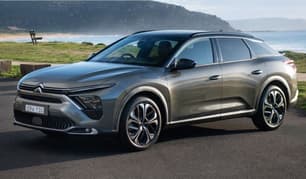
It’s partly an SUV, has more than a hint of wagon to it, and it’s nothing like the old Citroen C5s of years gone by. That’s no bad thing - because this is the sort of Citroen that people who have never even heard of the brand will likely pay attention to
The brand has shaken off its ‘quirky and French’ vibes for a more ‘modern European’ look, and let me tell you - this is a very interesting car. Read on to find out all the stuff you want to know, plus the things you need to know.
The 330e M Sport is an excellent car, but it could be a much better hybrid.
In Australia, where driving distances can be vast, a car that's as comfortable and easy to live with as this one is welcome. But for the electric range to dissipate so quickly, and not recoup again at a fast enough rate without plugging into a charger, is disappointing.
There are other plug-in hybrids, even among the more affordable mainstream brands, which can return charge to the battery incredibly quickly and effectively on the go.
If you are looking to make the step into a hybrid, then perhaps consider a fully electric car. There isn't a battery electric 3 Series on the market in Australia (yet), but BMW does sell the iX1 small SUV for less money than a 330e or the iX3 for a tad more.
Both are pure electric SUVs and have a range of between 400-500km. You'll never need petrol again, which makes a hybrid seem outdated.
This is a new take on the Citroen station wagon, and it’s an impressive one at that. It may not tick all the boxes, but it is a comfortable and practical car, with stunning design, decent equipment and a pretty agreeable price tag.
Now, just get that plug-in hybrid version in at a reasonable price please, Citroen.
Note: CarsGuide attended this event as a guest of the manufacturer, with meals provided.
Once upon a time sedans were all we drove, well mainly. Then SUVs became the style of car most people wanted. In fact, three out of four new cars sold in Australia today are SUVs.
So, I commend you on your choice of not just doing what everybody else does, and you'll be rewarded with better driving dynamics, and ownership of an iconic BMW - the four door, 3 Series.
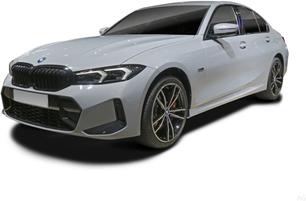
And even though this is a plug-in hybrid version of the 3 Series it's identical in styling to the petrol variants. Only the light blue border around the BMW roundel is the indication that it's an electric vehicle. That and the charging flap near the left front wheel.
The M Sport pack adds some very sexy features such as the M Sport aerodynamic body kit, the door sills and M Sport seats, but the M Sport Pro Pack our car came with adds a black gloss grille, boot lid spoiler and the snazzy seat belts.
The cabin's double screens are impressive but I miss analogue gauges and found the digital instrument cluster overly busy and led more by cool design than functionality.
Citroen reckons the C5 X combines SUV, wagon and sedan design cues to make it a true crossover model. I reckon they’ve got a point, and while it’s certainly not as butch as some other crossover wagons out there, it’s not bashful, either.
I’m a massive fan of the assertive front end lighting design, the bold body lines that punctuate the bonnet and swoop backwards down the sides of the car, and the swooping roofline that dips away, almost like the iconic Citroen DS.
It’s quite a large car, too - at 4805mm long on a 2785mm wheelbase, it has a commanding presence, and it’s 1865mm wide (not including the side mirrors) and a rather sleek 1490mm tall.
Of course it has some body cladding and black plastics to give that ‘rough and tumble’ appearance - and the rear features a couple of spoilers on the boot that help it cut through the air cleanly, and they look interesting as well.
Inside, there’s an almost-square steering wheel, which is interesting, and a pair of screens - a 12.0-inch touchscreen for your multimedia duties, and a 7.0-inch driver info screen. It looks and feels upmarket and pretty conventional in the cabin, so let’s see what the practicality is like.
People will tell you SUVs are more practical than sedans... and they're right, but not in as many ways as they probably think.
The cabins of sedans and SUVs of the same size are close in terms of space, but the 330e comes with excellent storage - better than many SUVs I've tested, featuring enormous door pockets, and a deep centre console storage bin.
There are four cupholders, too. Two in the fold down armrest in the back and another two up front.
There's also wireless charging up front, plus USB ports for the back passengers. The second row also has its own climate control and directional air vents.
Legroom is excellent in the back and I can sit behind my driving position with plenty of room to spare. Headroom is also excellent thanks to the tall roofline of the 3 Series.
Where a sedan isn't as practical as an SUV is its ride height, which makes getting in and out of the latter easier (although the 330e's doors open very wide) and its boot opening.
SUVs have hatch-like openings and that offers a wider and taller aperture for carrying cargo.
The 330's boot was still big enough to fit our two largest CarsGuide suitcases (see the video), but the location of the battery means cargo capacity has been reduced from 480 litres in a petrol 330i to 375 litres in this 330e.
The Citroen C5 X is almost as big as a Subaru Outback, and similar in size to a Kia Stinger. So it ought to have a bit of family-friendliness packed in.
Starting at the back, there’s a 545-litre boot capacity, with the kick-action, electronically controlled tailgate that you can also use the keyfob to open. It is a low, wide, quite squared-off aperture, meaning loading bulky items in should be a breeze. Just note that the roofline does taper down towards the rear, so bigger things will need to be pushed towards the seat backrests.
Or, if you’re really acting like a delivery van, you can drop the rear seats down to allow 1640 litres of cargo capacity. There are boot-mounted releases to drop the seats down, and there’s a floor mat in the boot, under which is a space saver spare wheel.
Back seat occupants are decently catered for. I’m 182cm/6’0” tall and I managed to sit behind my own driving position with plenty of leg and foot room - however, the sunroof does create a bit of a hump in the ceiling that you might bump your head on, and those with big feet or small children might want to take note that the sills in the door openings are very tall. A child could easily trip over them if they were clambering in the back in a rush.
Children will be covered with a pair of ISOFIX child-seat anchor points in the window seats and three top-tether restraints, too. There are map pockets, door pockets with bottle holders, a pair of USB-C charge points and directional air vents, too.
However, it wouldn’t be a French car without some kind of quirky cup holder situation, and the back seat has none - there’s no flip-down armrest to speak of. But the seat is exceptionally cushy.
Front seat impressions are good - and cup holders are present. They’re big ones, too - large enough for a big cuppa or a bottle of water, even, And there are door pockets with bottle holsters as well.
There’s an opening centre armrest box with a USB-C charge point, and in front of the interestingly designed recessed gear selector and parking brake, there’s another storage spot with a wireless phone charger, too. Nice.
Seat comfort up front is very good, with lots of adjustability (eight-way electric for the driver, six-way electric for front passenger) and heated front seats as well.
Scoring a big tick from me is the fact there are physical dials and buttons for the air conditioning and ventilation controls. But they’re in that glossy black finish, which shows fingerprints so much that it makes you feel self-conscious of being a walking germ farm.
The big touchscreen multimedia system has a few buttons and knobs, too - though the menus on screen do take some getting used to. It is highly customisable, so if you bought one you’d set it and forget it, but on first impression I struggled to get to grips with some of the nuances of the menus.
It does, however, have wireless or wired Apple CarPlay and Android Auto (with the media-feed USB-C port under the controls) and it goes full screen, too, while leaving enough space for other crucial elements. The graphics are nice and high-definition, and the 360-degree camera display puts the “surround” view units in Peugeot models to shame.
There’s also a configurable driver info screen, and a crisp and lovely head-up display as well.
The BMW 330e M Sport lists for $97,400, which is $4000 more than its 330i petrol twin.
The M Sport part of the name is there because the 330e comes standard with the M Sport pack. And that gives you a tough body kit, M Sport suspension, M Sport seats and aluminium trim, as well as M Sport door sills.
The car we tested and the one you can see in the video and images also comes with the 'M Sport Pro Package'. It costs $2800 and adds a boot-lid spoiler, glossy black grille and tail pipes, and M Sport seat belts, among other goodness.
This car also had the optional 'Visibility Package' fitted. It costs $4800 and adds a sunroof and adaptive LED headlights.
There's no direct rival for the 330e in Australia now. Mercedes Benz used to have a C300e, a plug-in version of its C-Class, but retired it locally some time ago.
The standard features of the 330e M Sport are identical to the 330i M Sport.
So, along with that M Sport pack also coming standard on the 330e is a head-up display, a 12.3-inch digital instrument panel, a 14.9-inch media screen with sat nav, Apple CarPlay and Android Auto, three zone-climate control, wireless phone charging, digital radio and power adjustable front seats.
Is it good value? There's a stack of equipment, tech, beautiful M Sport additions and it all feels superbly high quality. But knowing you can have a 330i for less means you're paying more just for the hybrid system. So, let's talk about that...
Citroen has made it simple for customers. There’s only one spec available for the C5 X at the time of launch, and it comes pretty much fully loaded for the list price of $57,670 (that’s before on-road costs).
The so-called C5 X Shine is the version we get at that price point, though there may be a higher-priced model with a plug-in hybrid powertrain sometime in the near future.
As it stands, this crossover wagon could be something you consider as an alternative to high-spec Subaru Outback (which maxes out at $55,990 for the new top-spec turbo XT version), or maybe you could think of it as a bit of a cut-price Euro alternative to an Audi A4 Allroad (from $75,200). The Citroen also looks like good value alongside the Peugeot 508 Sportswagon (from $65,657), which it shares a platform and technology with, and a value alternative to a VW Arteon Shooting Brake 140TSI at $65,640.
Standard are 19-inch wheels, LED headlights and daytime running lights, LED tail-lights, LED fog-lights, roof bars, two-tone paint finish with a black roof, leather interior trim, electric front seat adjustment, heated front seats, a sunroof, keyless entry and start, and sat nav with a standard three-year online subscription so your maps will stay up to date. You can extend up to six years, or you can use the integrated Apple CarPlay or Android Auto.
The screens are a 12.0-inch touchscreen for multimedia, and there’s a 7.0-inch driver information screen and a head-up display as well. There are four USB-C ports (two front, two rear), an auto-dimming rearview mirror, front and rear floor mats, and a space saver spare wheel.
The colour palette includes the following colours: Magnetic Blue metallic is the only no-cost paint option, while Steel Grey, Platinum Grey, Amazonite Grey and Nera Black are all priced at $690. Believe it or not, Pearl White paint is the most expensive option at $1050.
It certainly has plenty of gear for the money, and the design is something you’d pay money for, too. Let’s take a closer look at it.
The 330e M Sport has a 2.0-litre petrol engine and an electric motor. The engine makes 135kW while the motor produces up to 80kW, for a combined dollop of 215kW. Total torque is more than sufficient at 420Nm.
Acceleration to 100km/h from zero feels as quick as the 5.8 seconds BMW claims and that's also about a tenth of a second brisker than the 330i.
The 'XtraBoost' function combines the total output of both the engine and motor briefly providing that great acceleration.
An eight-speed automatic shifts gears smoothly with the drive going to the rear wheels.
I like all this very much - the responsive engine, the fantastic transmission, the extra oomph from the motor and the way it all works together seamlessly. It's just a shame it's not as efficient as some other new plug-in hybrids.
Yes it’s almost 2023, but the Citroen C5 X model launching right now isn’t bringing anything new or exciting to the table in terms of what’s powering it.
Instead, it runs a 1.6-litre turbo-petrol four-cylinder engine that is also used in other Citroen and Peugeot models. No hybrid tech, no electric version yet…. But Citroen has stated it is keen to bring a plug-in hybrid model to the market. Hopefully, it comes soon.
The petrol motor used here is the brand’s PureTech 180 with Stop & Start, and it’s good for 133kW of power at 5500rpm and 250Nm of torque at 1650rpm. This isn’t a small car, but it is relatively light, weighing in at 1439kg (tare mass).
However, it has a pretty small engine with low outputs for this type of vehicle. For context, the 508 from Peugeot has 165kW and 300Nm.
The C5 X has a standard fit eight-speed automatic transmission, and despite some SUV pretences, it’s a two-wheel drive, with power sent to the ground via the front wheels only.
That much-anticipated plug-in hybrid (or PHEV) uses the same petrol engine but adds an 81kW electric motor to the mix, for a combined output of 168kW of power and 360Nm of torque. Grunty.
The 330e M Sport is a plug-in hybrid which must be connected to an external power source regularly to charge its 12kWh battery.
The charging flap is located on the left side of the car near the front passenger door, which worked well for me as I could steer the 330e into my driveway and connect to a powerpoint on the wall using the charging cable provided.
It took me about six hours to charge the battery to 100 per cent from zero and that gives you a maximum 57km of electric driving range.
During my four days with the 330e Sydney's summer temperatures were hitting 34-degeres Celsius and with the climate control keeping the cabin at a hospitable 18C electric range was seriously cut short to about 40km.
I drove the 330e in hybrid mode nearly all the time - this is a hybrid after all. But there is a 'Sport' mode for more grunt and a 'Battery Hold' mode to save the charge for later.
I started with a full charge and a full tank of petrol, and for four days I lived with the 330e as I do with all my test cars.
I didn't aim to get the best fuel economy ever, nor was I wasteful with fuel. My wife and I, plus our two kids, just used it as our family car, doing trips to the beach, endless laps of the supermarket car park looking for a space, a birthday party, the lot.
I drove 154.7km over those four days and charged it on the second day after the battery was drained completely before driving another 70km or so over the next couple of days.
When I filled up after this it needed 7.74 litres to reach full again - it's a small 41 litre tank.
That converts to average fuel consumption of 5.0L/100km, which is bang on double the 2.5L/100km BMW says you should get.
I don't doubt you could get 2.5L/100km, but you'd have to be doing short trips and charging almost every time you weren't driving. And not use the climate control on an icy blast setting.
I've tested other plug-in hybrids that achieved much better mileage and that's because their on-board charging capabilities were excellent.
Some were even able to use the petrol engine to power the motor in reverse and therefore act as a generator to recharge the batteries fully.
The 330e M Sport doesn't do a good job of charging its battery while on the go. Sport mode does recoup charge to the battery, but again, if you're doing a long motorway trip that charge evaporates fast.
I don't think this type of plug-in hybrid is suited well to our country where we don't blink an eye at travelling 100km for Christmas lunch and then drive back again.
Also think about if you ever go on a trip away and don't have access to a power point or public charger. It's happened to me.
If you see a brand-new Citroen C5 X in the showroom or on the street you’ll note that the sticker on the windscreen shows an official combined cycle figure of 6.0 litres per 100 kilometres. For a petrol engine, that’s impressive.
Now, whether you get near that will be determined by how you drive. Lots of city and urban driving could result in a higher figure - but it does have start-stop tech for the true traffic grind.
On the launch drive, which included a mix of different driving situations, I saw an on-display return of 8.5 litres per 100 on the trip computer.
Fuel tank capacity is 52 litres, meaning a driving range of 866km if you can achieve the official figure, or 611km if you average what I did on the launch drive.
Can’t wait for the plug-in hybrid version of this car; it has claimed efficiency one-fifth of the petrol version launching initially - yep, it sips a claimed 1.2L/100km… but of course that relies on you making sure you actually charge it up and use the 50km of EV driving range it is said to offer. We’ll cover it off in more detail when the vehicle launches locally, likely sometime in 2023.
The 330e M Sport is outstanding to drive. The driving position is superb, the steering is effortless and accurate, handling is excellent and the ride is beautifully comfortable.
Brake pedal feel is surprisingly good for a hybrid - some have a wooden sensation.
The transition from electric motor to petrol engine is also remarkably smooth.
Acceleration in Sport mode is sudden, with the engine and motor combining their mumbo to move you. There is a 'fake' or synthesised exhaust note in Sport mode, but it sounds convincing.
Speaking of sounds at lower speeds, in fully electric mode the 330e emits a warning tone to alert pedestrians of your presence. It's quite loud in car parks and does actually make people turn around looking for a UFO.
If comfort is your main priority when it comes to your new car, then the Citroen C5 X (or any Citroen, really) should suffice.
The brand says that comfort is one of its defining features - a pillar of why Citroen exists, if you will - and as the flagship model in the brand’s lineup, this should represent the ultimate in comfort.
And it does.
The seats - with triple-layer foam - play a big part. They’re wider than most seats and, while they don’t hold you in place like the buckets in a sports car, this isn’t a sports car.
It also has acoustic glass front and rear to help make it feel more serene and ‘cocoon-like’ inside. There’s barely any wind noise, and just a touch of road roar over coarse-chip roads, but it’s far from noisy in the cabin.
Further, it glides along with relative comfort over bumpy sections of road, with the so-called Suspension with Progressive Hydraulic Cushioning all-but eliminating road surface intrusion into the cabin.
The suspension has hydraulic cushions at the ends of the springs and dampers (but before the bump stops) that are designed to delete the little bumps in the road surface, while also helping lessen the impact of larger imperfections like potholes. And, with the launch being held in Sydney on yet another wet day, the suspension did a spectacular job.
You can still feel the 19-inch wheels moving around a bit when you sink into a pockmark, but the way it feels from the driver’s seat is very good. I didn’t get to play passenger on this launch drive, but the seat of the pants vibe I got was that all occupants will be cosseted nicely.
That tendency towards relaxed movement is reflected in the handling of the car, too. It’s not a corner carver. You can engage Sport mode - which adapts the powertrain (engine and transmission calibration and sensitivity) and also the steering weight, if you really want to.
On the engine - it is perky enough in Sport mode and can do the 0-100km/h sprint in 8.1 seconds, according to Citroen.
This powertrain should really be categorised in the ‘comforting’ rather than ‘compelling’ category. It’s not a bad engine - but you can feel the weight of the car is holding it back, and it particularly feels a bit sluggish from a standing start. I also noticed a bit of vibration through the car under full-throttle acceleration, too.
But honestly, unless you were trying to duck through a gap in traffic, you’re not likely to spend much time with your foot pinned to the boards in this car.
I love and admire that this isn’t a car designed to be sporty. It isn’t trying to be that. The PHEV version will be more of a driver’s tool, with an adaptive suspension system and more power and torque. But honestly, I’d be happy with the C5 X as it is, because it’s just a lovely car.
The 3 Series was awarded the maximum five-star ANCAP rating when it was tested in 2019. The 330e comes standard with AEB, lane keeping assistance, blind-spot warning and rear cross-traffic alert.
There are excellent cameras front and rear and LED headlights, too.
Adaptive cruise control is also standard on the 330e M Sport.
There’s nothing groundbreaking on offer in terms of safety tech in the C5 X - but it does debut a few things for the Citroen brand, like rear cross-traffic alert. Yep, it took this long to get that in a Citroen.
There’s also active lane positioning assistance, “extended range” blind-spot monitoring and adaptive cruise control with speed sign adjustment, and the expected items like auto emergency braking (AEB) with pedestrian and cyclist detection.
It has parking sensors front and rear, and a 360 degree view camera. The camera is a big, big step up on the Peugeot 508 that the Citroen shares plenty with.
However, the C5 X doesn’t have a front centre airbag like some new rivals, though it does have dual front, side and curtain airbags fitted.
There is no ANCAP rating or Euro NCAP score for this car. But based on the current expectations and criteria, it wouldn’t likely score the maximum five-star rating due to some safety technology items being absent (junction assist for AEB, child presence detection, motorcycle AEB).
The 330e M sport is covered by BMW's five-year/unlimited kilometre warranty. The hybrid battery is covered by a six-year/100,000km warranty.
BMW offers a five-year/80,000km service package for the 3 Series for $2150.
Service intervals are condition-based, and the car will let you know when it's time for a check-up.
Buy a Citroen and you get a five-year/unlimited-kilometre warranty, as well as five years roadside assist and a five-year capped price servicing plan.
The C5 X isn’t cheap to maintain, with the average service cost sitting at more than $560 - that’s based on service intervals of 12 months/15,000 kilometres.