What's the difference?
Close your eyes for me and try to picture a two-door vehicle with a thumping V8 engine, 575kW and a whopping 1000Nm on tap, a 0-100km/h burst of 3.2 seconds and a top speed of 335km/h. Does it look like a Ferrari in your head? Something else Italian, or German perhaps?
Well, what if I tell you it also weighs 2.5 tonnes. Are you imagining a luxe SUV with the rear doors removed, perhaps? Think again, because what we’re discussing here is arguably the very best of Britain (albeit German-owned), the all new and highly impressive Bentley Continental GT Speed.
Gone is the famous and fabulous W12 engine, never to return (Bentley was long the world’s biggest maker of 12-cylinder engines, henceforth it will make exactly none), to be replaced by the one and only power plant the company will now offer, in various tunes, in all of its ICE cars (yes, a Bentley EV is coming, of course).
All that torque isn’t just from the big 4.0-litre V8, it’s also an 'Ultra Performance Hybrid', which will allow you to drive up to 81km in fully silent electric mode, should you be so boring.
We flew to a posh and very private members-only race track in Japan to find it out if this really is, as Bentley suggests, the everyday supercar.
GWM’s top-spec Cannon, the XSR, is a dual-cab 4WD ute worth checking out.
At a little more than $50,000, drive-away (nationwide), with twin lockers, a snorkel, underbody protection and Cooper Discoverer AT3 all-terrain tyres, this off-road-focussed Cannon variant also now has a 2.4-litre four-cylinder turbo-diesel engine rather than the previous-generation’s 2.0-litre four-cylinder turbo-diesel.
Lower-spec Cannons have undergone a refresh of sorts, including a revised front, but the XSR’s major change is the new engine. No matter, because there’s enough on offer in this top-shelf package for it to retain its value-for-money appeal.
But does the new engine make a difference to the XSR’s off-road performance?
Read on.
Any fears Bentley was heading in the wrong direction by abandoning 12 cylinders for hybridisation (not that it had a lot of choice) should be totally salved by the Continental GT Speed. It is a hugely capable, fabulously luxurious and beautiful to behold grand tourer that deserves extra points for not being an SUV. It might just be the supercar you could drive every day, with no complaints.
Note: CarsGuide attended this event as a guest of the manufacturer, with travel, accommodation and meals provided.
The GWM Cannon XSR is a twin-locked 4WD ute that’s reasonable on-road (it’s getting better all the time) and very capable off-road.
It certainly has enough gear onboard – including front and rear diff locks, a snorkel and all-terrain tyres – to be taken seriously as a 4WD, but it could still be better and more refined in other aspects, even at this price-point.
There are some issues with the Cannon’s general driveability but ultimately it has plenty going for it, not least its appeal as an impressive value-for-money purchase.
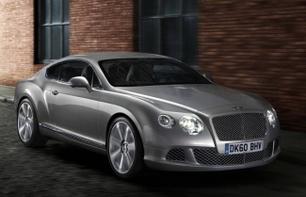
I don’t think I’ve ever heard so much interesting waffle about the design of any car, ever, but before we get to the wild, and wildlife, justifications for how it looks, just feast your eyes on it.
Now, not everyone might love it, but it’s hard to imagine a huge, super coupe looking any better than this thing does. It’s no Ferrari, sure, but realistically it doesn’t have to compete with that, because it’s a cruiser as well as a bruiser, a supercar you can be quiet and comfortable in. A Rolls-Royce with rocket engines, even.
The most obvious change, of course, is that Bentleys have had four headlights, or four eyes if you like, for so long that seeing this new one with two is a major shock, a big shift, but somehow it works.
The proportions, the elegance, the bold 'be big and bold and give no damns what anyone thinks', it’s just impressive, and the interior reflects that same, luxury ethos.
Apparently the new-look Continental is built on three design principles, the first of which is, amusingly, 'Resting Beast'. This is supposed to reflect how the Bentley looks from side on; like a tiger, stalking its prey, or perhaps resting and thinking about its prey. It’s all muscles and strength and power, but also elegance. And who doesn’t imagine tigers walking red carpets in ball gowns?
Principle two is 'Upright Elegance', and here you’re supposed to see, in the car, the strong vertical line one finds in the chest of a thoroughbred horse when it’s standing in particularly powerful way. Great. Love it.
And finally, there is the 'Endless Bonnet', which is a horizontal line that goes from the front of the car - via the bonnet obviously - and all the way to there rear, via cat-like haunches, providing an impression of “speed, even when standing still”.
Those are the bold strokes, but it’s all the little details that make it sing, like the beautiful jewellery-like look of the headlights, which are meant to resemble a tiger’s eyes. So many cats, is it any wonder I started thinking of the Bentley as a very, very flashy Jaguar?
It’s important to note that while it looks very new - and 68 per cent of the Continental’s parts are new - the body panels are carried over, while the front and rear are all new. This is one very effective mid-life facelift, with a heart transplant, then.
The XSR is 5439mm long (with a 3230mm wheelbase), 1958mm wide and 1893mm high. Official kerb weight is listed as 2230kg.
This is a substantial ute that resembles an amalgamation of Ford Ranger, Isuzu D-Max and Toyota HiLux.
The wide wheel track gives the XSR a squat stance and its snorkel, sports bar, bash plates, chunky all-terrain tyres and red brake calipers add to this ute’s presence.
Inside, a steering-wheel design tweak (it’s now three spokes) and refreshed dashboard layout help to give the cabin a low-key classy look and feel.
It may lack the all-around polish of something like the Ford Ranger, but the XSR’s much lower price negates that perception.
The XSR holds its own in the looks department across the dual cab ute category.
So a two-door, '2+2' grand tourer isn’t entirely built with the term 'practicality' in mind and it could be argued the existence of this Bentley Continental, the fourth generation, is something of a surprise, when you consider most people just buy SUVs and Bentley has done quite well with its Bentayga (which will, in future, share the same engine used here).
But for what it is, a two-seat car with occasional seating in the rear for emergencies, or very small children, it feels entirely fit for purpose.
An actual human can sit in the back, but it does feel a bit claustrophobic, and you’d be so jealous of how comfortable the people are in the front.
The 20-way adjustable front pews feel like grand armchairs for grand touring, fabulously comfortable - although you can slide across them a bit when driving on a race track, not a common problem - and plush to the touch.
They now come with a 'Wellness Facility' that brings postural, massage and climate functions to help with fatigue on long journeys - and epic blasts across multiple European countries is clearly what this thing is designed for.
In general, the cabin is just lovely, Bentley claims it does the best car interiors in the world and while Rolls might argue, it’s a pretty fair statement.
The spinning central 12.3-inch display remains the highlight, offering you a modern touchscreen, which can disappear to reveal either three classic analogue dials or a plain piece of dashboard, if you prefer a 'digital detox'.
The XSR’s five-seat interior is neat and spacious but there are parts, such as some buttons, dials and switches, that feel a bit flimsy and cheap.
Up front there are two USB ports, a wireless charging pad, a 12V plug and a deep centre console.
The new 12.3-inch touchscreen multimedia system includes wireless Apple CarPlay and Android Auto and has been improved by increments.
The front seats are power adjustable (driver’s six-way, passenger four-way) and both are comfortable without being too plush.
Second-row passengers get a firm but comfortable seat and amenities include USB charge ports, a 220V plug, air vents, and a fold-down centre armrest (with cupholders). There’s plenty of head, knee and legroom, unless you’re stuck in the middle where knee and foot room is pinched.
The second-row seat base can be folded out of the way to make room for more gear if no one’s in the back seat.
The second-row seat has top-tether points and there are ISOFIX anchors on the outboard seats.
The XSR’s load space (1520mm long, 1520mm wide and 540mm deep) has a durable tub liner, four tie-down points, as well as a pop-out step hidden in the top of the tailgate, and a step-up indent at each corner of the rear bumper.
This Cannon offers just as much all-round practicality and load-space flexibility as the likes of Isuzu D-Max, Mitsubishi Triton and Toyota HiLux.
As always, value becomes a nebulous term once the price of a car surges into the multiple hundreds of thousands. The Bentley Continental GT Speed will set Australian buyers back a whopping $581,900, before on-road costs.
Yes, you really can buy Ferraris and Lamborghinis for that kind of money, but Bentley assures us its buyers have already owned such fearsome machines, grown tired of their compromises and want something that’s just as fast, but 1000 times more comfortable, and easier to drive every day, and everywhere.
So that’s where the value proposition sits, basically. You’re buying a supercar that’s also a kind of Rolls-Royce adjacent luxury cruiser. Two cars for one price. Bargain. Kind of. It also weight 2.5 tonnes, if you’d like to think of it in dollars per kilogram.
Oh, and it’s hand made, too, and genuinely feels like it.
For that money you get an incredibly posh and plush cabin, excellent seats, and everything you touch, and smell, seems expensive and refined.
The newly facelifted, and butt-lifted, Continental also looks simply stunning, from every angle, outside. Particularly in its new 'Tourmaline Green' paint (there are 18 standard colours to choose from, or you can have bespoke paint made for you on request). And 15 standard leather hide colours as well.
It comes with all the apps and connectivity you could wish for, including a Bentley App Studio.
The XSR is the top-spec variant in the Cannon line-up and as such has a price-tag of $50,990, drive-away (offered nationwide).
Standard features include 18-inch alloy wheels, a chrome sports bar, automatic LED headlights, spray-in tubliner, keyless entry, leather-accented upholstery, 12.3-inch touchscreen multimedia system (with wireless Apple CarPlay and Android Auto), a six-way power-adjustable driver's seat and four-way power-adjustable front-passenger seat, ambient lighting, a black sports bar and matt black exterior trim.
Exterior paint choices for the XSR include the standard 'Pearl White', or 'Crystal Black', 'Lunar Red', 'Stealth Grey', 'Sapphire Blue' and 'Pittsburgh Silver'.
This Cannon compares favourably to rivals such as the Isuzu D-Max, Mitsubishi Triton and Toyota HiLux, in terms of standard features offered for the price.
There is some sadness that the world’s biggest producer and promoter of 12-cylinder engines has cut production of them altogether - the epic W12 is no more - and this does feel, on a smaller scale, like Porsche ditching flat-six engines forever.
Previous hybrid efforts from Bentley, including a V6-based one that the company now admits was a bit limp wristed, might cause some concern when you hear that Bentley will, henceforth, make just one engine for all its cars, and that it is a hybrid, albeit one attached to a 4.0-litre twin-turbo V8.
But then they point out the version in this Continental GT Speed’s is “the most powerful Bentley engine ever” and that sounds pretty good.
The engine alone makes 441kW and 800Nm, which almost sounds ample, but the addition of the electric E-motor is good for another 140kW and 450Nm, with the aid of a 29.5kWh battery, which somehow adds up to a combined output of 575kW and a nice, round, and impressive 1000Nm of torque.
All that power does have to move 2.5 tonnes of precious metal, which sounds like an ask, but is effortless in practice - hurling the Speed to 100km/h in a properly supercar-like 3.2 seconds on its way to a top speed of 335km/h.
Yes, vitally, it sounds pretty damn impressive when all the power sources are going at once, it even barks and pops on the overrun, a bit like the Porsche Panamera with which it shares the hybrid set-up, only a bit bossier, and perhaps classier.
The point of the hybrid feels like it’s mostly about performance and excitement, but it has a practical side, too, because in EV-only mode this giant Bentley can drive for up to 81km in pure, and slightly inappropriate-feeling, silence (at speeds of up to 140km/h).
Handy if you live in global cities with zero-emission zones, or if you want your neighbours to think you care about the climate.
One brilliant thing about this plug-in hybrid is it’s set up to use the engine to regen the battery, hard, in 'Sport' mode, so the more fun you have, the quicker the battery charges. So much so that, realistically, you might never need to plug it in at all (Bentley recently ran the car at a race track for two weeks and never needed to top it up via cable once).
It is an impressive, sonorous and enjoyable power plant, and you’d expect nothing less from Porsche, although Bentley says it’s done lots of work on the donor engine to make it uniquely more wonderful.
The new 2.4-litre four-cylinder turbo-diesel engine produces 135kW at 3600rpm and 480Nm at 1500-2500rpm. It's tractable and well suited to the demands of 4WDing.
Don’t get me wrong, the previous-gen Cannon’s 2.0-litre four-cylinder turbo-diesel engine (120kW/400Nm) was no slouch, either. It’s just that this bigger and more powerful engine is better.
The new engine can easily muster more than enough power and torque on- and off-road when needed. However, there are enough instances of substantial lag at crucial moments – punching off the mark from a complete stop to safely merge into traffic, for example – that when compounded threaten to mar the overall driving experience.
Another thing. The automatic transmission, now a nine- rather than eight-speed, while generally okay, proves patchy in daily driving, not upshifting as slickly as it should and sometimes hunting for the sweet spot, rather than hitting it.
In terms of all-round powertrain performance, the XSR is on par with four-cylinder, turbo-diesel rivals such as the Ford Ranger 2.0L (125kW/405Nm), Isuzu D-Max 2.2L (120kW/400Nm), Mitsubishi Triton 2.4L (150kW/470Nm) and Toyota HiLux 2.8L (150kW/500Nm).
While the top-line figures for performance hybrids like this always sound impressive, it’s hard to believe anyone will ever get near them in the real world, because the temptation to drive a car like this hard and fast, as its makers clearly intended, will mean chewing fuel in a very non-efficient way indeed.
On paper, though, where it matters in terms of being allowed to sell your giant luxury grand tourer in Europe, the Bentley Continental GT Speed produces just 29 grams of CO2 per kilometre.
Fuel economy is a claimed 10.3 litres per 100km, which is optimistic, but still a lot lower than the equally unlikely 14L/100km figure for the old (12-cylinders and no hybrid) car. As in, neither car would ever achieve the theoretical figure, but at least the new one is clearly a lot better.
Listed fuel consumption is 8.4L/100km on a combined (urban/extra-urban) cycle, which is better than the 9.4L/100km offered by the previous 2.0-litre four-cylinder turbo-diesel engine and eight-speed auto.
I recorded on-test fuel consumption of 10L/100km which is ahead of the 11.2L/100km I recorded in a Cannon XSR with the 2.0-litre four and eight-speed.
The XSR has an 78-litre tank, so, going by my on-test fuel figure, you could reasonably expect a driving range of about 780km from a full tank of diesel.
In an ideal world, one would take the Bentley Continental GT Speed for an appropriate drive from the top of Germany to the bottom of Italy or France, but instead we were asked to drive the big beast around a tight and slightly terrifying private members race track outside Tokyo called the Magarigawa Club.
Members here pay US$1 million a year for access to this circuit, carved out of several mountain tops, which features two long and fun straights attached to what feels like a hill climb circuit with a bit of Laguna Seca’s Corkscrew and a touch of Mt Panorama’s undulations.
This track, with its daunting lack of run-off, should have been an intimidating and possibly inappropriate place to try the Continental GT Speed, but it is a credit to the car’s “everyday supercar” personality that it soaked up the pressure, and pace with ease.
On our first lap we were encouraged to drive in EV mode, which was predictably a bit dull, quiet and not-quite boring, because if you went past 75 per cent of throttle, or 140km/h, the engine would kick in and things would instantly get interesting.
It was a good chance to note just how lushly comfortable the cabin and seats are, however, and just how supple the suspension can be.
The Bentley’s “secret weapon”, according to its engineers, is a new twin-valve damper the allows the chassis to behave like a sports car when you want it to - probably about 3.0 per cent of the time for actual owners - and an absolute luxury pleasure palace for cruising around the rest of the time.
The split personality thing really is on offer with this car, as we found out once we engaged the Sport setting.
The Speed’s all-wheel drive, all-wheel steering, torque vectoring and electronic LSD were all on display over the later laps, in which we were allowed to blast past 200km/h and find out just how good the brakes are at pulling up 2.5 tonnes of high-speed luxo-barge.
You do your steering via a lovely wheel with a leather front and Alcantara wheel, and it feels effortless, even in full track attack mode. A bit more feedback might be nice, but I guess Bentley owners have other cars for that kind of thing.
Aside from the rushing, roaring speed, what is most impressive is how little body roll there is from the Continental. It feels planted, poised, happy to change direction and is rarely upset or flustered, despite some squeals of complaints from the tyres.
Getting too wide on to the ripple strips caused a shudder and a skip sideways now and then, but perhaps I shouldn’t have been so far off the racing line.
Overall, the Continental GT delivers on its name, with Speed, and lots of it, all delivered in a properly swanky environment.
As noted above, there are some issues with the Cannon’s general driveability, but all in all it’s not atrocious. And if it’s a potential buy for you, you’ll always come back to the value-for-money rationale.
On- and off-road, the new engine has plenty of punch about it, but patchy delivery through the transmission sometimes works against it.
It’s a not a dynamic vehicle. No surprise, it’s a ute after all. But that point has to be made here because some people still drive these vehicles expecting sports car-like ride and handling.
The good news is the XSR’s touchy throttle and too-loose steering of days gone by have been mostly sorted out. But its thrashy transmission, stiff ride and unwieldy 13.7m turning circle remain.
Its bigger engine doesn’t carry over the previous-gen’s underdone feeling when pushed hard and it has a relaxed feel when you’re cruising along on the highway.
Some concerns have been raised over the years about driver-assist tech in Chinese-built vehicles. To the company’s credit, GWM seems to have addressed those issues… at least to some extent.
Suffice it to say, I’ve experienced a few tricky situations as a result of driver-assist tech in GWM vehicles. From annoyingly intrusive traffic sign recognition and jarring adaptive cruise control through to one particularly hair-raising AEB-related incident. (For more, read my yarn)
Overall, the XSR remains okay on sealed surfaces, but it’s not as refined or compliant as it could or should be.
As for off-roading…
On dirt tracks the XSR is jittery over corrugations and tends to thump through deeper potholes. Otherwise it is reasonably composed.
But with twin differential locks, decent underbody protection and Cooper Discoverer AT3 all-terrain tyres, this Cannon handles low-range 4WDing with ease.
The new bigger engine delivers on promised grunt in the dirt, giving the Cannon plenty of punch when the going gets tough.
Ground clearance of 228mm, wading depth of 700mm and off-road angles of 30 degrees (approach) and 26 degrees (departure; rampover is not listed) don’t hurt its 4WDing potential, either.
Off-road traction control and other driver-assist systems including hill descent control are adequate without being as smooth as the equivalent systems in more expensive vehicles.
It has 'Crawl Mode' (allowing for no-pedal, low-speed driving) and 'Turn Assist' (which brakes the XSR’s inside rear wheel to reduce the ute’s turning circle on traction-compromised surfaces).
While 4WDing, swapping between high- and low-range, changing off-road modes or switching diff locks on or off has been at times a clunky process, with the transition taking on a feeling not unlike shunting trains. No big deal, I reckon, but worth mentioning.
Wheel travel is adequate and this ute’s Cooper Discoverer AT3 all-terrain tyres perform well in the dirt and mud.
The Cannon XSR has towing capacities of 750kg (unbraked trailer) and 3000kg (braked).
All in all, off-roading is the one area in which the Cannon eclipses something like the BYD Shark 6 or Kia Tasman and matches, if not bests the Ford Ranger.
All the money and you only get four airbags; front and side for driver and passenger. And none in the back, so don't sit there. Bentley also has its own 'Safeguard' suite of technologies including 'Advanced Emergency Braking', 'Swerve Assist' and 'Turn Assist'.
Other tech includes 'Predictive Adaptive Cruise Assist with Lane Guidance', 'Lane Departure Warning', 'Emergency Assist', 'Remote Park Assist' and '3D Surround View'.
All GWM Cannons, except the 'untested' XSR, have had the maximum five-star ANCAP safety rating since 2021.
Standard safety gear on the XSR includes seven airbags (dual front, front centre, front side and full-length side curtain), AEB (with cyclist and pedestrian detection), adaptive cruise control, blind-spot monitoring, lane-departure warning, traffic sign recognition, rear parking sensors, a 360-degree camera and tyre-pressure monitoring.
The top-spec XSR misses out on emergency lane keeping, rear collision warning, blind spot monitor, lane change assist, and rear cross traffic alert (with braking).
The Bentley Continental GT Speed comes with a five-year, all-inclusive servicing plan as standard.
That sounds good, but stunningly, Bentley still only offers a three-year manufacturer warranty, albeit one with no mileage limitations. That's way below industry standard these days.
The battery that forms part of the hybrid system is, however, warrantied for eight years, or 160,000km.
The XSR is covered by a seven-year/unlimited km warranty and five years of free roadside assistance.
The first service is scheduled at the 12 month/10,000km mark, then services are scheduled for every 12 months or 15,000km.
Capped price servicing is available and for a Cannon with a warranty start date on or after January 1, 2026, the costs are $365, $470, $515, $520, and $685 per service. That’s a total of $2555 (and an average of $511 per workshop visit), which is more expensive than some of the Cannon’s rivals on the market.