What's the difference?
Yes, you can drive your Bentley and keep your family. It's called compromise, or the Bentayga, Bentley's SUV.
The Bentayga my family has been living with is the Azure grade which promises to be even more comfortable and pleasant than the rest of the range.
Comfort is important and we'll cover the Bentayga's lavish details in time, but our mission first and foremost is to find out if the Bentayga makes a good family SUV.
What’s 15 years between friends? Well, in this instance quite a lot because this is the all-new, pure-electric Renault Scenic E-Tech small-medium SUV.
The Renault Scenic we knew here until the late noughties was a petrol-powered, five-seat family car or an upright, seven-seat people mover.
But this is an altogether sleeker proposition, priced and specified to compete with other electric SUVs like the BYD Sealion 7, Hyundai Elexio, Kia EV5, Skoda Elroq and Zeekr 7X.
So, could this fresh Euro contender have what it takes to steer you away from such an impressive set of pure-electric competitors?
We attended its local launch to find out.
The Bentley Bentayga Azure may look a bit awkward and it surely isn't great value for money, but it is a true Bentley and a very good family SUV that not only provides terrific practicality but superb performance and comfort.
The Renault Scenic E-Tech is lining up against some heavy-hitting competitors, but Renault Australia admits it has one top of mind - the Kia EV5. The Kia’s a quality package and if you’re in the market for a mid-size electric SUV, you’ll no doubt have it on your shopping list. And you should have a look at this slightly smaller car, as well. It has the refinement, practicality and safety to stand up confidently in a rapidly expanding segment.
Note: CarsGuide attended this event as a guest of the manufacturer, with travel, accommodation and meals provided.
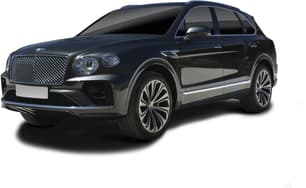
You'd think of all automotive brands Bentley, with its beautiful swooping and powerful saloons, would be able to floor us with something just exquisite in SUV form. But right from the 2012 concept the Bentayga has struggled to stun the world with its design.
So, while there are Bentley family traits all over the Bentayga, from the intricate headlights and mesh grille, to the oval tail-lights and body which squats over the rear wheels, the overall design looks awkward to my eyes.
To me it appears the boxy design with the tall, flat roofline and elevated ride height favours practicality over the sleekness possessed by a lower, more coupe-like SUV.
I favour dark coloured clothes because it hides my shapes, creases and bulges, but these are the things you want to see in a car and our Bentley's 'Onyx Black' paint, despite being a beautiful colour with a blue hue added, make it a featureless blob in the sunlight.
A lighter shade or something outlandish like a turquoise or yellow would look amazing, and even better, upset your neighbours.
Let's look at the interior design which is lavish with all the quilted leather and Mulliner customisation, but lacks the modern look of many contemporary cabins with its smallish media screen and busy mosaic of buttons.
I like the little chrome plungers for the air vents, the winged styling to the dashboard and the stitched leather upholstery, but it's easy to spot parts that are shared by other members of the Volkswagen Group (which owns Bentley).
For example, there are the indicator and wiper stalks, as well as the steering wheel buttons, all from Audi. Surely Bentley should have its own crafted parts?
The interior colour scheme on our Bentayga is 'Beluga' (black) and 'Camel' (tan) and the Mulliner option split the colours with a cream tone.
From a family perspective the tan and black will hide dirt, although the cream will struggle. It's possibly the best leather on the planet, however, coming from cattle living high enough that their hides are unblemished by insect stings.
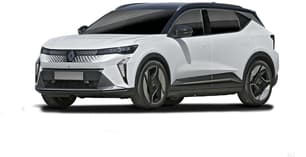
There are some design tips of the hat to Scenics past in this latest electric version, including blacked-out door pillars and a recognisably angular C-pillar treatment.
But despite the fact it debuted at the Munich IAA Motor Show in late 2023, from its slimline headlights and jagged grille to its sculpted flanks and saw tooth rear end, this fifth-generation Scenic looks contemporary from every angle.
A highlight is the large Renault diamond logo sitting at the centre of a faux upper grille, surrounded by a multitude of the same elongated hexagon shape as a cool recurring graphic, the pattern merging neatly into the headlights.
Speaking of which, the LED beams can be set to produce an elaborate welcome sequence as you approach the car.
The interior feels slick and screen-rich but not at the expense of user-friendly physical controls for audio, ventilation and other commonly used functions.
Recycled fabric on the dashboard and headliner looks and feels good while doing its bit to suppress cabin noise.
Speaking of which, the Scenic is Renault’s poster child for the use of recycled materials in its construction and end of life recyclability.
Everything from ferrous components consisting of 37 per cent recycled materials to a bonnet and doors made of up to 80 per cent recycled aluminium.
The dashboard cowling is made from kenaf, a plant fibre similar to jute; the steering wheel cover is 51 per cent bio-sourced; the cockpit uses 26 per cent recycled plastic; the storage bins in the door panels are 45 per cent recycled fibre, the floor mats are 54 per cent recycled plastic bottles and the seat upholstery is 100 per cent recycled fabric. The list goes on and on, but you get the idea.
Being shaped like a bus does nothing for the Bentayga's beauty but makes it spacious for cargo and roomy for people.
With its large doors and elevated ride height (the car can be lowered for easier access) it's great for families.
Our Bentayga is a five-seater, which is fine for my little family of four, but there are four- and seven-seat configurations available, too.
Second row legroom is exceptional, even for me at 189cm tall, and sitting behind my own driving position there's still plenty of room.
Headroom is also outstanding throughout. We could be a family that loves top hats, on our way to the top hat championships, and not have to remove our top hats. That's how good headroom and hat room is.
Sun blinds in the second row are vital in Australia, and the electric ones in the Bentayga raise and lower quickly, not just offering protection but also more privacy.
Storage is good throughout with big door pockets and five cupholders.
It seems the cabin space eats into the cargo area because the boot isn't overly large at 484 litres with all seats in place.
Buttons in the cargo area allow the rear of the car to be raised and lowered to make it easier to hoist items in the boot.
For devices there's a wireless phone charger up front along with USB ports in both rows.
In terms of how it all works in practice, at just under 4.5m long, close to 1.9m wide and less than 1.6m tall with a 2785mm wheelbase, the Scenic is more compact than the larger BYD Sealion 7 or Zeekr 7X, for example.
But there’s plenty of breathing room up front, with the centre screen angled towards the driver enhancing the cockpit feel for the one doing the steering.
There are large carpeted bins in the doors with room for bottles and a lidded storage box between the seats doubles as a centre armrest. That lid slides forward by 70mm to cover a small storage cubby under the front of it, which is a handy trick.
Locating the gear selector on the right-hand side of the steering column liberates extra space for a centre cupholder and large console storage bin. There’s a generous glove box and a wireless smartphone charger under the centre screen includes a rubberised base and two lugs to stop devices sliding around. Power and connectivity runs to two USB-C ports and a 12-volt socket.
Moving to the second row, sitting behind my 183cm driving position, while toe room is a little tight (with the driver’s seat set low down), there’s heaps of leg and headroom as well as enough shoulder room (and foot room thanks to a flat floor) for three adults on short to mid-length trips. A pair of adjustable centre air vents is also a welcome inclusion.
Storage includes door bins (again with room for bottles), large and device-sized pockets on the front seat backs and the pièce de résistance is the evocatively named ‘Ingenious armrest’, which includes a storage area and two cupholders at the base of articulated horizontal arms that allow passengers to mount a phone or tablet at various angles in rubberised slots for joint or solo viewing.
It is, indeed, ingenious and four USB-C plugs (two in the armrest, two near the air vents) mean back-seaters won’t be short of power options.
Boot volume with the rear seats upright is useful at close to 545 litres (VDA), expanding to around 1670L with the 40/20/40 split-fold second row lowered. A power tailgate is standard across the range.
There are bag hooks, tie-down anchors, lighting and a 12-volt socket back there, although for V2L (vehicle to load) functionality you’ll need an accessory adapter to plug into the charge port.
Maximum braked trailer towing capacity is a handy 1100kg, but there’s no spare tyre, only a repair/inflator kit, which isn’t good enough.
Reviewing every type of car on the market provides a pretty good perspective, but when it comes to Bentleys we enter a realm where value-for-money often isn't as crucial as it is for more mainstream options.
The same goes for the price. Bentleys are among the most expensive cars in the world. So if, like me, you flinch at the thought of paying more than half a million dollars for an SUV, it may not be the car for us right now.
With that I can tell you the Bentley Bentayga Azure's list price is $475,000 and our car with all of its options comes to $515,000.
That's more money than any SUV from Mercedes-Benz and BMW costs. Even Range Rover can't quite reach that mark.
Only the likes of Aston Martin's DBX 707 and Lamborghini's Urus can match the price.
There are always bigger fish, though, and Rolls Royce's Cullinan swims in at $700,000, making the Bentayga's price seem quite reasonable.
Let's look at the standard features.
Coming standard on the Bentayga Azure are the prettiest LED headlights in the world. There are LED tail-lights, too, as well as a proximity key, roof rails and a panoramic glass roof, plus a hands-free tailgate.
Inside there's the 10.9-inch media screen, sat nav, wireless Apple CarPlay and wireless Android Auto.
The diamond quilting to the door trims is also standard and so are the Bentley sports pedals.
Many of these features are standard on lower grades in the Bentayga range, but the point in choosing the Azure is that many of the optional bundles on offer are fitted as standard here.
So, while leather upholstery is of course standard the 'Colour Specification' package gives you a choice of all interior colour combinations and an extended choice of hide colours.
The 'City Specification' brings extra safety tech like rear cross-traffic alert and a top view camera.
The 'Front Seat Comfort' specification adds 20-way power front seats, ventilation and massage as well as comfort headrests.
The 'Touring Specification' brings adaptive cruise control, a head up display, lane keeping assistance and 'Night Vision'.
And then the 'Sunshine Package' adds electric sun blinds, which are great for kids in the back.
Despite the multitude of standard packages there's plenty left to option on the Azure.
Our car was fitted with about a dozen options including piano black veneer ($5884), 22-inch alloy wheels ($4733), rear privacy glass ($2617), LED welcome lights ($2238), self-levelling wheel centre caps ($1208), a heated acoustic windscreen ($1094), luggage management for the boot ($937) and a heated steering wheel ($543).
Then there's Mulliner, Bentley's in-house customisation division which will personalise your Bentley.
The Mulliner custom features on our Bentayga Azure include the addition of an extra colour in the leather upholstery ($13,492), 'Honeycomb' stitching on the steering wheel ($5391) and contrasting stitching on the quilted areas of leather trim ($2688).
Best family features would have to be the privacy glass, temperature control in the second row and the rear sun blinds.
The second row also comes with a removable tablet which can be used to adjust the climate control, sunroof and media settings among other functions.
In the hands of children this is every parent's nightmare and there's a 100 percent chance of the tablet being lost forever, possibly on the motorway between Sydney and Canberra.
The Scenic E-Tech starts from $55,990, before on-road costs, for the entry-grade Techno. Then there’s the Techno Long Range for $59,990, BOC, while the flagship Esprit Alpine comes in at $65,990.
That’s sharp relative to competitors and follows the brand getting a reality check with the Megane E-Tech after it launched here in late 2024, Renault shaving $10,000 off its price only a few months later.
Equipment highlights across the line-up include a 12-inch multimedia touchscreen, a 12.3-inch driver display, sat-nav, adaptive cruise control, a 360-degree surround-camera view, all LED exterior lights, wireless Android Auto and Apple CarPlay and six-speaker Arkamys audio.
There’s also dual-zone climate control, an electric tailgate, auto-folding side mirrors, cloth upholstery, heated front seats and steering wheel, 48-colour ambient interior lighting, keyless entry and start and 19-inch alloys (on the Techno models).
Then you can fold in over-the-air updates, access to remote services via the ‘MyRenault’ app and Google In-Built that enables voice-control for up to 70 car functions.
The Esprit Alpine ups the ante with 20-inch rims, nine-speaker Harman Kardon audio, synthetic leather and cloth seat trim, six-way power adjustment (with memory settings) for driver and front passenger seats, a massaging driver’s seat, brushed metal pedal covers and facial recognition for seat and mirror settings.
In short, the Scenic is well-equipped relative to its competitive set and cost of entry, with Renault confirming there are mainly demonstrator cars in dealers at the moment, with the majority of stock landing in late May or early June this year.
There are three optional paint choices - metallic ($800), two-tone ($1000) and matt ($1200), the latter exclusive to the Esprit Alpine.
When Bentley stopped putting its W12 into the Bentayga this year I was unsurprised yet sad. The world is moving toward tighter fuel emissions but the twin-turbo petrol V8 in this Azure is still a beast.
The 4.0-litre turbo-petrol V8 is from the Audi family and I love it as much for its plentiful torque and superb acceleration as the deep rumble of its exhaust.
Making 404kW and 770Nm the V8 can lift and throw the 2.5-tonne Bentayga to 100km/h from a standstill in 4.5 seconds and onto a top speed of 290km/h. I reckon you could get it to 300km/h with the wind behind you.
Drive goes to all four wheels via an eight-speed transmission and a Torsen-type centre differential.
Default drive balance is 40/60 front to rear, with up to 70 per cent of power able to be sent to the front wheels and up to 85 per cent to the rear axle.
I don't think you'll be astounded to hear this powertrain uses a lot of fuel? Let's go there...
Like its Megane E-Tech sibling, the Scenic E-Tech uses an excited synchronous motor which Renault says is more efficient than the more commonly used permanent magnet type, with the bonus that it uses no rare earth materials.
The entry-level Scenic E-Tech Techno's fitted with a 60kWh NMC battery. Its electric motor transfers 125kW and 280Nm to the front wheels and Renault claims a 0-100km/h time of 8.6 seconds.
The Techno Long Range and top-spec Esprit Alpine pack an 87kWh battery and a more powerful motor, raising outputs to 160kW/300Nm and lowering the 0-100kmh sprint time to 7.9 seconds.
Bentley says the Bentayga Azure with the V8 petrol engine will use an average of 11.4L/100km over a combination of open and urban roads.
But what happens if you live in the suburbs not far from the city and drive the Azure every day to do the school drop offs and trips to the shops and then take in some fun country roads? You use an average of 22.8L/100km according to the car's trip computer.
This is still not as high as I was expecting. I've driven V6-powered SUVs which use more than this under the same conditions.
That said, even when using as much fuel as Bentley says you should, an 85-litre fuel tank is only going to deliver an approximate 745km driving range.
Official energy consumption numbers for the combined (urban/extra-urban) cycle are close between the two powertrains at 16.3kWh/100km for the Techno and 16.8kWh/100km for the Techno Long Range and Esprit Alpine, which are bang on average for the class.
Range for the standard Techno is 430km, which is at the lower end of expectations for a medium electric SUV but adding the bigger battery pushes that number out to 625km, which is much healthier and useful day-to-day.
On the launch drive program, which took in some urban but mostly rural B-road running, we saw an average consumption figure of 17.1kWh/100km in the Esprit Alpine, which is pretty good in those conditions.
The car’s 400V electrical architecture allows for DC charging at up to 130kW for the entry model and 150kW for the bigger-battery variants.
At that speed, claimed 15-80 per cent charge times are 32 and 37 minutes, respectively. Not the best, not the worst. AC charge capability is 11kW on all models and a Mode 3 charging cable is included.
The Bentley Bentayga doesn't have a safety rating as like many extremely high-end cars it hasn't been assessed by ANCAP or Euro NCAP.
That said, the Azure grade comes standard with an armoury of safety tech including AEB (with turn assistance), lane keeping assistance, blind-spot warning, rear cross-traffic alert, evasive steering assistance, and adaptive cruise control.
Front and rear parking sensors are standard (and the most relied-upon feature I use daily), while exit warning saved my child and myself more than a few times from leaping out into the traffic on the school run.
The Scenic E-Tech has a maximum five-star ANCAP rating from assessment in 2022 with active crash-avoidance tech including AEB (with pedestrian and cyclist detection and junction assist), adaptive cruise control, lane departure warning and lane-keep assist, blind-spot detection, traffic sign recognition, a 360-degree camera view, rear cross-traffic alert, driver fatigue monitoring and tyre pressure monitoring as well as front, side and rear parking sensors.
If a crash is unavoidable, there are seven airbags onboard including a front centre bag and for child seats there three top-tether points across the second row with ISOFIX anchor in the outer positions.
The Bentayga is covered by Bentley's three-year/unlimited-kilometre warranty. Servicing is recommended every 12 months or 16,000km.
The good news is all new Bentley's have five years regular servicing included in the cost of the vehicle.
Warranty is five years/100,000km, which is well off the market pace with many competitors at seven, eight and up to 10 years conditional. The battery warranty at eight-year/160,000km matches the market.
Roadside assistance is included for five years, service is recommended every 12 months/30,000km and fixed price servicing is available at a reasonably sharp average of $325 per workshop visit for the first five years.
Renault has 52 dealers across the country covering major cities and key rural areas.