What's the difference?
Spoilt. That's what we are. If you're in the market for a hot hatch, you can have your pick of German-built and French ones from as little as $27,000. There isn't a dud among them now that the VW Polo GTI has had a bit of an update and you can pick and choose your style. Audi's S1 is aiming to be king of the kids with its stiffly-priced S1.
Set the finances aside and consider for a moment what's on offer. As it turns out, a lot.
It’s been in Australia since 2019 and despite the arrival of a comprehensively upgraded version in late 2023, the Tesla Model 3’s once gargantuan popularity has been declining in recent years.
A seemingly never-ending influx of pure-electric alternatives, primarily from China, has eroded the mid-size sedan’s positioning as the go-to, best-value EV choice.
But to its credit Tesla has again evolved the Model 3 proposition with the introduction of this Long Range Rear-Wheel Drive grade in October last year, at the time positioning it as “the longest-range EV in Australia”.
Since then, Tesla has adjusted the model grade name to Premium Long Range Rear-Wheel Drive.
Some additional tweaks, made in response to customer feedback, also illustrates the EV pioneer’s determination to step up in the face of increasingly fierce competition.
So, does this latest Model 3 do enough to earn a spot on your electric vehicle shopping list? We spent a week behind the wheel to find out.
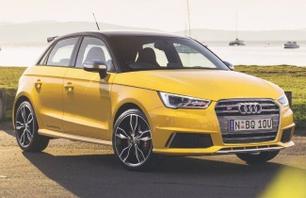
Cars this small shouldn't be this fast and useable at the same time, but the Audi S1 is. It isn't without its problems - the ride is harder even than the Fiesta ST which might weary some prospective buyers.
It's also a bit difficult to justify the price - in its basic form it's missing a few creature comforts that you'd expect in a $50,000 car - reversing camera, high-res screen, that sort of thing.
However, in the hot hatch world, those things don't matter. It has the bragging rights, the tech and the outright blinding speed to take on the bonkers Focus ST and equally zany Megane RS. And even the Audi S3.
Tesla has done enough with the introduction of this Premium Long Range RWD variant to keep the Model 3’s head well and truly above water in an increasingly competitive segment. After more than six years it still looks good, with a pleasant cabin environment, plenty of performance and leading energy efficiency. Safety is top-shelf and it stands up well in terms of practicality and driving dynamics.
That said, the ownership proposition is average, the determination to make so many functions screen-based is frustrating and the optional Full Self-Driving system is unconvincing. With the Model S and Model Y now discontinued globally it will be interesting to see how the Model 3 continues to evolve.
The A1 is so small it starts to strain Audi's design language. When you cram on the S-style bumpers and raccoon-eyed trim on the hatchback, it's starts to look a bit busy.
It isn't quite a shrink-wrapped A3 - Ingolstadt's designers know better than that - but it's full of Audi design cues, such as the strong, light-catching character lines, distinctive LED daytime running lights and fondness for big wheels.
Inside is along the themes of the A3, with what are becoming Audi's trademark; round eyeball air-con vents, the manual fold-down screen familiar to Q3 owners (but smaller) and a good clear dash. The handbrake jars slightly as it feels cheap to hold and wobbles a bit.
The S Sport seats are big and comfortable, and the top half of the backs are capped in plastic, which was colour-coded on our car. The rear passengers will certainly get an eyeful of whatever terrifying hue you've chosen, so choose wisely.
Despite the five doors, the back seats are occasionals, like the Mini the A1 is gunning for, and the boot is very small, but okay for shopping for couples or singles.
After four years in market, a heavily upgraded version of the Model 3 arrived in Australia in 2023, the biggest visual changes being a reshaped bonnet, aero massaged overall profile and angular slimline headlights.
The boot lid now incorporates a lip spoiler and the tail-lights were remodelled to create a truncated, two-layer effect. And in true Tesla fashion, the standard 18-inch alloy rims are fitted with matt black-finish aero elements filling the gaps between the satin black wheel spokes. Two new body colours - ‘Stealth Grey’ and ‘Ultra Red’ - were recently added to the available palette. For reference, our test car's finish is 'Quicksilver'.
It’s still clearly recognisable as a Model 3, but these relatively minor design changes have helped the mid-sizer keep up with the slew of sleek newcomers it now faces.
The interior was also given a substantial makeover, the expansive 15.4-inch central display screen backgrounded by an all-new wrap-around dash and revised console treatment, the former featuring a raised insert and the latter a two-device wireless charging station.
Introduction of this Premium Long Range RWD model also brought the small but significant addition of a physical indicator stalk on the left-hand side of the steering column, replacing buttons on the steering wheel. Big ergonomic tick for that.
Customisable ambient lighting lifts the tone, soft materials look and feel good and the doorcards, bins and armrests have been reprofiled into a more sophisticated arrangement.
Our test car’s dark grey and white synthetic leather trim combination lifts the mood as does light from the huge, two-panel glass roof. But beware, while white trim looks dazzling on the showroom floor it takes some extra work to maintain its schmick appearance in the day-to-day grind.
After seven years in market the Model 3 has aged well and still looks sleek and contemporary.
Starting at $49,900, Audi S1 is by far the priciest of the small-hatch based hotties, at least until Mini's madcap JCW arrives. This price is just almost double that of VW stablemate's forthcoming 2015 Polo GTI.
Standard on the manual-and-five-door-only S1 is a ten speaker stereo, climate control, ambient lighting, remote central locking, cruise control, satnav, headlight washers, auto headlights with xenon low beams, partial leather seats, leather-bound steering wheel, auto wipers and rear parking sensors.
Our Misano Red ($990 option) came with two extra packs. The Quattro Exterior Package ($3990) adds bi-xenon headlights with red trim, red brake calipers, spoiler, quattro logos on rear doors (ahem!) and five-spoke 18-inch alloys that are part matt black, part polished.
The Quattro Interior Package ($2490) adds S Sport front seats with Nappa leather and red backrest capping with quattro logo (ugh), more nappa around the cabin with contrast stitching, flat bottom steering wheel and red rings on the air vents.
There's an S Performance Package that brings the best of these two packs together for $4990, saving about $1500 and the embarrassment of the quattro logos.
Our test car also had aluminium air vents ($220), black contrasting boot lid ($300) and black roof ($720).
The A1 is so small it starts to strain Audi's design language
The grand total is a sobering $58,610. There's a couple more options that'll easily pop you over $60,000.
Audi's MMI is dash-mounted in the A1 as there's no room on the narrow centre console. As ever, it works well and doesn't take much getting used to. The satnav is a bit grainy on the smaller screen but is otherwise a competent unit.
Sound is from a ten-speaker stereo and you can stream across Bluetooth or plug in a memory card. The sound was good but the system did take a while to find the phone whenever we came back to the car.
At $61,900, before on-road costs in NSW ($67,329, drive-away), the Tesla Model 3 Premium Long Range RWD sits in the same price ballpark as other pure-electric mid-size sedans like the BYD Seal Premium RWD ($58,798, BOC), Hyundai Ioniq 6 2WD ($67,300, BOC), MG IM5 Platinum RWD ($69,990, drive-away) and Polestar 2 Standard range Single motor ($62,400, BOC).
Broaden the consideration set to include medium EV SUVs and a dozen other options including the BYD Sealion 7, Kia EV5, Skoda Enyaq and Zeekr 7X enter the picture, many with a price-tag around $10K lower than the Model 3’s.
But price is one thing, value is another. Aside from the performance and safety tech we’ll get to shortly, let’s look at the Model 3 Premium Long Range RWD’s included features.
Standard spec highlights include LED exterior lighting, new design 18-inch alloy wheels, a 15.4-inch central display screen, synthetic leather seat trim, power-adjustable ventilated and heated front seats, tri-zone climate control, adaptive cruise control and nine-speaker audio.
There’s also ambient interior lighting, navigation (with real-time traffic updates), an 8.0-inch rear touchscreen for back seat climate and entertainment, a power boot lid, dual wireless phone chargers, surround parking sensors, keyless entry and start (plus a lot more through the Tesla app, which we’ll cover in the Practicality section) and 360-degree acoustic glass (including the standard glass roof). Still no Android Auto or Apple CarPlay, though.
Add in less obvious improvements like the extension of soft-touch materials throughout the cabin and this Model 3 stacks up well in terms of value relative to its cost-of-entry and direct competitors.
This is where the action is. The S1's tiny body packs a 2.0-litre turbocharged four-cylinder producing 170kW and 370Nm of torque. The S1 will streak to 100km/h in 5.9 seconds thank to the traction aid of quattro all-wheel drive.
All Audi S1s come with a six-speed manual
Despite a pretty solid hammering during its week with us, including more time than we'd have liked in Sydney traffic, the stop-start function helped deliver a pretty reasonable 10.2L/100km, however that's a long way over claimed 7.1L/100km.
All Audi S1s come with a six-speed manual, so dual-clutch haters can save the whining. The only downside from not having a self-shifter is the ECU can't deliver the boy racer farts, parps and crackles of the other S cars.
The Tesla Model 3 Premium Long Range RWD is powered by a single permanent magnet synchronous electric motor producing a handy 235kW and in excess of 400Nm.
It sends drive to the rear wheels only via a single-speed, direct-drive automatic transmission.
Kerb weight is 1747kg and Tesla claims 0-100km/h acceleration in a rapid 5.2 seconds.
If you're buying the S1 as a comfortable urban runabout with a cool badge, you're half right. While the seating for front passengers is certainly supportive, the hard suspension tune will ensure you're well aware of road surface imperfections.
The S1 is a rocket
Thankfully, what it missed out on in the ride department it makes up for in every other way - the S1 is a rocket. The 2.0-litre turbo jammed under the bonnet has almost no lag and is paired with a slick six-speed manual that is terrific fun to manhandle through the gears.
The way the S1 picks up speed when it's on boost is addictive and licence-endangering. A flattened accelerator in second or third will obliterate just about anything this side of $100,000 and you'll be having more fun in this than big brother S3 because the chassis is more adjustable and there's a bit more life.
You can hear the turbo sing to accompany the bassy exhaust growl. Hit the massive brakes hard and the car remains stable even over rutted roads. Turning the wheel brings almost-instant turn-in, mashing the throttle again a fun little wriggle. It's superb.
It's tremendous fun point-to-point on a twisty road
You'll have to be a bit patient with the throttle to get the wriggle, though - give it too much too early and it will want to push wide, the quattro system shuffling power around to try and quell understeer while the electronic diff fiddles with the braking system to do the same thing. It gets there in the end, but you're better off meting out the power with your right foot for maximum rewards.
It's tremendous fun point-to-point on a twisty road - despite being a bit heavy for its size (1415kg), it's as chuckable as the next best thing, the Fiesta ST.
So, surprise, surprise, the Tesla Model 3 Premium Long Range RWD is quiet. But it’s quiet, even in the context of other EVs in this part of the market.
That’s thanks in part to acoustic glass in the front, rear and side windows as well as the dual-pane glass roof and the Bridgestone Turanza T005 EV tyres (235/45x18) featuring ‘B-Silent’ technology. Corny, but it works.
A kerb weight under 1.8 tonnes is relatively lightweight for an EV of this size and the Model 3 RWD is quick with 0-100km/h acceleration in a fraction over five seconds. There’s always plenty of pulling power under your right foot.
Suspension is double wishbone front, multi-link rear and ride comfort is respectable rather than exceptional. Smaller bumps and irregularities find their way into the cabin but never to an alarming degree.
Steering sits in the middle-of-the-road between tactile and wooden, which is par for the EV course, although it's accurate and pleasingly progressive. Body roll, even in enthusiastic cornering, is modest.
The physical brakes are ventilated discs front and rear although they don’t come into play all that often because the Model 3’s regenerative braking system is so good. Single-pedal operation soon becomes the norm.
Our test car’s optional ‘Full Self-Driving (Supervised)’ will set you back $10,100 as a one-off payment, or $149 per month and Tesla says when using it, “Under your supervision, your car will be able to drive itself almost anywhere with minimal driver intervention”.
We engaged it for a 30km trip through suburbia, across the Sydney Harbour Bridge and into the city’s inner south.
A rainbow-coloured magic carpet in front of the car graphic on the nav map tells you the system is engaged and although things went smoothly at first we soon sliced a bit off the inner oncoming lane as we turned right at a T-intersection, which was alarming.
The system also has a consistent tendency to stick to the far right-hand side of the lane, stay five to 10km/h under the signposted speed limit and it continued to operate without my hands on the wheel, although I kept them there for 99.9 per cent of the drive (which is tiring when you’re not doing the steering).
Having been squeezed to the point where we couldn’t merge safely into a particular arterial road the nav took us on what’s known in the trade as a wild goose chase that had to be nipped in the bud. If I hadn’t known my way around it could have been a huge waste of time and (vehicle) energy. As much a nav issue as an FSD one, but overall, let’s just say, I’m not convinced.
Under the heading of miscellaneous observations, I’m not a fan of the on-screen gear position slider in place of a physical control. It’s needlessly fussy, although its ability to automatically switch between D to R (and back) during slow-speed manoeuvres is helpful.
The software behind the car’s multitude of functions is exceptionally good, as is the ability to swipe in the vicinity of the temp and audio volume screen sliders, rather than having to hit them bang on and the blind-spot camera view which pops up on the screen when indicating on either side is handy.
Six airbags, stability and traction control, ABS, brake assist and distribution all add up to a five star ANCAP rating.
The Model 3 has a maximum five-star ANCAP rating from assessment in 2025, with outstanding scores across the independent body’s four key pillars: Adult Occupant Protection - 90 per cent, Child Occupant Protection - 95 per cent, Vulnerable Road User Protection - 89 per cent and Safety Assist - 88 per cent. Wow.
Active (crash avoidance) safety ticks a heap of boxes including AEB (operational from one to 150km/h with forward collision warning covering cars, cyclists, pedestrians and motorcycles) as well as rear AEB, lane keeping assist (car-to-car and car-to-motorcycle), lane departure warning, blind-spot monitoring, a 360-degree camera view, driver fatigue detection and more. None of them are overly intrusive in operation.
The airbag count runs to seven - front head and front side as well as full-length curtains, and a front centre bag to minimise head clash injuries between driver and co-pilot in a side collision. There’s also multi-collision brake (to reduce the chances of subsequent impacts after an initial crash).
For baby capsules or child seats there are three top-tether points across the second row with ISOFIX anchors on the two outer positions.
A super-impressive safety package that matches or betters anything in the category.
Worth noting our test car features Tesla’s ‘Full Self-Driving (Supervised)’ functionality which we’re positioning as a convenience feature rather than an outright safety factor. So, its performance is covered in the Driving section.