What's the difference?
If you’re looking for a sedan version of the RS 6 Avant, then you’ve come to the right place – sort of. See there is no RS 6 Sedan, but the RS 7 Sportback is the next best thing – you may even find it an even better thing because not only does it share RS 6 Avant’s outrageous engine and high-performance hardware, it’s also a sedan …but with a hatchback.
And if that kind of thing makes you happy, sit down – because the new generation RS 7 Sportback has just landed.
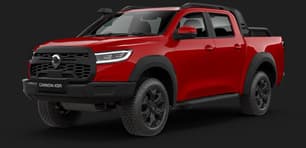
The Cannon XSR is GWM’s new top-shelf ute variant.
This dual-cab 4WD ute is intended as an off-road-focussed vehicle and has visual and mechanical upgrades over the rest of the Cannon stable, including part-time 4WD (not the full-time 4WD on GWM’s lower-spec Cannons), a front differential lock (in addition to the existing rear diff lock), raised air intake (aka a snorkel) and Cooper Discoverer AT3 all-terrain tyres.
It’s priced from $52,990 drive-away, so costs about $7500 more than you’d pay for the standard Cannon X on which this special edition ute is based. But it still undercuts similarly-equipped top-spec Ford Ranger and Toyota HiLux utes by about $20,000.
So, with twin lockers, a snorkel, underbody protection and all-terrain tyres, is the GWM XSR worth the extra cash?
Read on.
The new-generation RS 7 Sportback heralds the further evolution of this large majestic beast, with more features, a beautifully finished cabin and with more grunt with the looks to match. You’d be hard-pressed to find a better combination of power, dynamics and comfort in the Audi range – apart from in the RS 6 Avant of course.
In a very competitive ute market, the GWM Cannon XSR represents plenty of bang for your buck, but it’s just not as refined as you’d hope.
It should be better at this price-point, especially when it’ll be unfavourably cross-shopped with lower-spec variants in the Ford Ranger, Isuzu D-Max and Toyota HiLux line-ups.
It’s a nice enough vehicle on-road, and the XSR is an effective 4WD on the dirt without ever being truly exceptional – but that’s fine for those who want to save big bucks and still drive away in a well-equipped twin-locked off-road vehicle.
The big news is the RS 7 Sportback now comes with five seats. The previous generation car had just two seats in the second row. I'll talk more on practicality below but for now let's examine the new styling.
This RS 7 Sportback has new broad, black mesh grille, flanked by gigantic side air intakes, narrow headlights, and a thin upper air inlet which is a hat tip to early racing Audis.
While that new angrier, more angular and menacing face is a showstopper, everything about the new RS 7 Sportback seems to be accentuated further.
Look at the wheels. The previous generation came with 21-inch rims, now the new normal for the RS 7 are 22-inches – they're huge. Those wheel guards also flare out 20mm more than a regular A7's and the rear haunches have bulked up massively.
Come to the back of the car and the diffuser and bumper have also been beefed up. Nobody sitting behind you in traffic is going to think this is just a regular A7.
Don't expect the RS 7 Sportback's insides to be just as hardcore as its exterior. The cabin is almost identical to a regular A7's. It's a stunning cockpit dominated by a dash which protrudes back towards the passengers and houses the media screen. Anther display for climate is set into the big centre console which divides the driver and co-pilot into almost cocooned cells.
The cabin isn't without its RS touches though – there's the sports seats with honeycomb stitching, fully digital instrument cluster with RS specific meters, the RS steering wheel, the Nappa leather on the dashboard and the doors, the aluminium inlays. The level of fit and finish is up there with the best that I've seen on any production car.
The RS 7 Avant is 5009mm long, 1424mm tall and 1950mm across for a wide planted stance.
The XSR is 5439mm long (with a 3230mm wheelbase), 1958mm wide, and 1918mm high. It has a listed kerb weight of 1965kg.
It looks like the mongrel child of a HiLux, Ranger and D-Max – in a good way.
The wider-than-standard wheel track, as well as the snorkel, sports bar, substantial bash plates, tyres and even red brake calipers add to this ute’s presence.
The previous RS 7 Sportback was a four-seater, now it has five seats. That's right, a middle seat has been added to the second row, but, as you'd expect, it's not the best place be in the RS 7 Sportback, straddling the large driveshaft and ducking under the low roof-line.
That fastback profile does mean headroom in the second row is nowhere near as good as the RS 6 Avant's, but legroom is the same and, at 191cm tall, I can just fit behind my driving position with about 10mm to spare.
Up front it's not as spacious as you might think. That stepped dash protrudes into the passenger's space, the door pockets are thin and the centre console storage under the armrest is small.
Sportbacks are more practical sedans thanks the large opening offered by the hatch. The boot's 535-litre cargo capacity is great and only about 30 litres less than what you have in the RS 6 Avant.
For phones there's a wireless charger and two USB ports in the centre console storage box, while back seat passengers have two USB ports and a 12V outlets. There's also directional air vents and dual-zone climate control in the rear, too.
The XSR’s five-seat interior is a neat and roomy space but, in line with most utes at this price-point, if you scrutinise it in a critical way you soon discover that some parts feel a bit cheap and flimsy, such as some buttons, dials and switches.
Up front there are two USB ports, a wireless charging pad, a 12V plug and a capacious centre console.
A pair of cupholders can be concealed under a sliding cover and the storage bin is on the right side of big.
The driver gets a six-way power-adjustable seat; the front-seat passenger gets four-way power adjustment. Both seats are comfortable without being too plush.
Second-row passengers get a firm but comfortable seat and amenities include a USB port, a 220V plug, and a fold-down centre armrest.
The second-row seat base can be folded up and out of the way to make room for more gear if only two people are travelling.
Build quality is generally okay, part from the aforementioned flimsy-feeling buttons.
The XSR’s business end, the tub, has a durable-looking tub liner, tie-down points and a handy pop-out step hidden in the top of the tailgate.
But it's worth noting this ute’s tailgate can’t be locked.
The Audi RS 7 Sportback lists for $224,000, which is exactly $8K more than the RS 6 Avant.
Coming standard are the enormous 22-inch alloy wheels, the matrix LED headlights with laser lights, metallic paint, a panoramic glass sunroof (which is new to the model), privacy glass, head-up display, soft-close doors and red brake calipers.
Inside there's the Bang and Olufsen 16-speaker sound system (that new, too), sat nav, the 12.3-inch virtual instrument cluster, wireless Apple CarPlay (new, as well), wireless charging, full leather upholstery with RS sport front seats that are heated and now come with ventilation as standard, and four-zone climate control.
I've left off all the standard RS mechanical equipment, but I'll cover that in the driving section below.
Is it good value? Well the Mercedes-AMG CLS 53 S is $186,435 but it has way less grunt, the Alpina B5 which I've also road-tested lists for $210,000 and there's the Porsche Panamera 4 Sport Turismo for $236,300.
The XSR has a manufacturer suggested retail price of $52,990 drive-away.
Standard features include a 9.0-inch multimedia touchscreen system (with Apple CarPlay and Android Auto), a 7.0-inch digital driver info display, quilted leather seat trim, quilted leather door trim, 18-inch black alloy wheels, a sports bar, an assisted tailgate (with a pop-out step) and roof rails.
It also has LED headlights with LED DRLs, side steps, powered mirrors, keyless entry, push-button start, power-adjustable and heated front seats, a leather steering wheel, single-zone climate control air conditioning, an auto-dimming rear view mirror, tinted rear glass, and a six-speaker audio system.
As well, the XSR gets a part-time 4WD system (with 2WD high-range, 4WD high-range and 4WD low-range), rather than full-time 4WD, which is on lower-spec GWM utes; a front differential lock (in addition to the existing rear diff lock) and Cooper Discoverer AT3 all-terrain tyres.
It also gets red brake calipers, an underbody bash plate, wheel arch flares, and a sunroof.
Elsewhere, it gets steel front and rear bumpers and a new black grille.
The RS 7 may look like a large, well-mannered business class car, but think of it as a thug in a suit because this thing is a monster with a 441kW/800Nm twin-turbo petrol 4.0-litre V8.
That's almost 600 horsepower and the supercar acceleration that goes with it is brutal: we're talking 0-100km/h coming in 3.6 seconds. That also matches the RS 6 Avant and it's a tenth of a second faster than the Audi R8 V10 RWD supercar, (and also the previous-gen RS 7 Sportback Performance) and this is a large, four-door, five-seater.
Compared to the previous generation RS 7 Sportback Performance the power is down by 4kW, but torque is up by a whopping 100Nm. Give me torque over power any day.
Shifting gears is an eight-speed automatic transmission, sending the drive to all four wheels.
The XSR has the Cannon’s 2.0-litre four-cylinder turbo-diesel engine that produces 120kW at 3600rpm and 400Nm from 1500rpm to 2500rpm.
It has an eight-speed automatic transmission.
As mentioned, the XSR has part-time 4WD – with 2WD high-range, 4WD high-range and 4WD low-range – rather than the full-time 4WD set-up that’s in standard Cannons.
This is a large, all-wheel drive car with a 600 horsepower V8, but it also has a mild hybrid system in this new generation, which will switch the engine off at let the car coast down hills or at speeds under 22km/h.
Audi says this can save up to 0.8L/100km in real-life driving. That's great news, but consumption is still fairly high with Audi saying that after a combination of open and urban roads the RS 7 Sportback will have used 11.6L/100km.
The Cannon XSR has a listed fuel consumption of 9.4L/100km on a combined cycle.
Actual fuel consumption on this test, from pump to pump, was 11.2L/100km but, as is the nature of my testing, I did a lot of low-range four-wheel driving.
The Cannon XSR has an 78-litre tank so, going by that fuel figure above, you could reasonably expect a driving range of about 696km from a full tank.
Note: Drop 30km to 50km from any vehicle’s total calculated fuel-range figure for a better idea of that vehicle’s safe touring range – so, following that advice, the above driving range figure (696km) would become 666km after a 30km safe-distance buffer has been subtracted.
Also, remember that numerous other factors affect your fuel consumption and so impact your driving range, including how much extra weight you have onboard (passengers, camping gear, etc), whether your vehicle is fitted with any aftermarket equipment (bullbar, spare-wheel carrier, etc), whether you are towing (a camper-trailer, caravan, or boat, etc), your vehicle's tyre pressures, and the conditions.
I've never met an RS model that hasn't been great to drive – these cars are way more than just tough body kits and big wheels. The engineering which separates the RS 7 Sportback from the A7 makes them more distant cousins than siblings.
As I mentioned before the RS 7 Sportback and RS 6 share more than the same twin-turbo V8, there are also the giant brakes in form of 420mm discs at the front with 10 piston calipers and 370mm discs at the rear.
The optional carbon ceramic brakes are the largest ever to be fitted to a production vehicle at 440mm at the front and 370mm at the rear, saving 34kg in mass over the steel brakes.
Now standard for the first time is Audi's Dynamic Package, which adds dynamic steering (a variable ratio) paired with all-wheel steering, a sport differential, and a 280km/h top speed.
Coming standard is adaptive air suspension and for $2850 you can option the Dynamic Ride Control suspension, which is a hydraulically activated adaptive damper system
At the Australian launch, Audi supplied two RS 7 Sportbacks: one with the air suspension and the other with not only the Dynamic Ride Control system, but also the RS Dynamic Package Plus which adds the ceramic brakes and increases the top speed to 305km/h – this was the car I started off in.
I'm going to say right away that you don't need ceramic brakes for regular road use. Sure it means you can tell people that you have the biggest brakes in the world and they save you almost 35 kilos in weight, and, yes, they're resistant to fading, but they're expensive to replace and the steel ones are incredibly good.
I also feel the Dynamic Ride Control sports suspension isn't necessary in a car like the RS 7 Sportback. This is a Grand Tourer designed to eat up hundreds of miles at lightspeed in comfort.
So, while I found the first RS 7 Sportback with the big brakes and sports suspension sharper and firmer than the standard car, it didn't seem to fit with this vehicle's intent.
The regular RS 7 Sportback still accelerated with the same brutal force and roared at the scenery flashing past. It still handled through the tight corners superbly with excellent turn in, mind-boggling traction and grip, and excellent body control, but all in far more comfort.
This is the point – we covered hundreds of miles at the Australian launch of the RS 7 Sportback in a range of RS models, and sports suspension can go from great to gruelling on Aussie roads with their coarse-chip bitumen and potholes. The RS 7 Sportback, with its air suspension, not only made driving far more comfortable, but easier, too.
If you’re not expecting a dynamic, sporty driving experience from the Cannon XSR, then you won’t be disappointed.
I’m enjoying the fact that off-road vehicles from China and India are improving all the time but there are significant trade-offs when opting for a much cheaper version of the ute you actually want.
The XSR is not an insubstantial ute, but that doesn’t excuse its less-than-ideal steering (which feels too loose) or its stiff ride on upgraded suspension which, even though it increases wheel travel (for 4WDing – more about that later), seemingly hasn’t been tuned to suit the XSR’s bigger tyres, wider wheel track and greater bulk than its lower-spec stablemates.
Also, this ute has an unwieldy turning circle of 13.7m, which makes it an interesting vehicle to manoeuvre along busy urban streets or through a bustling car park.
This is a well priced ute if compared to similarly equipped, much more expensive utes, but that doesn’t excuse its touchy throttle and thrashy transmission.
However, its engine, which can feel underdone when challenged, has a relaxed feel about it when open-road cruising and if you aren’t putting too much pressure on it you likely won’t think it’s much of a let-down.
Overall, the XSR does okay on sealed surfaces, without ever getting anywhere near great – it’s simply not as refined or compliant as it could – or should – be.
On the dirt track leading to our 4WD test track, the XSR was very skippy over corrugations and tended to thump through potholes.
This ute does go well off-road though when it comes time for low-range 4WDing but, equipped with front and rear diff locks, that’s to be expected.
Off-road traction control and other systems including hill descent control, are adequate without being as seamlessly smooth as the equivalent systems in more expensive vehicles.
It also has 'Crawl Mode' (allows for no-pedal, low-speed driving) and 'Turn Assist' (which brakes the XSR’s inside rear wheel to reduce the ute’s turning circle on traction-compromised surfaces).
The over-sensitive throttle is far from ideal during low-speed low-range 4WDing when you need absolute control for safe driving, but I did become used to it – or at least I put up with it.
As mentioned earlier, the upgraded suspension has boosted wheel travel, which means you’re more than likely able in the XSR to stretch a tyre to the dirt for better traction and controlled forward progress.
The XSR’s Cooper Discoverer AT3 all-terrain tyres help, especially when the dirt becomes sticky mud that would gum up a lesser tyre, and we had no strife getting up and over one of our more severe set-piece hill climbs on that rubber.
All in all, the XSR is a capable twin-locked 4WD without ever being exceptional – and that’s fine.
The Cannon XSR has towing capacities of 750kg (unbraked) and 3000kg (braked).
ANCAP tested the A7 in 2018 and gave it the maximum five-star ANCAP rating, however, this rating does not apply to the RS 7 Sportback high performance model.
That said, the RS 7 Sportback is fortified with nearly every piece of advanced safety tech there is in Audi's cupboard. There's AEB which can detect and brake for cyclists and pedestrians at speeds between 5-85km/h and vehicles up to 250km/h; there's rear cross traffic alert and intersection crossing assistance with braking; lane departure warning and corrective steering to keep you in your lane, and blind spot warning.
Not a fan of parking, the RS 7 Sportback can do it by itself, or there's a 360-degree camera that'll help you do it yourself. There's an exit warning system, which will warn you if a vehicle is approaching as you go to get out, too, and if the RS 7 Sportback detects that it will be hit from behind, it will prepare the cabin by tensions the seatbelts and closing the windows, including the sunroof.
Along with all that there are Audi's new Matrix LED headlights with laser lights, rain sensing wipers and adaptive cruise control.
For child seats you'll find three top tether points and two ISOFIX mounts across the second row.
There's no spare wheel – instead, there's a tyre repair kit.
The Cannon range has the maximum five-star ANCAP rating from testing in 2021, however the Cannon XSR is not covered by this rating.
Standard safety gear on the XSR includes seven airbags, AEB (sans pedestrian detection) forward collision warning, lane-departure warning, lane-keep assistance, adaptive cruise control, traffic sign recognition, rear parking sensors, a 360-degree camera and tyre-pressure monitoring.
It does not get front parking sensors, lane-change assist or a door-open warning.
The RS 7 Sportback is covered by Audi's three-year, unlimited kilometre warranty which not only falls behind in duration compared to mainstream brands but also its direct rival Mercedes-Benz which now has five-year, unlimited kilometre coverage.
Service intervals are every 12 months or 15,000km with a three-year plan costing $2380 and a five-year plan for $3910.
The XSR is covered by a seven year/unlimited km warranty.
The first service is scheduled at the six-month/5000km mark (and costs $260), then every 12 months or 10,000km, with each service costing $360 a pop.