What's the difference?
Is 10 years long enough for a special birthday celebration? When you're a kid, hitting 'double figures' is a pretty big deal, and Audi's obviously in the mood to make some noise because it has lit the candles on a limited 10th anniversary version of its compact SUV rocket ship, the RS Q3.
Only 555 examples of the 'RS Q3 Sportback edition 10 years' will be produced for worldwide consumption, with Audi Australia capturing a batch of them and sending one our way for a brief blast as the fiery five-cylinder starts filtering into dealerships.
The first two things any new starter who arrives in the design department of Jeep’s headquarters in Ohio is told are, 1) The bathrooms are here and, 2) Don’t change the Wrangler.
Okay, I made that up, but it’s probably not far from the truth, because the Wrangler isn’t just iconic for Jeep, but iconic for the entire car world in a similar way to the Porsche 911 and the Ford Mustang.
The Jeep Wrangler is the equivalent of a Hollywood superstar - the Clint Eastwood of the car world - with its design that stretches all the way back to the iconic little off-roader purpose-built for the US Army in World War II.
So, how do you make changes without changing the recipe? Well, the Wrangler has been updated and we went to the Aussie launch to see what’s changed.
The Audi RS Q3 Sportback edition 10 years is dynamically brilliant, beautifully finished and surprisingly civilised on day-to-day duty. A polished compact performance package that even in this special 'get-it-while-you-can' guise offers compelling value relative to its direct competitors.
The changes to this updated Jeep Wrangler are small but meaningful. The inclusion of airbags, the updated media screen, and a feisty engine which suits the plucky nature of this off-roader make it a better Wrangler than ever.
Note: CarsGuide attended this event as a guest of the manufacturer, with travel, accommodation and meals provided.
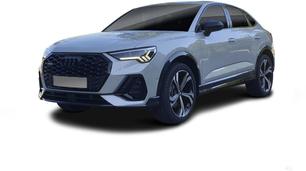
There's a lot going on with the RS Q3's exterior design; a mix of jagged lights, hard character lines, broad haunches and multiple vents surrounding the brand's signature, six-sided grille up front.
The big 21-inch rims fill the arches nicely and the rear features a deep diffuser with fat exhaust finishers poking out either side.
It's a purposeful, macho look and the Sportback edition 10 years is defined by a black package which adds gloss black to the side window trim, front spoiler blade, side blades, rear diffuser and exterior mirrors.
The limited edition is available in two colours, 'Chronos Grey metallic', which is unique to this model and 'Dew Silver matte' which will now be added to the broader RS Q3 colour palette.
Premium performance feels like the dominant theme inside with a typically Audi tech-focused approach including high-quality brushed metal elements, matt carbon inserts and quilted leather trim on the heavily bolstered front seats.
A meticulous attention to detail is obvious and the bottom line is it's all about the driver. A grippy, flat-bottom, leather-trimmed steering wheel looks as good as it feels, sleek screens enhance the racy vibe and the mix of physical and digital controls is sensible.
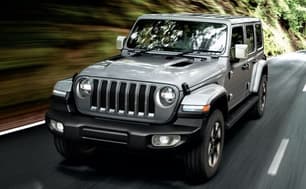
The Jeep Wrangler looks like a cartoon of a four-wheel drive, that’s how familiar and well-known the design is. It’s almost generic, like the word Jeep.
You could say the design is iconic, given that the roots of this SUV stretch back to the little Willys off-roader built for the US army in World War II. And to this day the slotted grille, pronounced wheel guards, short and upright windscreen, even the removable doors are still with us in this latest incarnation.
That’s why each generation of the Wrangler only sees very subtle tweaks to famous shape and look, in much the same way a Porsche 911’s design changes at the rate of dripping water reshaping a rock.
Changing the styling completely would destroy the look which connects the Wrangler to its past and the nostalgic appeal would be over.
So, this update sees more than subtle styling changes in the form of a tweak to the grille with the addition of a metallic-look trim around each of the slots while the mesh insert now has larger openings.
Along with this there’s a new front bumper. The Wranglers we tested had the optional heavy duty steel front bumpers.
There’s also some interior changes in the form of a new dashboard trim, horizontal air vents and then there’s the 12.3-inch media display which goes a long way to making the cabin look more modern.
Still, the interior is busy with buttons and switches in a design that seems to mix the look of heavy machinery controls with a prestige car. The Nappa leather of the Rubicon grade lifts the quality feel higher.
All Wrangler interiors also have an internal roll-over cage which covers the entire cabin, for the fixed metal roof and removable roof body style which are standard on the Overland and Rubicon.
Only the Rubicon is offered in a two-door and a four-door, while the Overland and Sport S are four-door only.
The Rubicon two-door looks cute and fun to my eyes, while the four-door versions look a bit more serious and beefy, but both definitely still give off tough and adventurous vibes.
The wheelbase difference between the two is as giant as it looks. The Rubicon two-door’s wheelbase is 2459mm while the four-door Rubicon’s, along with the Sport S and Overland, is 3008mm.
The Wrangler ranges in length from 4334mm for the Rubicon two-door to 4882mm for the four-door Wranglers. Width is the same for all Wranglers at 1894mm and the height ranges from 1879mm in the Rubicon two-door to 1901mm in the four-door versions.
Snug but spacious enough, the RS Q3 Sportback's driver and front passenger are provided with plenty of breathing room without upsetting the intimate, performance car feel. Just be prepared for a bit of head-ducking physical origami when folding yourself into either of the heavily bolstered front seats.
Storage includes door bins with room for bottles, two generous cupholders in the centre console, a lidded tray in front of the gearshift (which doubles as the wireless device charging bay), a storage compartment and owners manual holder under the front seats, a modest glove box and an adjustable front centre armrest with storage compartment.
Given this car measures just over 4.5m end-to-end, a close to 2.7m wheelbase is significant and rear room is generous given the Q3's overall footprint. Plenty of head and legroom (for me at 183cm) with enough width for three adults on short journeys. A trio of up to teenage kids will be fine.
The back seat is able to slide for extra legroom (and slightly less boot space), while backrest angle is also adjustable.
Storage runs to small bins in the doors, a fold-down centre armrest (with two pop-up cupholders) and storage nets on the back of the front seats. Directional and temperature control in the rear for the ventilation system is a big plus.
Power and connectivity options run to a 12V outlet and two USB sockets in the front (Type A and C), another two Type C sockets in the back and a second 12-volt jack in the boot.
Speaking of which, cargo volume with all seats up is a handy 530 litres, enough to swallow CarsGuide's three-piece luggage set or large pram (the latter with room to spare) and 1400 litres with the 40/20/40 split-folding rear seat lowered.
The loading lip is low, a stainless steel sill protector helps minimise scuffs and scratches and the hands-free power tailgate is welcome.
If you're keen to hook up the boat or horse float the RS Q3 is able to tow a braked trailer up to 1900kg (750kg unbraked), but don't bother looking for a spare of any description, a repair/inflator kit is your only option. Boo...
When we review most SUVs practicality is scored on things like legroom, storage space and boot size. But in the case of a vehicle with removable doors and roof, and a cabin that has one-way drainage valves so you can hose the interior out, practicality takes on a different meaning.
The Wrangler’s practicality seems focussed on serving adventurous folks in search of a muddy off-road expedition and, so, while there is storage it’s mainly nets for door pockets, moulded wells on top of the dash, and smaller hidey holes to makes sure loose items don’t get flung around the cabin.
Given the roof can be removed there’s also a lockable glove box and centre console storage box.
When it comes to cabin space the Wrangler’s interior feels a bit cramped. The footwells up front don’t offer much space and headroom throughout is restricted by the roll cage which stretches from the front to the boot.
The four-door Wrangler has five seats and good legroom in the second row, even for me at 189cm tall. As mentioned above, headroom is limited in places because of the safety structure. Boot space behind those rear seats is 898 litres.
The two-door Rubicon has four seats. The back ones aren’t the most spacious and the boot behind them is almost too small to mention at 365L, Two pieces of carry-on luggage wouldn’t fit back there and we had to put our bags on the rear seats.
The rear tailgate for all Wranglers is side-hinged (opening left to right) and splits to allow just the window section or lower part to open separately.
For charging and powering devices all Wranglers have two USB ports up front (one -A and one -C) and four USB ports in the second row (two -A and two -C). There are also two 12V outlets on board (front and rear).
There are two cupholders, seatback map nets and directional air vents for the second row.
The Wrangler sits high and climbing into the rear seats might be a challenge for smaller kids or even fully-grown humans, but there are chunky handholds at the pillars for extra help.
So, the Wrangler has excellent practicality, but this is geared more to its intended purpose of adventuring off-road rather than the city commute and school pick-up.
The Audi RS Q3 Sportback edition 10 years is priced at $102,900, before on-road costs, which is a $3800 premium over the standard issue version.
For those extra dollars the car is upgraded with specific 21-inch black alloy rims, black badging and brake calipers as well as (three-stage heated) 'RS' Nappa leather-trimmed sports front seats with contrast 'Copper Honeycomb' stitching.
The fancy stitching extends to the Alcantara-trimmed steering wheel and gear lever, the RS floor mats also feature copper highlights and the door downlighting projects a unique rhombus design.
At that money the RS Q3 lines up against BMW's firecracker X3 M40i ($126,800), the ferocious Mercedes-AMG GLA45 S ($121,900) with the Jaguar E-Pace 300 Sport AWD ($84,500) the only other similarly pitched compact performance SUV within $20K of the Audi.
And as well as the performance and safety tech covered later in the review, the RS Q3's standard features list includes, three-zone climate control, adaptive cruise control, keyless entry and start, Nappa leather trim, ambient lighting (with 30 colour choices), an RS sport contour leather-trimmed steering wheel, 12.3-inch digital instrument cluster, 10.1-inch multimedia display (with text and voice control), (wired) Android Auto and Apple CarPlay, sat nav and wireless device charging.
There's also a Bang & Olufsen '3D Sound System' (15-speaker with 680-watt, 16-channel amp), digital radio, 21-inch alloys, electronically-controlled adaptive dampers, auto Matrix LED headlights (with RS-specific darkened trim) and a hands-free power tailgate. And it's worth noting metallic and pearl effect paint finishes are offered at no extra cost.
Pretty impressive. Especially when you consider even this special edition RS Q3 is $20,000 cheaper than its primary BMW and Merc-AMG rivals.
The Jeep Wrangler range comes in three grades. There’s the entry-grade Sport S which can only be had with four doors, the Overland which is also a four-door and the top-of-the-range Rubicon comes as a shorter wheelbase two-door and the four-door.
The Sport S replaces the Night Eagle as the entry-point into the Wrangler range and with a list price of $75,950 it’s $5500 cheaper, too.
Above this is the Overland for $84,950 and at the top of the line-up is the hardcore Rubicon which is $83,950 for the two-door and $90,450 for the four-door.
This update sees all Wranglers now coming with a (damage and scratch-resistant) 'Gorilla Glass' windscreen and a 12.3-inch media screen. But each grade also comes with its own new features.
The Sport S has been given heated front seats, a heated steering wheel and ambient cabin lighting. Meanwhile, the Overland now has power front premium 'McKinley' seats and soft spare tyre cover.
And finally the range-topping Rubicon receives Nappa leather seats and a forward-facing 'Trailcam'.
There are mechanical upgrades across the range, too, especially for the Rubicon and we’ll get to those in the engine and driving sections of this review.
As for the rest of the features, coming standard on the Sport S are LED headlights, 17-inch alloy wheels, proximity key and push button start, sat nav, Apple CarPlay and Android Auto, a nine-speaker Alpine sound system and dark tint windows.
Along with its new features the Overland also comes standard with all of the Sport S’s equipment plus a three-piece removable hardtop, 18-inch wheels and a leather-wrapped shifting knob and hand brake handle.
Then there’s the Rubicon which has all the Sport S features, but 17-inch wheels instead of the 18s and an enormous amount of engineering hardware that makes this grade the off-road king of the Wranglers, which we’ll get to.
The RS Q3 Sportback is powered by a 2.5-litre in-line five-cylinder intercooled turbo-petrol engine sending drive to all four wheels via a seven-speed dual-clutch automatic transmission and Audi's quattro permanent all-wheel drive system based on an electronically-controlled multi-plate clutch pack.
Featuring a cast iron block, alloy head, direct-injection as well as variable intake and exhaust cam adjustment, the (EA855) engine features a special firing order (1-2-4-5-3), the odd number of cylinders producing a signature engine sound and exhaust note reminiscent of the 1980s 'Ur' Quattro.
Peak power is 294kW from 5850-7000rpm and maximum torque is 480Nm delivered across a broad plateau from 1950-5850rpm.
One of the biggest changes Jeep could make to the Wrangler without causing complete mayhem for fans is to the engine and even then there will be folks who don’t like what they’re about to read.
Deep breaths, okay? Right, so, in this update the V6 petrol engine has been replaced by a 2.0-litre turbo-petrol four-cylinder.
At 200kW the new four-cylinder makes a smidge less power than the V6 but more torque at 400Nm. An eight-speed automatic transmission shifts gears and sends the drive to all four wheels.
If you’re a Wrangler fan you’ll most likely know about this engine swap, but you’re wondering how this four-cylinder feels.
The answer is, really good. Jeep has got it right. It’s a torquey, responsive engine that feels energetic and suits the Wrangler's personality well.
In the short time I’ve spent on and off the road I’m convinced this turbo-four will be a good companion wherever you decide to go.
And go pretty much anywhere you can, with all Wranglers being ridiculously capable off-road thanks to their ladder frame chassis, high- and low-range gears, outstanding ground clearance (233mm-257mm, depending on variant ), excellent approach angle (41.4 to 44 degrees, depending on variant) and a departure angle to match (37 degrees for the both Rubicons; 36.1 for the Sport S and Overland).
The Rubicon comes standard with Jeep’s 'Rock-Trac' on-demand four-wheel drive system and this update adds a full float rear axle. Sport S and Overland grades have Jeep’s 'Selec-Trac Active' on-demand 4WD set-up.
Audi's official fuel economy number for the RS Q3 on the combined cycle is 8.9L/100km, the 2.5-litre turbo-petrol five-cylinder engine emitting 204g/km of CO2 in the process. Stop-start is standard.
We covered city, suburban and some freeway running on test, returning an (indicated) average of 9.6L/100km. And that's pretty good, given we pushed on enthusiastically on a reasonably regular basis.
The fuel tank requires 63 litres of 98 RON premium unleaded to fill it which translates to a theoretical range of just over 700km, shrinking to around 650km based on our real-world number.
The new turbo-petrol, four-cylinder means better fuel economy than the V6 it replaces. We have yet to test Jeep’s claims that after a combination of open and urban roads the four cylinder uses 9.2L/100km in the sport S and Overland grades and 9.9L/100km in the Rubicon.
In comparison, Jeep says the previous V6 uses 10.1L/100km in the Rubicon and 9.9L/100km in the Overland. Our own testing saw consumption closer to 13L/100km.
We’ll have the new Wrangler in our garage soon and we’ll be able to put the fuel consumption claims to a real world test.
In terms of range, the two-door Rubicon has a 61-litre fuel tank and in theory a range of up to 680km. The Sport S and Overland have an 81-litre tank and can get up to 880km, while the four-door Rubicon’s 81-litre tank should manage 830km.
Of course if you’re off-roading you’ll use more fuel and the range will drop accordingly.
It still seems counterintuitive when a high-riding SUV is tuned to perform and handle like a low-slung sports car but here we are. And Audi executes this mystifying transformation as expertly as any carmaker in the automotive world.
Audi says the RS Q3 Sportback will blast from 0-100km/h in 4.5 seconds. Anything under 5.0 seconds is properly fast, and there's nothing quite like the deep-throated bellow of a VW Group in-line five to raise the hairs on the back of your neck.
The RS Q3's sport exhaust system is a dual-branch set-up with exhaust flap control, and people of a certain age will instantly imagine themselves matching it with Ari Vatanen, Walter Röhrl and Michèle Mouton on a suburban special stage behind the wheel of a 1980s Group B Sport Quattro rally car (actually, the school drop off at an infinitely more sensible pace).
The car weighs in at a not insubstantial 1775kg, but 480Nm, available all the way from 1950rpm to 5850rpm, means a near instant surge of fierce acceleration is always lurking under your right foot.
And the VW Group is on the pace when it comes to dual-clutch auto transmissions, from Porsche's 'PDK' and VW's 'DSG' to Lambo's 'DCT' and Audi's 'S tronic'.
The RS Q3's seven-speed unit is quick and positive, the wheel-mounted paddles ramping up the engagement factor.
The variable ratio, electrically-assisted steering is capital G Great. Well weighted and precise with reassuring road feel and the Alcantara trimmed wheel is a nice way to access it all.
Suspension is by struts at the front and multi-links (four) at the rear with adaptive dampers on-board.
Despite running on 21-inch rims, shod with high-performance 255/35 Continental PremiumContact 6 rubber, ride comfort is surprisingly good.
Dial in 'Comfort' mode via the 'Drive Select' system and the impact of even substantial bumps is softened off appreciably.
An ideal set-up would be the first 'RS1' short-cut Drive Select button set for Comfort suspension, with throttle, steering and transmission set to maximum attack and the second 'RS2' mode tweaking the suspension to track-day level, too.
Push on through your favourite set of bends and you can feel the electronic wheel-selective torque control system keeping everything under control. This car puts its power down through sweeping sections with fuss-free authority.
The RS-specific menu in the digital instrument cluster provides extra instrumentation in the shape of a power/torque display, G meter and lap timer. Fun!
The brakes are professional grade with big ventilated rotors all around and aluminium fixed calipers at the front.
But beware, the flip side of the RS Q3's quick steering response is a sizeable 11.8m turning circle. Take your time when parking.
Every one of the Jeep launches I’ve attended over the past 15 years has involved a pretty decent off-road component and it’s clear the company has a lot of faith in its product.
This Wrangler launch’s off-road test had been scaled back due to days of flooding rain beforehand, but the section that was passable was enough to remind us of what we already know and that is the Wrangler is formidable.
A Queensland bush off-road course full of steep, muddy hills, ruts, rocks, dirt and slippery descents was still all there for us to test the Wrangler Rubicon four-door.
Fun and comfortable are the first words that pop into my head when recalling how the Rubicon fares. This is a super-capable beastie that feels planted, secure and adept at all times.
We tested low- and high-range four-wheel drive, locked the rear differential and let the hill descent mode do its thing and get us down the sides of hills that felt so close to vertical all we could see through the windscreen was the ground.
What's also clear is the new turbo-petrol, four-cylinder feels well suited to the job, with plenty of torque along with a feisty and responsive nature that fits the Wrangler better than the old V6.
There was also plenty of time spent on the road in the four-door Rubicon and its smaller two-door sibling. And was here it was also super clear the Wrangler felt like we’d taken it out of its natural habitat.
At 110km/h on the motorway the two door Rubicon feels light and floaty in its suspension, with steering adjustments having to be made constantly, like actors pretending to drive cars in movies, as the Wrangler wanders around in its lane. The Wrangler wander is a known trait and isn’t specific to this updated car.
And even though our launch drive took us on some great winding country roads which would have been perfect for a Mazda MX-5, the Wranglers found the fast tight turns difficult to handle.
I’m sure I heard a sigh of relief from our Rubicon as we pulled off the road and selected low-range four-wheel drive before bouncing up what looked to be a sheer cliff, with ease.
Of course, our Adventure Expert Marcus 'Crafty' Craft will put the Wrangler though its paces once we have one in the CarsGuide garage.
Although the Audi Q3 received a maximum five-star ANCAP score in 2019, the RS Q3 was specifically excluded from the assessment, so it's officially untested.
But the car boasts an extensive active (crash-avoidance) safety suite including, auto emergency braking (AEB) (5.0km/h to 85km/h for pedestrians and cyclists and up to 250km/h for vehicles), adaptive cruise control (with stop-go function and active lane assist), lane change warning and lane departure warning (with lane keeping assist).
There's also 'Attention Assist' (warning tone and visual signal if the system determines the driver's attention may be lapsing), front and rear parking sensors, a reversing camera with 360-degree view, rear cross-traffic alert, tyre pressure monitoring, 'Hill hold assist' and hill descent control.
If, despite all that, a crash is unavoidable there are six airbags on-board (front and side for the driver and front passenger as well as full-length curtains). The RS Q3's showing its (10-year) age here because additional rear side and front centre bags are close to the norm now.
Nice to see a first aid kit and warning triangle included and there are three top tethers and two ISOFIX anchor points for securing baby capsules and child seats across the second row.
The Jeep Wrangler has a three-out-of-five star ANCAP rating from testing in 2019. This isn’t an adequate safety score for a modern vehicle and the relatively modest advanced safety tech compared to other new SUVs and its structural integrity in crash tests caused ANCAP enough concern to award it lower scores.
Surprisingly the ANCAP report scored its child occupant protection at 80 per cent which is excellent.
This update to the Wrangler now adds curtain airbags which cover the front and second rows. Along with these there are dual front airbags plus safety tech which includes AEB (city and inter-urban) and blind spot warning. There’s also adaptive cruise control and front and rear parking sensors.
For child seats you’ll find two ISOFIX and three top tether mounts across the second row of the four-door variants.
The standard full-sized spare wheel is mounted on the tailgate.
Audi Australia covers all the models it sells with a five-year/unlimited km warranty with 24-hour roadside assistance included for the duration. Pretty much cost-of-entry in this part of the market.
Paintwork defects are also covered for five years, and the body is warranted against corrosion (to the point of perforation) for no less than 12 years. Nice.
Service intervals are 12 months/15,000km and capped-price servicing is available, a five-year/75,000km plan for the RS Q3 costing $3580, an annual average of $770. Fairly steep.
An 'Audi Advantage' package is also available, adding an extra two years' worth of warranty, scheduled servicing and roadside assistance (to the end of any existing term) for $3800.
The Wrangler is covered by Jeep's five-year/100,000km warranty, which is off the mainstream market standard of five years/unlimited km.
Service intervals are recommended every 12 months and 12,000km and service prices are capped at $399. Jeep also offers lifetime roadside assistance if you service your Wrangler though Jeep.