What's the difference?
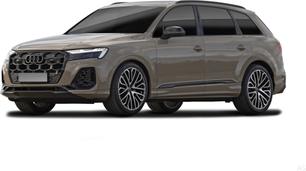
The updated Audi Q7 is a bit of a game of ‘spot the difference’ - but even though it’s far from a new generation, the update is more than just some shiny new bits.
While the brand’s first SUV is still in its second generation, a bit of modernised design and some tech tweaks are aimed at keeping it in line with rivals, even as it nears a decade on sale.
As well as the new features, there’s also a new variant bound for Aussie showrooms. So, is it still up to the task?
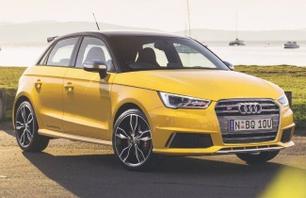
Spoilt. That's what we are. If you're in the market for a hot hatch, you can have your pick of German-built and French ones from as little as $27,000. There isn't a dud among them now that the VW Polo GTI has had a bit of an update and you can pick and choose your style. Audi's S1 is aiming to be king of the kids with its stiffly-priced S1.
Set the finances aside and consider for a moment what's on offer. As it turns out, a lot.
Overall, changes to the Q7 aren’t quite revolutionary, but that’s okay because it was already a fantastic large SUV.
The fact Audi has kept the price around the same mark and introduced a cheaper entry-grade should be welcome news for prospective buyers.
But even the existing variants are capable and impressive family haulers… and now they’re just that little bit better.
Note: CarsGuide attended this event as a guest of the manufacturer, with travel, accommodation and meals provided.
Cars this small shouldn't be this fast and useable at the same time, but the Audi S1 is. It isn't without its problems - the ride is harder even than the Fiesta ST which might weary some prospective buyers.
It's also a bit difficult to justify the price - in its basic form it's missing a few creature comforts that you'd expect in a $50,000 car - reversing camera, high-res screen, that sort of thing.
However, in the hot hatch world, those things don't matter. It has the bragging rights, the tech and the outright blinding speed to take on the bonkers Focus ST and equally zany Megane RS. And even the Audi S3.
The phrase ‘evolution not revolution’ is applicable here, cliche as it is, with the Q7 having been given a Botox-style lift at the front end.
The standard matrix LED headlights have a higher lighting signature than before, with the lighting elements leading into the lines down the shoulder of the SUV.
The grille now features a hexagonal honeycomb insert, the vertical line styling is now a thing of the past and the functional side vents are a little more aggro.
Overall, it’s a sharper look that brings the Q7 up to date with Audi’s current design language, down to the more angular wheel choices.
At the rear, the new tail-lights are ‘joined’ via a chrome strip spanning the rear, and the lower bumper (with real exhaust exits) has had a refresh.
Audi’s new CI badging (or ‘corporate identity’, pretty sexy stuff) is also present, which includes a new typeface for the ‘Q7’ badge at the rear, which is no longer italicised and is separate from the red ‘S line’ rhombus.
The four rings badge is also flatter and is white with black outlines, rather than a three-dimensional chrome badge.
Inside, the changes are more than skin-deep. In fact, the skin is the same, you’d be hard pressed to notice anything different about the Q7’s interior between pre- and post-facelift without diving into the electronics.
The A1 is so small it starts to strain Audi's design language. When you cram on the S-style bumpers and raccoon-eyed trim on the hatchback, it's starts to look a bit busy.
It isn't quite a shrink-wrapped A3 - Ingolstadt's designers know better than that - but it's full of Audi design cues, such as the strong, light-catching character lines, distinctive LED daytime running lights and fondness for big wheels.
Inside is along the themes of the A3, with what are becoming Audi's trademark; round eyeball air-con vents, the manual fold-down screen familiar to Q3 owners (but smaller) and a good clear dash. The handbrake jars slightly as it feels cheap to hold and wobbles a bit.
The S Sport seats are big and comfortable, and the top half of the backs are capped in plastic, which was colour-coded on our car. The rear passengers will certainly get an eyeful of whatever terrifying hue you've chosen, so choose wisely.
Despite the five doors, the back seats are occasionals, like the Mini the A1 is gunning for, and the boot is very small, but okay for shopping for couples or singles.
Four variants are available in the Audi Q7 line-up, excluding the performance-bent SQ7. Well, at the time of the launch event, one of those four is yet to arrive, that being the new entry-grade Q7 45 TFSI which starts from $108,815, before on-road costs. TFSI being ‘Turbo Fuel Stratified Injection’ or Audi-speak for ‘turbo-petrol’.
It’s joined by a diesel-powered 45 TDI which starts from $117,284, before on-roads. But ‘entry-grade’ for the Q7 doesn’t mean skint on goodies, both coming in with standard gear like leather-appointed upholstery with heated electrically adjustable front seats, an electric folding third row, wireless phone charging, screens and tech galore, matrix LED headlights, 20-inch wheels, adaptive air suspension, and a slew of safety features including some new stuff, but we’ll get to that later.
The matrix LEDs are one of the main new bits of kit, though a daytime drive route meant not getting to put those to use. They’re pretty, though…
The 45 grades can be upgraded with the $3900 'Premium Package' to add 21-inch alloys, four-zone climate control, black exterior styling and coloured interior ambient lighting.
Stepping up from the 45s are the 50 TDI S line and 55 TFSI S line, which together at $136,815 each form the next rung up from entry.
They’ve got 21-inch wheels and an S line exterior pack along with tinted privacy glass to tell them apart from the entry 45s from the outside, but inside there’s four-zone climate control, ambient lighting, a Bang & Olufsen sound system, a head-up display and proper leather upholstery for the seats.
Australian 50 TDIs and 55 TFSIs come standard with an S line interior pack that includes sports seats, leather steering wheel and shifter, aluminium inlays and door trim, plus black headlining and floor mats with contrast stitching.
There are two option packs at this level: the $4200 'Luxury Seat Package' adds S sports seats that feature an integrated headrest, Valcona leather with diamond stitching, ventilation for the front seats and heating for the second row’s outboard seats.
Then there’s a 'Premium Plus Package' for $5500 which brings 22-inch alloys, sport-tuned adaptive air suspension, dynamic all-wheel steering, a black exterior styling pack and power-assisted closing doors.
Given the update is all up relatively minor, prospective buyers will be pleased to know the same can be said for the pricing changes - even a year ago, the prices for the Q7 variants that were on sale at the time were within a couple of thousand dollars of where they are now.
Starting at $49,900, Audi S1 is by far the priciest of the small-hatch based hotties, at least until Mini's madcap JCW arrives. This price is just almost double that of VW stablemate's forthcoming 2015 Polo GTI.
Standard on the manual-and-five-door-only S1 is a ten speaker stereo, climate control, ambient lighting, remote central locking, cruise control, satnav, headlight washers, auto headlights with xenon low beams, partial leather seats, leather-bound steering wheel, auto wipers and rear parking sensors.
Our Misano Red ($990 option) came with two extra packs. The Quattro Exterior Package ($3990) adds bi-xenon headlights with red trim, red brake calipers, spoiler, quattro logos on rear doors (ahem!) and five-spoke 18-inch alloys that are part matt black, part polished.
The Quattro Interior Package ($2490) adds S Sport front seats with Nappa leather and red backrest capping with quattro logo (ugh), more nappa around the cabin with contrast stitching, flat bottom steering wheel and red rings on the air vents.
There's an S Performance Package that brings the best of these two packs together for $4990, saving about $1500 and the embarrassment of the quattro logos.
Our test car also had aluminium air vents ($220), black contrasting boot lid ($300) and black roof ($720).
The A1 is so small it starts to strain Audi's design language
The grand total is a sobering $58,610. There's a couple more options that'll easily pop you over $60,000.
Audi's MMI is dash-mounted in the A1 as there's no room on the narrow centre console. As ever, it works well and doesn't take much getting used to. The satnav is a bit grainy on the smaller screen but is otherwise a competent unit.
Sound is from a ten-speaker stereo and you can stream across Bluetooth or plug in a memory card. The sound was good but the system did take a while to find the phone whenever we came back to the car.
The four drivetrain options for the Q7 line-up are split between the two ‘grades’, with the 45 TFSI and TDI powering the 'entry-level' cars and the 50 TDI and 55 TFSI as the feature-packed variants.
The most affordable option is the 45 TFSI, which runs a 2.0-litre, four-cylinder, turbo-petrol engine making 185kW and 370Nm.
Like all variants in the Q7 range, the 45 TFSI engine powers all four wheels via an eight-speed automatic transmission. Audi claims the 45 TFSI will hit 100km/h in 7.3 seconds, if that’s your thing when it comes to three-row SUVs.
The rest of the line-up is powered by different versions of the brand’s 3.0-litre V6, all turbocharged, and all with 48-volt ‘mild hybrid’ (MHEV) tech aiming to increase efficiency.
The 45 TDI is, of course, a turbo-diesel 3.0-litre V6 that makes 170kW and 500Nm, also sending power and torque to all four wheels via the same style transmission. Audi says this one knocks over 100km/h in 7.1 seconds.
Similarly, but with more power and torque, the 50 TDI is also powered by a turbo-diesel unit as the name suggests. This one puts out 210kW and 600Nm, making it likely the best choice for towing and such even though all V6 variants boast a 3500kg braked towing capacity. The 50 TDI’s figure to hit 100km/h is a claimed 5.9 seconds.
Finally, the 55 TFSI makes 250kW and 500Nm, and boasts a 5.9-second claimed 0-100km/h time.
This is where the action is. The S1's tiny body packs a 2.0-litre turbocharged four-cylinder producing 170kW and 370Nm of torque. The S1 will streak to 100km/h in 5.9 seconds thank to the traction aid of quattro all-wheel drive.
All Audi S1s come with a six-speed manual
Despite a pretty solid hammering during its week with us, including more time than we'd have liked in Sydney traffic, the stop-start function helped deliver a pretty reasonable 10.2L/100km, however that's a long way over claimed 7.1L/100km.
All Audi S1s come with a six-speed manual, so dual-clutch haters can save the whining. The only downside from not having a self-shifter is the ECU can't deliver the boy racer farts, parps and crackles of the other S cars.
Aside from the mild-hybrid now standard on the Q7’s V6 models, there’s not a whole lot to report on in terms of new tricks or surprises from behind the wheel.
But that’s okay, because it means the Q7 remains a supremely comfortable and capable large SUV.
Our test route consisted of plenty of rural driving, with a combination of surfaces that would in some family haulers see the suspension and maybe even steering show cracks in their ability - but the Q7 remains composed.
Given its weight and size, it can feel a little hefty around sharper corners, but the Q7 in these variants (i.e, not its performance-focused SQ7 sibling) isn’t built to be hustled like that.
It feels like the kind of air-suspended loungeroom-on-wheels that would be at home barreling down the autobahn at 180km/h and being completely undramatic about it.
Still, this model shares some moving parts underneath with the likes of the extremely capable Porsche Cayenne, and while the Q7 isn’t quite a giant hot hatch, the sound foundations shine through dynamically.
Of course, when it comes to powertrains, there isn’t really a wrong answer, each engine fits a purpose.
If you’ll ever need to tow (and you can at up to 3500kg braked), the low-down steady urge of the 50 TDI is probably your best bet, but even the 45 TDI is a solid choice for long-range motoring.
The petrol models will better suit those in city situations, and while they never feel truly urgent, the 55 TFSI isn’t without some impressive push for something of this size.
If you're buying the S1 as a comfortable urban runabout with a cool badge, you're half right. While the seating for front passengers is certainly supportive, the hard suspension tune will ensure you're well aware of road surface imperfections.
The S1 is a rocket
Thankfully, what it missed out on in the ride department it makes up for in every other way - the S1 is a rocket. The 2.0-litre turbo jammed under the bonnet has almost no lag and is paired with a slick six-speed manual that is terrific fun to manhandle through the gears.
The way the S1 picks up speed when it's on boost is addictive and licence-endangering. A flattened accelerator in second or third will obliterate just about anything this side of $100,000 and you'll be having more fun in this than big brother S3 because the chassis is more adjustable and there's a bit more life.
You can hear the turbo sing to accompany the bassy exhaust growl. Hit the massive brakes hard and the car remains stable even over rutted roads. Turning the wheel brings almost-instant turn-in, mashing the throttle again a fun little wriggle. It's superb.
It's tremendous fun point-to-point on a twisty road
You'll have to be a bit patient with the throttle to get the wriggle, though - give it too much too early and it will want to push wide, the quattro system shuffling power around to try and quell understeer while the electronic diff fiddles with the braking system to do the same thing. It gets there in the end, but you're better off meting out the power with your right foot for maximum rewards.
It's tremendous fun point-to-point on a twisty road - despite being a bit heavy for its size (1415kg), it's as chuckable as the next best thing, the Fiesta ST.
The Q7 is a maximum five-star car according to ANCAP, but the list of safety features is dozens long.
The highlights include adaptive cruise assist, lane assist and side assist, surround view cameras and new traffic sign recognition plus warnings for approaching cyclists and the like.
In fact, Audi claims there are more than 30 active safety features, and almost all of them are standard across the range. The only one that isn’t is 'Parking Assist' with 'Park System Plus', as Audi calls it - the base 45 TFSI is only equipped with Park System Plus and not Park Assist.
Basically, the 45 TFSI can’t take over the task of parking itself, while the others can.
It’s all handled through radars, cameras, and sensors and when you’re on the road functionality is relatively unobtrusive which is a plus!
For reference, the Q7 has eight airbags including dual-frontal, side-chest airbags for front and second row outboard passengers, plus side head-protecting or curtain airbags for both rows.
On top of that, there are ISOFIX points not only in the second row, but also in the third, totalling five spots all up.
Six airbags, stability and traction control, ABS, brake assist and distribution all add up to a five star ANCAP rating.