What's the difference?
The Audi A4 allroad is the off-roader of the A4 line-up. I’m using the term ‘off-roader’ loosely here because this wagon is obviously best suited to daily duties in a city and suburbs, with perhaps an occasional foray into very light off-roading, i.e. driving on a well-maintained gravel or dirt road with few, if any, corrugations, and in dry weather only.
But that’s not a negative factor because the great thing about adventures is that they can be scaled to suit you, your lifestyle and your vehicle of choice.
However, is this allroad your best option for a comfortable, nice-driving all-rounder? Read on.
Almost 30 years after Lexus launched its original LS flagship sedan, the fifth generation of the car has arrived in Australia in what appears to be the brand’s never-ending battle to hunt down and beat Mercedes-Benz, BMW and Audi at their own game.
In some markets it looks as though Lexus is making headway. In the United States last year Mercedes-Benz was the best-selling luxury brand, followed by BMW and then Lexus. To give you even more insight, 50 per cent of all Lexus sales globally are in the US.
The story is different in Australia, with Lexus hardly a threat to the big three Germans, selling about a third less each month.
The Lexus LS is the Japanese prestige brand’s flagship and comes with a price that nudges up against formidable rivals. There’s the Mercedes-Benz S-Class, BMW 7 Series and Audi’s A8. Only the best cars from a few of the best brands in the world – no pressure, Lexus.
This may even be a reason to buy one – in that it’s not one of the traditional three. You could see Lexus as the popular underdog that in some ways does a better job than the usual suspects. A people’s favourite perhaps?
Just look at how often it’s mentioned in songs. According to lyrics.com.au the word Lexus has been used in 873 songs. Meanwhile Mercedes Benz appears in 500, Audi in 402 and BMW in 307.
With all this in mind we headed to the Australian launch to drive the LS 500 and its hybrid twin the 500h.
The Audi A4 allroad 40 TDI quattro S Tronic is a nice-looking wagon that’s fun to drive.
It’s packed with tech, adequately functional for daily life and it’s also capable enough off-road as long as the driving surface is nothing more challenging than well-maintained gravel or dirt tracks in dry weather, and you’re not planning a rough-and-tumble expedition into remote bushland.
As I mentioned earlier, the great thing about adventures is that you can scale them to suit you and your vehicle and the allroad offers a nice stepping-stone for people who’d like to experience the outdoorsy lifestyle, before perhaps diving deeper into it.
The Lexus LS 500 and 500h are both exceptional cars. The ‘obnoxious’ styling especially to the grille makes the offerings from BMW, Benz and Audi look bland and overly corporate inside and out. It’s really in the dynamics department that the LS falls short of its rivals and only the LS 500 is enjoyable if you like to drive with a degree of conviction.
Both the LS500 and 500h, though, have wonderfully comfortable rides and this together with those sumptuous interiors makes these the perfect place to be if you’re in the back being swiftly and quietly taken to you next meeting.
For me the sweet-spot pick would be the LS 500 F Sport for its value and dynamic ability.
The allroad’s overall look is part of a range-wide refresh and it certainly fits in with the line-up’s updated aesthetic.
Because I’m a bloke who spends the bulk of my time in 4WDs – traditionally bulkier vehicles rather than slim city-friendly wagons – I’m not totally enamoured of the Audi’s style, especially in terms of trip-packing practicality. However, I can certainly appreciate the appeal of its quite low, sleek and streamlined appearance, which its tweaked chunkier grille adds some gravitas to. It’s just not my cup o’ tea.
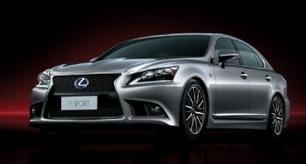
“You’re either going to love them or hate them.” You can bet that whenever you’re told this just before being introduced to somebody then that somebody is going to be downright obnoxious. The same goes for the LS, well it’s face anyway, because those are the kinds of statements made about that grille.
The thing is, the LS needs an obnoxious face because its up against The Establishment - the Mercedes-Benz S -Class, BMW 7 Series and Audi A8, and given there’s no way they’ll ever let Lexus into their little ‘club’ it’s good that the LS has steered clear of imitating them and is boldly different.
This was also the type of thinking which inspired the grille’s creator, Tokuo Fukuichi. The so called ‘spindle grille’ first appeared in 2010 on the CT200h before rolling out to the rest of the Lexus line-up. The look polarised the opinions of fans and even executives inside Lexus. But Fukuichi was adamant the key to the brand’s survival and success was to not to be boring.
That massive gaping mouth is anything but boring, and for this new-generation LS the spindle grille has been overhauled. Yes, some car companies might make a few tweaks to a grille, but not Lexus. Using a CAD computer program, it took designers six months to refine each of the 5032 surfaces on the F-Sport’s grille and the more than 7000 on the Sports Luxury’s. If only you didn’t have to slap a number plate on these exquisitely spun net-like structures.
New LED headlights and the ‘Zorro blade-slash’ LED running lights are equally obnoxious and therefore perfectly suited for the LS’s face. So too are the enormous air inlets below them in the bumper. If only the rest of the car’s exterior was as wild and not mild and milder the further you get from the grille. The rear looks stately, modern and sleek but could have done with something more adventurous (similar to IS’s taillights).
But the LS’s insides make up for that dullness, with a cabin that’s decadent and alien at the same time. A dash which sweeps from door to door features asymmetrical string-like design elements which are a theme carved through wood and glass and stitched into leather throughout the cabin. The quality is superb, while the fit and finish is better than I’ve seen on some of its competitors.
There are four no-cost interior packages on the Sports Luxury ranging from 'Moon White' trim with walnut decorative inlays to black trim with 'Crafted Latte' inserts. But it’s the $9800 optional 'Black with hand-pleating' and 'Kiriko' glass which is a stand out. It’s an intriguing look, the pleated fabric which cascades around the hand-cut Japanese glass.
The F Sport’s cabin is less decorative with seats that hold you tighter in three no-cost option leathers from 'Moon White' to 'Flare Red' with aluminium door and dash decorative elements.
Both cabins are sumptuous, although they fall a little short in gob-smacking tech like those amazing, expansive, floating dash screens and the virtual instrument cluster in the S-Class. Yes, there’s the large screen up front and the seat-back screens in the rear but the styling of the graphics and typeface reveal the Toyota DNA.
The LS has the presence a prestige brand’s flagship car should - imposing, long and wide. Look at the LS’s dimensions. At 5235mm end-to-end and 1900mm across, the LS is longer and wider than a Mercedes-Benz S-Class, but swoops in lower at 1450mm. The LS’s wheelbase is longer than a regular S-Class’s at 3125mm, too.
Apart from the grille you can tell an F Sport from a Sports Luxury by its black brake calipers and black elements in the front bumper, boot lid and sill.
To tell a 500 from a 500h, the difference is subtle. There are the badges, of course, but the 500's rear bumper also has a different design with chrome exhaust surrounds.
I’ll answer that question as a politician would – without actually answering the question.
The allroad’s interior looks good and certainly feels open and spacious, although the driver’s seat tends to feel a bit more snug as the dash is angled towards that position.
The new 10.1-inch touchscreen, home for most upfront functions, dominates the dash, in a good way.
The front seats are electrically adjustable with lumbar and driver memory.
There are plenty of places in which to put your everyday bits and pieces (including a decent storage bin/arm-rest), as well as charging points, including two USB ports, for your devices.
Need somewhere to put a cold beverage, mate? There are two cup-holders between driver and front-seat passenger, two in the fold-down centre arm-rest for the back-seat passengers, and bottle holders in all doors.
Back-seat passengers also get air vents, climate control, mesh seat-back pockets and grab handles.
There is a 495-litre cargo space when the rear seats are in use, but that increases to 1495 litres when those seats – 40:20:40 split folding – are stowed away in the floor.
Anything with a 3.1m wheelbase has to be practical right? Well, legroom in the back is excellent, but I can’t properly stretch out in that reclining rear seat with the ottoman without my feet hitting the seatback.
Headroom is also a bit a restricted in that rear row for me, too. That’s something to keep in mind for taller passengers (I'm 191cm tall).
A cargo capacity of 480 litres is 30 litres shy of the Mercedes-Benz S-Class, while the cooler box in the rear (that comes with the Sports Luxury trim) eats into the boot space and drops the total to 440 litres.
The LS is a five-seat sedan, but that centre rear seatback folds forward to become the armrest and houses the controls to the massage and reclining functions, plus two cupholders.
There’s another two cupholders up front and pockets in all the doors. While the storage area under the centre console armrest in the front and back is good – that’s about it for storage.
An access mode will raise the car by 30mm when getting in and lower it by 10mm when getting out. Those wide opening doors also make entry and exit easier.
The Audi A4 allroad 40 TDI quattro S Tronic has a MSRP of $69,900 (plus on-road costs).
It has a 2.0-litre four-cylinder turbo-diesel engine unit (140kW/400Nm), a seven-speed S tronic automatic transmission, and Audi’s quattro all-wheel drive system.
In standard guise this allroad’s features list includes a new 10.1-inch touchscreen (with Apple CarPlay and Android Auto), DAB+ digital radio, an Audi 10-speaker stereo, wireless charging for Qi-enabled smartphones, Audi’s Virtual Cockpit (a 12.3-inch digital display), smart key with push-button start, leather trim, three-zone climate control, as well as LED headlights, 18-inch alloy wheels, illuminated door sills, and overall tweaked exterior and interior styling.
It also has AEB with pedestrian detect, lane change warning, rear cross-traffic alert, front and rear parking sensors and a reversing camera.
But our test vehicle has a few different features and a fair few extras. Our allroad has a ‘price as tested’ of $75,681 (plus on-road costs), because it has Assistance plus package ($2900), which includes a raft of driver-assist tech, such as adaptive cruise control, active lane assist, collision avoidance assist, high beam assist, head up display, park assist (helps to steer the vehicle into a parallel or perpendicular parking space), as well as a 360-degree-view cameras
It also has 19-inch Audi sport alloy wheels in 10-Y-spoke design ($1350), instead of the standard 18-inch alloy wheels in 5-V-spoke design, and metallic paint (Mahattan grey, $1531).
Note: when we were conducting this test, Audi announced that, among other things, it would release a new-gen A4 allroad quattro 40 TDI in early 2021 that would have an extra 10kW more than our test vehicle, so it’ll be a 150kW/450Nm machine.
For those of you into hot laps, the current-generation achieves 0-100km/h times of 7.9 seconds; the new A4 allroad quattro 40 TDI is claimed to achieve that mark in 7.3 seconds.
Pricing for the upcoming 150kW A4 allroad quattro 40 TDI as standard was set to be $70,700.
The line-up is simple. There are two powertrains: the turbo-petrol V6 LS 500, and the petrol-electric LS500h hybrid, and there's no price difference between them. Then, there are two trim levels: the F Sport for $190,500 and Sports Luxury for $195,500.
Coming standard on the F Sport are 'F Sport' seats with leather upholstery, heated front and rear seats, dual-zone climate control, 28-way power adjustable front seats and head-up display. The multimedia system comes with a 12.3-inch screen, sat nav, DVD player, DAB+ digital radio, Bluetooth connectivity and a 23-speaker Mark Levinson sound system.
There’s also LED headlights, 20-inch alloy wheels and a kick-open tailgate. While the F-Sport misses out on some of the plush features of the Sports Luxury it does get hardware for better on-road dynamics which you can read about in the driving section below.
The Sports Luxury has that large screen, those power adjustable front seats and the multimedia system with that Mark Levinson stereo, too, but adds much more. The front passenger seat slides and folds itself forward to allow the seat behind it to recline and extend its ottoman-style leg rest.
Both rear seats are 22-way power adjustable and heated. If you’re lucky enough to be lounging back there, you’ll also two 11.6-inch seat-back screens with a DVD player. Plus, there’s four-zone climate control, a rear cooler box and power sun shades.
The F-Sport and Sports Luxury have their own choice of no-cost interior options. The Sports Luxury also gives you the option to buy (for $9800) one of four special interior packs – you can read about the standout one with the hand-cut glass below.
There are 11 body colours to choose from: Sonic Quartz, Sonic Silver, Titanium, Liquid Metal, Onyx, Graphite Black, Vermillion, Scarlet Crimson (a dark red), Metallic Silk, Deep Metallic Bronze and Deep Blue.
The Audi A4 all road 40 TDI quattro S Tronic has a 2.0-litre, four-cylinder turbo-diesel engine, producing 140kw at 3800-4200rpm and 400Nm at 1750-3000rpm.
It has a seven-speed S tronic automatic transmission and all wheel drive.
Let's talk engine specifications .The LS 500 has a 3.5-litre twin-turbo petrol V6 making 310kW/600Nm, with drive being sent to the rear wheels via a 10-speed automatic transmission. That's impressive horsepower, but this car is heavy is a weight of about 2.3 tonnes.
The LS 500h has a 220kW/350Nm 3.5-litre V6 (a different engine to the 500’s) plus two electric motors driving the rear wheels. The total power output is 264kW. Shifting gears in the 500h is a continuously variable transmission (CVT). Just a reminder, too, the LS 500h is not a plug-in hybrid. Regenerative braking re-charges the lithium-ion batteries.
If you're looking for a diesel, you won't find one here. Same goes for a manual gearbox. And, while buyers can choose an all-wheel drive (awd) Lexus LS in other markets around the world, ours are all front-wheel drive.
It has claimed fuel consumption of 5.2L/100km (combined), but we recorded actual fuel consumption on test of 8.4L/100km – driving in soft sand likely negatively impacted that figure.
It has a 61-litre fuel tank.
The LS 500 has an official fuel consumption of 9.5L/100km while the 500h’s is 6.6L/100km after open and urban road driving. We drove both cars on mainly country roads and saw an average of 10.1L/100km in the LS 500 and 9.1L/100km in the 500h.
For a bloke who spends a lot of time in big, tall and bulky 4WDs, I felt like I was driving a go-kart. It’s that low, but it’s also that much fun – and it’s a very different driving experience to what I’m used to.
The allroad is 4762mm long, 1847mm wide and 1430mm high, and has a listed kerb weight of 1720kg. So relative to the 4WDs I usually steer around, this is light and low slung. It’s more car than SUV, that’s for sure.
Acceleration is rather punchy (the engine and auto are a decent match-up), steering is light but precise, and you can cycle through drive modes (efficiency, comfort, auto etc) to set up vehicle characteristics to suit your driving style and conditions.
The quattro all-wheel drive system helps to keep the allroad planted and composed at all times.
Ride is on the sharpish side of firm and you do tend to feel every irregularity in the road surface – it is long and low and on low-profile rubber afterall.
The virtual cockpit plus – a 12.3-inch high-resolution colour display – offers a comprehensive read on all things to do with the allroad.
Throw around your superlative of choice – “sporty” and “dynamic” fit this allroad well – but I’m loathe to gush about its on-road performance much more than that because I reckon if any motoring journos are reading this – many of whom spend the lion’s share of their time swanning about in sports cars – they would have already choke-spat out their dirty chai with surprise by now.
My first experience of the new LS was from the back seat of a 500 Sports Luxury being driven from the airport to the venue where Lexus Australia would deliver the presentation on its fifth generation of the car.
Seat reclined, I was whisked quietly and comfortably through the traffic, barely any road or wind noise, the ride was superb on that air suspension, a little floaty but still damped well enough for it not to become bouncy, with minimal head sway (the movement that makes you car sick).
Cocooned in leather with seat-back screens for audio and DVD the ride and environment was just right for a limousine chauffeuring important business types who need swift and tranquil transportation. Not for weirdos like me who were only interested in the way the front and back multi-link suspension kept a 2.3-tonne car with a 3.1m wheelbase so civilised, even through roundabouts. I wondered if this was actually the best way to experience the LS – from the back seats, being driven?
When I did drive the 500 and 500h in the two trims later it more or less confirmed that first impression. The 500 in F Sport trim was the best to drive, while the 500 in Sports Luxury was the best to be driven in. Why? I’ll explain.
The LS 500’s 3.5-litre twin-turbo V6 makes more power than the hybrid for starters, which is always a good thing when you need to move a car this heavy. Even then the LS 500’s acceleration isn’t super quick, and the engine needs to work hard when asked to get a wriggle on. That 10-speed automatic transmission is excellent though.
The same can’t be said for the CVT in the 500h which under harder acceleration does what CVTs do in that situation, make more noise without seeming to get the drive effectively to the wheels.
The 500h’s naturally aspirated V6 is a good thing, but it seems the weight of the car and the CVT work against it being exciting to drive. After a couple of hundred kilometres in a 500h blasting through the countryside steering it became tiresome rather than rewarding with the engine constantly kicking in and whining incessantly when asked for more beans, please.
This car is far better suited to slipping silently through city streets than it is galloping through the bush – that’s where the 500 is a lot more at home.
The 500 and 500h are rear-wheel drive cars, and this, along with an almost 50-50 balance, sets the ground work for good cars to pilot. The F-Sport trim adds an active rear stabiliser bar as standard equipment and brings a more sophisticated version of Lexus’s 'Vehicle Dynamic Integrated Management' (VDIM) – a stability system using data from suspension, ABS, traction control, electric power steering, the stabiliser bar and rear steering. The result is the control of longitudinal, vertical, yaw, roll and pitch movements for better ride and handling.
The F Sport trims adds bigger brakes, too with 400mm x 36mm discs on the front and 359mm x 30mm at the back, plus staggered tyres with 245mm rubber at the front and 275mm at the rear.
The electric steering is light, which makes it easy to manoeuvre in carparks, and an 11.2m turning circle is great for the class.
On the open road at speed the steering is pinky-finger light even in Sport+ mode, and while it’s smooth and accurate, I want to feel more connected to the wheels and where they’re pointed.
While the LS 500 is more the driver’s car than the 500h neither perform as well dynamically as Benz’s S-Class, but from the back seat the LS feels just as comfortable and even plusher.
The Audi A4 all road 40 TDI quattro S Tronic has the maximum five-star ANCAP safety rating.
It has eight airbags (dual front, front side, side bags front and rear, and curtains front and rear), as well as AEB with pedestrian detection, lane change warning, rear cross-traffic alert, a reversing camera, and front and rear parking sensors.
The Lexus LS has not been crash tested, but all the signs are there that this is an exceptionally safe vehicle, from the structure of the car to the advanced safety technology such as AEB (forward and reverse) with pedestrian detection, lane keeping assistance and adaptive cruise control.
For child seats there are three top tether anchor points and two ISOFIX mounts across the rear seats.
Both the 500 and 500h are fitted with run-flat tyres.
This Audi has a three-year/unlimited km warranty. Service intervals are recommended every 12 months or 15,000 km, whichever comes first.
The Lexus LS is covered by a four-year/100,0000km warranty. Servicing is recommended every 15,000km or 12 months. There is no capped price servicing program. Being a Toyota family product the Lexus LS also comes backed by the same reputation for reliability and you may experience lower maintenance costs than perhaps its German rivals.