What's the difference?
Aston Martin is best known for two things - being James Bond’s preferred mode of transport and building grand tourers.
The new DB12 is the latest in a long line of memorable grand tourers from Aston Martin that dates back to the DB2 of the 1950s and runs all the way through icons like the DB5 (1963-65) and more recently the DB7 (1993-2003), DB9 (2004-2016) and DB11 (2016-2023).
Except there’s a slight problem with this lineage - Aston Martin doesn’t think the DB12 is a ‘grand tourer.’ Instead, the brand has decided to define it as a ‘Super Tourer’ and claims this is a car that “takes a new direction” for a brand that is more than 100 years old.
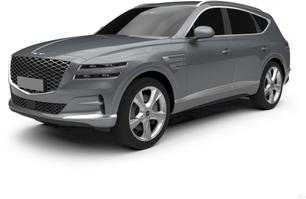
The Genesis GV80 SUV has cultivated a quiet but firm following since its debut but there's a new variant on offer - the coupe.
Offered in one highly-specified grade level for our market, the GV80 3.5T Luxury AWD Coupe proves to be a fierce competitor with luxury and handling for it's European rivals - the BMW X6, Range Rover Velar and Mercedes-Benz GLE Coupe.
However, the price point is starting to creep a little closer to its rivals, which might not be to everyone's fancy.
I've been family testing the GV80 for a week to see if it gets the seal of approval from my little family of three, read on to find out how it went.
Typically when a car company makes a bold claim in their press release it's hyperbole designed simply to grab attention. But in the case of the DB12, Aston Martin truly has built something different than before, elevating it beyond its previous ‘Grand Tourer’ status.
While ‘Super Tourer’ may be a bit dramatic in name, this is a very impressive car across the board. It’s fast, fun, luxurious, comfortable, opulent, stylish and liveable, so while it may require a heavy financial investment, you are duly rewarded.
Plus you also get to pretend to be James Bond…
The Genesis GV80 Coupe is a rare breed – it comes packed to the gills with features, has great ownership benefits and can easily accommodate a large family in comfort.
The fuel economy isn’t great but it looks and acts the part of a true luxury SUV. My husband and son were impressed and enjoyed all of the features it has.
Personally, I felt like Aston Martin peaked with its ‘DB’ design nearly two decades ago with the DB9. It was a masterpiece of simplicity, elegance and heritage and the subsequent DB11 just looked more fussy and complicated for the sake of being different.
The DB12 manages to correct that mis-step from the designers, getting back to the classic silhouette of an Aston Martin, maintaining the trademark elements (specifically the unique grille shape) and the elegance of simplicity.
Aston Martins don’t need to be attention-grabbing like a Ferrari or Lamborghini. Instead, they attract attention with an understated but unmissable presence that just attracts eyeballs. You don’t need to know anything about cars to know that the DB12 is a very expensive, luxury sports coupe - it says all that the second you get a look at it.
The interior of DB12 looks and feels every bit as prestigious as the exterior does. High-quality materials have been used throughout and there is a level of fit and finish that elevates beyond most other cars on the market. It feels like a hand-made car, built with patience and detail, rather than something rushed down a production line.
The cabin design itself manages to feel both classical and modern, in the same way the exterior takes inspiration from Aston Martins of previous years but gives them a 21st century update.
At first glance, there’s not a lot that separates the external styling of the Coupe and SUV, at least in the front.
The biggest difference is obviously in the rear and it's here Coupe's design shines. The SUV sibling looks nice but is a little boxy at the rear and features a dicky-looking window. The Coupe's rear is pinched but it’s rather softly done compared to some rivals.
It manages to look sleek and sexy as coupes tend to be without losing any of its large road-side presence.
The 'Storr Green Matte' paintwork on our test car highlights the high-end feel, as does the huge LED external lights and chrome accents.
Head into the cabin and you'll find design elements which accentuate the width of the car – like the long air vent strip that runs the length of the dashboard, a wide centre console and the huge 27-inch OLED technology screen that houses the media system and instrument cluster. Even the touchscreen control panel for climate and seat functions is big.
Our test model has a cream-coloured suede headliner and quilted Nappa leather seats that look plush. Contrasting stitching and the seatbelts are a bright red (or dark orange, depending on who you ask) and the panoramic sunroof adds a bright and cheery element.
The ambient lighting surrounds a lot of the features, like the cupholders and the crystal rotary dials. In fact, when you pop the car into reverse, the light changes from whatever it was to red, which is neat.
As far as luxury cars go, this totally looks the part and while design is very subjective, I love how this looks inside and out. Let us know what you think of it in the comments.
Inside Aston Martin’s designers have understood the typical customer isn’t a Gen Alpha who does everything on their smartphone, so there’s a neat array of proper buttons, switches and dials to take care of all the functions without taking your eyes off the road. If you are into technology you may be disappointed by the relatively small infotainment screen, but from a usability perspective it does the job well.
As you’d expect the level of fit and finish is impressive and the diamond quilting on the leather seats looks exceptional. The seats themselves are comfortable and supportive, with generous cushioning rather than the sportier, less comfortable seats found in purebred sports cars.
The DB12 is a 2+2, with a pair of seats in the rear, but to be frank you’d need to be desperate to use them. They are ‘emergency use only’ seats that will deeply compromise the front seat occupants just to squeeze anyone in the back.
With all of its features offering comfort and luxury, practicality is pretty high for the GV80 Coupe.
The cabin feels almost cavernous up front for my 168cm height. As mentioned, the seats are very comfortable and there is a stretching function that briefly comes on during a longer journey to ease any fatigue in your lumbar.
The rear row is almost as large as the front and there's a limo-like quality to the legroom that taller individuals will enjoy. The headroom is good for the outboard seats but a taller adult will be hunched when sat in the middle. Keep that for a kid!
Amenities in this row are excellent with the powered outboard seats that feature heat and cooling functions, directional air-vents, climate control and retractable sun-blinds (my son's favourites).
The individual storage is a little less than you might expect for such a large car, especially up front, as all options are on the shallow/small side.
There is a middle console (think of it as a tray), glove box, two cupholders, two drink bottle holders and a phone cubby that can be closed to keep things looking neat.
The rear row sees two map pockets, two cupholders and a storage cubby in the fold-down armrest, as well as some shallow bin storage.
Technology looks stellar, is easy to use and found throughout.
You're spoiled for choice when it comes to charging as there are four USB-C ports, three 12-volt sockets and a wireless charging pad to choose from.
And new for 2025 is the UV-C feature, which sterilises whatever you place inside the middle console. Handy for anyone who wants to disinfect small items, like a phone, keys or wallet.
The multimedia system takes a while to get used to as the tech has been updated but once you do, it’s an easy system. You can access the media system via the touchscreen or the rotary dial. Climate control and seat functions are accessed via the large control panel that sits underneath, which is handy for when you're on the go.
The GV80 Coupe has built-in sat nav, wired Apple CarPlay and Android Auto, as well as, a 12-inch colour head-up display.
Because of the sleek rear shape, the boot space sits at 644L when all seats are in use. It’s large enough for my gear and weekly errands and I like the powered tailgate's proximity feature. As long as you have the key fob, it will open when you stand at the rear. Great for when you have your hands full.
The loading space is level and the rear seat has a 40/20/40 split, which opens up storage options. But underneath the floor, there are heaps of cubbies for extra storage of smaller items and it’s here the tyre mobility and roadside assistance kits are housed.
Value is relative at this point in the market, as the DB12 is priced from $455,000 before on-road costs and any personalisation. For that price you do get a lengthy list of standard features you’d expect on a premium vehicle, including 21-inch forged alloy wheels, LED daytime running lights and tail-lights, keyless entry and ignition, 12-way electronically adjustable front seats, wireless phone charging, navigation, Apple CarPlay and a 390-watt 11-speaker Aston Martin sound system.
Of course, that’s what you should probably expect of much cheaper luxury cars. So on top of that there’s the high level of presentation, including both externally and in the cabin, with high-quality materials used across the entire vehicle.
Then there’s the ‘badge value’ that having an Aston Martin brings to the equation, which helps to play a part.
Finally, there’s how it compares when lined up against its competitors and on that front the DB12 looks well placed. The similarly powered Mercedes-AMG GT starts at $366,500, while V6-powered Maserati GranTurismo begins at $375,000 but the outgoing Ferrari 812 Superfast is priced at more than $600,000.
All things considered, the DB12 feels competitively priced and good value for this upper echelon of the new-car market.
The GV80 line-up has seen a model facelift for 2025 and the flagship’s powerful V6 engine now comes standard for all models. There's new tech and some design tweaks, too.
That means the price points are starting to creep a lot closer to their Euro rivals as the 3.5T Luxury AWD Coupe is priced from $136,000, before on-road costs.
However, despite only being offered in one variant for our market, the coupe is is ridiculously well-specified and you don't have to add luxury/enhancement packs at additional costs as you do on some of this car's rivals (I'm looking at you Range Rover).
In comparison, the closest rival, the BMW X6 xDrive40 MHEV, sits at $144,900 MSRP, and then the Range Rover Velar Autobiography comes in at $156,430 MSRP before the most expensive rival, the Mercedes-Benz GLE 450 4Matic Coupe, at $159,900 MSRP.
When I start talking about the GV80 Coupe's standard features I lose breath trying to list them all and you're about to learn why.
For comfort and luxury the Coupe is offered with crystal accents on its dials, Nappa leather upholstery, suede trims, a heated steering wheel and a panoramic sunroof.
The front seats are powered and feature a two-position memory function, lumbar- and side-bolster adjustments, extendable under-thigh supports, heat and ventilation functions... and a massage function.
Rear outboard seats are also powered and can be slide backwards/forwards and recline. They feature heat and ventilation functions as well.
Practical features include a powered tailgate with a proximity opening feature, retractable sun blinds (rear row), tri-zone climate control, keyless entry, push-button start, remote start and parking assist (via key fob), carwash and valet mode, and new for 2025, a biometrics system (fingerprint access for vehicle start and profile selection).
Technology includes a new 27-inch OLED screen that houses the multimedia system and instrument cluster, customisable ambient lighting, wired Apple CarPlay and Android Auto, over-the-air updates, satellite navigation, 12-inch coloured head-up display, digital rear view mirror, four USB-C ports, three 12-volt sockets, a wireless charging pad, Bluetooth connectivity and digital radio.
Phew... told ya there's a lot. Oh, and an 18-speaker Bang & Olufsen sound system. There. Done.
Aston Martin was once famous for its V12 engines, but with the brand changing hands so many times over the years and the pressure to develop increasingly expensive powerful, yet fuel-efficient engines means the brand now outsources some of its powertrains. So while the brand is developing a new V12 engine, the DB12 is powered by the 4.0-litre twin-turbo V8 built by Mercedes-AMG.
While Aston Martin fans may bemoan the use of a German engine in this British car, the truth is it’s a much better engine than the previous V12 used in the DB11, Vantage and other models. It offers up 500kW/800Nm and delivers all that performance in a broad spread across the rev range (unlike the old V12).
It gives the DB12 a sportier, more urgent and responsive driving character than its predecessors and helps to explain the new ‘Super Tourer’ name. Aston Martin claims it can run 0-100km/h in just 3.6 seconds and has a top speed of 325km/h.
The GV80 model facelift sees all variants enjoy a powerful 3.5L twin-turbo petrol V6 engine that produces 279kW of power and 530Nm of torque.
The Coupe is an AWD, features an eight-speed auto transmission and can do a 0-100km/h sprint in just 5.7 seconds.
It also has different terrain modes and a braked trailer towing capacity of 2722kg. Whether you’d use this car for that sort of stuff is another matter.
Aston Martin claims a combined fuel cycle return of 12.2 litres per 100km, which is not what you would call sipping the unleaded, but given this is a large, grand tourer (sorry, Aston Martin, Super Tourer) it’s actually a solid return. If you’re in the market for a car like this, anything sub 15L/100km should be considered acceptable; if you’re worrying about emissions or the cost of petrol you probably shouldn’t be buying a $455k sports car.
Unfortunately we didn’t have the DB12 long enough to get a real-world fuel economy figure, so we’ll just have to take Aston Martin’s word for it.
With its 78-litre tank the DB12 does have a theoretical driving range of approximately 630km.
Aye, here's the rub, as the hefty power comes with a thirsty gullet.
The official combined fuel-cycle consumption figure is a hefty 11.7L/100km and my real-world usage came out at 11.4L/100km after doing a lot of open-road trips this week.
I haven’t held back using the power but it's thirsty compared to its rivals which mostly sport mild-hybrid powertrains.
Based on the large 80L fuel tank and official combined fuel cycle consumption figure this car's theoretical driving range is 684km.
The defining characteristic of a ‘Grand Tourer’ is that while fast, they aren’t typically agile and as responsive as a sports car. In other words, a grand tourer is best suited to a long, cross-country trip on faster, flowing roads, rather than a winding mountain pass or twisty switchbacks.
So, in keeping with the ‘Super Tourer’ theme that the brand is selling, the DB12 is notably more responsive and therefore more engaging to drive across any condition. It still has the comfortable, laid-back nature of a ‘GT’ but when you want to have some fun it’s capable of hiding its size and feeling very sporty.
The handling is highlighted by how quickly the front end of the car reacts. Typically with this front-engined 'GT' cars you feel like you're sitting at the very back of the car, so it feels slow to respond to inputs and that can create a feeling of laziness. But not in the DB12. The front end feels sharp and responsive, making you feel like you are right at the centre of the action.
It's helped by the engine that feels lighter than the old V12s but more urgent with its power delivery, too. It adds to that feeling of a more sporty and focused driver's car, rather than a 'GT' for just soaking up the kays. It shouldn't be surprising though, AMG doesn't really build relaxed, laid-back engines, rather ones designed for maximum excitement - and that's what the DB12 delivers when you bury your right foot.
Remarkably, it also plays the role of ‘daily driver’ well too. Which is an unusual way to think of a car like this, but for those fortunate enough to have the means to afford it, the DB12 could ferry you from home to work and back again in luxury and comfort.
The GV80 Coupe has a deep well of power to dip into and fantastic pick up. The power delivery feels effortless and it’s easy for urban and open-road driving.
The GV80 isn't as dynamic on the road as some of its rivals when it comes to the ‘sporty’ factor and you notice that the most when you hit high winds or tackle a tight turn, as there is some roll, but on the whole it’s a smooth ride. Think of it as more ‘stately’ than sporty.
The cabin is mostly quiet but wind noise can creep in at higher speeds.
The wide windows and high ride mean the visibility is very good and so is the sound quality from the 18-speaker Bang & Olufsen audio system. Every school run is a concert!
The GV80 Coupe is large car and will fill out a parking space but it’s not hard to park because the 360-degree view camera system is so good and the projected parking guidelines add assurance in a tight spot.
There is a remote parking assist feature, where you can move the car remotely from your key fob, which is great for those times someone parks a bit too close and there’s not enough door clearance to get in.
The DB12 comes equipped with a lengthy list of active safety features as part of its Advanced Driver Assistance System (ADAS). These include adaptive cruise control, traffic sign recognition, lane keep assist, lane departure warning, lane change assist, front and rear cross traffic assist, driver drowsiness detection and hands-off detection.
There’s no ANCAP rating or equivalent, as crash testing these kinds of low-volume sports cars is unheard of from the safety authorities.
For those concerned with safety, you needn’t worry as the GV80 Coupe has a maximum five-star ANCAP safety rating from testing done in 2021 and scored highly for its adult and child protection scores at 91 per cent and 88 per cent, respectively.
Standard safety features include rear cross-traffic alert, lane departure alert, lane keeping aid, traffic sign recognition, intelligent seatbelt warning, a head-up display, adaptive cruise control, blind spot monitoring, blind-spot view monitor, parking assist pilot, driver attention alert and safe exit warning.
Other features include child occupant alert, leading vehicle departure alert, tyre pressure monitoring, LED DRLs, a 360-degree view camera system and front and rear sensors.
The GV80 Coupe comes with AEB with forward collision warning, car, pedestrian, cyclist and backover detection which is operational from 5.0–200km/h (up to 85km/h for car detection).
The GV80 features 10-airbags, which is great for the class!
There are ISOFIX mounts on the rear outboard seats plus three top tethers and you might get three seats installed if they’re not too big but two will fit best.
The standard Aston Martin warranty covers three years/unlimited kilometres, which is unusually short by current industry standards; a curious case of the top end of the market lagging behind the mainstream brands.
Servicing is handled by individual dealers, so there’s no set cost structure, but the intervals are every 12 months/16,000km. Instead you’ll need to discuss what sort of costs are involved with keeping your DB12 running smoothly when you speak to a salesperson.
The GV80 Coupe comes with a five-year/unlimited km warranty and complimentary servicing for five-years or 50,000km, whichever occurs first.
There is also complimentary roadside assistance through Assist Australia for five years.
Since this is a turbo, the servicing intervals are a little annoying at every 12 months or 10,000km but it’s rare for a car brand, let alone a luxury one, to offer anything for free. What Genesis offers is a real plus.