What's the difference?
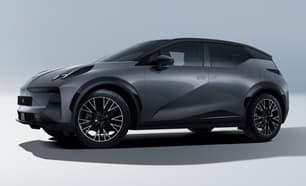
Zeekr is a new electric brand and the X small SUV is one of its first cars to come to Australia.
Owned by the Chinese carmaker Geely, which also has a big stake in Volvo, the X is designed in Sweden, built in China and now sold here.
Rivals to this little electric SUV include the Smart #1, Volvo EX30 and Xpeng G6.
The Zeekr X line-up is currently very simple - there’s the rear-wheel drive version and the all-wheel drive we tested.
BYD has achieved much success in recent years in Australia and it's now branching out with a new, more premium brand.
Denza is like the Lexus to Toyota and it’s launching in Australia with two large body-on-frame plug-in hybrid (PHEV) SUVs – the B5 and B8.
The former is on test here and its rivals include mainstream models like the GWM Tank 300 PHEV, however it also pitches itself against more premium offerings like the Land Rover Defender.
We’ve already driven the B5 over in China and this is the first time we’re getting to test it out on Australian roads, so let’s see how it fares.
The Zeekr X all-wheel drive surprised me in a great way. Not only is this the first Zeekr I've driven, it's also one of the best small electric SUVs I've ever driven. There's so much to like - from the good price and quality design to the high level of safety and how easy it is to drive.
Denza has made a huge statement with the B5 and for the most part the hype is deserved. It packs an incredible amount of luxury and tech inside and out which is even more surprising given the impressive asking price.
There are only a few flaws like the busy ride, over-the-top body roll and the occasional infotainment quirk. Hopefully these can be fixed with future over-the-air software updates.
Note: CarsGuide attended this event as a guest of the manufacturer, with travel, accommodation and meals provided.
More than interesting, the design of the Zeekr X is intriguing with styling that ranges from 'ooohhhh' when you see it from the front to 'huh?' when you catch it in side profile.
The nose design, to me anyway, looks exquisite - Porsche-SUV-like in its sporty and luxurious shape and the way the LED running lights are embedded into the bonnet is different and so special it probably makes some prestige brands a bit envious.
That side profile also looks pretty pleasing to me, until I reach that rear quarter where suddenly I feel I’m looking at panel shapes so oddly combined it’s like a puzzle with just five pieces and all of them in the wrong place.
The rear of the X looks good, but more importantly unique compared to the same templated styling many SUVs tend to safely stick to.
Zeekr and Volvo are owned by the massive Chinese car manufacturer Geely and the X is closely related to Volvo’s EX30. Once you know this you’ll see the similarities in the looks, although the less conservatively styled X is more appealing to me.
The X is also 100mm longer and all of that extra length is in the wheelbase which is 2750mm. As for the rest of the key dimensions, the overall length is 4432mm, the height is 1572mm and the width is 1836mm. So, a fairly small car.
The X’s interior is as intriguing as its exterior with the AWD version on test fitted with the no-cost option 'Mulberry & Rose' two-tone upholstery - a colour combination of maroon and off-white which you don’t see often unless it's a bespoke choice in a high-end car.
No, it’s not leather, but I don’t think this upholstery doesn't feel cheap or ‘plasticky’ as some synthetic leather interiors do.
There are high quality touches throughout, from the dotted city scape of Hangzhou where Zeekr is headquartered that glows through the door trim fabric at night to the embossed Zeekr pull tabs on the seats.
The X’s interior feels luxurious and the styling is outstanding.
It’s worth calling out straight away that the Denza B5 is essentially an SUV version of the BYD Shark 6 as the two share underpinnings, but it’s much more luxurious and blingy.
Externally it has a big, boxy and bluff design that helps it stand out on the road. It looks even tougher when the suspension is in its lifted mode.
I particularly like the front fascia with the big headlights and the prominent Denza badge on the grille, but there are some strange body creases around the side.
While the boxy looks make the B5 stand out, it’s not necessarily unique. There are elements that are reminiscent of the Land Rover Defender, plus many angles look similar to the GWM Tank 300.
Inside is where the luxe is dialled to the max. There are so many soft touches around the cabin that it makes a lovely place to spend time.
Additionally there is a lot of high-quality physical switchgear which is surprising given how prominent the large 15.6-inch central touchscreen is.
Lastly, I like how substantial many of the finishes are. There are large grab handles on either side of the dashboard which you do need to use to hoist yourself into the cabin, plus chunky interior door handle pulls that are satisfying to use.
Small cars don’t generally have the practicality of larger ones because of the obvious space limitations but the Zeekr X has a long wheelbase for the class (longer than the Mitsubishi Outlander’s) making it roomy compared to rivals.
Second row head- and legroom is good and even at 189cm tall I can sit behind my driving position. Back there are two cupholders in the fold down centre armrest, directional air vents in the pillars and bottle holders in the doors.
Back seat downsides? No USB ports and the way the rear door sill kicks up means my two children (both under 10 years old) can’t see out of their windows well.
Up front space is good with plenty of elbow and foot room. Storage is good, too, with big door pockets, a couple of cupholders, a deep centre console bin and even a hook for a handbag or to hang a takeaway bag. There are USB ports up front and a wireless phone charger, too.
Front seat downsides? No glove box, and while we're at it the panoramic glass roof doesn’t have a sun shade and even though it is tinted I found that over summer in Australia the car heated up quickly and I’ve even had to wear a hat while driving to keep the sun off my head and face.
The Zeekr X has a decent-for-the-class 362L rear boot capacity and a tiny 21L front boot which is where the charging cable lives.
Many Chinese cars have lots of bling but lack actual substance when it comes to comfort and usability. This is where the Denza differs.
Take the driver’s seat, for example. In a number of Chinese cars they look plush and comfy, but in reality they are firm after longer drives and lack adjustability.
The B5’s driver’s seat, however, is very comfortable, offering almost limitless adjustment, plus heating, ventilation and even a massage function as standard. The latter is great for longer road trips.
Ahead of the driver the steering wheel has plenty of adjustment, allowing people of different heights and statures to get comfortable behind the wheel. There are also lots of physical buttons and switches that have a satisfying click when pressed.
The digital instrument cluster is high-resolution and clear, and there's a number of different informative pages that you can cycle through. It’s nice to have this level of customisation.
Moving across, the aforementioned 15.6-inch touchscreen multimedia system dominates the dashboard. If you’re familiar with the user interface in other BYD vehicles, it’s virtually identical in the B5.
It’s very easy to navigate around and if you do get lost there are a number of shortcut buttons at the bottom of the screen that can either take you back home or to other key functions.
One of my favourite features about the screen is the swipe-down control centre menu. You can customise it to have key shortcut functions. It’s much better than having to dig through countless submenus.
It’s clear Denza still has a few kinks to iron out with the translations from Chinese to English as some don’t make sense. Denza will likely sort this with future software updates.
As standard there is wireless Apple CarPlay and Android Auto and it takes up the full screen when connected. It’s a stunning set-up, though reaching the far left-hand side of the screen from the driver’s seat can be a little tricky on the move.
As I touched on earlier, there is a lot of physical switchgear around the cabin which is helpful as you don’t need to solely rely on the touchscreen for key functions. The piano key buttons for the drive and EV/HEV modes are particularly handy, plus the rising gear shift lever is premium-feeling.
In terms of storage up front, there are up to two 50W wireless chargers (depending on the variant you opt for) with ventilation, two cupholders with adjustable depths, some shallow storage under the centre console, plus a fridge/hotbox under the centre armrest.
Moving to the second row there is plenty of space for at least two adults to sit comfortably. Pushing it to three may be a little tight with shoulder room, plus the centre seat is raised compared to the outboard ones. It’s worth noting though that there is a flat floor so you don’t need to fight for foot space.
Second-row amenities include chunky grab handles for easy ingress and egress, air vents on the back of the centre console, as well as heated and ventilated outboard seats in the top-spec Leopard trim. It’s properly luxe.
At the back the tailgate is side-hinged which can be problematic if you reverse into a carpark as you need to allow for space for it to open up. It has a soft-close function which is handy as you don’t need to slam it shut.
There’s 470L of boot space with the rear seats upright, expanding to around 1000L when folded. It’s a decent amount of space and is square with a very minimal load lip.
Amenities include a 12V socket, a wide array of hooks and nets, as well as a small storage space under the boot floor for the charging cables.
Lastly the B5 comes with a full-size spare wheel mounted on the tailgate. This is becoming increasingly rare in electrified vehicles and is very handy if you have a puncture.
The Zeekr X tested is the top-of-the-range all-wheel drive which lists for $64,900. The only other variant in the X model line-up is the rear-wheel drive which lists for $56,900.
Sure, $65K might seem a lot for what is a small SUV, but the X AWD is reasonably priced compared to rivals like the tinier Smart #1 for $58,900, its Volvo EX30 Performance Ultra twin for $69,990 and the Xpeng Long Range for $59,800.
We’ll get to the technical specs soon, but the all-wheel drive variant offers more than just AWD, there’s also more standard features than the RWD.
The RWD X comes with two-tone body colour with a black roof, a panoramic glass roof, a six-way power driver’s seat, an 8.8-inch digital instrument cluster and a 14.6-inch media screen.
There’s also Apple CarPlay and Android Auto, a seven-speaker audio system, dual-zone climate control and wireless phone charging.
The AWD has all of the RWD’s features and adds 20-inch alloy wheels, a 24.3-inch head-up display, an intelligent B-pillar which provides information on charging, a power adjustable front passenger seat, heated and ventilated front seats, a heated steering wheel, a 13-speaker Yamaha stereo and LED ambient lighting.
The RWD has just one motor while the AWD has two and more power, which we’ll cover soon.
The 2026 Denza B5 is offered in two trim levels – entry-level and the top-spec Leopard. Pricing for the former is $74,990 before on-road costs, while the latter is $79,990 before on-road costs.
This is very competitive and it undercuts many top-selling rivals like the diesel-powered Toyota Prado and Ford Everest by a significant margin if you want similar levels of specification.
It’s worth noting however, the GWM Tank 300 PHEV, which is the B5’s closest rival in terms of powertrains, is even cheaper at $59,990 drive-away.
As a base, the B5 is loaded with standard equipment. You get 18-inch alloy wheels, adaptive LED headlights, a glass panoramic sunroof, 12.3-inch digital instrument cluster, 15.6-inch touchscreen multimedia system, 16-speaker Devialet sound system, leather upholstery, heated and ventilated front seats with a massage function, plus heated outboard rear seats.
If this isn’t enough, the B5 Leopard gets larger 20-inch alloy wheels, adaptive hydraulic suspension, a digital rear-view mirror, a second wireless phone charger, Nappa leather upholstery and ventilated outboard rear seats.
This amount of standard equipment is wild, especially because the asking price is firmly below $100K.
On test is the all-wheel drive version of the Zeekr X which has two motors while the rear-wheel drive has just one.
Two motors brings the AWD variant more power and torque than the RWD. A lot more. Zeekr’s specs state the combined output for the AWD is 315kW and 543Nm, while the RWD has 200kW and 343Nm.
Good traction and plenty of grunt means the AWD can accelerate from 0-100km/h in 3.8 seconds, while the RWD gets there in a respectable time of 5.6 seconds.
Electric cars are known for their rapid acceleration but just to put those numbers in context, a new base model Porsche 911 ($280K) has 290kW and 450Nm and does 0-100km/h in 4.1 seconds.
Power comes from plug-in hybrid set-up combining dual electric motors (one on each axle) and a 1.5-litre turbocharged four-cylinder petrol engine.
It’s a similar set-up to the BYD Shark 6, but the B5 has more power. Total system outputs are a meaty 400kW and 760Nm, which is good for a claimed 0-100km/h sprint in just 4.8 seconds.
Power is sent to all four wheels and for added peace of mind off-road there are front and rear mechanical diff locks as standard, plus a wide range of drive and terrain modes, including a low-range mode.
Backing this up is a 3000kg braked towing capacity and up to 600kg of payload.
The Zeekr X all-wheel drive has a range of up to 470km (WLTP), but if anything under 500km already has you twitching with anxiety, the rear-wheel drive's 540km range might alleviate some of that.
We found the range of the AWD to be fine for the city, but also learnt that we chewed through a lot of energy at an average of 18.4kWh/100km according to the trip computer.
Zeekr says after a combination of open and urban roads you’ll likely use 15.5kWh/100km, but you’d need to be a smooth driver that’s not tempted to test the acceleration at every traffic light and drain the battery.
Speaking of which, the Zeekr X has a 66kWh battery with a DC charging capacity of 150kW and at that rate can be charged from 10-80 percent in about 30 minutes.
Feeding the electric motors is a 31.8kWh lithium iron phosphate (LFP) Blade battery which Denza claims to allow the B5 to travel up to 100km on electric power alone, according to NEDC testing.
There’s also vehicle-to-load (V2L) capability with 6.6kW output through the charging port using an adapter. This allows you to use the battery charge to power appliances. It’s handy if you go camping, for example.
The battery can be AC charged at rates up to 11kW or DC fast-charged at rates up to 100kW.
There’s also an 83L fuel tank. Denza claims the B5 has a total range of 975km, according to NEDC testing.
Fuel consumption depends on whether or not you charge up the battery. Denza claims you’ll use 1.9L/100km from 100 to 25 per cent battery charge and 9.5L/100km under 25 per cent battery charge, both according to NEDC testing. Regardless, this is better than similarly sized diesel-powered SUVs.
In short, the Zeekr X is outstanding to drive for the class - it’s composed, comfortable as well as easy and fun to pilot.
Everything feels good - from the steering and the pedals to the seats and visibility.
The tech works well - the head-up display is large and shows directions and speed clearly, and the shifter being on the steering column makes three-point turns and just getting out of car parking spaces easy.
The acceleration is ridiculously good, but that novelty wears off after you’ve shown everybody in your family, which is why it’s lucky it's not the only thing this small SUV does really well.
While it’s not as spacious as the other large SUV I was testing at the time - the Zeekr X’s short length means it was the car I picked if I needed to go somewhere close where I knew parking spaces would be a bit squeezy.
Behind the wheel the Denza B5 primarily operates as an electric vehicle (EV) first up, meaning it’s largely quiet inside the cabin when driving around normally.
Once the charge starts to drop, the petrol engine typically switches on to top up the battery. It largely acts as a generator and a lot of the time you can’t actually tell whether it’s on or off.
In some cases where you floor the throttle or go up a steep hill, the engine revs can flare and that’s when it makes its presence known in the cabin.
When the battery charge gets down low enough and you gun it, the petrol engine can directly power the front wheels. This is rare though because the car purposefully leaves at least 25 per cent battery charge in reserve.
With 400kW and 760Nm thanks to the combination of the dual electric motors and the 1.5-litre turbo-petrol engine, the B5 absolutely hauls. The peppy feel is largely due to the instantaneous torque the electric motors provide.
However, in the standard drive mode there is a noticeable input lag from when you push the accelerator a bit harder and when the car actually accelerates. This is reduced in the sport drive mode.
Despite the juicy outputs, the B5 does feel its weight. When you accelerate hard it pitches back extensively, much like the Jeep Grand Cherokee Trackhawk. This never failed to make me smile though.
It’s surprising as we only drove the top-spec B5 Leopard on this launch and it comes fitted with the DiSus-P adaptive hydraulic suspension system which has a self-levelling function.
In the bends the B5 gets a considerable amount of body roll regardless of the drive mode. This is common for many Chinese cars as they typically prioritise floaty comfort-oriented tunes over a firmer and more dynamic-feeling ride.
Despite this, once it leans over it’ll comfortably hold and grip, largely thanks to the chunky 275/55 R20 Pirelli Scorpion tyres that come standard on the top-spec Leopard trim.
Like many body-on-frame vehicles, the ride gets busy on harsher roads with more frequent bumps. As a passenger you can get jostled about in the cabin.
The steering, while direct enough, can have a vague and artificial feeling. Depending on the drive mode it either artificially adds or reduces the resistance.
Unlike the related BYD Shark 6, the B5 gets a low-range mode which uses a clutch pack on the rear electric motor to allow for more controlled low-speed crawling, plus front and rear mechanical diff locks. This can make a big difference once the going gets really tough.
Additionally, the DiSus-P hydraulic suspension allows for a total of 140mm of travel. In the highest position there’s a wading depth of up to 790mm.
Lastly in terms of noise, vibration and harshness (NVH), the B5 is a very quiet car to drive. As I mentioned above, the electric-first nature automatically makes this a quiet car.
There is very little road and wind noise. This is surprising as the B5 is essentially a 3.0-tonne box on wheels. It seems Denza has put a lot of effort into sound insulation.
The Zeekr X scored the maximum five-star ANCAP rating under the stringent 2024 criteria with a high 91 per cent for adult occupant protection and an impressive 87 per cent for child occupant protection.
The advanced safety tech is also impressive with AEB that not only detect pedestrians, cyclists and other cars on a straight road but also while turning at junctions and T intersections.
There’s lane keeping assistance, blind-spot warning, front and rear cross-traffic alert and airbags covering the front and rear occupants including a front centre airbag.
I used the Zeekr X to drive my own kids around and for child seats there are three top tether anchor points and two ISOFIX mounts in the second row.
The Denza B5 received a five-star ANCAP safety rating based on testing conducted in 2025.
As standard there are 11 airbags, autonomous emergency braking (AEB), blind-spot monitoring, front and rear cross-traffic alert, adaptive cruise control, a driver attention monitor, front and rear parking sensors, plus a surround-view camera.
While a number of the active safety systems operate well and only intervene when required, some are intrusive and over the top. The worst offender is the driver attention monitor which struggles to detect your eyes with sunglasses on, plus only requires a brief glance at the touchscreen to get it saying, “Tiredness detected, please take a rest”.
Thankfully you can turn this off using the touchscreen with the handy swipe-down control centre menu, but it needs to be done every time you drive the car.
The X is covered by Zeekr’s five-year, unlimited-kilometre warranty while the drive battery has an eight-year, 160,000km warranty. Roadside assistance and connected services are also offered for five years.
Servicing is recommended every two years or 40,000km.
Service pricing is $690 at two years/40,000km and $1420 at the four-year/80,000km mark, which covers the warranty period. For reference, the same $690/$1420 sequence is repeated at the six-year/120,000km and eight-year 160,000km intervals.
Denza B5 owners are covered by a six-year, 150,000km warranty, whereas the high-voltage battery is covered for eight years or 160,000km. Owners also receive three years of roadside assistance.
This warranty length is fairly standard in the mainstream segment, but in the luxury segment it pushes past the current five-year benchmark.
Logbook servicing is required every 12 months or 20,000km, whichever comes first. The first five years of servicing totals $3542, which averages out to just over $700 per service. This does seem like a lot, but in the premium space this is rather competitive, especially once you consider both the electric and combustion components are being serviced.
There are currently seven Denza dealers around Australia and it plans to have a total of 20 by the end of 2026. It’s also planning to allow certain BYD dealers to service Denza cars.