What's the difference?
The Volvo XC60 has long been an understated achiever of the premium mid-size SUV crowd.
It doesn’t shout for attention like some of its rivals, but it’s built a reputation for quiet confidence and family-friendly practicality. For 2026, the XC60 Ultra B5 Dark keeps the same engine but has received a facelift in other areas. Is it enough to keep family buyers who want a mix of practicality and luxury happy?
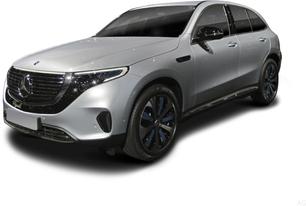
The Mercedes-Benz EQC has been on sale in Australia for a little while now, and aside from the local launch event we haven’t had a chance to spend any quality time with the brand’s first fully electric SUV. Until now.
The EQC 400, as it’s officially known, is the German luxury maker’s first foray into the full-EV landscape, and could arguably be seen as the first true luxury electric SUV on sale in Australia. I mean, yeah, there’s the Jaguar i-Pace, but it has a more premium-sporting intent than the EQC, and the Tesla Model X isn’t aimed at a luxury customer, more so a technologically-minded buyer.
So what’s the Merc EQC like to actually live with? We drove it for a week to find out.
The facelifted Volvo XC60 Ultra B5 Dark is the car at school pick-up that doesn’t need to brag. It just gets on with things and it looks good doing it. It offers a strong mix of family-focused features, comfortable and composed road manners and thoughtful practicality throughout the cabin.
The updated media system is crisp and responsive, though it could use a few tweaks to be truly intuitive. Overall, the XC60 mild-hybrid remains a solid choice for families who value understated luxury, comfort and safety over flash. It doesn’t reinvent the wheel, but it does what it does well.
When I was telling my colleagues about the Mercedes-Benz EQC my summary was, basically, it’s the best electric luxury car I’ve driven.
It’s plusher than a Jaguar i-Pace, more polished than a Tesla Model X - indeed, it feels like a different kind of electric car to both of those models. It’s an impressive foray into the segment, and we can’t wait for the chance to put it against some like-minded electric European luxury SUVs at some point in the future.
The XC60 has a graceful, poised curbside presence. Its wide stance and smooth body panels give it a confident silhouette, while the redesigned grille with dark accents, integrated intake vents (both faux and real), and those sharp 'Hammer of Thor' headlights tie it all together. It’s not trying to be sexy, but it is undeniably handsome. It's the kind of SUV that turns heads quietly rather than shouting for attention.
Inside, the vibe is pure Scandi chic. There’s a refreshing lack of plasticky surfaces, with everything feeling solid and premium to the touch. The supple Nappa leather seats and expansive panoramic sunroof instantly make the cabin feel airy and refined.
Taking centre stage on the dash is a new 11.2-inch portrait-style media display. The layout is a little too reminiscent of an oversized iPad for my taste, but the crisp graphics and quick touch response are big pluses. Adding a touch of craftsmanship, the crystal Orrefors gear shifter and genuine driftwood inlays across the dash and centre console bring warmth and texture you don’t find in most rivals.
Is this facelift breaking new ground? Not really. But then, it doesn’t need to. Volvo has long been firmly planted in the premium end of the field and this update simply shows it's still cultivating all the right qualities.
The Mercedes-Benz EQC is entirely different to what we expect from the brand, but it’s really what we expected all along when it came to an electric SUV from the Daimler stable.
It is sleek, streamlined and smooth, with panels that almost look like they’re formed from liquid. And it has the eco-edgy graphics you’d expect, with a specific grille treatment (yes, a real grille), headlights that are unlike any other Benz (they even have an LED that runs the width of the grille), and a rear-end style that looks almost like it was penned with another Stuttgart-based brand in mind… Porsche. I’m talking about Porsche.
But one thing that I really love about the EQC is its moustache. It's more prominent when the car is finished in white paint, but there’s a moustache that former Daimler chief Dieter Zetsche himself could be envious of. And he had one helluva soup strainer.
It is clearly made to be slippery, despite essentially sharing its underpinnings with the more conventionally angular - yet still rounded-edged - GLC SUV.
While it is a nicely styled gizmo, I found there are some things that could be annoying.
For instance, I was trying to plug in at night in a dark area, and while there is a small light above the charge port, other EVs have a light that actually illuminates the area where you’re plugging in.
And also, the plug port is on the driver’s side. If, like me, you had to charge up with the car on the street, it just adds a little bit more anxiety to the whole situation. I shudder to think what could happen if the charger was hit by a passing car - folding the mirrors in is one thing, but you can’t fold the power cable! The lead for the charger is long, thankfully.
I know, most people (maybe even all people!) who buy and EQC are going to have undercover parking in a garage or carport, but it’s still worth remembering that the filler isn’t on the kerb side like a number of other EVs.
It has almost identical dimensions to that car: 4774mm long on a 2873mm wheelbase, with a width of 1884mm and a height of 1622mm. For context, GLC is 4669mm long, same wheelbase, a bit wider (1890mm) and just a little more height (1639mm).
What about interior design? Well it’s also familiarly different, with a number of changes to the materials used but still the same tech and comfort you’d expect. Check out the interior images in the section below.
The XC60 is spacious without being sprawling. The front row is the sweet spot for comfort, with generous leg and headroom plus ergonomic seats that offer excellent under-thigh and side-bolster support. They also bring the luxury of heating, ventilation and even massage functions.
The rear row uses firmer padding, and while the backrest looks fairly flat, it’s deceptively supportive. Adults should be comfortable back there on longer journeys. Access is only slightly compromised by the wheel arch eating into the rear aperture, but otherwise it’s an easy SUV to get in and out of. My eight-year old pointed out that the rear doors are on the heavy side, though, and often need a good slam to latch properly.
Storage is well thought out throughout the cabin. Up front you get a decent glove box, cupholders, drink bottle holders, door bins, a dedicated phone tray that doubles as the wireless charging pad and a shallow centre console with two USB-C ports. One niggle. The cupholders don’t grip cups as snugly as they should.
The rear row has a 60/40 split with a 'ski-port' door and a fold-down armrest. And in the back, there are door bins with bottle holders, a fold-down armrest with cupholders and net map pockets. Rear passengers are also spoiled with dual-zone climate control, four directional air vents and two more USB-C ports.
One of the XC60’s best family-friendly features is the integrated booster seats, which have two height settings and fold neatly back into the base when not in use. They’re a lifesaver if you have kids who feel like they've 'aged out' of car seats but aren’t quite tall enough to go without. Of course, there are also ISOFIX mounts and three top-tether points if you still need to install child seats.
Out back, the boot offers a flat loading space, a powered tailgate with kick function and a healthy 613L of storage with all seats up (up to 1543L when the rear row is folded). You also get a 12-volt socket, a proper temporary spare tyre, and if you’ve got the optional air suspension (as per our test model) you can raise or lower the boot height for easier loading.
Tech usability is a bit of a mixed bag. The new 11.2-inch media display is sharp and responsive, and it comes pre-loaded with Google apps like Maps, Spotify and Assistant. But the Apple CarPlay and Android Auto isn't wireless, which feels like a miss at this price point.
The Bluetooth is patchy, with calls and music sometimes not syncing properly. A wired connection works better, especially for my iPhone 15 Pro Max, but I'm not a fan of leaving my phone on charge all the time. If you’re already familiar with Volvo or Polestar’s system, you’ll feel at home, but first-timers may need a little time to adjust.
If you’re thinking the EQC looks like a seven-seat SUV, you’re wrong. It’s a five-seater, with a decent sized boot, too.
The luggage capacity is 500 litres, which is decent for a car of this size, but bear in mind there is no spare wheel under the boot floor.
Rear seat space is reasonably spacious for someone my size (182cm) sitting behind their own driving position, with decent knee and toe space. Headroom is not terrific, though, and anyone taller will need to watch their head as they get in and out of the car as the top sill eats into space quite a bit.
Any middle-seat passengers might find the room a little less likeable, as the transmission tunnel intrudes quite a bit. Those with big feet might find shoehorning themselves in and out a bit of a challenge as the sills are quite large, and our car even had optional ($1200) “aluminium-look running boards with rubber studs” - side steps, essentially. They get in the way, too.
But if you’re just sitting two abreast in the back the seat comfort is really good, the trim quality is excellent, and there is a flip down armrest with the storage bin and pop out cupholders. There are rear air vents (no climate control adjustment in the back, though, and no USB charging either), and there are two map pockets, plus bottle holders in the doors. Up front you will find a mix of familiar elements if you’ve sat in any recent Benz model, but a few unique finishes and trim elements that might be new to you.
There’s a beautiful horizontal fin theme that runs around the cabin, as well as the now-traditionally audacious looking Burmester sound system speaker covers. They don’t quite gel with the aesthetic, to my eye.
The dash-top material - “fine surface texture”, as Benz calls it - is unlike anything else we’ve seen from the brand, it’s kind of like a soft silky slippery fabric trim. While there are lovely copper trim elements that just add something visually entertaining and appealing to the space.
There is a large covered centre console bin with 2x USB-C charge points and there is an additional USB-C upfront next to the wireless phone charger. The Mercedes touchpad system that aligns with the MBUX media screen is reasonably easy to get used to, but being a Benz there are plenty of options for usability - the centre screen is a touch-capacitive unit, or you can use the steering wheel-mounted controller on the left side of the wheel to control the middle screen. The right thumb controller manages the driver info screen.
It was mostly very easily managed, although the menus did get stuck at times for me - mainly in the section around the energy consumption. Plus I tried the whole “Hey, Mercedes” command thing, and it failed on numerous occasions.
There are two mild-hybrid variants in the XC60 line-up, and the one we’re driving here is the flagship Ultra B5 Dark. Priced at $81,990, before on-roads, it costs about $7000 more than the entry-level Plus B5 Bright, but that premium buys you a longer list of included features that makes the Ultra Dark feel like the sweet spot of the range. Especially considering Volvo also offers two plug-in hybrid XC60s, but those command up to $20K more!
In terms of market rivals, the XC60 sits right in the middle. The Audi Q5 TFSI starts at $81,000, while the Lexus NX 350h Sports Luxury AWD asks $87,900, both before on-road costs.
Standard equipment is generous. The Ultra Dark gets a panoramic sunroof and Nappa leather upholstery, with the electric front seats offering heating and ventilation functions plus a heated steering wheel for winter comfort. There's a 360-degree view camera system with surrounding parking sensors and a park-assist feature.
Tech upgrades include a new 11.2-inch media display with in-built navigation, Google apps, and wired Apple CarPlay/Android Auto, backed up by four USB-C ports, a 12-volt socket and a wireless charging pad. There's also a Volvo phone app, which allows users to pre-condition the climate prior to entry, have a digital key and program the spare key for any kids who might want to borrow the car!
Families will appreciate the thoughtful touches like a powered tailgate with kick function, built-in child booster seats in the rear row, a temporary spare tyre (a welcome feature), four-zone climate control and lots of storage throughout the cabin. Keyless entry sensors on every door add another layer of convenience.
Our test car was also fitted with just over $5000 worth of options, including the Bowers & Wilkins premium sound system, active air suspension, tinted rear windows, and even front seat massage functions. When you consider that many rivals charge extra for equipment that comes standard here, the XC60 Ultra B5 Dark makes a strong case for itself on value.
The EQC is available in two separate lines at the moment. The first is the standard EQC 400, which has a list price of $137,900 plus on-road costs, and then there’s the Art Line edition for $143,800.
There’s no haggling, either. The EQC is part of Benz’s standardised pricing model, and there are nine dealerships/retailers Australia-wide that handle orders for the EQC. Or you can buy it online, if that’s more convenient! However, as we reported at the Australian launch of the EQC, the wait time can be long - up to seven months from clicking ‘order’ to the car arriving in Australia.
What will you get if you do order an EQC? It’s hardly an affordable midsize SUV, but you’re paying for new technology - and you’re getting a pretty well kitted-out car, too.
The standard equipment list includes the AMG Line exterior package, 20-inch alloy wheels, LED headlights and daytime running lights, and a sunroof.
The interior gets the AMG Line treatment with leather upholstery, as well as a 13-speaker Burmester sound system, keyless entry, push-button start, electric tailgate, a head-up display, Mercedes-Benz’s MB-UX media system with twin 10.25-inch screens including Apple CarPlay and Android Auto smartphone mirroring tech, DAB digital radio, sat nav and the option of augmented reality navigation instructions. That system also incorporates Mercedes-Me Connect online capability, including web search.
There’s also an ambient lighting system with 64 colour choices, dual zone climate control, and heated front seats with electric seat adjustment and memory settings.
Thrown in for nix is a five-year Chargefox subscription. Chargefox is Australia’s largest car charging network, with fast charger stations stretching from Cairns to Adelaide (and there’s a cluster in WA as well).
There’s also a comprehensive safety technology suite included. All the details are covered off in the safety section below.
How about rivals? Well, its most natural competitors include the Jaguar i-Pace (from $124,100) and Tesla Model X (from $133,900), and there'll be an Audi e-tron electric SUV on sale in Australia by the end of 2020.
You might also think about the not-quite-fully-electric likes of the Volvo XC60 T8 plug-in hybrid (from $98,990), or even the plug-in hybrid Mercedes GLC 300e (from $83,500).
The Ultra B5 Dark tested here is all-wheel drive and has a 2.0-litre, four-cylinder, turbo-petrol mild-hybrid engine. It produces up to 183kW of power and 350Nm of torque.
The 'mild hybrid' tag comes from a 48-volt system paired with an integrated starter-generator. It’s not a full hybrid, so you won’t be gliding around silently on electric power alone, but it helps smooth out stop-start driving, boost efficiency and add a little extra shove when you put your foot down.
The result is an engine that feels lively in the city and confident out on the open road, with enough in reserve to make overtaking stress-free.
The EQC has a power output of 300kW and it has 760Nm of torque, which is enough to see its claimed 0-100km/h acceleration pegged at just 5.1 seconds.
The EQC’s top speed is 180km/h (limited for the sake of the batteries), and it has an 80kWh lithium-ion battery pack.
It uses a pair of asynchronous motors - one front, one rear - and they can alternate to do what’s best in the situation - be it working in 2WD (RWD or FWD), or in AWD.
If you’re thinking about an EQC as a towing option, the towing capacity is 750kg for an un-braked trailer and 1800kg for a braked trailer.
Volvo claims combined cycle (urban/extra-urban) fuel use of 7.6L/100km for the XC60 Ultra B5 Dark, which isn’t bad for a turbo-petrol but reminds you that this is only a mild hybrid. With a 71-litre fuel tank, you’re looking at a theoretical driving range of up to 934km which is great for a family SUV likely to see its fair share of school runs and road trips.
In my real-world testing, which included plenty of urban driving with one longer trip in the mix, I averaged 8.6L/100km. That’s a little higher than the claim, but still a respectable result overall.
With an 80kWh battery pack and a Type 2 CCS plug (up to AC 7.4kW / DC 110kW) the charge times vary pretty greatly depending on what output you’re powering up from.
Mercedes-Benz says a DC fast charging station should be able to replenish the battery bank in 1 hour 22 minutes (at a maximum of 110kW, though some Chargefox stations offer charge rates up to 350kW) while an AC charging station (like you’d find in car parks) or Mercedes-Benz’s own Wallbox system should take about 12 hours 13 minutes.
Charging from a regular household powerpoint is a last resort option. It is claimed to take 46 hours 40 minutes from empty to full (230-volt outlet, 10-amp/2.3kW). I plugged in to a powerpoint in my house and the car’s info display was stating it would take 9.5 hours to achieve the remaining 16 per cent of charge. It didn’t get to 100 per cent before I had to unplug, however.
My not-so-urban test drive loop commenced with 97 per cent of battery charge and an indicated range of 363km available. The idea was to get a feel for the “range vs reality” of the situation, so I did it in Comfort drive mode with the climate control active and no intent to either thrash the vehicle or baby it to save battery.
My drive ended with 36 per cent indicated charge remaining, after I’d covered 231.6km. That means, based on the car’s own algorithm, that it would have covered 315km before the battery was depleted, which is a long way short of the claimed 434km range.
The indicated energy consumption was 20.8kWh/100km, which is ‘thirsty’ for an EV. On our recent electric car comparison test, the most efficient of our EVs - the Hyundai Ioniq Electric - used just 13.0kWh/100km. Yes, I know the EQC is a lot heavier (2425kg kerb weight), but even the Tesla Model 3 was notably more efficient (18.5kWh/100km) than the EQC over very similar terrain and driving.
However, our testing saw us return an even better consumption rate than Mercedes-Benz’s claimed figure, which is 21.4kWh/100km.
There’s plenty of power on tap, with enough left in reserve when you really need to push it. Around town, the XC60 keeps up with traffic effortlessly, and out on the highway it never feels strained. The transmission is fairly punctual with its shifts, though you do need to drive it a little more assertively to avoid any lag when accelerating from a stop.
Visibility is excellent thanks to the big, wide windows and higher driving position. It’s also refreshing to have a wide rear window behind the C-pillar as it's something not all rivals manage.
On the road, the XC60 feels composed and comfortable. The cabin stays quiet even at highway speeds and the suspension soaks up the worst bumps without ever feeling floaty or disconnected. Handling is equally predictable, with steering and dynamics that feel natural and reassuring. Take a sharp corner at speed and you will notice a slight loss of composure but it rights itself quickly.
Day to day it’s also very car park friendly. Parking sensors and the 360-degree camera view make manoeuvring simple, though the video feed looks a little blurry at the edges. A more seamless stitch between camera angles would improve the presentation, but functionally it gets the job done.
If you have a garage and a Wallbox connector, there’s no reason the Mercedes EQC couldn’t be a terrific option as a commuter, a second car, or even your primary vehicle.
The thing with all electric cars is that it’s about settling into a rhythm. If you use the car to commute to work, maybe you can charge it there. Or you might have a solar array and charge at home.
No matter the situation, you’ll be getting a rather nice vehicle to live with, based on my week with the EQC.
It’s a plush car, that’s for sure. The silence it offers is truly relaxing, and there’s effortless torque to pull you away from a standstill. The way you can build pace to overtake, the rush of noise-free acceleration, is pretty astounding. Perhaps not as visceral as in a GLC 63 AMG, but it’s still an experience.
The steering is direct and doesn’t require much thought, though it does lack a little bit of feel. But it’s easy to predict and quick to respond, making for pleasant progress around town. It’s easy to park, as well, with a great surround view camera system, as well as front and rear parking sensors. And if you’re not confident, the car has semi-autonomous parking, too.
The brake pedal feel takes some acclimation, because it responds pretty well, but the action is hard to modulate at times. That is partly due to the brake regeneration system, which actively captures energy that would have otherwise been lost during braking. You can adjust the level of aggression of the regen brakes, too, by tapping either the up or down shift paddles. The most aggressive setting will almost pull you up to a halt from urban speed without any brake pressure required.
The suspension of the EQC feels more settled than the last GLC I drove, and that could be in part due to the extra weight and stiffness of the battery cell under the body. The centre of gravity feels low, and it feels stuck down to the road in most situations.
The ride is mostly fine, but with big 20-inch wheels and low profile tyres, it can jar on hard edges. I also noticed that it can feel a bit unsettled at higher speed, as the body moves around - from side to side - more than I would have expected. It deals well with undulation changes and big dips, and if the surface is good, so are the comfort levels in the cabin.
While the 2026 Volvo XC60 hasn’t undergone ANCAP testing yet, it continues Volvo’s long-standing reputation for safety with a comprehensive suite of features. Standard equipment includes autonomous emergency braking, blind-spot monitoring, lane keeping aid, lane departure warning, rear cross-traffic alert, front and rear collision warning, traffic sign recognition, driver attention warning and seven airbags - basically covering all of the essentials.
For families, there are integrated booster seats in the rear row, ISOFIX child seat mounts, and three top-tether anchor points. A stand-out feature is the programmable spare key, which is colour-coded in bright orange and allows you to set speed and speaker-volume limits. Which is ideal for nervous parents who share the car with teens or other young drivers.
Other practical safety touches include a protective first-aid kit and warning triangle, adaptive cruise control with stop/go function, parking assist, surrounding parking sensors and a 360-degree camera system.
It’s a Mercedes-Benz, so as you’d expect the safety offering is comprehensive and extensive.
The EQC received a five-star ANCAP crash test rating in 2019, scoring highly for child occupant protection in particular. But it also has all the safety assist nannies you’d expect, too.
There is autonomous emergency braking (AEB) with forward collision warning that works from 7-200km/h, plus active lane keeping assistance from 60-200km/h and lane departure alert, along with active cruise control, blind spot monitoring, rear cross traffic alert, rear AEB, driver fatigue monitoring, auto high beam lights and tyre pressure monitoring.
There are nine airbags (dual front, front side, rear side, curtain and driver’s knee), and the EQC has a pair of ISOFIX anchor points for baby seats and three top-tether points to affix child seats.
The XC60 is covered by a standard five-year/unlimited-km warranty, which is okay for its class, especially at the premium end. You can pre-purchase either a three- or five-year 'Volvo Genuine Service Plan'. The five-year plan will set you back $3870, which is steeper than many rivals, though Volvo sweetens the deal with five years' complimentary roadside assistance. Services are spaced at every 12 months or 15,000 km, whichever comes first.
One thing for regional owners to keep in mind, while Volvo has a decent retail footprint, there are only 34 Volvo service centres in Australia. Depending on where you live, that can mean a long drive. In my case, the nearest Volvo service centre is almost two hours away. That adds travel time and inconvenience for regular maintenance or unscheduled work.
It mightn’t have the same method of propulsion as a petrol or diesel Merc, but it has similar service requirements. You still need to take it to the workshop for maintenance every 12 months - or every 25,000km! - whichever comes first.
Owners can either pay as they go for servicing, or pay up front and bundle it into their finance. The upfront rate is $1350 for three years/75,000km. Pay as you go will peg you along at $450 (year one), $750 (year two), $450 (year three).
When the EQC launched it came with a three-year/unlimited kilometre warranty plan, but that was recently updated to a five-year/unlimited km plan, bringing Benz inline with the likes of Korean luxury maker Genesis, not to mention the majority of mainstream car brands.