What's the difference?
The hot hatch wars, an on-going automotive conflict, fired up when Volkswagen lobbed a massive, Golf GTI-shaped salvo into an unsuspecting global car market in the middle of 1976.
Peugeot may have run a bold out-flanking manoeuvre with deployment of the 205GTi from the mid-1980s, and other skirmishes broke out soon after with the likes of Suzuki’s Swift GTi, but so far the German maker has retained majority ownership of those three little letters that mean so much.
Fast forward to 1995 and application of the GTI tag spread to the compact VW Polo, which close to three decades later brings us to the current, sixth-generation version.
It arrived in Australia in 2018, and four years down the track it’s time for an update, with subtle cosmetic tweaks and a significant safety upgrade included.
Volkswagen Australia invited us to the car’s local launch including a varied drive program, topped off with a hot-lap track session, to get a first taste of how it shapes up.
Looks are subjective but Peugeot’s updated 2008 small SUV is good looking from every angle.
The update brings a raft of design tweaks and some tech upgrades, but mechanically there isn’t anything new.
It’s not a cheap car and its diminutive size might scare off some buyers who can cross-shop cheaper and more value focused alternatives from mainstream Japanese and Korean brands.
We are driving the range-topping 2008 GT variant to find out if it’s more than just a pretty face.
The Polo GTI faces tough competition in the form of Hyundai’s recently arrived, very good, and well-equipped i20 N, as well as Ford’s sleek and super-capable Fiesta ST. But as mentioned at the start, VW occupies the hot-hatch high ground with the GTI badge, and this upgraded Polo is loaded with features, dynamically outstanding and on the leading edge in terms of safety. Time will tell if the higher price, higher spec strategy is the right one, but there’s no doubting this updated Polo GTI is a compelling package.
Note: CarsGuide attended this event as a guest of the manufacturer, with meals provided.
The Peugeot 2008 is a handsome and accomplished little SUV that’s fun to drive and has a cabin that feels a little bit special.
In reality the 2008 is too expensive and isn’t as practical as most of the mainstream compact SUVs.
This is the car you buy with your heart, not with your head.
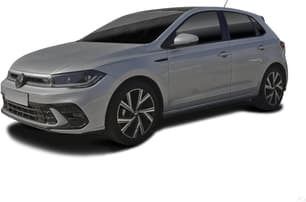
Not exactly a massive change to the exterior of the Polo GTI with this mid-life refresh, but sharp-eyed car spotters will notice a new front bumper treatment including a revised lower grille, defined by a body-coloured border and flanked by LED driving lights.
The headlights have also been reshaped to mark the arrival of standard matrix LED beams, with the signature horizontal red keyline moves from the centre to the bottom edge of the upper grille. A continuous LED strip across the nose stands the car apart after dark.
Previously part of the GTI’s ‘Luxury Pack’, the ‘Faro’ design 18-inch alloys fill the wheel arches nicely, and overall the car’s compact, tightly wrapped body and finely chiselled lines are familiar.
At the back, the LED tail-light clusters have been extended laterally into the hatch door, but the car’s fundamental shape is unchanged.
Inside the dash layout is the same, although the centre of the sports steering wheel has been massaged into a more organic shape with the airbag/horn now an oval rather than a circle.
The rest of the interior is relatively understated in typical VW fashion, the neatly sculpted sports seats trimmed with traditional ‘Clark’ tartan cloth on the cushion and backrest centres. And ‘Kings Red’ inlays in the dash, centre console and front door trims, are a reminder of the car’s heritage and sporty intent.
The Peugeot 2008 is a smooth operator with head-turning French flair, but the devil is in the detail.
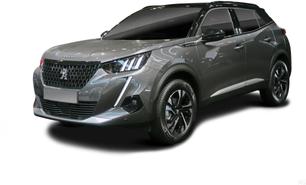
It’s not just the 2008’s well proportioned dimensions or the healthy dollop of exterior black highlights that catch your eye, but Peugeot has added a range of design cues to symbolise the Lion on its badge.
The tail-lights have a 3D effect that make them look like cat’s claws and the daytime running lights on the front resemble a scratch mark. These pair perfectly with the lion head crest on the grille.
Look deeper and you notice the attention to detail.
The 2008's redesigned front grille's slates are colour matched to the car's body colour.
Dual exhaust pipes are finished in chrome, giving the impression of performance even if the car doesn’t deliver on it.
The GT variant gets a two-tone paint job with a black roof contrasting with the body's colour.
Inside there are plenty of high quality finishes. The centre console is festooned in gloss black and there is a lovely carbon-effect textured insert on the dash and doors.
Some hard plastics below eye-level and on touch points such as where your knee might rub are less impressive. The rear seat loses some of the lustre of the front pew with tough plastics covering the back of the front seats and most of the doors.
At just under 4.1 metres long the Polo GTI is a decidedly compact hot hatch, but thanks in no small part to a relatively lengthy (2.6m) wheelbase, interior space is impressive.
The driver and front passenger have plenty of breathing room, and the rear is remarkable. At 183cm, sitting behind the driver’s seat set to my position, I enjoyed ample legroom, and more than enough headroom.
Width is another story, because while two adults will be fine in the back, there isn’t enough space for three to sit in comfort for any length of time.
Storage options in the front include a small lidded box between the seats (which doubles as an adjustable armrest), two cupholders and various oddments spaces in the centre console, as well as the wireless charging bay in front of the gearshift.
There are also pockets in the doors with room for (medium) bottles, a decent glove box, a shallow drawer under the passenger seat, and an overhead drop-down tray for glasses.
Map pockets on the front seat backrests, and small bins in the doors add extra practicality, but there’s no fold-down centre armrest or individual ventilation control for rear seaters.
For connectivity and power, there are two USB-C ports in the front, plus another two in the rear, as well as a 12-volt socket in the front centre console.
Boot space is a healthy 305 litres (VDA) with the 60/40 split-folding rear seats upright, that number growing to 1079L with them folded down.
Tie down anchors are handy for strapping loose loads, while shopping bag hooks help keep smaller bundles under control. And be aware, the spare is a space-saver.
Step inside and there is no hiding the 2008’s diminutive proportions.
It’s 4300mm long, 1815mm wide and 1550mm high, which puts it closer in size to the mini Mazda CX-3 than the larger CX-30 it is more aligned with price-wise.
This all adds up to a snug fit in whichever row you sit.
There are a couple of cupholders in the centre console - a smaller one for a standard takeaway coffee and a larger one for drink bottles.
Slight storage bins in the door can hold a regular drink bottle but there isn’t much room for much else.
The wireless device charger is hidden away behind a compartment below the central screen that opens with a push and there are two USB-C ports up front and the rear seats score a USB-C and A connection.
Rear seat passengers do without a dedicated aircon vent, unfortunately.
There is an issue with Peugeot’s i-Cockpit steering wheel and digital driver display, too.
If you like to sit low the chances are the steering wheel will cut off your view of the bottom part of the display. If you prefer to have the seat jacked up, you’ll have better vision of the readouts.
There are piano key-like physical controls for simple climate functions such as the de-mister and auto climate settings. More complex functions are done via the 10-inch central multimedia screen.
The boot is a decent size at 434L and can easily handle a weekly grocery shop or a few overnight bags.
There is only a space saver spare wheel, but this car is aimed at city driving where it is easier to source a replacement tyre.
Headline news is the Polo GTI’s before on-road costs price has gone up by close to 18 per cent, from $32,890 to $38,750.
Why? More standard equipment; some new things and other previously optional features now included in the base price.
The aim is to bring the car into line with the specification the majority of customers are ordering, because Volkswagen believes the days of a ‘price leader’ Polo GTI are behind it. That is, pique a buyer’s interest with a keenly priced but relatively sparse base model, and they invariably add options once engaged in the process.
So, the Polo GTI has put a price gap on its two key competitors, the Ford Fiesta ST ($32,290) and Hyundai i20N ($32,990), but it’s now loaded with a whole lot of fruit for the money.
The new bits are ‘Matrix’ LED headlights, a centre airbag, and 18-inch alloy rims (up from 17s), while the elements moved from the options list to the standard equipment column are assistance features bundled under the ‘IQ.Drive’ umbrella including, blind-spot monitoring, rear cross-traffic alert, front parking sensors (joining those in the rear), ‘Park Assist’, adaptive cruise control, and auto-folding exterior mirrors.
Also included in the GTI’s base price are the ‘IQ.Light’ matrix LED headlights, ‘Dynamic Light Assist’ (auto low to main beam switch with light profile adjusted to avoid dazzling cars ahead or oncoming), ‘Premium’ LED tail-lights (with dynamic indicators), metallic paint ($600 on the Polo Life and Style), LED driving lights, dual-zone climate-control, front and rear carpet mats, ‘Digital Cockpit Pro’ (incorporating nav and phone functions), ambient interior lighting, wireless device charging, and sports front seats.
Then you can add ‘Discover’ nav in the 8.0-inch media touchscreen set-up, auto headlights, rain-sensing wipers, ‘Manoeuvre Braking’ (low-speed rear AEB), an auto-dimming rearview mirror, leather trim on the sports steering wheel, gearshift and handbrake lever, and six-speaker audio.
A ‘Sound & Tech Package’ is available for the GTI ($1500) incorporating a 9.2-inch multimedia screen, and a Beats branded premium audio system (digital eight-channel amp, 300 watts).
A Panoramic glass sunroof ($1500) is also offered, and premium metallic paint adds $300.
The 2008 range kicks off at $39,990, before on-road costs, for the base Allure grade and rises to $44,490 for the fully loaded GT variant.
That’s a lot of money for a small SUV, especially considering the Skoda Kamiq range starts at $32,990, you can get Nissan’s Qashqai from $33,890 and a Mazda CX-30 for $33,140.
There is a lot to like about the 2008’s standard equipment list, though.
Flash looking 17-inch alloy wheels are complemented by adaptive LED headlights that control individual LEDs to brighten the road without dazzling oncoming vehicles. The headlights will automatically switch on in low light situations and stay on for a short period of time after you exit the vehicle to make it easier to find your way to the door at night.
A 10-inch multimedia screen is compatible with wireless Apple CarPlay and Android Auto, and a wireless device charger completes the cord-free ecosystem.
Peugeot’s 'i-Cockpit' brings a 10-inch driver display with 3D readouts paired with a small steering wheel.
GT buyers can expect eight colour ambient lighting, a six-speaker stereo, four USB charging ports, in-built sat nav and brushed aluminium foot pedals.
Well bolstered seats are heated up front and wrapped in synthetic suede and leather upholstery with contrast green stitching. The driver’s seat is power adjustable and has a massage function but the front seat passenger will need to move the seat themselves.
There are rain-sensing wipers, roof rails, power folding and heated side mirrors and a space saver spare wheel.
It’s a solid list of equipment but is missing some features you’ll find on similarly priced rivals such as a head-up display.
The Polo GTI is powered by a version of Volkswagen’s 2.0-litre (EA888) four-cylinder turbo-petrol engine, driving the front wheels through a six-speed dual-clutch auto transmission.
The iron block/alloy head unit uses direct- and port-injection, variable valve lift on the intake side, and variable valve timing on the intake and exhaust sides to produce maximum torque of 320Nm from 1450 to 4390rpm, at which point peak power of 147kW takes over from 4390-6000rpm.
Lurking beneath the bonnet is a little three-cylinder 1.2-litre turbo-petrol engine that makes 96kW and 230Nm. That’s a decent amount of grunt from the little unit, but again you can get more oomph for less from mainstream rivals.
It is paired to an eight-speed automatic transmission that drives the front wheels.
There is no hybrid help, either.
VW’s official fuel economy figure for the Polo GTI on the combined (ADR 81/02 - urban, extra-urban) cycle is 6.5L/100km, the 2.0-litre turbo four emitting 150g/km of CO2 in the process. Not bad for hot-hatch with this kind of performance.
Minimum fuel requirement is 95 RON premium unleaded and you’ll need 40 litres of it to fill the tank. Using the official consumption figure that translates to a range of 615km.
Stiff emissions regulations in Europe mean these little turbocharged petrol engines have a fair bit of self control on the drink.
Peugeot claims the 2008 uses 5.4L/100km on the combined cycle. We used slightly more than this but spent most of the time in the cut and thrust of city traffic where cars use more fuel.
You’ll need to budget for pricier premium unleaded petrol, too.
The Polo launch drive program covered around 150km of city, suburban and freeway running from inner Sydney, through twisting B-roads to the city’s south, and sprawling semi-rural areas further west, topped off with a closed track session at the Luddenham Raceway.
Weighing in at a fraction over 1.3 tonnes, with 147kW/320Nm sent to the front wheels, the Polo GTI is capable of sprinting from 0-100km/h in 6.8 seconds, which is satisfyingly quick.
And the 2.0-litre, four-cylinder turbo-petrol engine’s dyno sheet must be a thing of beauty with maximum torque available from from 1450 to 4390rpm, and peak power picking things up at precisely the end of that plateau, remaining on tap all the way to 6000rpm.
So, mid-range punch is always there, and the six-speed ‘DSG’ dual-clutch auto delivers rapid, precise shifts, with wheel-mounted paddles dialling up the fun factor when you want to shift ratios yourself.
Combined engine and exhaust noise is agreeably rorty without tipping over the annoyance threshold, although the high-performance 215/40 Continental ContiSportContact rubber transfers a fair amount of rumble on coarser surfaces.
The base suspension set-up is strut front/torsion beam rear, with the standard ‘Sport Select’ system built around switchable dampers, offering the choice of ‘Normal’ and ‘Sport’ modes.
Normal is nicely composed with comfy compliance over longer undulations as well as higher frequency bumps and dips. But if the red mist descends and you’re ready for some fun the (noticeably firmer) Sport setting buttons everything down that bit more.
As well as the damping, throttle response is faster, the DSG picks up the pace as does the steering. Even the exhaust is enhanced, although it’s via the synthetic ‘Sound Actuator.’ Boo!
Balanced and predictable in quick cornering, the Polo GTI’s electro-mechanically assisted steering is precise and beautifully weighted, with great road feel. And the car’s ‘Extended Differential Lock’ uses the traction control and braking systems to minimise wheel spin, maximise traction, and help limit understeer.
On top of all that, the carefully sculpted sports seats deliver secure location without compromising comfort, and the grippy sports wheel feels great.
Braking is by ventilated discs at the front with solid rotors at the rear, and even under the pressure of a flat-out track session (moderated with the help of some admirably patient tame racing drivers) they remained progressive and firm.
In more civilised surroundings the Polo’s size and excellent all-around vision (not to mention a clear reversing camera) make it a cinch to park. The combination of on-screen touch controls, and physical dials for the multimedia system is welcome. And the connection for Apple CarPlay and Android Auto is wired or wireless which is handy for those who prefer the surety of a wired connection or the flexibility of one less cable in their life.
On the road the 2008 is a bit temperamental.
Most European cars are fitted with stiffer suspension than the cosseting springs found in Japanese machines.
This means you’ll feel bumps and road imperfections through your seat more than other SUVs. It has particular problems ironing out consistent smaller bumps, which can unsettle it and lead the 2008 to skip across them.
The counterbalance to that is a more dynamic drive experience, with the 2008 exerting excellent body control through the bends as it is held in line by the stiffer set-up.
Pair this with sharp, direct and well-weighted steering and it's a fun little SUV to take on a twisting country back road.
Three cylinders might not sound like a lot, but in the real world this is all the 2008 needs.
Its 96kW and 230Nm won’t set the world on fire but the torque is accessed from just 1750rpm, which endows the 2008 with some punch off the mark and it feels zippy when navigating the daily commute.
Don’t confuse that for outright speed, though, the 2008 completes the benchmark 0-100km/h dash in 9.3 seconds.
The transmission is fine when you are accelerating or cruising at motorway speeds, where it uses its many ratios to keep the engine humming along in its sweet spot. There are paddle shifters if you want more control.
In stop-start traffic it isn’t as an accomplished performer. It can struggle to find the right ratio and this leads to a jerky movement reminiscent of dual-clutch autos.
The cabin is well insulated with the outside world kept mostly at bay, but you’ll hear the three cylinder’s charming little rumble when you put your foot down.
Parking is a cinch thanks to its petite proportions and the 2008 has no issues navigating tight city streets or underground car parks.
The current Polo scored a maximum five-star ANCAP rating when it launched in 2018, and it must have been tempting for VW to save more than a few euros by side-stepping active and passive safety upgrades in this refresh.
But, bravo, it didn’t, the German giant re-submitting this updated version for assessment against more challenging 2022 criteria.
The GTI is loaded with a raft of crash-avoidance tech under the umbrella of ‘IQ.Drive’, including AEB (with cyclist and pedestrian detection), lane-keeping assist (with lane departure warning), ‘Multi-Collision Brake’ (automatically slows the car after a collision, reducing the chance of a secondary impact), driver fatigue detection, ‘Park Assist’ (perpendicular and parallel), front and rear parking distance sensors, rear AEB (low-speed), a reversing camera (with static and dynamic guidelines), adaptive cruise control (with speed limiter and distance warning display), and tyre pressure monitoring.
If, despite all that, a crash is unavoidable there are seven airbags on-board - driver and front passenger (front and side), front centre, and full-length side curtain.
A front centre airbag is the solution many manufacturers are using to meet ANCAP’s recently introduced, tougher criteria around head clash injuries.
There are three top tether points across the rear seat for child seats and/or baby capsules, with ISOFIX anchors on the two outer positions.
The 2008 has a maximum five-star ANCAP safety rating, but that mark was given in 2020 and it might not get the same score if it was retested today.
It has six airbags, but misses out on a centre airbag that protects against head clashes in a side on collision.
It has a decent amount of safety equipment with auto emergency braking, lane keep assist, blind spot monitoring and adaptive cruise control.
Rear cross-traffic alert, which sounds an alarm if a car is approaching from the side as you reverse, is a notable absence.
Volkswagen Australia covers the Polo GTI with a five-year/unlimited kilometre warranty, which is now the volume market standard.
The paint is warranted for three years/unlimited kilometres, “Through Corrosion” is covered for 12 years/unlimited kilometres, and 12 months roadside assistance is included.
Servicing is required every 12 months or 15,000km, with prices over the first five years ranging from a low of $455 to a high of $1498, the average per service coming out at $701, which is a pretty solid number.
Capped price servicing is available, however, over five- and three-year plans. Paying up-front for five years results in a $765 saving over pay-as-you-go.
A nice side benefit is the ability to fold servicing costs into the vehicle’s financing at the time of purchase, and the plan is transferable if you decide to sell the car before the five or three years is up.
Peugeot covers the 2008 with a five year/unlimited km warranty, which is the standard coverage today.
The French brand offers a range of prepaid servicing packs that’ll save you a handy amount compared to pay-as-you-go maintenance.
A five-year plan is the best value, costing $1700 for five scheduled visits every 12 months or 15,000km. That’s $638 cheaper than the pay-as-you-go servicing.