What's the difference?
The hot hatch wars, an on-going automotive conflict, fired up when Volkswagen lobbed a massive, Golf GTI-shaped salvo into an unsuspecting global car market in the middle of 1976.
Peugeot may have run a bold out-flanking manoeuvre with deployment of the 205GTi from the mid-1980s, and other skirmishes broke out soon after with the likes of Suzuki’s Swift GTi, but so far the German maker has retained majority ownership of those three little letters that mean so much.
Fast forward to 1995 and application of the GTI tag spread to the compact VW Polo, which close to three decades later brings us to the current, sixth-generation version.
It arrived in Australia in 2018, and four years down the track it’s time for an update, with subtle cosmetic tweaks and a significant safety upgrade included.
Volkswagen Australia invited us to the car’s local launch including a varied drive program, topped off with a hot-lap track session, to get a first taste of how it shapes up.
Jeep's Renegade might be late to the mini-SUV party but it comes with a pretty impressive back catalogue to suggest that this is a SUV that can cash the cheques its name can write.
The top of the range Trailhawk can write even bigger cheques than the lower models, bringing with it a range of off-road tech toys to let you really get down and dirty.
The Polo GTI faces tough competition in the form of Hyundai’s recently arrived, very good, and well-equipped i20 N, as well as Ford’s sleek and super-capable Fiesta ST. But as mentioned at the start, VW occupies the hot-hatch high ground with the GTI badge, and this upgraded Polo is loaded with features, dynamically outstanding and on the leading edge in terms of safety. Time will tell if the higher price, higher spec strategy is the right one, but there’s no doubting this updated Polo GTI is a compelling package.
Note: CarsGuide attended this event as a guest of the manufacturer, with meals provided.
Rugged, dependable and good off-road are the most obvious qualities of the Trailhawk. It stands out from the rest of the mini-SUVs by being able to do the S and the U with plenty of vigour.
It's just a shame that its on-road manners can't match that of its big brother, the Cherokee. Unless you're planning on proper off-roading, the Trailhawk might not be quite what you're looking for.
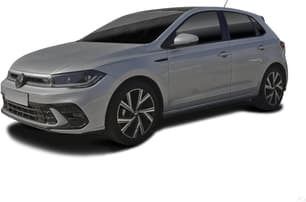
Not exactly a massive change to the exterior of the Polo GTI with this mid-life refresh, but sharp-eyed car spotters will notice a new front bumper treatment including a revised lower grille, defined by a body-coloured border and flanked by LED driving lights.
The headlights have also been reshaped to mark the arrival of standard matrix LED beams, with the signature horizontal red keyline moves from the centre to the bottom edge of the upper grille. A continuous LED strip across the nose stands the car apart after dark.
Previously part of the GTI’s ‘Luxury Pack’, the ‘Faro’ design 18-inch alloys fill the wheel arches nicely, and overall the car’s compact, tightly wrapped body and finely chiselled lines are familiar.
At the back, the LED tail-light clusters have been extended laterally into the hatch door, but the car’s fundamental shape is unchanged.
Inside the dash layout is the same, although the centre of the sports steering wheel has been massaged into a more organic shape with the airbag/horn now an oval rather than a circle.
The rest of the interior is relatively understated in typical VW fashion, the neatly sculpted sports seats trimmed with traditional ‘Clark’ tartan cloth on the cushion and backrest centres. And ‘Kings Red’ inlays in the dash, centre console and front door trims, are a reminder of the car’s heritage and sporty intent.
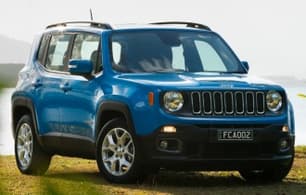
In what is absolutely not a coincidence, the Renegade immediately conjures up the Wrangler. Upright grille from the Willys Jeep (references abound here), round headlights, squared off wheel arches to mimic the Wrangler's guards, short overhangs and big rear view mirrors.
The 17-inch wheels look completely lost in the wheelarches which are even more cavernous owing to the Trailhawk's 50mm of extra ride height. The wheels are also a bit cheap looking but will probably survive the belting the car is intended to take.
Less rugged is the interior, despite a fairly self-conscious effort to make it look and feel chunky. The front seats are flat and unsupportive with the rears just as lacklustre making sure everyone is sliding around together. Luckily, front passengers get a dash-mounted grab handle.
It seems quite well put together, however, but with carpets and easily-marked plastics, you'll hope your passengers don't bring the mud in with them too often. And the "Since 1941" stamped into the steering wheel can go.
The dashboard is reasonably clear and has plenty of information to share via the screen between the dials but whoever thought marking the redline with a water splash graphic in bright orange should probably rethink their design decisions.
Storage is limited to two cupholders up front, door pockets in each door and nets on the front seat backs.
Headline news is the Polo GTI’s before on-road costs price has gone up by close to 18 per cent, from $32,890 to $38,750.
Why? More standard equipment; some new things and other previously optional features now included in the base price.
The aim is to bring the car into line with the specification the majority of customers are ordering, because Volkswagen believes the days of a ‘price leader’ Polo GTI are behind it. That is, pique a buyer’s interest with a keenly priced but relatively sparse base model, and they invariably add options once engaged in the process.
So, the Polo GTI has put a price gap on its two key competitors, the Ford Fiesta ST ($32,290) and Hyundai i20N ($32,990), but it’s now loaded with a whole lot of fruit for the money.
The new bits are ‘Matrix’ LED headlights, a centre airbag, and 18-inch alloy rims (up from 17s), while the elements moved from the options list to the standard equipment column are assistance features bundled under the ‘IQ.Drive’ umbrella including, blind-spot monitoring, rear cross-traffic alert, front parking sensors (joining those in the rear), ‘Park Assist’, adaptive cruise control, and auto-folding exterior mirrors.
Also included in the GTI’s base price are the ‘IQ.Light’ matrix LED headlights, ‘Dynamic Light Assist’ (auto low to main beam switch with light profile adjusted to avoid dazzling cars ahead or oncoming), ‘Premium’ LED tail-lights (with dynamic indicators), metallic paint ($600 on the Polo Life and Style), LED driving lights, dual-zone climate-control, front and rear carpet mats, ‘Digital Cockpit Pro’ (incorporating nav and phone functions), ambient interior lighting, wireless device charging, and sports front seats.
Then you can add ‘Discover’ nav in the 8.0-inch media touchscreen set-up, auto headlights, rain-sensing wipers, ‘Manoeuvre Braking’ (low-speed rear AEB), an auto-dimming rearview mirror, leather trim on the sports steering wheel, gearshift and handbrake lever, and six-speaker audio.
A ‘Sound & Tech Package’ is available for the GTI ($1500) incorporating a 9.2-inch multimedia screen, and a Beats branded premium audio system (digital eight-channel amp, 300 watts).
A Panoramic glass sunroof ($1500) is also offered, and premium metallic paint adds $300.
The Renegade range starts at $28,000 for the 1.6-litre Renegade Sport manual front-wheel drive, climbing between $2000 and $3000 through the Sport Auto, Longitude Auto, Limited Auto with a final jump of $4000 to the 2.4-litre auto-only Trailhawk.
Standard is a nine-speaker stereo with Bluetooth and USB, 17-inch alloys, dual-zone climate control, reversing camera, rear parking sensors, keyless entry and start, cruise control, electric front seats with heating, satellite navigation, automatic bi-xenon headlights, auto wipers, leather trim, roof rails, front and middle bash plates, full size spare, heated leather steering wheel, privacy glass, trailer sway control and tyre pressure monitoring.
The lairy Omaha orange is $500, part of an eleven colour palette with only two no-cost paint options (black and white).
You can add lane departure warning, auto-parking and a black painted roof for $500 each, a removable and retractable roof called My Sky Roof for $2200 or a more conventional electric sunroof for $1900.
The Beats-branded nine-speaker stereo is run via Fiat-Chryser's UConnect system, accessible through the 6.5-inch touchscreen. While it improves with every attempt, it's still quite clunky and when the sat-nav is added, becomes a bit of a mess.
Thankfully, not every function has been crammed into the touchscreen interface, so you'll spend more time with your hands on the wheel rather than working out which bit of the screen has the climate control.
The Polo GTI is powered by a version of Volkswagen’s 2.0-litre (EA888) four-cylinder turbo-petrol engine, driving the front wheels through a six-speed dual-clutch auto transmission.
The iron block/alloy head unit uses direct- and port-injection, variable valve lift on the intake side, and variable valve timing on the intake and exhaust sides to produce maximum torque of 320Nm from 1450 to 4390rpm, at which point peak power of 147kW takes over from 4390-6000rpm.
The Trailhawk is powered by Fiat's 2.4-litre four naturally-aspirated four-cylinder producing 129 kW and 230 Nm. Jeep reckons you'll get 7.5L/100km on the combined cycle. Our mostly city driving with a longish motorway run produced an 11.0L/100km average over a week.
The transmission is a nine-speed ZF automatic driving all four wheels.
The Trailhawk also has Jeep's five mode Selec-Terrain system which should cover pretty much every eventuality – Auto, Sport, Mud, Sand and, just for the Trailhawk, Rock. The Trailhawk is rated to tow 400kg unbraked and 907kg braked.
The Polo launch drive program covered around 150km of city, suburban and freeway running from inner Sydney, through twisting B-roads to the city’s south, and sprawling semi-rural areas further west, topped off with a closed track session at the Luddenham Raceway.
Weighing in at a fraction over 1.3 tonnes, with 147kW/320Nm sent to the front wheels, the Polo GTI is capable of sprinting from 0-100km/h in 6.8 seconds, which is satisfyingly quick.
And the 2.0-litre, four-cylinder turbo-petrol engine’s dyno sheet must be a thing of beauty with maximum torque available from from 1450 to 4390rpm, and peak power picking things up at precisely the end of that plateau, remaining on tap all the way to 6000rpm.
So, mid-range punch is always there, and the six-speed ‘DSG’ dual-clutch auto delivers rapid, precise shifts, with wheel-mounted paddles dialling up the fun factor when you want to shift ratios yourself.
Combined engine and exhaust noise is agreeably rorty without tipping over the annoyance threshold, although the high-performance 215/40 Continental ContiSportContact rubber transfers a fair amount of rumble on coarser surfaces.
The base suspension set-up is strut front/torsion beam rear, with the standard ‘Sport Select’ system built around switchable dampers, offering the choice of ‘Normal’ and ‘Sport’ modes.
Normal is nicely composed with comfy compliance over longer undulations as well as higher frequency bumps and dips. But if the red mist descends and you’re ready for some fun the (noticeably firmer) Sport setting buttons everything down that bit more.
As well as the damping, throttle response is faster, the DSG picks up the pace as does the steering. Even the exhaust is enhanced, although it’s via the synthetic ‘Sound Actuator.’ Boo!
Balanced and predictable in quick cornering, the Polo GTI’s electro-mechanically assisted steering is precise and beautifully weighted, with great road feel. And the car’s ‘Extended Differential Lock’ uses the traction control and braking systems to minimise wheel spin, maximise traction, and help limit understeer.
On top of all that, the carefully sculpted sports seats deliver secure location without compromising comfort, and the grippy sports wheel feels great.
Braking is by ventilated discs at the front with solid rotors at the rear, and even under the pressure of a flat-out track session (moderated with the help of some admirably patient tame racing drivers) they remained progressive and firm.
In more civilised surroundings the Polo’s size and excellent all-around vision (not to mention a clear reversing camera) make it a cinch to park. The combination of on-screen touch controls, and physical dials for the multimedia system is welcome. And the connection for Apple CarPlay and Android Auto is wired or wireless which is handy for those who prefer the surety of a wired connection or the flexibility of one less cable in their life.
The Trailhawk name suggest that things are going to get muddy – compared to the rest of the range, the range-topper rides 50mm higher and has exposed, easy-to-reach tow hooks in the fairly unlikely event you get stuck. It also has a 20:1 low-range crawl ratio and Active Drive 4x4 which means it can switch between front and all-wheel drive. It'll also wade through almost half a metre of water. It's a genuine mud-plugging proposition and will take on some much bigger machinery out in the bush.
On the road, where we spent all our time in the Renegade, it's not what you'd call particularly inspiring. There's a number of sources of noise that contribute to a less than quiet cabin and having to constantly correct your course at freeway speeds adds to the tiring nature of the Renegade.
It's much better at lower speeds, pottering around but then again, its nine-speed transmission needs a lot more work on the shift mapping because it seems to forget which gear it needs to be in when you sink the right foot. If you don't need the Trailhawk's extra off-road goodies, consider the 1.4 litre Limited or Longitude.
The current Polo scored a maximum five-star ANCAP rating when it launched in 2018, and it must have been tempting for VW to save more than a few euros by side-stepping active and passive safety upgrades in this refresh.
But, bravo, it didn’t, the German giant re-submitting this updated version for assessment against more challenging 2022 criteria.
The GTI is loaded with a raft of crash-avoidance tech under the umbrella of ‘IQ.Drive’, including AEB (with cyclist and pedestrian detection), lane-keeping assist (with lane departure warning), ‘Multi-Collision Brake’ (automatically slows the car after a collision, reducing the chance of a secondary impact), driver fatigue detection, ‘Park Assist’ (perpendicular and parallel), front and rear parking distance sensors, rear AEB (low-speed), a reversing camera (with static and dynamic guidelines), adaptive cruise control (with speed limiter and distance warning display), and tyre pressure monitoring.
If, despite all that, a crash is unavoidable there are seven airbags on-board - driver and front passenger (front and side), front centre, and full-length side curtain.
A front centre airbag is the solution many manufacturers are using to meet ANCAP’s recently introduced, tougher criteria around head clash injuries.
There are three top tether points across the rear seat for child seats and/or baby capsules, with ISOFIX anchors on the two outer positions.
Seven airbags (including driver's knee bag), traction and stability controls, roll mitigation, blind spot monitoring, ABS and brake assist.
The Renegade does not yet have an ANCAP star rating although it scored five EuroNCAP stars in 2014.