What's the difference?
I'm calling it - the Volkswagen Passat is the forgotten hero of station wagons.
It's surprisingly large while retaining the creature comforts and understated styling of old-world glamour.
Then enters the R-Line. A badge that diehard Volkswagen enthusiasts know is synonymous with sporty performance and handling.
However, it can be overlooked for its more affordable rivals, the Mazda6 and Skoda Octavia wagons.
But does affordability take it out of the running for the family market? Or is this the answer for the drivers who don't want to compromise on performance but still have a kid (or three) to throw in the back?
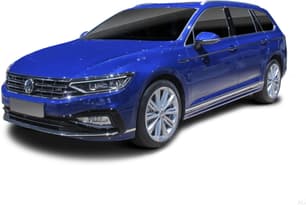
I've been hauling my little family of three around town this week to see what the big blue wagon could do.
Mercedes-Benz loves to fill a niche. This is the company, after all, that has a coupe version of its GLC and GLE SUVS, four-door coupes ranging in size from the CLA to the AMG GT 4-door, and enough electric vehicles to make Tesla jealous.
The nichest of all though, might the CLS, which has been updated for the 2022 model year.
Positioned above the E-Class but below the S-Class in the line-up as a sporty sedan for customers after a blend of style, technology and performance, the new CLS is available in just one engine now, while styling and equipment have also been tweaked in the update.
Can the CLS earn its place in the Mercedes line-up or is it destined to be a bit player amongst more popular models?
I so enjoyed driving the Volkswagen Passat 206TSI R-Line. It's a roomy wagon that should fit a lot of different types of families. It still has sporty performance that will entice even the most reluctant family car buyer, so don't be turned off by its large proportions! I really like the comfort, convenience and handling of this one, so it gets an easy 8.0/10 from me.
My kid thought the blue colour was cool and loved having so many things to play with in the back seat. His only complaint was about the heavier doors but he still managed. He gives it an 8.0/10, too.
Comfortable when it needs to be and sporty when you want it to be, the CLS 53 is a bit like Mercedes’ Doctor Jekyll and Mr Hyde – or maybe Bruce Banner and the Hulk is a better frame of reference for some.
While it doesn’t excel in any one particular area, its breadth of useability is commendable, but ultimately it might be its all-too-familiar aesthetics that is the biggest letdown.
From the inside, it looks and feels like any other large Mercedes model (not necessarily a criticism), while the exterior – in my opinion – doesn’t go far enough to differentiate it from the CLA.
After all, if you wanted a stylish and sporty sedan, shouldn’t feel special too?
The Passat is a large car and stands at 4708mm long, 1832mm wide and 1504mm high. The boxier rear and long nose make these proportions feel even larger.
The 2023 model doesn't see much change, if any, to the previous iteration. The exterior features the classic VW sharp pleat that runs the length of the body, slim-line LED lights and pronounce grille with lots of chrome accents found throughout.
It looks shiny, new and stylish, but not garish. You'd be proud to be seen in this.
The interior is also classically VW – sharp, a little pared back and hosting easy to see buttons and dials. The adjustable ambient lighting elevates the cabin space, as does the black headliner (R-Line exclusive).
An interesting feature is the directional air vents, the slatted design is carried the entire length of the dash which accentuates the width of the car. It all looks seamless and well thought out.
Mercedes’ homogenised design is a bit of a double-edged sword, and while the CLS does wear its styling confidently, it probably looks a little too much like the cheaper and much smaller CLA for our tastes.
Both are swoopy four-door coupes from Mercedes-Benz, so of course there will be some similarities, but keen-eyed car spotters will notice some differences.
While the proportions are similar, the longer wheelbase and bonnet line gives the CLS a more mature look, and the extra details found in the head- and tail-lights, and front bumper stand it apart.
The changes to the 2022 version also brings in AMG’s 'Panamericana' front grille, which adds a bit of welcome aggression to the front end.
From the side, the steeply raked roof flows seamlessly into the rear, while the 20-inch wheels fill out the arches well.
All four doors are also frameless, which is always cool to see.
From the rear, quad-exhaust tips hint at the CLS’s sporty intentions, while a prominent rear diffuser and subtle boot lid spoiler also feature.
Inside, the biggest change to the CLS is now the inclusion of the MBUX multimedia system, which keeps it in line with the E-Class, C-Class and other Mercedes models.
AMG sports seats are also fitted, wrapped in Nappa leather and 'Dinamica' fabric upholstery for all pews.
Our test car also came fitted with red contrast stitching and seat belts, adding a racy streak to the CLS cabin.
Have to point out the new steering wheel that comes with the 2022 CLS, though, which mirrors the tiller offered in the new E-Class, and is a step back in terms of functionality.
It looks premium enough thanks to its chunky leather-wrapped rim and gloss black dual-spoke design, but using the buttons, especially when on the move, is difficult and unergonomic.
This design is definitely function over form, and might need a few more revisions to get it right.
Overall, we’d say the CLS is a good-looking car, but does play it a bit too safe with its styling?
A very practical family wagon with all passengers enjoying ample head and legroom.
The amenities in both rows are very good. The seats are fairly comfortable but the lumbar support isn't awesome. The massage function on the driver's side is a nice novelty but not strong enough to be called a massage. Think of it as gently stretching.
For storage, you get a decently sized middle console, dedicated phone tray, cooled glove box, drink bottle holders in each door and two cupholders.
There are plenty of charging options available for the front with two USB-C ports and a 12-volt socket. Bonus having the wireless Apple CarPlay (and Android Auto), as it's one less cable you have to worry about.
In general, I like how easy the tech is to use. The 9.2-inch touchscreen multimedia system looks great and is responsive.
It's easy to get all the connections going and you can pull the built-in satellite navigation directions through to the 10.25-inch digital instrument panel. I did miss having a head-up display this week but the info on the instrument panel is displayed clearly.
The back seat gets a couple of cupholders in the fold-down armrest and drink bottle holders in each door. It also has directional air vents with climate control, reading lights and one USB-C port for charging. However, I would have liked to have seen another charging port, to limit sibling squabbles.
There are ISOFIX child seat mounts on the outboard seats plus three top tether anchor points.
The backseat is wide enough to fit three child seats side by side if needed, and there's plenty of room for front passengers when a 0-4 rearward facing child seat is installed.
The windows are wide and offer good visibility but I really like the 142mm ground clearance. It was super easy for my six-year old to climb in and out.
The only thing he mentioned he didn't like was how heavy the doors were to operate. I don't mind this because they feel solid but they do swing wide, so be wary of letting any wild kids just hop out themselves in a crowded car park. You may get (or inflict) some dings.
The boot is a great size at 650L, with all seats in use, but if you pop down the backseats, that jumps up to 1780L.
The back seat also split-folds 40/20/40, which opens up your storage options. I enjoyed using the powered tailgate with kick function, it's handy on the grocery run.
Measuring 4994mm long, 1896mm wide, 1425mm tall and with a 2939mm wheelbase, the CLS slots neatly between the E-Class and S-Class in size and positioning.
Up front, occupants are afforded ample room for head, legs and shoulders, while the electronically adjustable seats make it easy to find a comfortable position.
The steering wheel also features a telescoping function – an always appreciated feature – and the expansive glasshouse makes things feel open and airy.
Storage options include a deep door pocket, a cubby found under the armrest, two cupholders and a smartphone tray with wireless charging capabilities.
It’s a different story in the second row, though, as the sloping roofline does noticeably eat away at headroom.
Don’t get me wrong, a six-foot-tall (183cm) adult can still slide in there fine, but the roof is dangerously close to the touching the top of the head.
Leg- and shoulder-room is pretty good in the outboard seats though, while the middle position is compromised by the intrusive transmission tunnel.
In the second row, passengers have access to a bottle holder in the door, a fold-down armrest with cupholders, backseat map pockets and two air vents.
Opening the boot reveals a cavity offering 490 litres of volume, with an aperture wide enough to fit golf clubs or luggage for a weekend getaway for four adults.
The rear seats also fold in a 40/20/40 split fashion, but Mercedes-Benz is yet to detail how much volume is on offer with the rear seats down. And as a traditional sedan, the CLS is less practical than the liftback Audi S7.
The 206 TSI R-Line is top of a (small) two-model line-up. Our example has been finished in 'Lapiz Blue', a colour exclusive to the R-Line. Otherwise, expect a sea of monochromatic colour options.
We say top model but it's not necessarily a massive jump up in specifications from the 162 TSI Elegance, you're paying for the engine performance on this one.
This R-Line will cost you $67,790, before on-road costs. That's a $4K price hike from the 2022 model with no discernible upgrades.
And that price tag still puts it well above its closest rivals, with the Octavia RS 180 TSI being $53,090 and the Mazda6 Atenza at $52,140 (all before on-road costs).
However, you won't be disappointed with the features list with Nappa leather-appointed seat trim, R-Line stitched detailing on the floor mats and seats, electric and heated front seats, massage function on the driver's seat, a panoramic sunroof as well as wireless Apple CarPlay and Android Auto all coming as standard.
The R-Line also enjoys 19-inch alloy wheels, a full-sized spare, heat insulating tinted glass, 65 per cent light reducing rear privacy glass and 30-way adjustable ambient lighting in the cabin.
When the third-generation Mercedes-Benz CLS-Class hit Australian showrooms in 2018, it was available in three flavours, but the 2022 refresh has trimmed the line-up to just one – the top-spec AMG-tuned CLS 53.
The discontinuation of the entry-level CLS350 and mid-tier CLS450 means the CLS-Class now kicks off at $188,977, before on-road costs, which makes it more expensive than rivals like the Audi S7 ($162,500) and Maserati Ghibli S GranSport ($175,000).
With BMW ditching the 6 Series, the Bavarian brand doesn’t offer a direct rival to the Mercedes-AMG CLS 53, but its bigger 8 Series is offered in a Gran Coupe body style that starts at $179,900.
So, what does Mercedes include in the CLS’s asking price?
Standard equipment includes interior ambient lighting, a head-up display, 12.3-inch digital instrument cluster, power-adjustable and heated front seats, woodgrain interior trim, powered boot lid, rear privacy glass, push-button start, keyless entry, and a sunroof.
As an AMG model, the 2022 CLS is also fitted with a unique steering wheel, sports seats, illuminated door sills, drive mode selector, 20-inch wheels, a performance exhaust, boot lid spoiler and blacked-out exterior package.
Handling multimedia duties is a 12.3-inch 'MBUX' (Mercedes-Benz User Experience) touchscreen, with functions including Apple CarPlay/Android Auto connectivity, digital radio, a wireless charger, satellite navigation and a 13-speaker Burmester sound system.
It’s a long and fully-featured equipment list, for sure, and it’s so extensive that there aren’t really any options available.
Buyers can opt for an 'AMG Exterior Carbon Fibre Package', power-closing doors, and different finishes for the exterior paint, interior trim and seat upholstery – that’s it!
While its nice that everything you’d want comes included in the asking price, it’s hard to ignore the fact that its Audi S7 rival is more than $20,000 cheaper, but also well equipped.
The R-Line has a 2.0-litre, four-cylinder turbo-petrol powertrain with a maximum output of 206kW/350Nm.
That puts its engine specs 44kW up on the Elegance model and you feel that difference when you put your foot down.
The six-speed auto transmission provides surprisingly smooth shifting in most settings. The grunty engine combined with the all-wheel drive creates a sporty and purposeful driving experience.
Powering the Mercedes-AMG CLS 53 is a 3.0-litre turbocharged inline six-cylinder engine, punching out 320kW/520Nm to all four wheels via a nine-speed automatic transmission and Merc's '4Matic+' AWD system.
A 48-volt mild-hybrid system, known as 'EQ Boost', is also fitted that serves up to 16kW/250Nm from take-off.
The result is a 0-100km/h acceleration time of 4.5 seconds, keeping it on pace with the likes of the 331kW/600Nm Audi S7 (4.6s) and 390kW/750Nm 250kW/500Nm BMW 840i Gran Coupe (5.2s).
While not as brutish as AMG’s eight-cylinder engine, the straight six strikes a great balance between pace and poise that perfectly suits a model like the CLS 53.
That powerful engine does cost you a little bit with efficiency. The official combined fuel figure is 8.1L/100km and real-world testing saw my figure at 8.6L.
Not too bad for the type of driving I did this week, which was a combo of open-road and urban. I wasn't scared of putting my foot down but I would expect to see a double-digit figure in an urban setting.
This has a 66L fuel tank and based on the official combined figure, you should be able to get around 815km driving range, which is great.
Official fuel consumption numbers for the CLS 53 are pegged at 9.2 litres per 100km, while we managed an average of 12.0L/100km in our launch drive.
All of our driving was relegated to country back roads and high-trafficked urban areas however, with no consistent freeway driving.
We’ll reserve judgement on how accurate the fuel economy figures are until after we’ve had the car for longer, but the EQ Boost system is designed to help keep consumption down by being able to coast the engine in particular situations.
The performance of this is to be commended. Powerful but poised, there's a sense of performance in reserve when you put your foot down and while still fun, it's not unbridled power.
It inspires confidence, the lower centre of gravity and firm steering meaning you tackle corners with minimum roll. You can accelerate out of a corner a little earlier than you might normally in this.
The cabin is nice and quiet with some road noise at higher speeds but not enough to intrude on chatting.
Despite suspension that feels sporty, aka stiff, the ride comfort is very good, with back seat passengers also feeling the comfort. There's not a lot of jostling in this.
Let's talk parking. It is a large car but you don't feel those dimensions when you park it.
It's very forgiving to manoeuvre with the front and rear parking sensors, crisp 360-degree view camera and tight 11.7m turning circle!
And if you're not confident it has a self-parking feature.
There are certain expectations on a vehicle when it wears a Mercedes badge, namely it should be comfortable to drive while also dripping with the latest tech. And here the large four-door coupe delivers in spades.
Driving the car is smooth, easy and comfortable when in its default drive setting, you can really sink into the CLS and just eat up the miles in comfort.
There are small niggles, like the 20-inch wheels and low-profile tyres (245/35 front and 275/30 rear) throw up a bit too much road noise into the cabin, but for the most part, around town, the CLS is serene, supple and supremely soothing.
However, switch it over to Sport or Sport+ and the steering gets a bit heavier, the throttle response a bit sharper, and the suspension a bit stiffer.
Does it transform the CLS into a sports car? Not quite, but it certainly dials up driving engagement to a level where you can really have some fun.
Though this isn’t a full-fat AMG in the same vein as an E63 S and doesn’t feature the ubiquitous 4.0-litre twin-turbo V8, the CLS 53’s 3.0-litre six-cylinder engine is still plenty potent.
Coming away off the line feels particularly brisk, likely due to the EQ Boost system adding a bit of poke, and even flat-footing it mid-corner delivers a noticeable surge of urgency from the creamy straight six.
However, the best of the CLS 53 experience, in my opinion, is actually the sound, with the exhaust letting off the right sort of pops and crackles in Sport+ mode on overrun.
It’s rude and obnoxious, but also completely surprising coming from the motoring equivalent of a three-piece dress suit – and I love it!
The brakes are also up to task for scrubbing speed, but our relatively brief time with the car was in extremely wet conditions, so the 4Matic+ AWD system was hugely appreciated.
This has a good list of safety features with the following being standard: LED daytime running lights, lane departure alert, lane keeping aid, blind-spot monitoring, rear cross-traffic alert, 360-degree view reversing camera with dynamic guidelines, front and rear parking sensors, driver fatigue alert, and adaptive cruise control (with stop/go function).
I like the Emergency Assist feature which will provide multiple visual and sound alerts if there's no steering wheel activity detected. If there's still no driver input, the car will slow down and ultimately come to a complete stop.
The Passat's maximum five-star ANCAP safety rating has just expired and at the time of writing was yet to be retested.
The 2023 Passat has nine airbags, including side airbags for the rear outboard seats, as well as curtain airbags covering both rows.
There are three top tethers across the rear row and ISOFIX child seat mounts on the outboard positions.
The Mercedes-Benz CLS is yet to be tested by ANCAP or Euro NCAP, which means there is no official crash-test rating that applies to local market vehicles.
However, the standard safety equipment list is extensive, and covers autonomous emergency braking (AEB), nine airbags, rear cross-traffic alert, blind-spot monitoring, tyre pressure monitoring, a surround-view camera, route-based speed recognition and lane-change assist.
The rear seats also feature two ISOFIX mounting points for child seats.
The Passat comes with a market standard five-year/unlimited km warranty, and roadside assistance is included for one year (through Allianz Insurance) if you get your car serviced at a VW centre.
There is a three- or five-year capped price servicing plan that can be pre-purchased and will save you money compared to the pay-as-you go option. Servicing averages $620 though, which is expensive for the class.
Servicing intervals are reasonable at every 12 months or 16,500km – whichever occurs first.
Like all new Mercedes-Benz models sold in 2021, the CLS 53 comes with a five-year/unlimited kilometre warranty with roadside assist over that period.
This outclasses the assurance period offered by BMW, Porsche and Audi (three-year/unlimited kilometre), and matches that available from Jaguar, Genesis and Lexus, who recently upgraded their offering.
Scheduled service intervals are every 12 months or 25,000km, whichever occurs first.
The first three planned services will set buyers back $3150, broken down as $700, $1100 and $1350 apiece.