What's the difference?
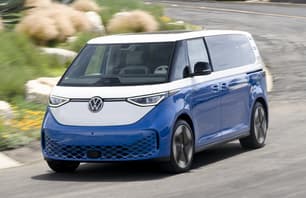
You might call it six degrees of Kombi separation. Somewhere, somehow just about all of us have a VW bus lurking in our family and friends' back story. And this is the latest version of that familiar box on wheels to hit the Aussie market.
It’s the premium, sportier, AWD GTX version of the pure-electric Volkswagen ID.Buzz.
This one-box wonder hits the retro-futurist ball out of the park and we attended its local launch to explore whether what’s under the skin supports the promise of its stunning exterior.
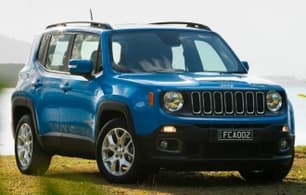
Jeep's Renegade might be late to the mini-SUV party but it comes with a pretty impressive back catalogue to suggest that this is a SUV that can cash the cheques its name can write.
The top of the range Trailhawk can write even bigger cheques than the lower models, bringing with it a range of off-road tech toys to let you really get down and dirty.
The only way to make this car cooler would be to add a split fold-out windscreen and a tube steel luggage rack on the roof.
It’s fast, super practical, comfortable and guaranteed to put a smile on the face of premium family buyers ready to go for something different. And that smile will extend to just about everyone who lays eyes on it. I love it.
Note: CarsGuide attended this event as a guest of the manufacturer, with travel, accommodation and meals provided.
Rugged, dependable and good off-road are the most obvious qualities of the Trailhawk. It stands out from the rest of the mini-SUVs by being able to do the S and the U with plenty of vigour.
It's just a shame that its on-road manners can't match that of its big brother, the Cherokee. Unless you're planning on proper off-roading, the Trailhawk might not be quite what you're looking for.
The ID.Buzz GTX is characterised by a unique front bumper with new integrated daytime running lights near its outer edges and a narrower black honeycomb grille.
GTX badging and the exterior mirror housings are finished in high-gloss black, and 21-inch alloy wheels are standard.
The rich ‘Cherry Red’ solid paint finish of the launch test car is exclusive to the GTX and it’s a fair bet many buyers will stump up the extra $4K required for a two-tone treatment, in this case with ‘Mono Silver’ as the highlight colour.
The interior is familiar ID.Buzz territory, with the long, broad dashtop pushing the windscreen and small front windows beside it into a quintessentially Kombi ‘bay window’-style design.
A 12-inch central multimedia screen sits proud of the multi-layered dash, and a slick 5.3-inch LCD instrument and car data display is fixed in front of the driver.
A black headliner dials up the sporty feel, the electric front seats are a GTX-specific design and the synthetic diamond pattern microfleece trim is highlighted by red contrast stitching and piping.
The red cross-stitching extends to the steering wheel and smile-inducing stainless steel ‘play’ and ‘pause’ symbols on the accelerator and brake pedals are retained.
The sub-zero cool exterior design manages to merge with a more restrained and practical interior perfectly. VW has solid retro form with the ‘New Beetle’ from the 1990s and this primo ID.Buzz looks amazing. It drew an instant crowd of curious onlookers every time we stopped.
In what is absolutely not a coincidence, the Renegade immediately conjures up the Wrangler. Upright grille from the Willys Jeep (references abound here), round headlights, squared off wheel arches to mimic the Wrangler's guards, short overhangs and big rear view mirrors.
The 17-inch wheels look completely lost in the wheelarches which are even more cavernous owing to the Trailhawk's 50mm of extra ride height. The wheels are also a bit cheap looking but will probably survive the belting the car is intended to take.
Less rugged is the interior, despite a fairly self-conscious effort to make it look and feel chunky. The front seats are flat and unsupportive with the rears just as lacklustre making sure everyone is sliding around together. Luckily, front passengers get a dash-mounted grab handle.
It seems quite well put together, however, but with carpets and easily-marked plastics, you'll hope your passengers don't bring the mud in with them too often. And the "Since 1941" stamped into the steering wheel can go.
The dashboard is reasonably clear and has plenty of information to share via the screen between the dials but whoever thought marking the redline with a water splash graphic in bright orange should probably rethink their design decisions.
Storage is limited to two cupholders up front, door pockets in each door and nets on the front seat backs.
The new ID.Buzz GTX 4Motion is priced at $109,990, before on-road costs, which puts it in the same price zone as a diverse range of large, primo people haulers.
On price, it competes with three-row EVs like the Kia EV9, LDV Mifa 9, and if you stretch the price equation a little further, the Zeekr 009. But in terms of style and personality, this machine lives in a world of its own.
Maybe its VW California Beach sibling comes closest, however that van’s traditional turbo-diesel powertrain stands in stark contrast to the ID.Buzz’s pure-electric vibe.
Once you’ve crested the $100K mark, it’s fair to expect a healthy list of included features and the ID.Buzz GTX doesn’t disappoint.
Aside from the performance and safety tech we’ll get to shortly, the highlights include adaptive cruise control, auto LED matrix headlights, 13-speaker (plus sub-woofer) Harman Kardon audio with digital radio, wireless Android Auto and Apple CarPlay, three-zone climate control, a panoramic (dimmable) glass roof, 30-colour ambient lighting, power-adjustable heated front seats, heated (outer) rear seats and 21-inch alloy rims.
There’s also a head-up display, a heated steering wheel, rain-sensing wipers, microfleece seat trim, keyless entry and start, electric side doors and tailgate (the latter with hands-free functionality), ‘Ask IDA’ voice control and dark tinted windows.
That’s a strong, class-competitive value equation. Metallic or pearl effect paint will set you back $1890, the two-tone treatment is $4090 and black 21-inch alloys add $380.
The Renegade range starts at $28,000 for the 1.6-litre Renegade Sport manual front-wheel drive, climbing between $2000 and $3000 through the Sport Auto, Longitude Auto, Limited Auto with a final jump of $4000 to the 2.4-litre auto-only Trailhawk.
Standard is a nine-speaker stereo with Bluetooth and USB, 17-inch alloys, dual-zone climate control, reversing camera, rear parking sensors, keyless entry and start, cruise control, electric front seats with heating, satellite navigation, automatic bi-xenon headlights, auto wipers, leather trim, roof rails, front and middle bash plates, full size spare, heated leather steering wheel, privacy glass, trailer sway control and tyre pressure monitoring.
The lairy Omaha orange is $500, part of an eleven colour palette with only two no-cost paint options (black and white).
You can add lane departure warning, auto-parking and a black painted roof for $500 each, a removable and retractable roof called My Sky Roof for $2200 or a more conventional electric sunroof for $1900.
The Beats-branded nine-speaker stereo is run via Fiat-Chryser's UConnect system, accessible through the 6.5-inch touchscreen. While it improves with every attempt, it's still quite clunky and when the sat-nav is added, becomes a bit of a mess.
Thankfully, not every function has been crammed into the touchscreen interface, so you'll spend more time with your hands on the wheel rather than working out which bit of the screen has the climate control.
The GTX is a twin-motor AWD, the front unit generating 80kW/134Nm and the rear 210kW/560Nm. Total output is 250kW/590Nm which boosts towing capacity from 1.0-tonne in the single-motor ID.Buzz to 1600kg.
A single-speed transmission sends drive primarily to the rear wheels to maximise efficiency, the dual-motor set-up able to direct power to the front axle as required during acceleration or to manage available traction.
The Trailhawk is powered by Fiat's 2.4-litre four naturally-aspirated four-cylinder producing 129 kW and 230 Nm. Jeep reckons you'll get 7.5L/100km on the combined cycle. Our mostly city driving with a longish motorway run produced an 11.0L/100km average over a week.
The transmission is a nine-speed ZF automatic driving all four wheels.
The Trailhawk also has Jeep's five mode Selec-Terrain system which should cover pretty much every eventuality – Auto, Sport, Mud, Sand and, just for the Trailhawk, Rock. The Trailhawk is rated to tow 400kg unbraked and 907kg braked.
Despite the fact that it weighs in at around 2.8 tonnes (2780kg), Volkswagen Australia says this dual-motor ID.Buzz accelerates from 0-100km/h in 6.4 seconds and on to a 160km/h maximum velocity, if you dare.
And there is always some serious oomph lurking under your right foot. Trundle along at 65km/h, pin the accelerator, and in roughly two blinks of an eye you’re doing 95km/h.
Proportionally, this car is like a loaf of bread on wheels - about as high as it is wide. And on the windy launch drive we were buffeted a bit, the car moving sideways slightly when hit with a gust. But overall, it remains stable despite its proportions. That said, some wind noise comes over the bluff nose on the freeway, but never to an alarming degree.
The ID. Buzz rides on VW’s Modular Electric Drive (MEB) platform and there’s been past criticism of the short-wheelbase versions' ride quality, but there are no such issues here.
Suspension is by struts at the front and semi-trailing arms at the rear and this GTX has had a suspension retune with particular attention paid to key components, including the dampers.
On rural roads that have seen better days, dotted with potholes, bumps and thumps, a combination of that suspension retune and the longer wheelbase helped the GTX handle it well.
There are five drive modes with Comfort the default. Eco smooths out acceleration, tapers the climate control and reduces overall power, while Sport dials up the powertrain, suspension and steering. Traction optimises the AWD system for loose or slippery surfaces and Individual allows you to cherry pick various attributes for a custom set-up.
Steering is progressive rate and you can feel it loading up nicely as you head into a corner. Not the last word in terms of road feel, but the car points accurately and turn-in is nice and progressive.
At the same time you’ve got the electric motors constantly shuffling drive between the front and rear axles, helping you out if you decide to explore the car’s sporty nature and have a crack in the corners.
Tyres are Hankook Ventus S1 Evo3 EV specials (235/45 fr - 265/40 rr) and in long, sweeping bends, taken at pretty decent speed, they grip hard. Even on coarse-chip B-road surfaces there’s a bit of rumble but it’s far from a roar.
Braking is by large (358mm) ventilated discs in the front and, believe it or not, drums at the back. A well-designed, modern drum brake can work effectively and the regenerative braking in an EV like this is a big factor in terms of washing off speed.
In terms of lower speed manoeuvres, you’ve got a 360-degree camera view as well as a reversing camera and front and rear parking sensors. If you really need some help, Park Assist Plus will get the job done for you.
In terms of ergonomics, we spent hours behind the wheel and the front seats remained comfortable and supportive in terms of lateral grip.
Speaking of grip, the steering wheel is nice to hold. And the cool little 5.3-inch instrument and car data display is clear as a bell, and the large 12-inch media screen is easy to use and working through the different screens is largely intuitive.
The Trailhawk name suggest that things are going to get muddy – compared to the rest of the range, the range-topper rides 50mm higher and has exposed, easy-to-reach tow hooks in the fairly unlikely event you get stuck. It also has a 20:1 low-range crawl ratio and Active Drive 4x4 which means it can switch between front and all-wheel drive. It'll also wade through almost half a metre of water. It's a genuine mud-plugging proposition and will take on some much bigger machinery out in the bush.
On the road, where we spent all our time in the Renegade, it's not what you'd call particularly inspiring. There's a number of sources of noise that contribute to a less than quiet cabin and having to constantly correct your course at freeway speeds adds to the tiring nature of the Renegade.
It's much better at lower speeds, pottering around but then again, its nine-speed transmission needs a lot more work on the shift mapping because it seems to forget which gear it needs to be in when you sink the right foot. If you don't need the Trailhawk's extra off-road goodies, consider the 1.4 litre Limited or Longitude.
The current ID. Buzz range hasn’t been assessed by ANCAP although its sister organisation, Euro NCAP, awarded it a maximum five-star rating in 2022.
As you’d expect, a full suite of driver-assistance tech is onboard including highway-speed AEB with pedestrian and cyclist monitoring, adaptive cruise, lane-keeping assist, lane-change assist, blind-spot monitoring, rear cross-traffic alert, driver fatigue monitoring and tyre pressure monitoring.
There’s also a 360-degree view and reversing camera, plus Park Distance Control incorporating front and rear proximity sensors.
The airbag count runs to seven - front, front side, curtains covering the second and third rows, as well as a front centre bag. And multi-collision brake minimises the chances of subsequent impacts after an initial crash
There are five top tethers for child restraints; three across the second row and two in the back row, with four ISOFIX anchors across both rows.
Seven airbags (including driver's knee bag), traction and stability controls, roll mitigation, blind spot monitoring, ABS and brake assist.
The Renegade does not yet have an ANCAP star rating although it scored five EuroNCAP stars in 2014.