What's the difference?
The venerable VW Caddy was launched in 1979 and after five generations and more than four decades of service, it remains one of the world’s most popular range of small vans.
In Australia’s light-commercial vehicle market, the Caddy’s work-focused Cargo model competes in the small van (under 2.5-tonne GVM) segment against the Renault Kangoo and Peugeot Partner.
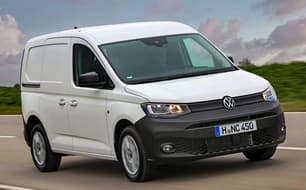
The VW range offers Cargo (SWB), Cargo Maxi (LWB) and Crewvan (LWB) models with a unique choice of petrol/diesel engines and manual/auto transmissions.
We recently revisited this German workhorse to find out why it remains such a strong seller in Australia from a business perspective.
Renault Australia has recently launched the first all-new Master commercial van in more than a decade, with its fourth-generation featuring new aerodynamic styling plus more power, torque, safety equipment and load-carrying capacity than the model it replaces.
We recently spent a week aboard one of these new variants, which competes in the ‘3501-7500kg GVM’ segment of Australia's 'Heavy Commercial' vehicle market, to assess its workhorse credentials from a tradie’s perspective, particularly for those thinking about upsizing from a ute or mid-size van.
It’s not hard to see why the Caddy Cargo maintains its enduring favouritism in the small van class. It has outstanding workhorse capabilities, unmatched five-star safety and drivetrain choice, combined with a spirited car-like driving experience, be it unladen or with a heavy payload. It’s not perfect, but it's also hard to fault in a workhorse role.
The first Renault Master was launched in 1980 and its evolution through four generations and almost half a century of commercial service has resulted in the latest model winning numerous European industry and media awards. It combines practical payloads, tow ratings and load volumes with good driver comfort, energetic performance and thrifty fuel economy, making it worthy of consideration for those wanting a large commercial van that can meet a multitude of job requirements.
Our test vehicle rides on a 2755mm wheelbase with 4500mm overall length, yet its 11.4-metre turning circle is slightly larger than a Toyota HiAce mid-sized van, which highlights the restrictions in steering lock shared by front-wheel-drive vehicles like the Caddy and its French rivals.
Underneath you’ll find robust MacPherson strut front suspension, a coil-spring beam rear axle with Panhard rod, four-wheel disc brakes and electric power-assisted steering.
It comes well armoured for work duties with unpainted dark grey plastic used in areas where bumps, scrapes and wear usually occur like the front/rear bumpers (including the rear pillars from top to bottom), door-handles and door mirror-shells. The bright silver alloy-look plastic wheel-covers can also be easily replaced if damaged by kerbs to keep this van looking sharp on the job.
Its purposeful external appearance is matched by a neat and practical cabin design with wipe-clean rubber flooring and fabric-trimmed bucket seats for driver and passenger. Hard surfaces abound in contrasting shades of grey with splashes of satin chrome.
The minimalist dash design is achieved by corralling most functions into the comparatively small (by today's standards) central touchscreen including often-used climate control, engine auto start-stop etc., which can be fiddly and distracting when driving. Thankfully, at least physical dials for audio volume and tuning remain.
Our test vehicle rides on an expansive 4215mm wheelbase with external dimensions of more than six metres in length (6315mm) and more than two metres in width (2080mm) with a height of almost 2.5 metres (2498mm). Its turning circle is 14.9 metres.
The latest Master features new wind tunnel-developed body styling to optimise aerodynamic efficiency (and therefore fuel economy). There’s also ample use of unpainted dark grey plastic in all the usual areas prone to bumps, scrapes and wear in hard-working vans including the grille, bumpers, door handles/mirror-shells and along each lower side.
The latest interior design brings a larger multimedia screen and the e-shifter for the automatic transmission has been relocated to a stalk on the steering column, even though the prominent dash protrusion which previously housed the auto’s shift lever remains (repurposed here with a small storage bin) to accommodate the base model’s manual shifter.
Although seating for up to three occupants is standard issue, a two-seat configuration (with or without the steel bulkhead) is available for MWB Mid-Roof/LWB Mid-Roof automatic models as a $400 option.
The Caddy’s 1508kg tare weight and 2250kg GVM results in a 742kg payload rating, of which up to 100kg can be legally carried on the roof where external anchorage points are provided for roof racks or rails.
It’s also rated to tow up to 1500kg of braked trailer, although its relatively low 75kg tow-ball download (TBD) limit could present a challenge, given that TBD is typically about 10 per cent of trailer weight. So, a 150kg TBD rating would be better.
Volkswagen also does not publish a GCM (Gross Combination Mass) rating, so we don’t know how much it can legally carry and tow at the same time.
The cargo bay, which offers up to 3.1 cubic metres of load volume, is accessed through a kerbside sliding door or asymmetric rear barn-doors.
Its 1797mm length and 1614mm width with 1230mm between the rear wheel-housings provides good versatility, given it can carry an 1165mm-square Aussie pallet or 1000 x 1200mm Euro 3 pallet, two 800mm x 1200mm Euro pallets, or two 720 x 830mm bread-roll containers.
However, with the sliding side-door’s 695mm opening, all of these would need to be loaded through the rear barn-doors which offer 180-degree opening for easy forklift or loading dock access. The load floor is protected by a thick moulded-rubber liner and there are six load-anchorage points.
The cargo bay walls and doors are lined to mid-height and there are two bright LED roof lights and a handy 12-volt socket.
Driver and passenger have ample cabin storage with large-bottle holders and bins in each front door, a handy pull-out compartment to the right of the steering column, numerous bins embedded in the dash-pad, full-width overhead shelf, a large glovebox and a centre console with dual small-bottle/cup holders and numerous storage nooks.
Our test vehicle’s 2108kg kerb weight and 4000kg GVM results in a payload rating that’s nudging two tonnes (1892kg).
It’s also rated to tow up to 2000kg of braked trailer and with its substantial 6000kg GCM (or how much weight it can legally carry and tow at the same time), it can tow its maximum trailer weight while carrying its maximum payload. And that’s a practical set of numbers for tackling a multitude of jobs.
The cargo bay, with its cavernous 13 cubic metres of load volume, measures 3857mm in length and 1537mm in width with 1885mm of internal load height. And with 1380mm between the rear wheel housings, it can carry up to three standard 1165mm-square Aussie pallets or up to four 800 x 1200mm Euro pallets.
Alternatively, if kitted out with a work bench, cabinets and shelving it could serve as a spacious mobile workspace for a variety of trades.
The cargo bay is accessed via a large kerbside sliding door with a class-leading 1312mm opening width (allowing side pallet loading) or through the twin-swing rear doors which open to a full 270 degrees (with body-mounted magnets to hold them there) for optimum forklift and loading dock access.
It doesn’t come standard with a load floor-liner (ours is fitted with a thick rubber mat) which we’d recommend to avoid scratches and dents, but all walls and doors are lined from floor to roof. There are also internal lights, a 12V power socket and large handles in the side and rear entry points to assist climbing aboard.
Cabin storage includes full-width overhead shelving, two tiers of storage in each door plus three open bins across the top of the dash with cupholders on each side. There’s a small glove box on the passenger side plus more dash storage and another 12V socket.
The hinged passenger seat base cushions also tip forward to reveal a large hidden compartment beneath. And, given our example is fitted with the optional Business Pack, the centre seat backrest folds forward to reveal a large multi-function work station (see image) for those needing an office on wheels.
Our test vehicle in standard Candy White is the Cargo SWB, which at entry-level is available with a 1.5-litre turbo petrol engine with six-speed manual or seven-speed auto. Or you can step-up to a 2.0-litre turbo-diesel with either a six-speed manual or (like our example) a seven-speed auto for a price of $45,990 plus on-road costs.
That’s higher than its two small van competitors, given the Renault Kangoo SWB petrol auto lists at $42,990 and Peugeot’s Partner Pro Short petrol auto is $39,990, but the Cargo is unique in offering five-star safety and its drivetrain choices.
The work-focused standard equipment list includes 16-inch steel wheels with plastic covers, 205/60R16 tyres and a full-size spare. There’s also an electronic handbrake, separate cargo bay locking system, a reversing camera, rear parking sensors, heated door mirrors, daytime running lights, two USB-C ports and two 12-volt sockets.
A moulded composite bulkhead with window separates the cabin from the cargo bay. The driver also gets a leather-trimmed flat-bottom steering wheel with multi-function controls, plus adjustable lumbar support for both driver and passenger seats.
The four-speaker multimedia system is controlled by an 8.25-inch colour touchscreen with Apple CarPlay, Android Auto and MirrorLink connectivity and FM radio, but no DAB or (sorry, talkback fans) AM band.
Volkswagen also offers numerous paint colour options and four option packs, plus there’s a genuine accessories range containing useful workhorse items like all-weather floor mats, roof racks, cargo barriers, dashcams and more.
Australia’s MY27 Renault Master range consists of four diesel models comprising Mid-WheelBase (MWB) and Long-WheelBase (LWB) with a choice of Mid-Roof (aka standard roof) and High-Roof body styles.
Our test vehicle is the LWB Mid-Roof (L3H2) finished in standard solid white paint (premium paint options available) which comes standard with a 2.0-litre turbo- diesel engine, nine-speed automatic (only the entry-level model is manual) and front-wheel drive for a list price of $61,990 plus on-road costs.
That pricing compares well with numerous European rivals including the Fiat Ducato 2.2L LWB Mid-Roof Auto ($60,500), Iveco Daily 35 S14V H2 LWB Auto ($75,447) and Mercedes-Benz Sprinter 315CDI LWB Auto ($86,107).
It comes standard with numerous work-focused features including:
Our example is also equipped with the optional Business Pack ($1000) which includes a fold-down work station (see Practicality), climate control air-conditioning, LED cabin lighting, card-type sensor key with automatic walk-away locking and push-button start.
Our test vehicle’s premium 2.0-litre four-cylinder turbo-diesel engine, dubbed TDI320, meets Euro6 emission standards using AdBlue, and produces 90kW at 4250rpm and 320Nm between 1500-2500rpm.
The seven-speed dual-clutch automatic offers three drive modes comprising (default) Drive, Sport or sequential manual-shifting using steering wheel-mounted paddles. There’s also an electronically-controlled automatic locking diff.
Our test vehicle is powered by a turbocharged 2.0-litre four-cylinder diesel engine which complies with Euro 6 emission standards using AdBlue and produces 125kW of power at 3500rpm and 380Nm of torque at 1500rpm. Those outputs represent gains of 15kW and 30Nm over the previous model.
It drives the front wheels through a nine-speed torque converter automatic which offers the choice of sequential manual-shifting using the steering wheel-mounted paddles.
The official combined average fuel consumption is a hybrid-like 4.9L/100km and the dash display was showing 5.6L after our 355km test, of which about one third of that distance was hauling a near-maximum payload.
That wasn’t far south of our own fuel-sipping figure of 6.5L/100km, based on actual tripmeter and fuel bowser readings. Therefore, you could expect an excellent real-world driving range of up to 770km from its 50-litre tank.
Official consumption figures issued by manufacturers are not mandatory in commercial vehicles above 3.5 tonnes GVM, but for the record we completed a total test distance of 306km in mostly metro driving, of which about one third was hauling a one-tonne-plus payload. We also had the engine’s auto stop/start function switched off for the duration.
When we stopped to refuel, the dash display was claiming a thrifty 8.3L/100km which was close to our own figure of 8.8 calculated from fuel bowser and tripmeter readings.
That’s outstanding sub-10L/100km economy for a vehicle of this size (better than many utes), which should deliver a real-world driving range of around 900km from its 80-litre tank.
Its compact external dimensions are deceptive, as the cabin has ample headroom and it’s not hard for even tallish drivers (I’m 186cm) to find a comfortable position, even though the close-fitting bulkhead restricts backrest recline adjustment and the base cushion rake is fixed.
Small vans are the closest you’ll get to a car-like driving experience in light commercials and, given the Cargo’s unique turbo-diesel powertrain, it has unmatched torque output that provides energetic performance.
The shift calibrations of its seven-speed dual-clutch automatic ensure vigorous response in city and suburban driving, given that for most of the time they keep the engine operating between 1500-2500rpm, where its 320Nm of torque is served at full strength.
Combined with nicely weighted steering and four-coil suspension that provides an ideal balance of responsive handling and supple bump absorption, it’s an enjoyable and engaging vehicle to drive. The Sport drive mode and sequential manual-shifting options raise the fun level.
The gearing also ensures low-stressed highway driving with only 1600rpm required to maintain 110km/h, at which speeds the solid bulkhead minimises cargo bay noise that mostly emanates from the rear tyres. However, tyre noise can still be intrusive on certain grades of coarse bitumen.
To test its payload rating, we forklifted 650kg into the cargo bay through the rear barn-doors, which with driver equalled a total payload just shy of its 742kg payload limit. The rear suspension compressed almost 60mm under this weight, with long jounce rubbers positioned inside the rear coil springs providing additional load support and, in effect, a second stage of springing.
The Caddy took this heavy load haul in its stride on city and suburban roads, gliding over bumps without a hint of bottoming-out. The payload’s effect on engine, steering and braking performance was minimal and its handling composure was maintained regardless of speed or road conditions.
It also made light work of our 13 per cent gradient, 2.0km-long set climb at 60km/h, and although engine braking on the way down required some assistance from the quartet of disc brakes to keep speeds in check, they handled this task with ease.
Our only criticism of the driving experience is that, given the substantial blind-spot over the driver’s left shoulder caused by the cargo bay’s solid walls, a Cargo buyer must pay extra to get blind-spot monitoring and rear cross-traffic alert as part of an options pack. We reckon these active features are crucial to safe van operation (any solid-walled van that is) and should be standard.
It has a commanding driving position with ample headroom, large glass areas and good vision along both flanks courtesy of its large truck-style mirrors with their lower sections offering wide-angle views.
The height/reach-adjustable steering wheel feels nice in your hands and the driver’s seat offers ample comfort with its fold-down inboard armrest and adjustable lumbar support.
However, some rake adjustment in the base cushion would be welcome as it can feel like you’re sliding forwards at times, given there’s no dedicated left footrest to brace against like the one in the passenger footwell (which of course is the driver's footwell in LHD models).
Unladen ride quality is firm, as you’d expect given its big GVM rating, but supple enough for acceptable driving comfort. The diesel powertrain is impressively quiet which combined with strong braking and responsive steering makes it easy to manoeuvre in busy metro traffic.
Ample torque ensures spirited acceleration from standing starts, combined with efficient gearing that keeps the turbo-diesel engine mostly within its peak torque zone at typical urban speeds.
Although sequential manual-shifting is available using the steering wheel paddles, we found the nine-speed auto’s snappy but smooth shifting optimised the engine’s performance. It’s also a low-stressed highway cruiser requiring only 1800rpm to maintain 110km/h, at which speed the cabin bulkhead blocks most of the cargo bay noise.
To test its GVM rating we forklifted 975kg into the cargo bay which combined with our crew of two equalled a total payload of just under 1200kg, which was still about 700kg short of its payload limit.
There was minimal compression in the leaf spring/solid beam rear suspension and although acceleration was slightly subdued it hauled this one-tonne-plus load with competence, including our 13 per cent gradient, 2.0km set climb which it easily cleared in fourth gear.
Engine-braking on the way down, in a manually-selected second gear, was not as robust as it overrode our manual selection when the engine reached 4000rpm on overrun (tacho reads to 7000rpm with no redline) and self-shifted up to third, which is an engine-protecting protocol commonly found in European vans we’ve tested.
Although the four-wheel disc brakes proved capable of maintaining the speed limit to the bottom of the descent it’s important to be aware of these engine-braking limits in commercial vans, particularly when hauling heavy loads in hilly terrain.
Unmatched by its small van rivals is a five-star ANCAP rating (tested 2021, expires 2027) which applies to all Cargo variants built from July 2022.
It’s equipped with seven airbags, AEB with pedestrian and cyclist monitoring, a reversing camera, rear parking sensors, daytime running lights, non-adaptive cruise control, driver fatigue alert system and more, but you must pay extra for extra safety.
ANCAP safety ratings do not apply to large commercial vans in Australia but the latest Master did earn a premium Platinum safety rating from Euro NCAP. Comes equipped with standard driver and passenger front airbags plus active safety features including:
The Caddy comes with a five-year/unlimited-kilometre warranty and 12 months roadside assist.
Scheduled servicing is every 15,000km or 12 months, whichever occurs first.
An optional five-year pre-paid service package is available for the price of a three-year package ($2000), so that’s two free services and savings of up to $1439 compared to pay-as-you-go capped-price servicing. In other words, an average annual servicing cost of $400.
The Master comes standard with a five years/unlimited km warranty plus five years' complimentary roadside assistance if serviced within the Renault dealer network.
Scheduled servicing is 12 months/30,000km whichever occurs first. Capped price servicing for five years/150,000km totals $4125 or an average of $825 annually which is at the higher end of service pricing among its European rivals.
Renault Australia has a national network of 50-55 dealerships across most states and territories and most provide vehicle servicing.