What's the difference?
The Toyota Fortuner has been around since 2015 with very few significant changes in the years between then and now.
And that’s telling because the HiLux-based Fortuner has never managed to make the mark in its market segment that Toyota would so dearly like it to.
With a new Fortuner possibly due in the not-too-distant future – with Toyota’s mild-hybrid 48V V-Active system onboard perhaps? – it’s worth revisiting the seven-seat Fortuner to see how the current ageing 4WD wagon stands up against its fresher rivals.
Read on.
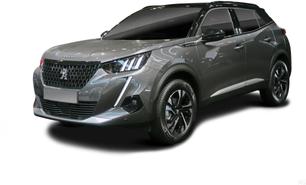
Looks are subjective but Peugeot’s updated 2008 small SUV is good looking from every angle.
The update brings a raft of design tweaks and some tech upgrades, but mechanically there isn’t anything new.
It’s not a cheap car and its diminutive size might scare off some buyers who can cross-shop cheaper and more value focused alternatives from mainstream Japanese and Korean brands.
We are driving the range-topping 2008 GT variant to find out if it’s more than just a pretty face.
The Toyota Fortuner is a family friendly wagon and a very capable 4WD, but it’s looking and feeling decidedly old, especially when cross-shopped against the current highly competitive 4WD wagon market in which vehicles are increasingly stylish, sophisticated and packed with driver-assist tech (that isn't clunky) and standard features (that are extensive).
The Fortuner is practical and easy to live with as a daily driver, and in GXL spec it makes a lot of sense as a functional not flashy off-road tourer, but it’s far from the best family 4WD wagon around.
Until a next-generation Fortuner possibly arrives, there are plenty of Toyota fans who’d happily settle for a current Fortuner – if they haven’t already.
The Peugeot 2008 is a handsome and accomplished little SUV that’s fun to drive and has a cabin that feels a little bit special.
In reality the 2008 is too expensive and isn’t as practical as most of the mainstream compact SUVs.
This is the car you buy with your heart, not with your head.
The GXL is 4795mm long with a 2745mm wheelbase. It is 1855mm wide, 1835mm high and has a listed kerb weight of 2185kg. It has a 11.6m turning circle.
Not a lot has changed in terms of the Fortuner’s looks over the years and while it stubbornly retains that pleasingly non-offensive exterior of most modern SUVs, it does manage to not be totally bland.
The GXL is a body-on-frame 4WD based the HiLux, so it’s no sports car in appearance whether you gaze at it from the front, side, rear or from a bird’s eye view, but it doesn’t look like a block of rotten wood, so unless you’re looks-obsessed, then you should be okay driving this around.
The Fortuner interior is looking dated and the standard dark grey fabric cloth seats, though well-suited to coping with day-to-day messes and spills, don’t do the cabin any favours either, and – you know what? – I don’t mind any of it. Note our test vehicle on this occasion had black leather-accented seats as part of its GXL Option Pack, but I've spent time in cloth-seat Fortuners.
The Peugeot 2008 is a smooth operator with head-turning French flair, but the devil is in the detail.
It’s not just the 2008’s well proportioned dimensions or the healthy dollop of exterior black highlights that catch your eye, but Peugeot has added a range of design cues to symbolise the Lion on its badge.
The tail-lights have a 3D effect that make them look like cat’s claws and the daytime running lights on the front resemble a scratch mark. These pair perfectly with the lion head crest on the grille.
Look deeper and you notice the attention to detail.
The 2008's redesigned front grille's slates are colour matched to the car's body colour.
Dual exhaust pipes are finished in chrome, giving the impression of performance even if the car doesn’t deliver on it.
The GT variant gets a two-tone paint job with a black roof contrasting with the body's colour.
Inside there are plenty of high quality finishes. The centre console is festooned in gloss black and there is a lovely carbon-effect textured insert on the dash and doors.
Some hard plastics below eye-level and on touch points such as where your knee might rub are less impressive. The rear seat loses some of the lustre of the front pew with tough plastics covering the back of the front seats and most of the doors.
The Fortuner’s cabin has a comfortably familiar feel to it and, thankfully, this interior is all about function not fashion.
It’s a practical space, with standard cloth seats (as mentioned our test vehicle has the Option Pack leather-accented seats, but I’ve spent enough drive time in Fortuners with cloth seats to know how those cope with the mess and dirt of everyday life), carpet floors with rubber mats, and durable plastic surfaces everywhere.
Up front, there’s an 8.0-inch multimedia screen (too small, not clear and bright enough) and that system has USB-connected Apple CarPlay and Android Auto (no wireless anything), and a 4.2-inch colour driver’s display, which is too small, too basic and part of an outdated mix of analogue and not-new-enough digital instrumentation.
There are the usual storage spaces – including a glovebox, a centre console, a tray for your smartphone, pop-out cup-holders on the outboard edges of the dash – and a USB port and a 12V socket for charging purposes.
The Fortuner’s three rows are in a 2-3-2 seat configuration. The 60/40 split-fold second-row seat has a one-touch, tumble feature. The 50/50 third-row seats are able to be stowed away, sort of. When folded to each side they protrude into the load space, reducing the size of what would otherwise be a more useable cargo area.
It’s reasonably comfortable in the second row; I sat behind my driving position and I had adequate head and knee room.
The second row has cup holders in the fold-down armrest, ceiling-mounted controls for the aircon, and two ISOFIX and three top-tether anchor points.
All three rows get aircon – with ceiling-mounted vents – and there are a few storage spaces in the third row, but no cup-holders.
In terms of comfort, it’s ordinary back here; the seats are flat and unsupportive – and, for anyone other than children, the space is tight.
Boot space is listed as 200 litres with the third-row seats in use, and in that area there are cargo hooks and a 12V socket.
Stow away the third-row and cargo space increases to 716 litres. But the seats still jut into the cargo area, greatly reducing your actual useable load space, and they also obscure a lot of driver vision to the rear.
With the second and third rows out of the way you have a listed 1080L of cargo area.
Step inside and there is no hiding the 2008’s diminutive proportions.
It’s 4300mm long, 1815mm wide and 1550mm high, which puts it closer in size to the mini Mazda CX-3 than the larger CX-30 it is more aligned with price-wise.
This all adds up to a snug fit in whichever row you sit.
There are a couple of cupholders in the centre console - a smaller one for a standard takeaway coffee and a larger one for drink bottles.
Slight storage bins in the door can hold a regular drink bottle but there isn’t much room for much else.
The wireless device charger is hidden away behind a compartment below the central screen that opens with a push and there are two USB-C ports up front and the rear seats score a USB-C and A connection.
Rear seat passengers do without a dedicated aircon vent, unfortunately.
There is an issue with Peugeot’s i-Cockpit steering wheel and digital driver display, too.
If you like to sit low the chances are the steering wheel will cut off your view of the bottom part of the display. If you prefer to have the seat jacked up, you’ll have better vision of the readouts.
There are piano key-like physical controls for simple climate functions such as the de-mister and auto climate settings. More complex functions are done via the 10-inch central multimedia screen.
The boot is a decent size at 434L and can easily handle a weekly grocery shop or a few overnight bags.
There is only a space saver spare wheel, but this car is aimed at city driving where it is easier to source a replacement tyre.
Our test vehicle is the GXL, the mid-spec variant in a line-up topped and tailed by the base-spec GX and the top-shelf Crusade.
The GXL has a starting price of $58,895 plus on-road costs.
Standard features onboard this seven-seat 4WD wagon include a 8.0-inch multimedia touchscreen (with Apple CarPlay and Android Auto), a six-speaker sound system, digital radio, manually adjustable seats and 17-inch alloy wheels.
Exterior paint choices include Glacier White (no extra cost) or premium paints Frosted White, Graphite, Stunning Silver, Eclipse Black, Feverish Red, Phantom Brown, and Saturn Blue, which all cost $675 extra.
Our test vehicle has the Option Pack, which includes black leather-accented seats and eight-way power-adjustable front seats.
The 2008 range kicks off at $39,990, before on-road costs, for the base Allure grade and rises to $44,490 for the fully loaded GT variant.
That’s a lot of money for a small SUV, especially considering the Skoda Kamiq range starts at $32,990, you can get Nissan’s Qashqai from $33,890 and a Mazda CX-30 for $33,140.
There is a lot to like about the 2008’s standard equipment list, though.
Flash looking 17-inch alloy wheels are complemented by adaptive LED headlights that control individual LEDs to brighten the road without dazzling oncoming vehicles. The headlights will automatically switch on in low light situations and stay on for a short period of time after you exit the vehicle to make it easier to find your way to the door at night.
A 10-inch multimedia screen is compatible with wireless Apple CarPlay and Android Auto, and a wireless device charger completes the cord-free ecosystem.
Peugeot’s 'i-Cockpit' brings a 10-inch driver display with 3D readouts paired with a small steering wheel.
GT buyers can expect eight colour ambient lighting, a six-speaker stereo, four USB charging ports, in-built sat nav and brushed aluminium foot pedals.
Well bolstered seats are heated up front and wrapped in synthetic suede and leather upholstery with contrast green stitching. The driver’s seat is power adjustable and has a massage function but the front seat passenger will need to move the seat themselves.
There are rain-sensing wipers, roof rails, power folding and heated side mirrors and a space saver spare wheel.
It’s a solid list of equipment but is missing some features you’ll find on similarly priced rivals such as a head-up display.
Every Fortuner in the line-up has a 2.8-litre four-cylinder turbo-diesel engine – producing 150kW and 500Nm – and that’s matched to a six-speed automatic transmission.
In terms of performance, the Fortuner is not going to set any hearts a-flutter: it’s sluggish off the mark, it takes a heavy right boot to make it feel like anything other than lacklustre on the move, and the six-speed auto downshifts quite harshly at times, especially when going up or down long, gradual inclines on the highway.
However, the 4WD set-up is effective, with adequate low-range gearing, a quietly efficient (but a tad clunky) off-road traction control system, and a rear diff lock.
Lurking beneath the bonnet is a little three-cylinder 1.2-litre turbo-petrol engine that makes 96kW and 230Nm. That’s a decent amount of grunt from the little unit, but again you can get more oomph for less from mainstream rivals.
It is paired to an eight-speed automatic transmission that drives the front wheels.
There is no hybrid help, either.
The Fortuner has official fuel consumption of 7.6L/100km.
On this test I recorded 9.6L/100km.
Going by my on-test fuel figure, you could reasonably expect a driving range of about 833km from this Fortuner’s full 80-litre tank.
Stiff emissions regulations in Europe mean these little turbocharged petrol engines have a fair bit of self control on the drink.
Peugeot claims the 2008 uses 5.4L/100km on the combined cycle. We used slightly more than this but spent most of the time in the cut and thrust of city traffic where cars use more fuel.
You’ll need to budget for pricier premium unleaded petrol, too.
On-road, the Fortuner offers up a pretty standard driving experience for a ute-based wagon. It’s on the HiLux ladder-frame chassis, and it has a firm ride, bordering on harsh. Having said that, you do get used to it soon enough and the Fortuner's coil-spring suspension set-up takes most of the sting out of surface irregularities, except for the more severe dips and bumps.
The Fortuner’s driving position offers plenty of visibility – although the A-pillars are bulky and the third-row seats block vision to the rear when they’re folded up to the sides of the cabin.
This 4WD wagon is generally quiet, although there’s noticeable wind-rush noise around the wing mirrors and engine noise builds to a diesel shriek when you use a heavy right boot as is regularly required.
Steering – reach- and rake-adjustable – is adequately light and sharp, and the Fortuner, with its 11.6m turning circle, is reasonably nimble in suburban areas.
Acceleration, from a standing-start or for overtaking, is laggy but available power and torque come in handy during general driving, making the Fortuner more agreeable all-round than previous versions.
The six-speed auto is generally right for the job, but it downshifts harshly, especially when going up or down long, gradually sloping highway stretches. That happens enough for it to be on the wrong side of annoying.
Some aspects of the Fortuner’s driver-assist tech is annoying: active cruise control is too abrupt and pre-emptive, consistently miscalculating the space between the Fortuner and the vehicle in front as accurately as most of its rivals. This clunky application of tech to real-world scenarios works against the Fortuner.
While driving a lightly corrugated and rutted dirt track o the way to our set-piece off-road tests, the Fortuner’s ladder-frame chassis yielded a stiff, firm ride, bashing and bouncing over any and all surface imperfections. Airing down the Yokohama Geolandar ATs (265/65R17) from 38 psi (pounds per square inch) to 26 psi takes some sting out of the ride.
The Fortuner is a very capable 4WD with standard off-road measurements, including ground clearance (216mm), approach angle (29 degrees), departure angle (25 degrees) and rampover angle (23.5 degrees). It has a listed wading depth of 700mm.
The Fortuner’s switchable part-time 4WD system has two-wheel drive (H2), and high- (H4) and low-range (L4) four-wheel drive. There’s ample low-end torque on offer – on tap across a broad rev range – for controlled low-speed 4WDing and the unfussed turbo-diesel engine keeps the Fortuner ticking along, without any hassle.
Engine braking is good, keeping the Fortuner to a sustained and composed momentum on downhill runs.
The off-road traction control system is an effective set-up, limiting wheel-spin and sending much-needed torque to the tyres with some useable traction, with the aim to keep the vehicle moving along at a safe, controlled pace.
Besides that, the driver always has the option of engaging the rear diff lock for more traction action.
Wheel travel is decent for a wagon like this and if you can get the full suspension flex, and drop any mid-air tyres to the dirt for more traction, chances are you’ll be able to get moving along safely soon enough.
So, the mechanicals are fine – its 4WD set-up is very effective – but the Fortuner doesn’t have a whole lot of ground clearance (a claimed 216mm, standard for a contemporary 4WD wagon) and the side steps are prone to hitting on the edges of steep and deep ruts, but those factors are easily overcome through considered driving and tyres that are better suited to off-roading.
The standard Yokohama Geolandar AT tyres are somewhat of a flaw in the Fortuner’s off-roading set-up. Sure, they’re technically all-terrains, but I reckon a better bet for you – if you’re planning to drive anything beyond formed trails – is to invest in a set of more aggressive all-terrains with greater sidewall bite.
If you’re planning to use your Fortuner to tow anything, keep in mind that it has a 750kg unbraked towing capacity and 3100kg braked towing capacity. Remember: to be on the safe side, avoid going loading up to anywhere near those capacity figures.
Payload is 615kg (easily reached when you factor in people, pets, camping gear and more), gross vehicle is (GVM) is 2800kg, and gross combined mass (GCM) is 5900kg.
On the road the 2008 is a bit temperamental.
Most European cars are fitted with stiffer suspension than the cosseting springs found in Japanese machines.
This means you’ll feel bumps and road imperfections through your seat more than other SUVs. It has particular problems ironing out consistent smaller bumps, which can unsettle it and lead the 2008 to skip across them.
The counterbalance to that is a more dynamic drive experience, with the 2008 exerting excellent body control through the bends as it is held in line by the stiffer set-up.
Pair this with sharp, direct and well-weighted steering and it's a fun little SUV to take on a twisting country back road.
Three cylinders might not sound like a lot, but in the real world this is all the 2008 needs.
Its 96kW and 230Nm won’t set the world on fire but the torque is accessed from just 1750rpm, which endows the 2008 with some punch off the mark and it feels zippy when navigating the daily commute.
Don’t confuse that for outright speed, though, the 2008 completes the benchmark 0-100km/h dash in 9.3 seconds.
The transmission is fine when you are accelerating or cruising at motorway speeds, where it uses its many ratios to keep the engine humming along in its sweet spot. There are paddle shifters if you want more control.
In stop-start traffic it isn’t as an accomplished performer. It can struggle to find the right ratio and this leads to a jerky movement reminiscent of dual-clutch autos.
The cabin is well insulated with the outside world kept mostly at bay, but you’ll hear the three cylinder’s charming little rumble when you put your foot down.
Parking is a cinch thanks to its petite proportions and the 2008 has no issues navigating tight city streets or underground car parks.
The Toyota Fortuner GXL has the maximum five-star ANCAP safety rating from testing in 2019. Note the ANCAP safety rating for the Fortuner is based on crash tests of the Toyota Hilux.
Standard safety gear includes seven airbags and driver-assist tech, including AEB with pedestrian (night and day) and cyclist detection (day only), active cruise control, lane departure alert, road sign assist and more.
The 2008 has a maximum five-star ANCAP safety rating, but that mark was given in 2020 and it might not get the same score if it was retested today.
It has six airbags, but misses out on a centre airbag that protects against head clashes in a side on collision.
It has a decent amount of safety equipment with auto emergency braking, lane keep assist, blind spot monitoring and adaptive cruise control.
Rear cross-traffic alert, which sounds an alarm if a car is approaching from the side as you reverse, is a notable absence.
A five-year/unlimited kilometre warranty covers the Fortuner, which is par for the course these days.
If you stick to the relatively short servicing schedule – six months or 10,000km with at authorised dealerships – Toyota says it will cover the engine and driveline for up to seven years. All warranty elements are subject to terms and conditions, so make sure you’re fully aware of those.
Capped-price servicing applies and, for our test vehicle, it was $290 per appointment for the first five, then $377.38, $813.93, $572.55, $478.93 and $377.38.
Peugeot covers the 2008 with a five year/unlimited km warranty, which is the standard coverage today.
The French brand offers a range of prepaid servicing packs that’ll save you a handy amount compared to pay-as-you-go maintenance.
A five-year plan is the best value, costing $1700 for five scheduled visits every 12 months or 15,000km. That’s $638 cheaper than the pay-as-you-go servicing.