What's the difference?
The Toyota Fortuner has been around since 2015 with very few significant changes in the years between then and now.
And that’s telling because the HiLux-based Fortuner has never managed to make the mark in its market segment that Toyota would so dearly like it to.
With a new Fortuner possibly due in the not-too-distant future – with Toyota’s mild-hybrid 48V V-Active system onboard perhaps? – it’s worth revisiting the seven-seat Fortuner to see how the current ageing 4WD wagon stands up against its fresher rivals.
Read on.
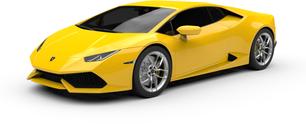
Lamborghini is a brand built on madness, excess and eye-searing design. Its cars don’t have to make sense, and indeed its owners probably prefer it if they don’t - they have other vehicles to use for the real world.
So, the existence of the new Lamborghini Huracan Sterrato, the world’s first 'All-terrain Supercar', a V10-engined mad machine built to drive sideways at high speed on dirt, should not come as a surprise.
And yet it really does, because there’s never been anything like it before (yes, Porsche has built the 911 Dakar, but it’s more of a sand-dune-climbing, desert-crossing motorsport tribute), for the very good reason that no one ever considered it would be a good idea.
It also sounds just a touch intimidating, the kind of driving experience that would require pro rally driver skills to survive, so it was with some trepidation that we headed to Palm Springs, USA, to test out the new Huracan Sterrato.
The Toyota Fortuner is a family friendly wagon and a very capable 4WD, but it’s looking and feeling decidedly old, especially when cross-shopped against the current highly competitive 4WD wagon market in which vehicles are increasingly stylish, sophisticated and packed with driver-assist tech (that isn't clunky) and standard features (that are extensive).
The Fortuner is practical and easy to live with as a daily driver, and in GXL spec it makes a lot of sense as a functional not flashy off-road tourer, but it’s far from the best family 4WD wagon around.
Until a next-generation Fortuner possibly arrives, there are plenty of Toyota fans who’d happily settle for a current Fortuner – if they haven’t already.
Not just a spectacularly stupid idea made real, the Lamborghini Sterrato is by far the best, or at least most hilarious, of the many Huracan variants the company has produced.
It makes you feel like a hero, even when you’re going sideways on dirt like a nutter. It could just be my new favourite supercar.
Note: CarsGuide attended this event as a guest of the manufacturer, with travel, accommodation and meals provided.
The GXL is 4795mm long with a 2745mm wheelbase. It is 1855mm wide, 1835mm high and has a listed kerb weight of 2185kg. It has a 11.6m turning circle.
Not a lot has changed in terms of the Fortuner’s looks over the years and while it stubbornly retains that pleasingly non-offensive exterior of most modern SUVs, it does manage to not be totally bland.
The GXL is a body-on-frame 4WD based the HiLux, so it’s no sports car in appearance whether you gaze at it from the front, side, rear or from a bird’s eye view, but it doesn’t look like a block of rotten wood, so unless you’re looks-obsessed, then you should be okay driving this around.
The Fortuner interior is looking dated and the standard dark grey fabric cloth seats, though well-suited to coping with day-to-day messes and spills, don’t do the cabin any favours either, and – you know what? – I don’t mind any of it. Note our test vehicle on this occasion had black leather-accented seats as part of its GXL Option Pack, but I've spent time in cloth-seat Fortuners.
Oh yes, it’s pretty interesting, all right, because it breaks new dusty ground for Lamborghini, and its Huracan in particular.
To cope with its intended use, the Sterrato has been raised 44mm higher than the ground-hugging normal version and it’s also had giant, bolt-on style guards attached to make it look a bit wilder.
Also quite noticeable is the huge roof scoop - which renders rear vision from the driver’s seat a complete zero, they may as well throw the mirror away - which has to be there to help the V10 engine breathe.
The side air intakes through which air usually gets to the mid-mounted power plant have been blocked up, because they would have sucked in too much dirt and gravel.
I’m happy to report the silly looking rally style headlights stuck to the Huracan’s shark nose are optional, although again, no doubt every buyer has gone for them, because they stand out in a crowd.
The Huracan Sterrato has no problem doing that on its own, of course, because it already looks extremely aggressive, and its knobbly, all-terrain tyres finish off that style flourish.
The Fortuner’s cabin has a comfortably familiar feel to it and, thankfully, this interior is all about function not fashion.
It’s a practical space, with standard cloth seats (as mentioned our test vehicle has the Option Pack leather-accented seats, but I’ve spent enough drive time in Fortuners with cloth seats to know how those cope with the mess and dirt of everyday life), carpet floors with rubber mats, and durable plastic surfaces everywhere.
Up front, there’s an 8.0-inch multimedia screen (too small, not clear and bright enough) and that system has USB-connected Apple CarPlay and Android Auto (no wireless anything), and a 4.2-inch colour driver’s display, which is too small, too basic and part of an outdated mix of analogue and not-new-enough digital instrumentation.
There are the usual storage spaces – including a glovebox, a centre console, a tray for your smartphone, pop-out cup-holders on the outboard edges of the dash – and a USB port and a 12V socket for charging purposes.
The Fortuner’s three rows are in a 2-3-2 seat configuration. The 60/40 split-fold second-row seat has a one-touch, tumble feature. The 50/50 third-row seats are able to be stowed away, sort of. When folded to each side they protrude into the load space, reducing the size of what would otherwise be a more useable cargo area.
It’s reasonably comfortable in the second row; I sat behind my driving position and I had adequate head and knee room.
The second row has cup holders in the fold-down armrest, ceiling-mounted controls for the aircon, and two ISOFIX and three top-tether anchor points.
All three rows get aircon – with ceiling-mounted vents – and there are a few storage spaces in the third row, but no cup-holders.
In terms of comfort, it’s ordinary back here; the seats are flat and unsupportive – and, for anyone other than children, the space is tight.
Boot space is listed as 200 litres with the third-row seats in use, and in that area there are cargo hooks and a 12V socket.
Stow away the third-row and cargo space increases to 716 litres. But the seats still jut into the cargo area, greatly reducing your actual useable load space, and they also obscure a lot of driver vision to the rear.
With the second and third rows out of the way you have a listed 1080L of cargo area.
Next question, please. You don’t get cupholders, there’s not really anywhere to put your phone and the cabin generally feels as roomy as a phone box that’s been through the wash and shrunk quite badly.
There’s a frunk that can barely hold two small backpacks and that’s about it. If you want practical space, buy an Urus. The Huracan Sterrato is not a practical car, but that’s not part of its design brief.
Our test vehicle is the GXL, the mid-spec variant in a line-up topped and tailed by the base-spec GX and the top-shelf Crusade.
The GXL has a starting price of $58,895 plus on-road costs.
Standard features onboard this seven-seat 4WD wagon include a 8.0-inch multimedia touchscreen (with Apple CarPlay and Android Auto), a six-speaker sound system, digital radio, manually adjustable seats and 17-inch alloy wheels.
Exterior paint choices include Glacier White (no extra cost) or premium paints Frosted White, Graphite, Stunning Silver, Eclipse Black, Feverish Red, Phantom Brown, and Saturn Blue, which all cost $675 extra.
Our test vehicle has the Option Pack, which includes black leather-accented seats and eight-way power-adjustable front seats.
Well, considering every Lamborghini Huracan Sterrato will almost certainly go up in value and become a collector’s item you’d have to consider them good value, at least in investment terms.
On the other hand, any car with a price tag of $503,949, before on-road costs, sits somewhat adjacent to the word “value”.
That large number has not put enthusiasts off, however, with all 1499 of the limited-run Sterrato Huracans already sold, and a long list of people with their names down hoping that someone gets scared and changes their mind, apparently.
Our vehicle came with two built-in cameras, which you could operate through the touchscreen to record Tik Tok-length videos of your driving.
This is almost certainly a cost option, but no one could tell us exactly, and all of the cars are already sold, no doubt to people who ticked every single option box.
Oh, and you do get aluminium floor mats. Nice.
Every Fortuner in the line-up has a 2.8-litre four-cylinder turbo-diesel engine – producing 150kW and 500Nm – and that’s matched to a six-speed automatic transmission.
In terms of performance, the Fortuner is not going to set any hearts a-flutter: it’s sluggish off the mark, it takes a heavy right boot to make it feel like anything other than lacklustre on the move, and the six-speed auto downshifts quite harshly at times, especially when going up or down long, gradual inclines on the highway.
However, the 4WD set-up is effective, with adequate low-range gearing, a quietly efficient (but a tad clunky) off-road traction control system, and a rear diff lock.
The Sterrato is powered by a Lamborghini engine that’s on its way into the history books, a 5.2-litre V10 that will die with this, the last variant of the Huracan.
Its replacement will be powered by a V8 hybrid, which will no doubt be more powerful but simply will not sound as amazing.
The version in the Sterrato has been detuned slightly, partly because of the breathing issues - you just can’t get as much air into an engine when it’s driving through its own self-propelled dust storm - and because of its all-terrain tyres, the first ever to be speed rated to 260km/h.
It still makes an impressive, and very loud, 449kW (602hp) and 560Nm, however. I’d describe it as “more than enough”.
That monster engine is matched with a seven-speed dual-clutch automatic and a very, very clever all-wheel drive system.
The Fortuner has official fuel consumption of 7.6L/100km.
On this test I recorded 9.6L/100km.
Going by my on-test fuel figure, you could reasonably expect a driving range of about 833km from this Fortuner’s full 80-litre tank.
So, Lamborghini claims the Huracan Sterrato will deliver a fuel "economy" figure of 14.9 litres per 100km, which seems like a lot, until you consider it probably won't get anywhere near that, if you drive it the way you're supposed to, particularly foot flat and wheels spinning on dirt.
Again, fuel economy is not a core value for this car, nor its buyers.
An 80-litre tank means a theoretical range of around 480km.
On-road, the Fortuner offers up a pretty standard driving experience for a ute-based wagon. It’s on the HiLux ladder-frame chassis, and it has a firm ride, bordering on harsh. Having said that, you do get used to it soon enough and the Fortuner's coil-spring suspension set-up takes most of the sting out of surface irregularities, except for the more severe dips and bumps.
The Fortuner’s driving position offers plenty of visibility – although the A-pillars are bulky and the third-row seats block vision to the rear when they’re folded up to the sides of the cabin.
This 4WD wagon is generally quiet, although there’s noticeable wind-rush noise around the wing mirrors and engine noise builds to a diesel shriek when you use a heavy right boot as is regularly required.
Steering – reach- and rake-adjustable – is adequately light and sharp, and the Fortuner, with its 11.6m turning circle, is reasonably nimble in suburban areas.
Acceleration, from a standing-start or for overtaking, is laggy but available power and torque come in handy during general driving, making the Fortuner more agreeable all-round than previous versions.
The six-speed auto is generally right for the job, but it downshifts harshly, especially when going up or down long, gradually sloping highway stretches. That happens enough for it to be on the wrong side of annoying.
Some aspects of the Fortuner’s driver-assist tech is annoying: active cruise control is too abrupt and pre-emptive, consistently miscalculating the space between the Fortuner and the vehicle in front as accurately as most of its rivals. This clunky application of tech to real-world scenarios works against the Fortuner.
While driving a lightly corrugated and rutted dirt track o the way to our set-piece off-road tests, the Fortuner’s ladder-frame chassis yielded a stiff, firm ride, bashing and bouncing over any and all surface imperfections. Airing down the Yokohama Geolandar ATs (265/65R17) from 38 psi (pounds per square inch) to 26 psi takes some sting out of the ride.
The Fortuner is a very capable 4WD with standard off-road measurements, including ground clearance (216mm), approach angle (29 degrees), departure angle (25 degrees) and rampover angle (23.5 degrees). It has a listed wading depth of 700mm.
The Fortuner’s switchable part-time 4WD system has two-wheel drive (H2), and high- (H4) and low-range (L4) four-wheel drive. There’s ample low-end torque on offer – on tap across a broad rev range – for controlled low-speed 4WDing and the unfussed turbo-diesel engine keeps the Fortuner ticking along, without any hassle.
Engine braking is good, keeping the Fortuner to a sustained and composed momentum on downhill runs.
The off-road traction control system is an effective set-up, limiting wheel-spin and sending much-needed torque to the tyres with some useable traction, with the aim to keep the vehicle moving along at a safe, controlled pace.
Besides that, the driver always has the option of engaging the rear diff lock for more traction action.
Wheel travel is decent for a wagon like this and if you can get the full suspension flex, and drop any mid-air tyres to the dirt for more traction, chances are you’ll be able to get moving along safely soon enough.
So, the mechanicals are fine – its 4WD set-up is very effective – but the Fortuner doesn’t have a whole lot of ground clearance (a claimed 216mm, standard for a contemporary 4WD wagon) and the side steps are prone to hitting on the edges of steep and deep ruts, but those factors are easily overcome through considered driving and tyres that are better suited to off-roading.
The standard Yokohama Geolandar AT tyres are somewhat of a flaw in the Fortuner’s off-roading set-up. Sure, they’re technically all-terrains, but I reckon a better bet for you – if you’re planning to drive anything beyond formed trails – is to invest in a set of more aggressive all-terrains with greater sidewall bite.
If you’re planning to use your Fortuner to tow anything, keep in mind that it has a 750kg unbraked towing capacity and 3100kg braked towing capacity. Remember: to be on the safe side, avoid going loading up to anywhere near those capacity figures.
Payload is 615kg (easily reached when you factor in people, pets, camping gear and more), gross vehicle is (GVM) is 2800kg, and gross combined mass (GCM) is 5900kg.
I could give you the short version of what it was like to drive the Lamborghini Huracan Sterrato at speed on a specially prepared dirt race track, which would be to say that I have never, ever had so much fun in a car, but that would be selling it short.
While the Sterrato is clearly built to do one insensible thing brilliantly, while somehow not imperilling the life of its driver, what is most incredible about it is how good it is at everything else, as well.
To create this Huracan, Lamborghini had to increase the ride height significantly, soften up the suspension and increase its amount of travel.
It also had to ask Bridgestone nicely to produce a tyre unlike anything the world has ever seen, an all-terrain tread capable of dealing with dirt and gravel and yet also grippy enough to be used on a sealed race track, or to carve up your favourite mountain pass.
It also had to be capable of being speed rated to 260km/h, or about 100km/h faster than any all-terrain tyre Bridgestone has ever produced before.
Looking at the unique Dueler All-Terrain AT002s, with their chunky tread, you would assume that the Sterrato is going to be noisy, slippery and possibly a little rough on public roads, but that’s not the case at all.
This Huracan rides more smoothly - largely thanks to those suspension tweaks - and more quietly than its forebears, and it’s actually more practical around town as well, thanks to the ride height. So, no more flinching at speed bumps.
The tyres also provide proper supercar levels of grip on public roads, even those dusted with a bit of desert sand.
There’s a bit of squirm at the rear and under hard braking, but overall the experience is typically Lamborghini Huracan wonderful, all playing out to a soundtrack that is beyond beautiful from that howling V10.
The first part of our track experience at the Chuckwallah Raceway was also familiarly fantastic, the Huracan ripping around the sealed track at astonishing speed; it certainly doesn’t feel detuned.
Lamborghini had gone to the trouble of mirroring the sealed circuit with a specially constructed dirt track in the infield, so that 50 per cent of our lap would be spent sideways in ankle deep, dust, sand and rocks, much of it through long, long bends, with the occasional chicane set up specially for Scando flicking action.
Now, I am not, by any means, an expert at drifting, nor an accomplished rally driver, so I was, to put it mildly, shit scared of getting this half-million-dollar, limited-edition, 449kW monster on to the dirt section.
I feared I would spin around, or flip upside down, or find some other way to embarrass myself, but what happened when I got there was beyond inexplicable, and beyond joy.
This car is so clever, so easy to drive, so beautifully balanced, that it can turn a total newb into Colin McRae. His name comes to me because the whole experience reminded me of driving a rallying video game, it felt unreal, and yet overpoweringly visceral at the same time.
I could start a drift with the slightest flex of the throttle, then balance the car as it pivoted around a bend before nailing the throttle and haring off to the next fantastic drifting opportunity.
When we got back on the sealed stuff, the car would shake like mad, at 200km/h, as the dust attempted to get its way out of the wheels, but that just added to the excitement.
The secret wasn’t that I’d somehow become a better driver, it was what Lamborghini engineers call, accurately, “the hero maker”.
It’s a software and hardware package called LDVI, or 'Lamborghini Dinamica Veicolo Integrata', which, when you put the Sterrato in 'Rally' mode, uses many sensors combined with torque vectoring and selective braking to keep you going where you want to go, with minimal intervention.
Or at least minimal intervention that you can feel, which makes you feel like a hero.
I kind of understand how it works, but I totally relate to how it makes you feel. Like a genius. And you’d pay $500K for that, surely?
The Toyota Fortuner GXL has the maximum five-star ANCAP safety rating from testing in 2019. Note the ANCAP safety rating for the Fortuner is based on crash tests of the Toyota Hilux.
Standard safety gear includes seven airbags and driver-assist tech, including AEB with pedestrian (night and day) and cyclist detection (day only), active cruise control, lane departure alert, road sign assist and more.
In a V10-engined supercar you’re meant to drive on dirt? You’ve come to the wrong place.
Okay, so there’s no crash rating, and there won’t be, but you do get AEB, driver, passenger, and side airbags along with knee airbags as well as front and rear-specific collapsible areas, reinforcement bars in the doors. Oh, and Electronic Stability Control.
A five-year/unlimited kilometre warranty covers the Fortuner, which is par for the course these days.
If you stick to the relatively short servicing schedule – six months or 10,000km with at authorised dealerships – Toyota says it will cover the engine and driveline for up to seven years. All warranty elements are subject to terms and conditions, so make sure you’re fully aware of those.
Capped-price servicing applies and, for our test vehicle, it was $290 per appointment for the first five, then $377.38, $813.93, $572.55, $478.93 and $377.38.
The Huracan Sterrato comes with a Lamborghini warranty good for three years with unlimited kilometres.
It also comes with 24/7 roadside assist for an unspecified amount of time. It is also offered with pre-paid scheduled maintenance service for three or five years.