What's the difference?
The bZ4X is the new, and first, electric medium SUV from Toyota and I'm family-testing the base model variant.
You may be thinking, ‘gosh, Emily, this looks awfully similar to that Subaru Solterra you were just in' and you‘d be right! They’re essentially twins as they share electrical underpinnings, some tech and even internal styling but unlike its counterpart, Toyota is offering its base model as a front-wheel drive.
The bZ4X doesn't just have to contend with its Subaru twin because it also competes in the same market segment as seasoned rivals like the Kia EV6 and Tesla Model Y.
But how does the first EV from Toyota stack up under the pressure of family use? My little family of three has been putting it through its paces to find out for you.
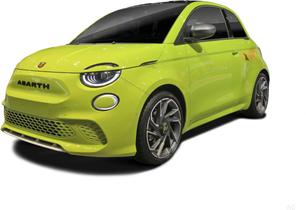
Meet the Abarth 500e, the mad-hatter sibling to the very good and all-electric Fiat 500e, and the Italian brand's first attempt at a bonafide EV hot hatch.
It's tiny, tough and – despite the lack of engine and exhaust – it burbles manically when you fire it up.
So does this mean Italy’s pint-sized, petrol-powered icon has a future in the all-electric era? Let’s go find out.
The Toyota bZ4X base variant is an uncomplicated car to drive. It has some decent features for its grade level and it is plenty big enough for my little family of three but it doesn’t always come out ahead of its rivals.
It would be an easy EV to dip your toes in if you’re wanting something economical to maintain yet able to fit the family. But it's expensive for what it is.
My seven-year old likes the cool looks but has been confused about Mummy is reviewing the same car again.
It’s not perfect, but it’s everything a hot hatch should be in the electric era — engaging, exciting, and, above all, fun.
There’s not much separating the bZ4X from its Subaru twin other than badging and ever-so-slightly different front and rear fascias. The differences are so small only diehard enthusiasts will be able to tell them apart. To me, they look the same on the outside!
The overall look is sporty and fun with lots of pleating in the panelling to give it a futuristic vibe and sharply defined tail-lights for some edginess.
Against our test model's 'Liquid Metal' paintwork the heavy black plastic moulding wrapping around the base of the car doesn't stand out too much but will on a lighter colour.
The internals do differ somewhat and the best change is the more traditional round steering wheel. I prefer the look and feel of it compared to the squared-off shape of its twin's.
The 7.0-inch digital instrument cluster is set a fair way back on the dashboard and looks disjointed from the rest of the tech. The steering wheel also cuts into my vision of the screen and while I could shift my seating position to better accommodate, I'd be compromising my driving comfort to do so. A head-up display would be welcome here.
The dashboard, doors and seats all feature a grey knit-like fabric that looks warm and inviting but the cabin is elevated by synthetic leather trims throughout. Overall, the cabin is quite pleasant but wouldn’t be out of place on a much more affordable car.
I’m just going to come right out and say it — I love the look of the Abarth 500e, even if the colour of our test car should be renamed Acid Trip, rather than Acid Green.
I love its perfectly proportioned, hunkered-down hot-hatch styling, the new ABARTH lettering on the body, and the new scorpion logo pasted to the side.
Basically, if you can look at the Abarth and not smile, then you need to find more fun in your life.
Inside, it’s a predictably cramped-feeling space, but it’s all nicely laid out, and the more I use them, the more I like the horizontal drive controllers that don’t eat up the little space you have with a traditional shifter. The materials are a bit hit and miss, though.
The cabin is very spacious with generous leg- and headroom. I have plenty of room for my 168cm (5'6") height but my 183cm (6'0") father was also very comfortable in both rows.
The seats in both rows are well-cushioned and up front, the driver’s side has ample support from the two-way powered lumbar. I also like the way both front seats are heated. You could handle a long trip even as a passenger prince/ss.
Individual storage is less generous than you’d expect for the class given you don’t get a glove box but there are still enough nooks and cubbies for some items and a shelf underneath the console can fit a small handbag.
My seven-year old discovered a secret pocket underneath a removeable box in the middle console where Toyota has stored the manual and logbook.
Up front you also get two cupholders, four drink bottle holders (two in each door) and a handy cubby behind the rotary transmission shifter. In the rear you get map pockets, two cupholders and a device holder in the fold-down armrest and a large drink bottle holder in each door.
No complaints from my kid regarding the amenities in the back and he likes having his own directional air vents and reading lights. But it's the 182mm ground clearance we all love because the bZ4X is super easy to get in and out of. Definitely no grunts in this one!
There's no frunk storage but the boot's 421L capacity will suffice for your bigger grocery run or odd trip but the capacity is lower than some rivals. Underneath the level loading space there's a retractable cargo liner, two cable pouches, a first aid kit and the tyre puncture repair kit. I like the powered tailgate on the base model. I find them handy with a kid in tow.
Technology is well-rounded and upmarket. The 12.3-inch touchscreen multimedia system is responsive and easy to use but the customisations for internal features are a little lacking. The built-in satellite navigation is clear and there is a dedicated Toyota services app, too.
The wireless Apple CarPlay is simple to connect to and I didn't have any dropouts with calls or connections, which is great. There is also wireless connectivity for Android Auto users.
Charging options throughout the car are solid with each row getting two USB-C ports, while the front also features a USB-A port and 12-volt socket. However, there’s no wireless charging pad or V2L (vehicle-to-load) capability which might annoy over long-term use.
While I like the addition of the central screen, it’s surprisingly annoying to use — I found myself jabbing at the buttons again and again before it reacts. You need a Stephen Hawking-level intellect to figure it all out.
I was trying to turn off the Abarth Sound Generator, which I'm reliably informed is possible, but after about five minutes digging through sub-menus, I abandoned all hope.
Normally I’d spend a bit of time exploring the back seat, but frankly, once in there I didn't really feel like spending excess time back there.
The Abarth 500e is only around 3.6m long, 1.7m wide and 1.5m tall, and suffice it to say, the space is tight, and you’ll only be using the two seats in the back in an emergency, or for the smallest of kids.
The boot is pretty tiny, too, starting at 185 litres (VDA) with the rear seats up, but growing to 550L (VDA) with the split-fold rear seat lowered.
So, not much to write home about. But criticising the tiny Abarth for a lack of practicality is like criticising a horse because it can’t swim – it’s not really in its job description.
There are two variants for the bZ4X range, with the base model tested here being a front-wheel drive and only sporting a single motor. This entry-grade is priced from $66,000, before on-road costs, and the top AWD variant is $74,990 MSRP.
Compared to the bZ4X's single-motor rivals, this price tag positions the Toyota right in the middle for costs with the most affordable rival being the Tesla Model Y RWD for $55,900 MSRP, then the Kia EV6 Air at $72,590 MSRP.
Although very similar, Subaru is offering its base variant as a dual-motored AWD, but for price comparisons it is $69,990 MSRP.
For a base model, you get some solid features like heated front seats, built-in satellite navigation, built-in Toyota connected services app and wireless Apple CarPlay and Android Auto.
The upholstery also features synthetic leather accents rather than just plain black cloth and you get an upgraded JBL sound system.
Like its Subaru twin, only the driver's seat is powered with lumbar support but both feature those heat functions.
Other standard features include keyless entry, push-button start, dual-zone climate control, Bluetooth connectivity, a tyre puncture repair kit and digital radio.
Technology is also rounded out by the 12.3-inch touchscreen multimedia screen, 7.0-inch digital instrument cluster and four fast USB-C ports.
There are a few items missing in this variant that feature in a lot of its rivals, which reminds you this is a base model. Things like heated rear outboard seats, a heated steering wheel and a sunroof, all of which would be easy to accept if the car wasn't edging close to $70K.
Ok, so bonkers thing number one: This Abarth 500e might look like it could fit in your pocket, but it is priced like a much bigger vehicle, starting at $58,900 plus on-road costs for the Turismo variant, increasing to $60,500 for the limited-edition Scorpionissima.
Outside, either trim gets 18-inch diamond-cut alloys, LED lighting all around, a fixed glass roof, the new e-latch front doors (meaning you can just push a button to open the door) from the 500e, along with some performance-focused add-ons, like a front splitter, greyed-out mirror caps, rear disc brakes and new front and rear bumper treatments.
Inside, there’s a leather-and-Alcantara steering wheel, sports seats, aluminium pedals and climate control, while on the tech front, a central 10.25-inch central screen pairs with a wireless charger and wireless phone mirroring, while a second 7.0-inch Driver Display Screen gives you all your driving data.
Oh, and there’s what the brand calls an Abarth Sound Generator, which is all kinds of crazy, but we’ll touch on that in a moment.
The difference between the Scorpionissima and the Turismo, by the way, is style led, with Abarth decals down the sides, and a certificate of authenticity confirming yours is one of 1949 vehicles sold around the world.
The bZ4X base variant is a front-wheel drive and has a single electric motor producing 150kW/256Nm - which sounds a bit schlumpy compared to its rivals but its pick up is great and you don’t feel it's underpowered, even when you’re on the open-road.
There’s a single front-mounted electric motor providing the go here, with a total 113.7kW and 235Nm on offer fed through the single-speed gearbox, which is enough to push the 500e from 0-100km/h in 7.0 seconds.
Happily, the way that power is delivered makes it feel faster, and that Sound Generator does a pretty good impersonation of a petrol-powered hot hatch, rising and falling with your inputs.
The official energy consumption figure is 16.9kWh/100km and I averaged 16.1kWh over a mix of urban and open-road driving. The consumption is good and on par with some of its rivals but the official driving range from the large 71.4kWh lithium-ion battery is up to 436km, which is lower than most of its rivals by a good portion.
The bZ4X has a Type 2 CCS charging port which means you can benefit from faster DC charging speeds, up to 150kW. On a 150kW DC system you can go from 0-80 per cent in around 40-minutes.
On a 7.0kW AC charger, you can go from 10-100 per cent in 9.5 hours and that drops to seven hours on an 11kW system. All the bZ4X figures are good enough to avoid the inconvenience zone but aren't as fast as some of its competitors.
Right, there’s one obvious downside to the Abarth experience, and that is that it is fitted with a 42kWh battery that delivers a claimed 253km of driving range.
It’s worth noting that there are three Drive Modes — Turismo, Scorpion Street and Scorpion Track — and that only the first one will deliver the maximum range, because it limits inputs to 100kW and 220Nm.
Engage the other two — I’ve had it locked in Scorpion Track, for example, which gives you all of the power and deactivates one-pedal driving — and you can expect those numbers to drop.
When it comes time to charge, the Abarth 500e is set up for 85kW DC fast charging, which should take you from flat to 80 percent charged in around 35 minutes, as well as a maximum 11kW AC charging, which takes just over four hours to get to fully charged. Or you can plug it into a regular socket, which means more like 15 hours to recharge.
One last caveat: I actually wasn't able to get it to charge, which curtailed my adventures a little bit. I tried three chargers, all of which conjured an error message on the screen, and after a quick call to the folks at Abarth it transpired that a quick software update is required.
You don’t often notice this base model is a front-wheel drive until you accelerate too quickly from a standstill and tlose a bit of traction. Otherwise, power delivery is smooth and while you don’t get a tummy-sucking-sensation when you put your foot down the power satisfies for city and open-road driving.
The steering feels light and there's a fair bit of understeer when tackling winding roads. This made the handling a bit lacklustre at times but it’s not too intrusive in an urban environment. Just remind yourself it’s not a performance EV if you ever start thinking ‘fast and furious’ thoughts.
Ride comfort is very good and I’d attribute that to a well-cushioned suspension set-up. While you notice bumps, you’re not bothered by them, even in the back seat. The cabin is peaceful and quiet most of the time but road noise creeps up a lot at higher speeds.
Visibility is excellent and despite a few little things, like the steering, it’s an uncomplicated car to drive.
The bZ4X isn’t too hard to park because the reversing camera is relatively clear but this grade would benefit from the 360-degree view system which is available on the top-grade model. The 4690mm length, 1860mm width and 1650mm height makes it a happy-go-lucky friend in a small car park.
Remember what I said about how just looking at the Abarth should put a smile on your face? Well, driving it paints on an even bigger grin, and it starts as soon as you fire it up.
While most EVs start silently, leaving you wondering if they're on at all, the Abarth takes a different approach, instead leaning on its sound generator, modelled on the exhaust note of the 695, to give you a throaty rumble when you fire it up. It even revs! And yes, you can turn it off (apparently), but why would you?
On the road, electric drive has actually improved the Abarth experience, I reckon, because all the harshness of the drivetrain has been ironed out, instead just leaving this smooth, potent flow of power every time you plant your right foot, with no gear changes or harsh vibrations to get in the way.
The steering is predictably direct, too, and the whole vehicle feels nimble and quick to react to your inputs.
It’s honestly the kind of car that’s fun driving anywhere, be it suburban streets or twisty backroads, and despite having a couple of options parked at my house, I found myself pulled to the Abarth for all of my trips.
Downsides? The ride is firm but comfortable on most roads, but downright uncomfortable when you clang over bumps or road imperfections. You’ll have to decide if that’s a price to high to pay, but I can live with it for the trade off. And while the cabin tech looks nice, but is fiddly and annoying to use.
Finally, the range relegates the Abarth to a second car, or for those who rarely leave the city. Which is a big ask at the price point.
The bZ4X comes with some good standard safety features like a full suite of LED lights (including the DRLs), lane departure alert, lane keeping aid, traffic sign recognition, seatbelt warning, adaptive cruise control as well as a reversing camera supported by front and rear parking sensors.
Unfortunately, the base model misses out on items the top model features like blind-spot monitoring, 'Safe Exit Assist', driver attention monitoring, rear-occupant alert and rear cross-traffic alert. All of which are fairly big-ticket items and available on much more affordable Toyotas.
Still, the bZ4X achieved a maximum five-star ANCAP safety rating from testing done in 2022 and has seven airbags, including a front centre bag.
It has AEB with forward collision warning as well as car, pedestrian and cyclist detection which is operational from 5.0-80km/h (and up to 180km/h for car detection).
There are ISOFIX child-seat mounts on the rear outboard seats and three top-tether anchor points. Two child seats will fit best, though.
The Abarth 500e is fitted with six airbags, and decent suite of active safety stuff, like AEB, Lane Keep Assist, Traffic Sign Recognition, Blind Spot Warning, auto high beam and and an attention monitor. It’s all pretty subtle, though, and it didn't bing or bong at me once, which was wonderful.
It scored four stars when tested by Euro NCAP.
The bZ4X comes with a five-year/unlimited km warranty and the battery is covered by an eight-year or up to 160,000km warranty. Both are usual terms for the class.
There is a five-year or up to 75,000km capped priced servicing plan and annual services cost just $180, which is very competitive.
Servicing intervals are more in line with a fuel-based car at every 12-months or 15,000km, whichever occurs first.
It’s an interesting ownership proposition, because the car is covered for three years or 150,000km, which is underwhelming and then some compared to the warranty offerings of its competition, but there is capped-price servicing, at $300 per visit, required every 12 months or 15,000km, which lasts 10 years.
The battery is covered for eight years or 160,000km.