What's the difference?
Cast your mind back to 2012, Carly Rae Jepsen’s super-catchy Call Me Maybe single was at the top of the music charts, the first Avengers movie had just hit movie theatres and Toyota’s 86 sports car finally arrived in Australian showrooms after a lengthy teaser campaign.
Fast-forward eight years to 2020, and Carly Rae Jepsen is still releasing bangers, the Avengers have become the zeitgeist of 2010s popular culture and... the Toyota 86 is still available in local showrooms.
Sure, Toyota has tweaked, fiddled and updated the 86 a little since then, but the formula for an affordable, front-engine, rear-wheel-drive coupe is still the same.
But the 86 now competes in a market that has moved ahead in leaps and bounds, and while direct competitors like the Mazda MX-5 are few and far between, it now has to fend off competition from some light-sized warm hatches.
Does the Toyota 86 manage to hold its own in 2020? Or is it better off relegated to the annals of history?
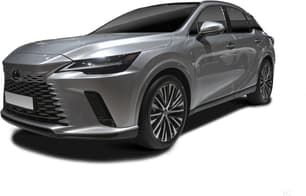
This is a BIG moment for the Lexus RX in Australia. And I'm not just referring to the spindle grille that adorns the front-end of this all-new model (though it too is almost commercially massive).
I'm talking more about the vehicle itself, and its importance to the Lexus brand here. The RX is one of Lexus' best sellers in Australia, and so this new one – which welcomes a new platform, new powertrain options and an all-new F Sport Performance trim level – is a big deal.
So, does it live up to the hype (and to its German competition)? Join me as we figure all that out ahead of the RX's debut here in early 2023.
The Toyota 86 might be a bit of a blast from the past in 2020, especially considering there is a new-generation version just around the corner, but that doesn’t mean it’s a bad car.
In fact, it serves up a fun and visceral driving experience seldom seen in anything other than the most focussed of sports cars, but packaged up with an attainable price.
If you value practicality and straight-line pace, a hot hatch will be the easy choice, but if the driving experience is the most important aspect of a car to you, it’s hard to pass up the Toyota 86.
The RX is a big SUV that doesn't always look, or drive, like one, and – in 500h guise especially – can put a smile on a driver's face, too.
Gone are the cabin quirks and the polarising design elements (well, mostly...), and in their place you'll find a solid, premium-feeling family offering without much in the way of drawbacks.
Note: CarsGuide attended this event as a guest of the manufacturer, with travel, accommodation and meals provided.
There’s no denying Toyota’s 86 boasts classic sports car proportions thanks to a long bonnet, short overhangs and a sleek coupe body-style.
Though some things have changed since the model first came to market in 2012, such as revised bumpers and lights, the 86 is just as recognisable today as it was back then.
From the front, the 86 gives off a purposeful and aggressive stance thanks to its angled headlights, gaping intake and bulging arches.
Move to the side and you will see the wheelbase stretches nearly to the edges of the car, while a strong shoulder- and roofline join at the rear haunches to emphasise the 86’s rear-drive character.
The rear end is probable the least favourable angle for the 86, but the wide tail-lights, large diffuser and dual-exhaust outlets add to its sporting character.
Our test car was fitted in the eye-catching Apollo Blue colour, as well as 17-inch wheels, mirror caps and a rear spoiler finished in black.
After eight years on the market, we still think the 86 is one of the better-looking sports cars on the market, largely thanks to its purposeful and no-frills approach to styling.
It’s not quite as over-the-top as something like a Honda Civic Type R, but you still know it means business if it showed up to a track day.
Step inside though, and the cabin has not aged as well as the exterior.
The centre stack houses a 6.1-inch multimedia touchscreen that looks like it was picked out at a Repco sale, while you can practically see the pixels on the digital clock and temperature readout screens.
It’s not all bad though, as the chunky switchgear and large push-button starter add a little character to the interior.
We also like the instrumentation, which puts the tachometer front and centre for the driver while also incorporating a 4.2-inch display to add a bit of modernity.
Honestly, the Lexus RX looks far more powerful, and cohesive, in the metal than it does in some photos, and in the right colour (we're fond on the deep black or the copper-rose hues), it looks downright fetching.
That Predator-shaped front-end is massive, but the way the Spindle grille kind of bleeds in the body work at the nose of the vehicle is a neat trick, and the whole design ethos gives the RX a sportier, more modern, and more intimidating, energy from almost every angle.
Perhaps the most clever element though is the wave-like design piece that links the rear window with the boot, somehow managing to shrink almost-five-metre SUV (visually, at least), and leaving the RX looking more sporty than hulking.
The door handles are cool, too. They’re fixed, and you just touch them to open the door, with a similar system used once inside to get out again.
Inside, Lexus has gone for a clean, modern-feeling space, and, thankfully, there isn't a Remote Touch trackpad in sight. Instead, you can choose between two screen sizes – 9.8- or 14.0-inch – which kind of dominate the dash, while the air-con controls are digital and interactive, too.
It must be said, though, some interior treatments feel far more special than others, and while Lexus in Australia isn't spilling on specifics for our market just yet, the top-spec models will almost certainly feel more plush than the cheaper ones.
Measuring 4240mm long, 1775mm wide, 1320mm tall and with a 2570mm wheelbase, the 86 coupe is dimensionally smaller in every measure to its Corolla hatchback sibling.
Despite this, Toyota says there is enough seating for four, but the 86 is much closer to a 2+2 than it is to a proper four-seater.
Front occupant space is ample enough, with plenty of adjustable in the seat and steering column for drivers to get into the perfect position.
There’s cupholders in the centre console, storage and the door pockets will even take a water bottle.
Front occupants also have access to a very, very small tray just in front of the shifter, though what it could accommodate is unknown.
We will also mention that when in odd-numbered gears, it can get tricky to use the climate controls, though it wouldn’t be a problem in auto-equipped cars.
Flick the front seats forward, contort yourself into the rear and, well, its more akin to a medieval torture device than passenger-friendly seating.
Headroom is especially limited, though we were surprised with the better-than-expected legroom due to the bucket-shape of the rear seats.
Don’t expect any mod-cons in the rear though, as the only thing to keep yourself entertained back there is the seat belt.
The boot accommodates just 237 litres of volume, which is just about enough to fit a large suitcase, though because of the short space, it will have to go in sideways leaving not a lot of room for much else.
Boot floor is also quite high, meaning tall objects will struggle to fit, but the rear seats can be folded flat to accommodate longer items.
While early versions of the 86 came with a spare wheel, in 2020, all new cars come with a puncture-repair kit.
The entire RX range now rides on Lexus' GA-K platform, which is lighter (-40kg), more rigid, and offers a lower centre of gravity (-15mm) than the model it replaces.
The RX is wider (+25mm to 1920mm), lower (-10mm to 1695mm), but no longer (still 4890mm) than the outgoing model. But Lexus has lengthened the wheelbase (+60mm to 2850mm) to earn some extra backseat space for rear riders.
And it must be said, there is lots of room for backseat riders. Sitting behind my own 175cm driving position I had more than enough knee room, and enough head room, and a general feeling of airy spaciousness.
Elsewhere you get the usual practicality perks, with two cupholders up front, two more in the pull-down seat divider that splits the rear seat, and there are two ISOFIX attachment points in the back seat, too.
Charging is handled by a four USB ports, and depending on the trim/spec balance Lexus in Australia shoots for, you should at least find vents with temp controls for backseat riders, too.
Lexus is yet to confirm the luggage space specs for the new RX, but given it’s only being offered with five seats, and that there’s been no change to the vehicle’s length, you can expect a fair bit of room for bags in its auto-opening boot.
The Toyota 86 kicks off at $31,440 before on-road costs for the base GT manual, while the GTS version starts at $36,640.
An automatic transmission adds $2300 to the asking price.
Our test car, a top-spec GTS with all the options, rings the till up to $39,590 thanks to the Dynamic Performance Pack and Apollo Blue paint adding $2950.
As standard, the 86 comes with dual exhaust tips and LED headlights with daytime running lamps, while the black spoiler and side mirrors are an option available to the GTS grade.
The 17-inch wheels finished in black are also exclusive to this spec of 86, and the Dynamic Performance Pack adds larger Brembo brakes and Sachs suspension (more on those later).
Inside, the 86 is fitted with a black leather interior, sports seats with Alcantara inserts, Alcantara touches on the dashboard and door trims, rear privacy glass, dual-zone climate control, heated front seats, 4.2-inch multi-function driver display, push-button start, floor mats and three-spoke multifunction steering wheel.
The multimedia system is displayed on a 6.1-inch colour touchscreen, and includes features such as Bluetooth connectivity, USB input and satellite navigation.
No doubt this version of the 86 wears a sizeable pricetag, one that puts it right in contention amongst faster and more practical hot hatches like the Hyundai i30 N, though how much value you put in a coupe body-style and rear-drive dynamics is up to you.
Compared to something like the 2.0-litre MX-5 though, which starts at $43,820, the 86 looks much more attractive, but again, this is not taking into consideration the Mazda’s convertible party piece.
This is an arbitrary seven out of 10, here. Because we don't yet know how many trim levels the new RX will launch in, how much each will cost, or what you'll get for your investment.
What we do know is that the RX will launch with three powertrain options: an all-new turbocharged hybrid, a second, more conventional hybrid, and a turbo-petrol engine. There’s a plug-in hybrid version available overseas, but we ain’t getting it. Or at least, not yet.
In terms of specific trims and equipment levels, you’ll need to wait until closer to the RX’s launch in early 2023 for the full skinny. But you can expect a choice between a 9.8-inch or 14.0-inch central touchscreen with wireless Apple CarPlay and Android Auto, an eLatch door system with fixed handles that unlatch at the push of button inside and out, as well as more high-tech safety kit (thanks to Lexus Safety System 3.0) than you can shake a radar at.
Powering all Toyota 86s is a 2.0-litre four-cylinder Boxer petrol engine, outputting 152kW/212Nm when paired to a the six-speed manual gearbox.
Automatic transmission versions are downgraded to 147kW/205Nm.
Peak power comes in at a heady 7000rpm, while maximum torque is available from 6400-6600rpm for both manual and automatic versions.
Tipping the scales at around 1258kg means the manual 86 can accelerate from zero to 100km/h in 7.6 seconds, while the automatic version is 0.6s slower to the landmark time.
Let’s start with what we’re not getting at launch. Internationally, there's a new plug-in hybrid variant that pairs a 227kW hybrid system with a 18.1kWh lithium-ion battery for an EV driving range of more than 65kms, but fight though Lexus in Australia did, it couldn't secure the model for our market at launch. It wants it though, and badly. So watch this space.
Instead we get three options, including the RX 350h, which pairs a 2.5-litre petrol engine with Lexus' existing hybrid system to produce a total 180kW and 316Nm. It's paired with a constantly variable transmission and will be offered in two- or all-wheel drive.
There’s also a turbocharged 2.4-litre petrol engine on offer in the RX 350, good for 205kW and 430Nm, and paired with an eight speed automatic and AWD.
But the powertrain I really, really like lives in the RX 500h F Performance, and pairs a 2.4-litre turbocharged petrol engine with an electric motor up front, and a second at the rear axle, for a total of 273kW and 551Nm.
The all-new hybrid system has been designed with turbocharged engines in mind, and features a single electric motor at the front, and a bigger rear motor, with the latter able to provide real driving power to the rear tyres - and contribute to a sprint to 100km/h of just 5.9secs.
Lexus calls it an 'eAxle' motor, and it can deliver some 76kW to the rear tyres. It pairs with a 'DIRECT4' all-wheel drive system which the brand says improves "handling, controllability, and feel."
Fitting, then, that it features on the RX 500h F Performance, which also introduces a new go-fast tier for the Lexus brand (though one you can expect to see more frequently in the near future), and which sits between the existing F Sport and the top-tier, full-fat F models.
The brand says things like bigger brakes, performance components and the highest power outputs will be reserved for the F Performance models. And so it is with the RX 500h F Performance, which welcomes six-piston front brakes, adaptive variable suspension, dynamic rear steering and 21-inch wheels.
Official fuel-consumption figures for the 86 is 8.4 litres per 100km with the six-speed manual.
However, we managed an 8.3L/100km figure after a week’s worth of driving, which is especially impressive given most of our time was spent in Melbourne’s inner-city.
Of note, the 86 requires 98 RON petrol.
Let’s start with the pure-petrol RX 350, which will sip a claimed 8.8 litres per hundred kilometres on the combined cycle, and will demand premium petrol. The RX 350h is more fuel efficient, demanding 6.4 to 6.7 litres per hundred kilometres on the combined cycle.
But the most impressive is the RX 500h, which Lexus says will need 8.2 to 8.5 litres per hundred kilometres — making it more efficient than the petrol-powered RX 350, despite producing an extra 68 kilowatts of power and 121 newton metres of torque.
Front engine, rear-wheel drive, it’s a tried-and-true formula for an engaging driving experience and the Toyota 86 certainly doesn’t disappoint its spiritual predecessors in this regard.
Sure, the engine is a little underpowered, but the free-revving 2.0-litre will happily be wrung out until the 7600pm cut off.
The slick six-speed shifter is also an absolute joy to move, offering satisfying ‘snicks’ with every gear change, and a positive and natural throw that makes it hard to mis-shift.
Pedal placement, a crucial element in a manual car, is equally excellent, with just the right amount of spacing between the clutch, brake and throttle.
Don’t get us wrong, we aren’t heel-and-toe devotees, but it's nice they are positioned well, and offer the right amount of feedback and engagement.
From the driver’s position, looking out over the long bonnet can be a bit daunting, but with the bulging front wheelarches, you can actually tell exactly where the front wheels are, making apex-clipping a breeze.
The fantastic steering response helps with that too, as does the communicative chassis that conveys exactly what the rear axle is wanting to do.
Balanced, neutral handling is the name of the game here, with MacPherson struts up front and a double wishbone rear.
Our test car was also fitted with the up-rated Brembo brakes and Sachs-branded dampers that are designed to improve stopping power and handling respectively.
However, without driving this car and an 86 without the Dynamic Performance Pack fitted, it’s hard to make comment on how much the handling characteristics have changed.
We can say that the Brembo brakes are excellent at scrubbing speed from the perky Toyota coupe, thanks to larger callipers and rotors.
Right, let’s cut to the chase here. I like the way the all-new RX family drives, pretty much across the board. If that’s all the information you want or need, feel free to check out here and move on to the next sub-heading.
Still here? Ok, then let’s go a little deeper.
None of the powertrains on offer feel under-powered in the RX range, which is a good start, but they all do their jobs a little differently.
The RX 350 is probably the most familiar, with a traditional automatic and that well-known petrol-powered punch. It’s not the most powerful engine on offer here, but it’s more than enough to get the RX up and moving — but, for mine, it can feel a little thrashy (or like it’s straining a little too hard), when you really start to push it, but such is the price you pay for a four-cylinder engine pushing a large SUV.
Next up is the RX 350h, which Lexus reckons will be the best-selling model in Australia. Lexus and Toyota have been doing hybrid powertrains for some time now, and the system fitted to the new RX is predictably solid-feeling, though it too has its drawbacks – namely that the constantly variable transmission can drone on and on under constant acceleration, and even the commendably insulated cabin can’t block it out completely.
So if this is a Goldilocks’ scenario, then the just right has to be the RX 500h, which blends its powerful powertrain with a traditional-feeling automatic to deliver plenty of performance and a tight, engaging drive experience that makes it feel as though the big SUV is somehow shrinking around you from behind the wheel, courtesy of the best performance kit (brakes, adaptive suspension, etc).
But to be honest, no matter the RX, the thing that really stands out here is its on-road dynamics. The car doesn’t really wobble about, there’s not much in the way of body roll, and it feels tight and confidence inspiring, no matter the model - but especially the rear-wheel-steering equipped 500h.
The RX also does a commendable job of locking the outside world outside of the cabin. Where you want it to be a calm and sedate family hauler, it can be that. But it can also put a smile on your face on the right road, too.
And that, I think, is something to be celebrated. And also not something we’ve come to associate with Lexus over the years. But that’s now beginning to change. Long live F Sport Performance, then.
The Toyota 86 carries a maximum five-star ANCAP safety rating and was crash-tested in 2012.
It scored 34.4 points out of a maximum of 37, with excellent 94 and 96 per cent results in the frontal offset and side impact tests respectively.
However, ANCAP standards have since moved on, and mandates the standard inclusion of driving assistance technologies such as autonomous emergency braking (AEB) for a five-star result.
The Toyota 86 is not fitted with AEB as standard, nor is it available as an option, but does come fitted with cruise control, reversing camera, hill-start assist and seven airbags.
The Lexus RX welcomes the brand's Lexus Safety System 3.0 setup, which means more high-tech kit than you can shake a radar at.
What appears where on the Australian lineup remains to be seen, but internationally the RX will offer things like Advanced Park, remote parking from your smart phone, Safe Exit Assist that will actually prevent you opening the doors should the cameras detect pedestrians or cyclists, and Pre-Crash Safety, which scans intersections for bikes, people or cars, and activate alarms and the brakes should it sense a collision.
That, and things like Front Cross-Traffic Alert, active cruise, Lane Departure Warning and Lane Tracing Assist, road-sign recognition and Lane Change Assist, should see Lexus shooting for a five-star ANCAP safety rating.
Like all new Toyota vehicles, the 86 comes with a five-year/unlimited kilometre warranty, which is also accompanied by a seven-year anti-corrosion assurance.
The first service is due in the first month of ownership and is free, while scheduled servicing is usually every 15,000km/nine months, which every comes first.
Each of the next four services covering up to 36 months/60,000km is capped at $200 per servicing, while the next service rises to $391, $1860 and $391
Therefore, the first 63 months/105,000km of ownership will set buyers back $3051 in servicing.
The Lexus family is covered by a five-year, unlimited-kilometre warranty, which is about bang-on in the premium-vehicle space.
While servicing details are yet to be confirmed, the previous RX required a trip to the service centre every 12 months or 15,000kms, and it will fall under the brand’s capped-price servicing program, and the Lexus Encore program, which offers all sorts of perks to owners.