What's the difference?
Tesla’s Cybertruck truly is a giant wedge of cutting-edge technology, and not only because its edges are so sharp you could literally cut yourself, or chop kindling, with them.
No vehicle, nor indeed even any of his stupid ideas, so perfectly represents the manic mania, the whooping, wanton wackiness of Elon Musk as this comically angular, sharp-edged savager of pedestrians.
And yet people, and American people in particular as we discovered on a trip to Los Angeles to drive one, love the Cybertruck. Tesla is said to be holding as many as 2 million pre-orders for it in North America alone and many Australians have expressed interest in buying one, when the company finally manages to build it in right-hand drive, and get it on sale down here, almost regardless of the price (spoiler alert: it’s going to be a lot).
I’ve seen a lot of strange and wildly ugly cars over the years, but if you parked the Cybertruck next to all of them, they’d just disappear because you really can’t take your eyes off its pointy, almost dangerous looking lines. It’s like a human tried to engineer an echidna on wheels.
It does make me laugh, though, and so it was with a smile on my face and acid dripping from my pen that I arrived at a giant Tesla delivery centre in LA to drive it. Come with me.
So, you’re after an affordable alternative to the increasingly expensive Toyota HiLux and Ford Ranger. You need it to be tough enough for work, but also big and comfortable enough to haul family every now and again.
It’s a common predicament, and one that's increasingly served by Chinese and Korean alternatives.
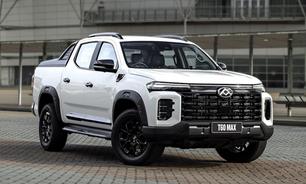
Today, we’re looking at LDV’s latest effort - the T60 Max Plus. While it looks like just another new variant from the outside, it’s hiding some significant changes underneath, and it takes its place at the top of the T60 range in 2024.
Could it be the right ute to fit your budget? Let’s take a look.
Weird, wild, unnecessary, arguably horrific to look at, or at least challenging, too fast, too silly, the Cybertruck is many things, but all of the bad things are obvious from a distance while you only realise just how impressive, clever and intense it is once you take it for a drive.
The drive-by-wire steering alone is a revolutionary bit of tech that will surely bleed into the wider world.
Overall I thought I would hate it, but I walked away, head still shaking, with grudging respect approaching admiration for the Tesla Cybertruck.
The Max Plus brings a lot of welcome upgrades to the T60 range, particularly in its previously non-existent active safety suite, but it’s not all good news. There are still a few areas where this ageing ute could use a lot of polish.
Still, there’s something to be said for how refreshingly straightforward much of it is, and for the most part its specs and features are up to the task of competing with many more expensive alternatives.
Is there anything interesting about a Narwhal, or a rhinoceros? It’s hard to know whether to give the Tesla Cybertruck 10 out of 10 for how interesting its design is, or zero for how offensive it is, but it would certainly get a solid 20 out of 10 for uniqueness.
Sure, in pictures it looks pretty out there, but when you stand before it in all its shiny steel it makes you laugh out loud, to the point where it has taken your breath away.
And then you start to notice all the fingerprints on it. Every time you - or any of its many admirers - touches it, you get nasty, oily stains and keeping it clean would make looking after a car painted in a matte finish look as easy as sleeping.
So, stainless steel as a choice for constructing a car? Perhaps there’s a reason no one else has ever followed the DeLorean’s lead here, but there’s no denying it grabs your eye, and provides a certain solidity to the whole structure.
Much like a Frank Gehry building, you’re either going to love the Cybertruck and think it a work of modern art, or dismiss it as a childish man’s fantasy made real (essentially that was the design brief for this vehicle, “make Elon a toy”, and it has nailed that brief), but either way you’ll definitely have strong feelings about it.
A car, or even a pick-up truck, with no round surfaces, nor subtlety of any kind, can’t really be described as beautiful in any way. But interesting? Definitely.
The T60 Max Plus takes the visage of a factory-kitted version of the existing T60 Plus. The most notable difference this time around is the unique gloss black grille design which features a new spot to hide the front radar array for the safety suite, alongside new gloss wheel designs and that huge sports bar fitting atop the tray.
To my eye at least the T60 looks a fair bit more rugged and industrial than most of its rivals, which with every iteration are looking more like passenger vehicles than work-ready utes. Still, there’s an aggressiveness to its contrast black trims and tall ride height which may appeal to some. For others it will be more function-over-form, with less bumper overhang than something like the SsangYong Musso and there’s something to be said for that, too, I suppose.
Inside is where this Max Plus version sets itself apart from the rest of the range with its abundance of screen real-estate, upgraded materials, and an almost EV-like centre console treatment.
It’s certainly more digital-feeling and contemporary than the rest of the T60 range, but it might lose some of the simple but rugged appeal of its interior as a result.
The screens look pretty slick, especially when you’re using phone mirroring to hide the otherwise clumsy stock software suite. It’s one thing to have nice big screens, it’s quite another to have slick, attractive, and customisable software to match.
Sadly, that’s not the case for the Max Plus, which offers one lacklustre look and feel for the dash cluster, paired with an array of confusing menus on the multimedia screen.
While the front and rear seats feel plenty spacious, that odd peaked baseball cap roof is a bit challenging in terms of headroom, and I smashed my noggin into it a few times trying to reach into the back seat for more Oreos and Mountain Dew.
You can pop up the bench seat in the back to create even more space for storage, or to provide a flat floor to sleep on.
You can also lie an American sized pizza box on the vast swathe of dash between you and the wildly angled windscreen, there’s plenty more storage on the floor between you and the passenger and then more storage bins at your hip, as well. A wireless phone charger sits twinned with the spot where you park your Tesla card key.
It’s a practical, semi-rugged feeling space, but with the usual kind of Tesla less is more feeling, except when it comes to the screen, which is stupidly large and requires far too much input when you’re driving to be safe. And there’s still no speedometer where you need one, in front of your eyes, and no head-up display, despite Tesla’s love of other jet-fighter tech, like drive-by-wire steering.
There are some benefits of the new interior design, and there are some disappointments too. These begin with the seating position, which is still miles off the ground in its lowest setting. This might give you a commanding view of the road, which has benefits, but it also makes you feel like you’re sitting on the T60 rather than in it.
The steering wheel is also only pitch adjustable rather than also offering telescopic adjustment, and even then its range of movement is extremely limited. For me, at 182cm tall, this meant the wheel blocked the top of the digital instruments, and I also felt like I was far too close to the roof. It’s an awkward seating position to say the least.
However, the new cabin layout has quite a bit of storage to play with. There are functional bottle holders and pockets in the doors, a decent glove box, and the new centre console offers a huge tray underneath with a removable dual cup holder insert, which also has two little cutaways for storing your keys. This area also hides some USB ports and a 12-volt outlet, for a nice cable-free interior if need be. The armrest console box offers even more space, and the wireless phone charger perched atop the console area is a welcome touch.
Less impressive is the strip of touch-based controls for the climate which sits underneath the multimedia screen. At least it has some controls which don’t require a screen sub-menu to navigate, but it simply doesn’t compare to having actual buttons and dials.
The most puzzling part of this equation is the lack of physical controls of any kind for the headlights, and no way for the passenger to adjust volume without needing to go one or two sub-menus deep. Inconvenient at best, potentially dangerously distracting at worst.
Again, some rivals get an edge here. The Musso’s multimedia suite looks comparatively old, but has heaps of physical buttons, while the GWM Ute Cannon splits the difference, maintaining buttons but gaining confusing menus. Both are better to use than the T60.
The back seat came as a surprise, as it offers pretty decent legroom for a full-sized adult, something quite rare in this ute segment. It also offers pockets on the backs of both front seats, dual adjustable air vents and a USB port on the back of the centre console, two small bottle holders in the doors, and a further two in a centre drop-down armrest. Underneath the seats there’s access points to small storage areas below.
The tray area seems reasonably well appointed with a pre-applied spray-in tub liner and four tie-down points at the extremes of the bed. The tub dimensions come in at 1485mm long, 1131mm wide (between the arches), and 530mm tall for the standard version. The Mega Tub variant extends the length to 1800mm. Payload for the tray is 840kg for the manual, 830kg for the auto, and 800kg for the Mega Tub.
Interestingly, despite its new coil-sprung rear, the T60 Max Plus maintains its 3000kg braked towing capacity, which isn’t the 3500kg industry standard, but is pretty close.
These specs mean the standard tray version is slightly larger than the Ssangyong Musso with a slightly higher payload, although it can tow 500kg less. It has a lower payload and a smaller tray than the GWM Ute, although it can tow about the same amount.
How does one define value when it comes to the vehicular equivalent of a cockroach, one that seems capable of surviving the apocalypse with it indestructible (but possibly slightly rusty in appearance) stainless-steel exterior, HEPA filters (will protect you from pollution, pollen and “industrial fallout”) and (almost, kind of) bowling-ball proof super-strong windows (it can allegedly survive the impact of a baseball at 112km/h - handy if someone is trying to kill you with a baseball)?
And what price can you put on the kind of attention driving a Cybertruck gets you? Perhaps only a Bugatti or a Pagani could match the level of wide-eyed, slack-jawed excitement you see from other people when you drive this thing around.
Then there’s the fact that it accelerates like an actual rocket, is allegedly so cosseted in the cabin that it’s “as quiet as outer space” (this is a comparison test I am up for, if Elon’s Space X would like to arrange it), and can tow “an average African elephant”, or 4,990kg, and has a 1134kg capacity in that vast rear tray, covered by a standard, automatic tonneau cover that’s so tough you can stand on it.
In that rear tray you’ll find a bottle opener, and some storage tubs with drainage holes to keep your beer cold or your fish frozen. You could sleep in there, on the composite bed, which is tough you don’t need a liner, but why would you when you can sleep in the truck - the dash is so large you could comfortably lie under the windscreen to sun yourself - using 'Sleep Mode', which runs the air con all night from its giant battery to keep it at your set temperature.
Speaking of your battery, you can also charge things with it using the integrated power outlets, and that includes the ability to charge another Tesla, or to re-zap your Tesla Powerwall at home and run your house during a blackout. Or the Apocalypse.
Tesla has put a price on all this, of course, and in America it ranges from US$81,895 to US$101,985. Frankly, that seems like quite good value when you add it all up, or at least it would if the Cybertruck really could tow five tonnes further than the end of the street, and if range - surely something of an issue for an outdoorsy vehicle like this - really could be guaranteed at 547km.
If and when it gets to Australia, of course, its value will need to be reassessed on what is sure to be a much, much larger number.
The T60 Max Plus is the new top-spec version of one of Australia’s most affordable new utes. From the outside it looks very similar to the Max Luxe which sits below it, but hides re-worked suspension, an overhauled interior, and some extra safety kit behind its tweaked grille.
It also continues to be available as a manual at $48,411, an automatic at $50,516 and as an extended ‘Mega Tub’ version at $52,092. LDV deals in drive-away pricing, and you’ll note these prices are roughly equivalent to low-grade versions of the industry leading utes like the Ford Ranger and Toyota HiLux.
The T60 is more likely, however, to compete with other low-cost ute options, like the GWM Ute Cannon also from China (from $52,990 in equivalent XSR form) or the SsangYong Musso from Korea (from $49,500 in equivalent Ultimate form).
Standard equipment is reasonably impressive, with 18-inch gloss black alloys, LED headlights, a sports bar out the rear, spray-in tub liner, a locking tailgate (for the first time), and an abundance of gloss black highlight trims to separate it from lesser models in the range.
On the inside the highlight of the overhauled design is the dual 12.3-inch screens which make up a dash-spanning digital suite. It comes with new-ish software which looks the part at a distance, although I was a little dismayed to discover it had limited functionality, only one ugly theme for the dash cluster, and minimal customisation.
You also score (very) synthetic leather seat trim with power adjust for the driver and front passenger, and an expanded array of soft-touch surfaces throughout. It looks modern and plush from a distance, but feels less impressive once you’re actually inside.
If you want a ute which does a better job of feeling more like a luxurious passenger car, the SsangYong Musso leans into this aspect harder, and if you want something that's bit more accessorised for the rough stuff the GWM Cannon XSR looks more the part. Ultimately it feels as though this new top-spec T60 is left in something of an awkward middle ground between the two.
Of course, the new safety equipment and suspension do add something to the T60 formula, but we’ll talk more about these later in the review.
Yes, I’m giving it 10. Because how could you want for more than a torque figure of 13959Nm, and a Ferrari-humbling 630kW of power to boot?
The Cybertruck is the perfect example of Elon Musk’s approach to what we’ll call science, or Twitter, or X. If it can be done, just do it, don’t ask whether it’s a good idea, or batshit insane.
So because he could fit a vast 123kWh battery and two crazy powerful motors to this pick up monster, and that could provide enough grunt to send three tonnes of mass to 100km/h in 2.8 seconds, they did.
Is it wise? Probably not. Is it wild and almost, somehow, strangely admirable? Yep.
The T60 Max range lays claim to one of the most powerful 2.0-litre four-cylinder diesel engines - a bi-turbo unit producing 160kW/500Nm with peak torque arriving from 1500rpm.
It is mated to either a six-speed manual, or an eight-speed ZF-sourced torque converter automatic transmission.
It has a 2H, 4H, and 4L selector (alongside an automatic setting for the Plus Max), and is equipped with a rear differential locker (which can only operate below 30km/h).
For those looking to venture well beyond the tarmac the T60 Max Plus has a 27-degree approach angle, a 24-degree departure angle, 220mm of ground clearance, and a 19-degree rampover angle. Wading depth is 550mm, and it has a 12.7-meter kerb-to-kerb turning circle.
Tesla claims a range of 547km between charges and that even when towing something of “reasonable size” (a smaller Tesla perhaps) it will still get 400km. I, for one, very much doubt that.
Tesla also claims you can recover up to 235km of range with just 15 minutes of Tesla Supercharging, while a charge from 10 to 80 per cent on that same Supercharger would take 44 minutes. On a 110V American plug it would take 110 hours, or 4.5 days, to fully charge from zero to 100 per cent.
The official combined fuel consumption of the diesel-only Max Plus is 9.3L/100km for the manual or 8.9L/100km for the automatic.
With over 500km of testing with plenty of freeway miles, our automatic example produced an as-tested number of 9.3L/100km.
It’s fair to say the Tesla Cybertruck is an intimidating prospect in the metal. It towers over you and seems to stretch into forever, because it does, at 5.68m long (too long to fit in a standard Australian parking space).
It’s also a full 2.0m wide, 1.8m tall and weighs 3.1 tonnes, but along with its size comes the fact that it just doesn’t look… right. There’s not a round surface on it but there are plenty you could cut yourself with, or lose a finger in.
It’s no less weird inside, as the giant A-pillars, vast dash, crazy yoke steering device and graphically lovely screen confront you, making it feel like you might be on the Starship Troopers ride at Universal Studios rather than in an LA car park.
Then, while you’re getting used to this and having a good laugh at the Easter egg on the touch screen (smash the windows on the graphic of the car with your finger and you hear the sound of Elon freaking out at the infamous failure demonstration of its unbreakable glass), you’re warned that it is going to be almost as weird to drive as it looks.
This is, in part, due to the Cybertruck’s unique drive-by-wire steering - a technology previously popular only with jet fighters and other planes - which allows it to have a yoke instead of a steering wheel without being annoying, because your hands will never cross over and be left grasping air.
Yes, the Infiniti Q50 debuted with 'steer-by-wire' a decade ago, but featured a full mechanical system as a fail-safe back-up. No mechanical safety net here.
The Cybertruck has less than one full turn lock-to-lock, and it has not just passive but aggressive rear wheel steering, allowing the back wheels to turn the opposite direction to the front ones at parking speeds, quite radically, which, once you’re used to it, makes it much easier to park than seems possible.
It also makes this Tesla incredibly sharp and direct and means that, for the first few minutes of driving it you will turn the wheel, sorry, yoke, far more than necessary.
Once you get used to it, however, it is fabulous, as long as you don’t think about what would happen if the software that’s the only thing connecting you to the wheels - rather than actual moving parts - failed.
The steering makes the Cybertruck shrink around you to the point where you forget, at times, just how big it is. Combined with the low centre of gravity and the bank vault solidity of the chassis, it also makes it turn-in and handle like a much smaller sports car (and it has a turning circle that defies belief, one that’s sharper than some sedans).
Speaking of sports cars, most of them won’t keep up with the Cybertruck if there’s someone brave in its driving seat. Indeed, you’d need a proper hypercar to match its constant, surging torque (no, I don’t believe it can really have 13,000-plus Newtons, but it’s a lot), and its purely outrageous, surging speed.
Tesla has a habit of calculating torque at the wheels, not the motor(s) and gearing reductions increase torque markedly.
Yes, I do believe it would do 0 to 100km/h in three seconds, maybe slightly less, but I’m also equally sure it’s not a great idea to try (I'm also very grateful I didn't experience the problems with the throttle sticking open on some examples that recently saw every Cybertruck recalled).
The problem is that 3.0-tonne weight figure, and all that mass. It feels beyond weird to move something this big, that fast, and it quickly makes you pause for a chilling thought about whether it’s all going to be able to stop again. It does, or it did for me, but boy, it puts the wind up you every time you try.
Overall, though, it’s hard to overstate just how surprisingly good, and yes, at times even fun, the Cybertruck is to drive.
Oh, and for the trainspotters out there, claimed efficiency is 22.4kWh per 100km, but we actually saw 27kWh during our two days of test drives. Our second Cybertruck was also making some distinctly weird metallic clanking noises from underneath, particularly when we switched between forward and reverse.
It might be worth waiting for the second generation of this thing before buying one, but that won’t be an issue for Australian fans, anyway.
As far as its off-road abilities, we managed to find a bit of beach in a car park and pointed the Cybertruck at it. After an initial fearful moment of being sure we were going to sink, we just put the foot down and let all that torque power us out of trouble. It felt effortless.
The T60 Max Plus has improved the formula in a few ways, but still feels a bit rudimentary in others.
The awkward seating position does provide quite a commanding view of the road, and makes it easy to gauge where the end of the bonnet is. This is useful parking in a city, but will also have benefits off the road. The 360-degree camera suite also helps with this manoeuvrability.
Interestingly the steering is quite good. This Max Plus is the only variant to score a fully electric power steering rack, as opposed to the lesser power assisted steering rack. It’s initially alarmingly light, but it also makes the T60 a breeze to steer unlike some utes in this class, and I was surprised to find it still had a sufficient amount of feel to give it confidence in the corners.
Yes, this is one of the most powerful 2.0-litre diesels, but it doesn’t feel particularly overwhelming to drive. The transmission, too, despite the brand bragging about its ZF sourcing, feels a bit transparent and rudimentary lumping through the gears with a degree of clumsiness. Still, it’s predictable and does what it says on the tin.
The same goes for the 4H and even ‘automatic’ 4x4 settings, which I found was surprisingly quick to activate if you started slipping on mud or wet tarmac.
Another less than impressive trait is the amount of sound produced. Supposedly this Pro Max version has additional sound deadening over the other variants, and yet the clatter of the diesel engine proved a constant in the cabin at freeway speeds or any time you needed to accelerate hard.
This particular version of the T60 should also feature an improved ride compared to its relations thanks to swapping the leaf sprung rear suspension out for coils, but I was surprised to find it was still quite stiff. No doubt this inherent hardness is down maintaining the same towing capacity. It makes it a bit jiggly when you drive it over the regular sort of road imperfections and corrugations. One wonders what the point of having coil spring suspension is at all if it’s going to feel more or less the same as leaf sprung alternatives.
One area that was particularly pleasing to me was the way the new active safety equipment wasn't overly invasive. There were a few moments where the lane keep tech intervened a bit too hard, but it’s pretty hands off as far as the rest of the systems go.
Overall then it does what it says on the tin, and is surprisingly easy to steer, although it doesn’t really excel at anything, which can be a hard sell in an environment where many utes are more passenger car like than ever.
Some unkind experts have referred to the Cybertruck as a “death machine” and a “guideless missile”, pointing out that putting a stainless steel body on top of a big old battery is inherently problematic. As is the lack of crumple zones.
Making all this very pointy metal move as fast as a McLaren supercar has also raised some questions about sanity.
Then there was the recent recall of every Cybertruck built so far:
"Cybertruck owners reported that their vehicles were at risk of getting stuck driving at full speed due to a loose accelerator pedal. Video showed the pedal itself falling off and the piece beneath wedging itself into the car’s interior, which would force the vehicle into maximum acceleration. One driver was able to save himself from a crash by holding down the brake pedal."
Elon Musk, has claimed, however, that the Cybertruck, is “much safer per mile” than its competitors.
Australia has different pedestrian safety regulations to the US and while some have posited that the Cybertruck will pass, pointing to the fact that you can buy an even bigger Ram truck here, others are not so sure.
The Tesla Cybertruck does have six airbags, and a suite of active safety features as part of its 'Autopilot' system, but it does not yet have 'Full Self Driving'.
Perhaps one of the biggest pieces of new equipment on the T60 Max Plus is the more competitive array of safety equipment than before. It includes auto emergency braking, lane keep assist with lane departure warning, and adaptive cruise control. It also gains a set of front parking sensors to add to its 360-degree parking camera suite.
Technically the LDV T60 range maintains a maximum five-star ANCAP rating, but it dates back to 2017 and is thus about to expire. It has a total of six airbags, consisting of dual front, side, and curtain.