What's the difference?
Subaru struck gold when it first launched the BRZ in 2011.
It, alongside the related Toyota 86 (now GR86), has been the standard for budget two-door sports cars for 15 years now. Nothing besides the MX-5 convertible is in the same class.
However, buyer’s preferences have changed dramatically over the years and sports cars are at risk of becoming more mundane and vanilla to please the general public. It’s great that Subaru continues to offer the BRZ, importantly with the availability of a manual gearbox. Hallelujah.
Last year Subaru made some slight tweaks to the BRZ, including adding active safety tech and a ‘Sport’ mode to the manual trims, plus a full-size spare wheel on the top-spec tS grade.
Speaking of, we’ve got the BRZ tS manual on test here, so let’s see how it fares in 2026.
Are you in the market for a cheap SUV? Are you ambivalent about what badge it wears? Do you like taking risks?
If you're answered yes to all those questions, do I have the car for you!
It's called the GAC Emzoom (that's e-m-zoom, so back off Mazda lawyers), and it's the latest in a seemingly endless list of new cars from new Chinese brands.
But unlike so many new models that fail to leave an impression, there are several reasons why the Emzoom is worth paying attention to.
The Subaru BRZ is a classic modern-day sports car that is a driver’s car through and through. This top-spec tS tester with the litany of accessories is a great example of what’s possible straight from the dealer, but it’s definitely not the best bang for your buck.
Thankfully you still get virtually every benefit the BRZ offers in the entry-level model. You’ll save thousands of dollars which you can use to pay for fuel on a road trip or modify your car exactly how you’d like.
Candidly, I really didn’t want to like the Emzoom. I think Australia has too many car brands already and the market is in danger of becoming overwhelmed with mediocre products at bargain prices that will squeeze out better but more expensive products.
But I cannot help but really be impressed by what GAC is offering. There’s no doubt the brand faces a major challenge expanding its dealership network to grow sales, but if it continues to deliver vehicles as nice as the Emzoom then it at least has a shot.
Not only is it affordable but it has style, space and is enjoyable to drive. For anyone in the market for a small SUV or just a sub-$30k new car, this should definitely be on your short-list.
Note: CarsGuide attended this event as a guest of the manufacturer, with accommodation and meals provided.
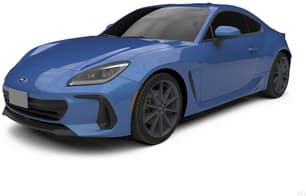
The Subaru BRZ has a timeless exterior design that screams dynamic sports car from every angle.
Even though the second-generation BRZ is around halfway through its lifecycle now, the design is aging like fine wine. It’s also a lovely evolution of the original which dates back to 2011.
The BRZ is low slung, has an aggressive front fascia plus the rear has prominent exhaust pipes. All of this stacks up to make a tough-looking car.
Thankfully this test example is also finished in 'WR Blue' exterior paint, which in my books is still the best colour for a Subaru performance car.
Adding all the genuine accessory goodies onto this car not only amplifies its street appeal, but also harnesses its racing intent. The carbon rear wing in particular has a swan neck design much like the Porsche 911 GT3. Many interested car-spotters craned their necks to get a good look.
Despite this, all the accessories are too flashy for my taste, especially for a car likely to be driven daily. I’d go for the stock look to retain resale, or something subtle like a small rear lip spoiler.
Inside the BRZ has all of the hallmarks of a sports car, as well. These include a steering wheel with minimal buttons, a prominent rev counter and contoured seats.
The manual gear shifter in this car is prominent and nice to hold. It’s great to still see manual options as they’re slowly but surely falling out of favour with buyers.
The manual handbrake is also a nice touch from a design perspective, but it limits overall interior practicality. More on that in a bit.
You can tell the interior is getting a little dated due to the older central multimedia system. But at the end of the day sports cars are more about the driving experience than the flashy tech.
Unfortunately one of the common themes for many of the new Chinese brands entering the Australian market is inoffensive but uninteresting design. The cars tend to be quite generic and lacking in style and statement.
That’s not the case with the Emzoom, which stands out with its bold, angular design that really sets it apart from its direct rivals. For a brand looking to make an immediate impression and attract a new demographic, GAC has made a strong opening move with the Emzoom.
It’s not limited to the exterior either, with an equally design-forward cabin. There’s only a smallish 7.0-inch LCD instrument display integrated into a wider panel, but it’s all housed within a single unit alongside the 14.6-inch multimedia display to create a hi-tech look.
Yes, there are other elements from rival brands that are evident in the design, but borrowing a few cues from other places isn’t something unique to GAC and the overall look and feel of the Emzoom is very likeable.
Hopping into the BRZ you’re immediately aware you’re getting into a sports car. It’s low-slung and the driving position feels like you’re almost sitting on the road. Perfect for this kind of machine.
The front seats are beautifully contoured and lock you in for when you’re driving through the twisties. Thankfully, the bolstering isn’t too aggressive and it’s still comfortable for everyday driving.
Ahead of the driver, the leather-wrapped steering wheel has a thin rim and is lovely to hold and turn. There aren’t many buttons but the few that remain are purposeful and have a lovely tactile click.
Behind this there is a 7.0-inch digital instrument cluster that permanently displays the rev counter in the middle. It’s a cool set-up that almost has a retro look to it, plus you’re able to configure the content that is displayed on the left-hand side.
Moving across, the central touchscreen multimedia system is classic Subaru. Nothing revolutionary, but I appreciate the physical shortcut buttons and dials on both sides of the screen.
It’s very easy to navigate around the screen, though as the photos show it is prone to glare, especially in bright scenarios.
Disappointingly there is only wired Apple CarPlay and Android Auto, with no wireless versions offered. You need to plug your phone in with a USB-A cable in a slot under the split-fold centre armrest.
While this means your phone will reliably charge, rather than having your phone overheat on a wireless charger, there’s no nice spot to put your phone given the physical handbrake takes up so much valuable centre armrest space.
You can put your phone in one of the cupholder spots, but when you do you don’t get a centre armrest. It’s too compromised for my liking.
While I’m on the topic of storage, there isn’t a great deal of it. There’s a small glove box and if you want, you can technically use the backseat area as they’re way too compromised for adults to fit into.
The rear seats are so small I didn’t even bother trying to fit as in my default driving position there is zero legroom. Even kids would struggle.
In terms of boot space, there is 201L available with the rear seats upright. It’s a fine space, though it’s impeded by the full-size spare wheel poking above the load floor. As a result you need to pack around the wheel.
Folding the rear seats makes the boot space more usable, though the envelope to slot things into the boot is narrow.
While the full-size spare wheel impedes the boot area, I’m glad it’s there because it’s much more usable than a dinky space-saver spare wheel or nothing at all. It gives you peace of mind in the event you have a puncture in the middle of nowhere.
The Emzoom offers a surprisingly spacious interior for a small SUV.
We were required to travel with four adult occupants at one stage and even in the back seat there was enough room for this six-foot tall reviewer to ride comfortably.
It feels more spacious thanks to the panoramic sunroof which can let in a load of natural light and get rid of the cramped feeling you sometimes have in these smaller models, particularly in the back seats.
While the seats are trimmed in PVC, they look and feel fine for this price point, and the driver’s seat is ventilated and has six-way power adjustment.
There are two USB ports in the front (one A and one C) as well as a 12V outlet, and there’s one USB-A in the rear.
The boot measures 341 litres, which is a respectable size for this type of SUV. While the inclusion of a power tailgate is a very nice touch at this price and makes life easier.
The 2026 Subaru BRZ line-up starts at $47,890, before on-road costs, for the entry-level model regardless of whether you opt for the manual or automatic.
On test here, however, is the flagship tS trim which starts from $52,790, before on-roads. That's $4100 more expensive than it was when it first launched in 2024.
It’s worth noting this is overlooking the limited-edition tS Kiiro ($53,590, before on-roads) with its bright yellow paint.
As a base, the BRZ comes with a solid amount of kit. This includes 18-inch alloy wheels, LED headlights, power-folding side mirrors, an 8.0-inch touchscreen multimedia system with wired Apple CarPlay and Android Auto plus dual-zone climate control.
One of the few things missing is wireless Apple CarPlay and Android Auto. This is becoming commonplace in many cars and while it can be a hassle to plug into a USB port, it also means your phone will reliably charge.
You need to step up to the S trim if you want features like leather-accented upholstery and heated front seats. The top-spec tS in particular gains STI-tuned suspension, Brembo front and rear brakes, black door mirror covers and tS badging.
Adding to this, our particular tester comes equipped with a wealth of optional accessories. These include an STI body kit, STI alloy wheels and an STI carbon boot spoiler, totalling just over $14,500 fitted… Goodness me. For reference, the carbon rear wing is almost half of that.
Altogether, this kitted-up BRZ tS tester costs around $67,300, before on-road costs. While this is much more than the top-spec Toyota GR86 and Mazda MX-5, it’s still less than an entry-level Ford Mustang Ecoboost or BMW 2 Series.
GAC has kept it simple and offers the Emzoom in a single model grade - Luxury - which is priced from $25,590 plus on-road costs. Even at roughly $28,000 on-road, the Emzoom is among the dozen or so cheapest new cars in Australia, and certainly one of the most affordable SUVs of this size.
GAC didn’t skimp on equipment to achieve that price too, with such luxuries as a panoramic sunroof and power tailgate included, along with 18-inch alloy wheels, LED lights and dual-zone climate control.
Other equipment includes wireless phone charging, wireless Apple CarPlay and Android Auto, Bluetooth and a six-speaker sound system.
Bucking the trend for electrification, the Emzoom is powered by a 1.5-litre four-cylinder turbocharged petrol engine that makes 125kW/270Nm. This provides adequate performance for a small SUV, without offering anything special.
The engine is paired to a seven-speed dual-clutch transmission, which sends its power to the front wheels. More on that set-up under ‘Driving’...
Subaru claims the BRZ manual consumes an average of 9.5L/100km on the (ADR 81/02) combined (urban/extra-urban) cycle.
We almost matched this during our largely urban-based testing, achieving an average of 9.7L/100km. There’s a 50L fuel tank which means there’s a total theoretical range of 515km using our as-tested fuel consumption.
A minimum of 98 RON premium unleaded petrol is required which isn’t uncommon for sports cars, but it still hurts your hip pocket nerve.
Slightly confusingly GAC quotes a claimed combined urban/extra urban figure of 6.6L/100km, but based on the WLTC testing protocol, which is similar but marginally different to the more common and real-world-focused WLTP.
However, in our actual real-world test drive we instead saw a return of 7.6L/100km, so expect to use slightly more than the claim, regardless of testing protocols.
The Emzoom has a 47-litre fuel tank, which means if you can hit the claimed economy, you’ll have a range of just over 700km on a single tank. Our real-world average would still be good for more than 600km, which is a respectable range for what is designed to be a city-friendly SUV.
This is where the BRZ has always excelled and this kitted-out tS manual is no exception.
Firing up with a cold engine, you’re immediately aware this is powered by a horizontally-opposed 'boxer' engine. It has that classic high idle that eventually simmers down once the engine has warmed up a bit.
Setting off you need to acquaint yourself with how this manual gearbox works. Every manual is a little different, however this BRZ is easy to pick up and understand quickly.
I particularly like the notchy and direct gear throw. It makes changing gears easy, fun and engaging.
If I am to be critical, the clutch bite point is a little high and there is a touch too much rev hang when changing gears, especially in the ‘Sport’ drive mode, but you get used to it eventually.
In everyday driving scenarios there is enough power available. Some more wouldn’t go astray due to the lack of a turbocharger, but this constraint makes the car more fun to drive as you have to work harder with the gears.
Speaking of, the gearing is short, which means you will be shifting gears quickly. At 60km/h, for example, the car can be driven around in sixth gear, which is clearly focused on maximising efficiency.
Once you’ve reached your set speed there’s enough torque to maintain it without having to dive back through the gears. This is nice because you don’t have to shuffle through the gears to keep up with traffic.
Out on the open road is where the BRZ comes into its own. The steering in particular highlights how balanced and poised the car feels. It’s so fun to chuck around on twisty bends and feel the weight transfer.
The STI-tuned suspension in this particular trim also highlights how sporty and dialled-in this car is. It can feel a little rough and taut on pimpled urban roads, though you need to remind yourself this is a sports car, not a comfort-oriented SUV.
In a similar vein, at higher speeds there is a lot of road and tyre noise that transfers into the cabin. This is made worse when the rear seats are folded. While more sound insulation would likely fix this, I like it being left out in the name of lighter weight (kerb weight is only 1.3 tonnes).
What makes the Emzoom really impressive, particularly at its price, is the way it drives. GAC has been in partnership with both Toyota and Honda in China for decades, and clearly the brand has been paying attention to how those more established global brands do things.
The net result is a small SUV that is genuinely enjoyable to drive and a far cry from the dull, unresolved offerings from other Chinese newcomers.
The Emzoom’s ride is nothing short of remarkable, given this is an all-new brand to Australia. It managed to soak up some very nasty-looking bumps without any notable fuss in the cabin. There is still some fine-tuning that could be done to make it class-leading in terms of both comfort and responsiveness, but the overall first impression is very, very positive.
It’s a similar story for the steering, with responsiveness and good weighting, not the occasionally numb and dull steering other Chinese competition offer up.
The engine is fine, nothing special to report, it does the job steadily but does need to be worked hard at times. The gearbox, on the other hand, is more notable.
While a dual-clutch transmission is better on paper, providing faster gear changes for more responsive driving and lower fuel consumption, in practical terms they can be more challenging to operate smoothly.
That’s very much the case with the Emzoom, with the clutch tending to ‘slip’ when you take-off from standstill, often resulting in wheel spin - and a more dramatic-sounding departure than you intended.
This is probably not helped by the tyres, a Chinese brand that this reviewer had never experienced before but felt light on grip.
Once on the move, it works well enough, although occasionally it gets caught between gears when you’re trying to drive more spiritedly, but most of the time it’s fine.
By far the biggest foible of the Emzoom is the noise. GAC clearly saved money on what’s known in the business as ‘NVH’ (or noise, vibration and harshness), with a noticeable amount of tyre roar, wind noise from mirrors and poor sound deadening underneath.
It’s not ideal but there was always going to be a compromise to get this type of SUV for this price.
The current-generation Subaru BRZ hasn’t been crash-tested by ANCAP and is therefore unrated.
In 2025, the manual BRZ joined the auto version when it gained Subaru’s 'EyeSight' camera system, which brings autonomous emergency braking (AEB), lane departure warning and even adaptive cruise control. It’s rare for manual-equipped vehicles to feature the latter.
This is above and beyond the seven airbags, blind-spot monitoring, rear cross-traffic alert, lane change assist, reverse camera and tyre pressure monitoring.
It’s worth noting manual versions of the BRZ do not have any parking sensors, front or rear, as standard. Automatic versions gain rear parking sensors and a rear AEB system.
There are two ISOFIX anchors and two top-tether points for child seats in the second row, though space is rather limited.
Thankfully, GAC didn’t cut too many corners on safety. There’s airbag coverage for all outboard occupants and a 360-degree parking camera system as well as a decent amount of driver assistance features for a sub-$30k SUV.
It must be noted that there is no ANCAP or Euro NCAP score, but the Emzoom comes with autonomous emergency braking (AEB), forward collision warning, lane keeping assist, lane departure warning, high beam assist and adaptive cruise control.
However, that's the extent of the list, so it doesn't have the comprehensive list of active safety systems that its rivals can claim.
Subaru BRZ owners are covered by a five-year, 100,000km warranty which is now commonplace in the mainstream segment. Many carmakers are now extending their coverage out to seven years and beyond.
Logbook servicing is required every 12 months or 15,000km, whichever comes first. The first five services cost a total of $2595.51, which averages out to around $519 per service. For the performance car space this isn’t cheap but not as exorbitant as more premium offerings.
Subaru has a total of 128 dealers around Australia, with a spread across metro, rural and regional areas.
GAC has tried to be proactive and match the market with a seven-year/unlimited kilometre warranty, but strangely offers an even longer warranty for its electric and plug-in hybrid models.
It is an unusual decision and raises question marks over the longevity of its internal combustion engine models for no apparent reason.
As we wrote when we tested the Aion V, GAC is starting from scratch in Australia with less than a dozen dealers set to operate in the first 12 months. That means limited opportunities to both buy and service a GAC vehicle.