What's the difference?
The Skoda Kamiq might be one of Australia’s most underrated vehicles.
As you may or, more likely, may not know, the Kamiq crossover has always been positioned to compete with mainstream players like the Honda HR-V, Mazda CX-3 and Subaru Crosstrek in its own quirky way, which we’ve always quite liked here at CarsGuide.
That’s some tough competition, though, so what does this Skoda do differently to deserve your attention, what’s changed for this year’s update, and do we still think this Skoda should be on your shopping list if you’re considering those other cars?
Read on and we’ll find out.
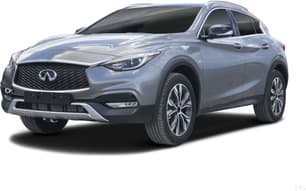
Tim Robson road tests and reviews the 2016 Infiniti QX30 at its Australian launch with specs, fuel consumption and verdict.
There’s no doubt that the compact crossover segment is a vitally important place for any carmaker to be. Nissan’s luxury arm, Infiniti, is no different, and thanks to a decision from its Japanese masters, the diminutive premium brand will go from having no players on the field to having two marquee players in a matter of just a few months.
The architecturally identical front-wheel-drive Q30 launched only a month ago in three variants, and now it’s the turn of the all-wheel-drive QX30 to take to the pitch.
But is there enough of a difference between the two to actually consider them different cars? Is it adding a layer of complexity for the prospective Infiniti customer? As it turns out, the differences run more than skin deep.
The Skoda Kamiq continues to be an overlooked gem. It’s cleverly designed and well equipped, even in base form, and what sets it apart from many other dull options in this segment is how fun it can be to drive.
Despite all of this and keen ownership terms it continues to account for a tiny number of sales in the segment, and I don’t think it’s destined to change as, value or not, its positioning remains the same in a small SUV space where it’s increasingly hard to stand out.
Still, for those who dare to choose something different, there’s a great little car to be found.
Note: CarsGuide attended this event as a guest of the manufacturer, with travel, accommodation and meals provided.
Even though it’s almost identical to the Q30, the QX30 manages to feel sufficiently different in suspension tune and cabin ambiance to be considered different.
It’s a disappointing oversight, though, by Infiniti to deny the base GT such basic safety fundamentals as a rear view camera (which Infiniti assures us is being worked on).
The Kamiq's design is distinctly European for better or worse, but it stands out from its crossover rivals by looking (and feeling) more hatchback than SUV.
If you’re wondering what’s changed for this update, I don’t blame you, the changes are very subtle. Looking closely will reveal a tweaked front bumper and a new rear diffuser, as well as progressive LED indicators.
The style of the two variants has also been subtly altered with new wheel choices and the increase in the use of gloss black on the Monte Carlo, but there are more distinct changes on the inside.
Each grade gets its own theme for the highlight trim across the dash reflected in the seats, and honestly I don’t miss the leather, cloth seats are back in in a big way, and in both grades here they’re pretty rad.
Other new features include a tweaked set of multimedia screens, with the base car maintaining a set of dials, and the larger unit re-working its touch-based shortcut buttons.
As usual, the digital dash treatment (courtesy of Volkswagen Group) is well above par in terms of customisation and information.
Ultimately then, it’s not too different from how it looked and felt before, but there’s certainly an argument to be made that it didn’t need to change. The Kamiq has always been a distinctive and well-appointed choice in this segment.
The QX30 is one of the first projects to result from a technology partnership formed between the parent company of Mercedes-Benz and the Nissan-Renault Alliance.
In a sign of how worldly the car industry is becoming, the QX30 is built in Nissan’s Sunderland plant in the UK, using the German Mercedes-Benz A-Class platform and powertrains, all under Sino-French ownership via the Nissan-Renault Alliance.
On the outside, the design that first aired on the Q30 is pretty unique. It’s not a subtle car, with deep crease lines along its sides that, according to Infiniti, is an industry first in terms of manufacturing complexity.
When it comes to differences between the two vehicles, it’s minimal at best. There is a 35mm increase in height (30mm from taller springs and 5mm from roof rails), an extra 10mm in width, and extra trims affixed to the front and rear bumpers. Aside from the all-wheel-drive underpinnings, that is pretty much it for the exterior.
The same black plastic overfenders that are fitted to the Q30 are present on the QX30, with 18-inch rims on both the base model GT and the other variant, the Premium.
The dimensions of the QX30 are also an exact match for those on the Mercedes-Benz GLA, with the long front overhang acting as the main visual connection between the two cars.
Practicality is one of Skoda’s big selling points. The deal is this. Skoda models sit between entries in the Volkswagen range to provide strategic alternatives to its parent company's hero brand.
The Kamiq, for example, sits size-wise between the T-Cross and T-Roc, although once you’re in the cabin it feels bigger than both.
A nice low seating position makes the roof feel distant, while massive windows grant excellent visibility. It's easy for me (at 182cm) to find a nice seating position thanks to plenty of adjustability, although some might find it feels a bit more hatch-like than other SUVs in this class which have taller seating positions.
The overall spacious feeling in the front is boosted by ample storage, including pockets and bottle holders in the doors, a triple cupholder in the centre console, a large storage bay under the climate unit and a small armrest console box.
Unlike rivals in this space which are quick to offer synthetic leathers as you work your way up the range, even the top-spec Monte Carlo has seats clad in cloth trims.
While this might not be great if you have kids prone to spilling liquids, I think design-wise the car is better for it and certainly no less comfortable.
Also notable is the commitment to dials for the climate unit, and a change for this model year is the introduction of fan speed buttons so this function no longer needs to be controlled through the touchscreen.
Interestingly, dials only appear on the smaller of the two touchscreens available on the base Select, while the Monte Carlo’s larger screen only has touch-based volume controls.
The back seat is enormous, offering me leagues of knee room behind my own driving position and the roof remains almost as distant as it is in the front seats.
It also feels wide enough and has decent amenities, like dual USB-C sockets, adjustable rear air vents and dual-tiered pockets on the backs of the front seats.
You also get a decent-sized bottle holder in the door and a drop-down centre armrest and the soft trims continue into the rear unlike some segment rivals which switch to hard plastic door cards.
The biggest downside for back seat passengers is the raised floor in the centre position (a platform restriction) which unfortunately makes it a bit squeezy for adults. Best leave this centre position for kids.
At 400 litres the boot punches well above its weight for this crossover segment, expanding to 1395L with the second row folded.
There’s a space-saver spare wheel under the floor and the Kamiq is also rated to tow, albeit at a limited 610kg or 630kg for an unbraked trailer and 1200kg or 1250kg (braked) for the Select and Monte Carlo, respectively.
The QX30 is obviously very similar to the Q30 in many respects, but the interior is slightly different, with larger, less cosseting seats up front and slightly higher seats in the rear.
The cabin is also lighter in overall appearance, thanks to a paler colour palette.
There are plenty of neat inclusions, including a pair of USB ports, plenty of door storage, a space for six bottles and a sizable glove box.
A pair of cupholders resides up front, along with a pair in the fold-down armrest in the rear.
There is no particularly logical location for the storage of smartphones, though, and the lack of Apple CarPlay or Android Auto is down to Infiniti opting for its own phone connectivity suite.
A decent 430 litres of luggage space behind the rear seats is contrasted by a cramped rear area for all but the smallest of passengers, while sharply shaped rear door apertures making getting in and out a bit of an ask.
There are two ISOFIX baby seat points and a 12-volt socket in the rear, as well.
In a quest to make its range more straightforward for buyers Skoda has simplified the Kamiq range down to two variants for 2025.
The bad news is it’s no cheaper. Actually, it continues its march up the price-scale, now starting from $32,890, before on-road costs, or $33,990 drive-away for the new entry-point Select.
The good news is, for the money Skoda has packed in even more standard equipment.
The Select is only available with the smaller 1.0-litre 85TSI engine and offers a pretty comprehensive list of stuff, including LED headlights, 17-inch alloys, an 8.0-inch digital dash with an 8.25-inch multimedia touchscreen, wireless Apple CarPlay and Android Auto connectivity, dual-zone climate and keyless entry with push-button start.
There's also a leatherbound steering wheel with cloth seat trim and manual adjust front seats, four USB-C outlets, heated and power folding wing mirrors with an auto-dimming rear view mirror. It also scores some upgraded kit for the active safety suite, as well as drive modes and paddle shifters.
You can also option this grade with the 'Signature Pack', which adds adaptive cruise control and ‘Park Assist’, an electric tailgate, 18-inch alloy wheels, the larger 10.25-inch multimedia touchscreen, tinted windows, carpet floor mats, interior ambient lighting, chrome exterior highlights, an alternate interior trim with suede highlights, and rear privacy glass.
At the top of the range is the new Monte Carlo which starts from $42,690, before on-roads, or $44,990 drive-away.
It scores a larger 1.5-litre four-cylinder 110TSI engine, and adds adaptive cruise control, lane keep assist with lane guidance and park assist to the safety suite.
Standard equipment also includes 18-inch alloys, upgraded ‘Matrix’ LED headlights, ‘Sport Chassis Control’ suspension, the larger 10.25-inch digital dash and 9.2-inch multimedia touchscreen, a panoramic sunroof, 10-speaker premium audio, heated front seats with a heated steering wheel, sports front seats with power adjust for the driver, as well as black highlights on the exterior trim and soft-touch carbon-look highlight trims on the inside.
Both grades get some of Skoda’s ‘simply clever’ features like an umbrella integrated into the driver’s door, a ticket holder on the windscreen, a washer funnel integrated into the reservoir and phone pockets on the backs of the front seats.
According to Skoda, the slightly higher prices for both grades this time around are offset by several thousand dollars of increased value in equipment.
On the flip side, though, some gear has been removed from the Kamiq range entirely, including leather seats, wireless phone charging, heated rear seats, and voice control for the multimedia system.
Does it represent value compared to its rivals? It’s relative. Yes, even the base version is more affordable than any Subaru Crosstrek, but you can’t get all-wheel drive, while a Mazda CX-3 can be had for just $26,950, before on-roads, but doesn’t offer the same level of base equipment.
The HR-V is more expensive and offers less gear for the money. It seems ever-increasing prices are a segment-wide problem.
The biggest challenge is new Chinese rivals. Haval’s Jolion is physically bigger and can be had in hybrid form for less money ($32,990 drive-away), while the Chery Omoda 5 ($27,990) and MG ZST (from $26,490) are cheaper and a size-up. It’s easy to see the temptation for mainstream buyers.
The QX30 will be offered in two variants; the base model GT at $48,900 plus on-road costs, while the Premium will cost $56,900.
Both come equipped with the same engine; a 2.0-litre four-cylinder turbocharged petrol engine that’s sourced from Mercedes-Benz and also used on the Q30 and Merc GLA.
Eighteen-inch rims are standard on both cars, while an electronic handbrake, 10-speaker Bose audio, 7.0-inch multimedia screen and a full set of LED lamps all round are fitted across both variants as well.
Unfortunately, the QX30 GT misses out on a reversing camera all together, a fate it shares with the Q30 GT.
Infiniti Cars Australia told us that this was an oversight at the time the cars were being specced for Australia, particularly in light of the other technologies that the car would receive, like automatic emergency braking.
The company says it’s working hard to bring a reversing camera to the GT.
The top-spec Premium gets leather trim, a powered driver’s seat, and additional safety equipment like a 360-degree camera and radar cruise with brake assist.
The only optional extra on each car is metallic paint.
Two grades, two engine choices, doesn’t really get simpler.
The base Select is offered only with the smaller 1.0-litre three-cylinder turbocharged 85TSI engine (85kW/200Nm) paired with a seven-speed dual-clutch automatic transmission, driving the front wheels.
Meanwhile, the top-spec Monte Carlo is only offered with the larger 1.5-litre four-cylinder turbocharged 110TSI engine (110kW/250Nm). It is also paired with a seven-speed dual-clutch auto and also only drives the front wheels.
These engine options are notable in the segment as they are both lean turbo units in a sea of older naturally-aspirated engines, and while some will rightfully have reservations around dual-clutch automatics, they’re certainly snappier and more efficient than torque converters or dull CVTs.
Just the one engine is used across both cars; the 155kW/350Nm single-turbo 2.0-litre four-cylinder petrol engine from the Q30 and A-Class.
It’s backed by a seven-speed transmission and wired into an all-wheel-drive system that is biased towards a front-drive configuration.
Sourced from Mercedes-Benz, up to 50 per cent of drive can be sent to the rear wheels, according to Infiniti.
You’ll note Skoda doesn’t offer a hybrid option in its range, although one of the benefits of its more complicated engine and transmission is a fuel consumption which falls between what a plug-less hybrid or naturally aspirated rival might score.
The official/combined consumption of the 85TSI engine is just 5.5L/100km and for the 110TSI engine it is 5.6L/100km.
On our lengthy drive program at the launch both variants seemed to be landing a little over 6.0L/100km, which is more impressive than many rivals, which score in excess of 7.5L/100km in our testing.
Perhaps to even things out a little, the Kamiq’s turbocharged engines require mid-shelf 95 RON unleaded.
Infiniti claims a combined fuel economy figure of 8.9L/100km for the 1576kg QX30 across both the variants; this is 0.5L thirstier than the Q30 version.
Our brief test yielded a dash figure of 11.2L/100km over 150km.
What immediately sets the Kamiq apart the moment you hop in the driver’s seat is how hatch-like it feels. While a lot of small SUVs and crossovers in this price-bracket grant a really high seating position to make them feel bigger than they are, the Kamiq lets you sit closer to the floor.
This has the effect of making it feel even smaller than it is, but also lends it a sporty feel from behind the wheel. This is reinforced as soon as you start driving by its lightweight, agile feel.
Keen steering in both grades is backed by firm suspension, making the Kamiq responsive and agile, and because both engines are turbocharged they offer something quite different in this space normally dominated by dull naturally-aspirated 2.0L engines.
First, the catch. The dual clutch transmission can be a bit fiddly, particularly in the 85TSI which comes with a fair dollop of turbo-lag.
This means you’ll have to factor in a moment of delay before acceleration arrives at T-junctions or green lights. It can be frustrating at times, but the trade-off is the small capacity turbo engine pairs with efficient ratios to make for lean fuel consumption.
The fun factor is also boosted. Once you overcome the initial laggy moment, the little turbo engines surge to life with an agreeable gruff tone, and the dual-clutch transforms from fiddly to snappy once you’re at speed.
This means when you’ve got a nice road to carve up, the Skoda is a hell of a lot more entertaining to drive than almost any rival in this space.
It doesn’t have the clumsy handling of Chinese rivals, nor does it have the lifeless drone of a bigger, less efficient engine paired to a continuously variable automatic. It’s a rare slice of excitement in a small SUV category dominated by average drive experiences.
The cabin manages to feel upmarket in most ways, and is relatively easy-to-use on the go thanks to a commitment to the dials and switchgear. It is a comfortable companion on a long journey.
While the suspension is keen and keeps the car agile though, keep in mind the ride can be quite hard. This Skoda doesn’t quite have the poise or breadth of ability of its VW relations. Large wheels in both grades don't help this equation.
There is also a notable amount of tyre roar entering the cabin, particularly on coarse chip or at freeway speeds which, to be fair, is a common trait in this part of the market.
To summarise, the Kamiq is a uniquely European drive experience in an otherwise dull segment, and despite some drawbacks, it’s a real stand-out as a result.
Again, it would be easy to think that the QX30 would feel almost identical to its lower-riding sibling – but that would be incorrect. We criticised the Q30 for being a bit too buttoned down and unresponsive, but the QX30 feels more lively and involving, thanks to its unique spring and damper set-up.
Even though it’s 30mm higher than the Q, the QX doesn’t feel it at all, with a benign, pleasant ride with good body roll control and competent steering.
Our front-seat passenger complained of feeling a little ‘hemmed in’, which is a valid point. The sides of the car are very high, and the roofline is quite low, exacerbated by the steeply raked windscreen.
The 2.0-litre four-potter is smooth and punchy, and the gearbox well suited to it, but it’s lacking in aural character. Luckily the QX30 does a terrific job of suppressing noise before it gets into the cabin, then…
Safety equipment is mostly impressive, although there is a small catch.
While active safety gear on both grades includes auto emergency braking (to freeway speeds, with rear manoeuvre braking), lane keep assist, and blind-spot monitoring, only the top-spec Monte Carlo gets adaptive cruise control, the more proactive adaptive lane guidance and park assist features.
Both cars get front and rear parking sensors, however, and a rear view camera but there’s no 360-degree parking suite.
I was also impressed to find none of the active safety items were invasive to the drive experience, which certainly can’t be said for every small SUV.
The standard array of six airbags is present, and there are dual ISOFIX points and three top tether mounts across the rear seats.
The Kamiq range was awarded a maximum five-star ANCAP safety rating in 2020.
The QX30 gets seven airbags, auto emergency braking, forward collision warning and a pop-up bonnet as standard across the line.
The base GT does, however, miss out on a reversing camera.
The Premium model also offers a 360-degree camera, blind spot warning, radar cruise control and brake assist, traffic sign detection, reverse motion detection and lane departure warning.
Skoda is going to great lengths to try and challenge the idea that a European car can’t be as easy to own as a Japanese or Korean rival.
As a result, it is the first European brand to offer a seven-year, unlimited kilometre warranty, which is backed by a seven-year prepaid service pack.
This pack is reasonable. At $2650 it works out to $379 a year, which is not quite as affordable as Toyota or some Chinese rivals, but it’s also not expensive when you consider the service pricing of brands like Subaru or Kia.
It also offers a guaranteed future value program and the brand’s keen finance terms, on paper at least, make a Kamiq cheaper to own over five years than many of its competitors.
The Q30 is offered with a four-year, 100,000km warranty, and servicing is suggested every 12 months or 25,000km.
Infiniti offers a fixed three-year service schedule, with the GT and the Premium both costing an average of $541 over the three services provided.