What's the difference?
It’s finally happened: Rolls-Royce has become so divorced from the everyday world of common folk that it's no longer even sharing the previously agreed meanings of words. Rolls has its own meanings, possibly its own language, which must be spoken with a plum on the tongue.
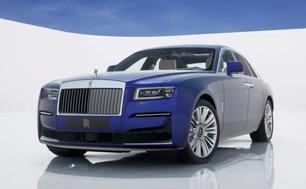
They’ve been heading here for a while. For example, at Rolls, “affordable” means the car we're driving today, the Rolls-Royce Ghost Series II, which is yours for just $680,000 (an indicative price, bumping to $800K for the Black Badge). And “iconic British marque” means, obviously, “BMW bought us in 2003, so there might be some German bits”.
It turns out that “driver-focused” means something different at Rolls-Royce, too. Thanks to a smattering of chassis innovations, Rolls says this updated 2025 Ghost is “the most driver-focused V12 Rolls-Royce ever”. Which is “a side of Ghost’s character that our clients increasingly and enthusiastically embrace”.
Don’t fall for it. The Ghost’s extra focus is not actually very focusy, and its additional dynamism is really only more dynamic in the way that a bed that could corner at all would be more dynamic than a normal bed. None of that matters.
The reason it doesn’t matter is because the Ghost Series II is wonderful. Indeed, it is very nearly perfect. Which is a word that even Rolls won’t quibble over.
Picturing yourself driving a Ferrari is always a pleasant way to waste a few 'when I win Lotto' moments of your life.
It’s fair to assume that most people would imagine themselves in a red one, on a sunny, good-hair day with an almost solar-flare smile on their faces.
The more enthusiastic of us might throw in a race track, like Fiorano, the one pictured here, which surrounds the Ferrari factory at Maranello, and perhaps even specify a famously fabulous model - a 458, a 488, or even an F40.
Imagine the kick in the balls, then, of finally getting to pilot one of these cars and discovering that its badge bears the laziest and most childish name of all - Superfast - and that the public roads you’ll be driving along are covered in snow, ice and a desire to kill you. And it’s snowing, so you can’t see.
It’s a relative kick in the groin, obviously, like being told your Lotto win is only $10 million instead of $15m, but it’s fair to say the prospect of driving the most powerful Ferrari road car ever made (they don’t count La Ferrari, apparently, because it’s a special project) with its mental, 588kW (800hp) V12, was more exciting than the reality.
Memorable, though? Oh yes, as you’d hope a car worth $610,000 would be.
In a disruptive era when the coachbuilder has pivoted to SUVs like the Cullinan, a sort of London black cab that’s been dipped in opulence, and succeeds despite itself, and the brand’s grand, million-dollar EV, the Spectre, the Ghost is a safe and familiar space.
A beautiful, long, broad, immaculate land boat. It’s a space Rolls inhabits with relish.
The Ghost Series II feels nothing like a track-day option when you’re behind the wheel. But it might do if you were stepping out of a Phantom. Or a Cullinan. Or a Wraith. Especially if you’re stepping out of the back doors.
It’s the perfect driver’s car. As long as all your other cars are also Rolls-Royces.
Clearly, this is not a car for everyone, and you’d have to question whether it’s a car for anyone, really, but people who like spending $610,000 on Ferraris, and waiting in a queue to do so, will be delighted, because it delivers the kind of exclusivity, and bragging rights, that you’d have to hope a car called Superfast would.
Personally, it’s a little too much, a little too over the top and definitely too mad, but if rockets are your thing, you won’t be disappointed.
Yes, its exterior is more monolithic than before. The previous iteration was hardly fiddly, but the (apparently client driven) evolution here edges ever so gracefully towards what Rolls-Royce might secretly think of as brutalism.
The Ghost Series II’s generous 2148mm width is further emphasised up front, stretched across its upright prow, with slimline headlights adding definition and — surprisingly — a touch of villainy.
New, Spectre-inspired tail lamps and a discreetly inscribed double ‘R’ monogram add a reserved flourish from behind, and buyers can choose from two new 22-inch, nine-spoke wheel designs.
It’s subtle, no doubt. But it’s also impeccable.
It’s very… big, isn’t it? And it looks even bigger in the flesh with a bonnet you could use to put a roof over your tennis court. In all, the Superfast is 4.6m long, almost 2.0m wide and weighs 1.5 tonnes, so it certainly has presence.
Making something this big look good is a challenge even for those as talented as Ferrari’s design team, but they have nailed it. The front has what appears to be a mouth, poised to swallow lesser cars whole like some whale shark Terminator.
The bonnet appears to be flaring its nostrils, and looks fabulous from the driver’s seat, and the swooping side and taut rear complete things nicely.
Personally, it still just looks too big to be a Ferrari, but then this is not a mid-engined super car, it’s a grand touring rocket ship, and the ultimate expression of unnecessary excess, and it pulls off that aura perfectly.
Inside, yes, there are bonkers touches in this most refined of automotive spaces, such as upholstery pinpricked by 107,000 'Placed Perforations' of 1.2mm in diameter, each individually examined, that replicate the shape of some clouds spotted over Rolls-Royce's Goodwood HQ.
Beside those flourishes of lunatic opulence, the more practical features feel pedestrian, but they’re comprehensive. The wireless Apple CarPlay and Android Auto, the seamless 'Central Information Display' and the 18-speaker 1400-watt audio, the upgraded Wi-Fi hotspot and the unobtrusive USB-C ports. The rear-seats flush with giant, streaming-optimised screens and heated and ventilated massaging seats.
Rolls acknowledges the generational movement of its clientele from back seat to front, with over 90 per cent of buyers now opting to — gasp! — steer themselves in a Ghost. But with back-seat savoir faire in its DNA, Rolls simply extends its hospitality to every seat.
Practicality isn’t really your concern when you buy a two-seat mega car like this, so let’s just say it’s about as practical as you would expect it to be. Not very, then.
The Ghost Series II is yours for an indicative price of just $680,000 (or $800K for the Black Badge) plus substantial on-road costs. The Ghost Series II extended (which we didn’t drive at the international launch in Provence) will slip in at around $20K less than the Black Badge before additional charges.
If they seem like big numbers, you’re probably the sort of person who looks at price tags, or who shops in shops that put price tags on things. These are not common traits of Rolls-Royce buyers, who may only be vaguely aware of the actual price of their vehicle, and whose historical impression of guillotines is generally unfavourable.
So, high six-hundreds is table stakes.
But you might also think the ‘standard’ Ghost, like all Rolls-Royces, is considered by most buyers to be a mere starting point, from which they’ll typically up-spec their ride from a sumptuous and expensive options list.
Spending another 10 percent of the purchase price on customisation is a bare-bones outlay for most owners, but even so, the evolved Ghost’s out-of-the-box features are so comprehensive as to be almost overwhelming.
First, because the Ghost has been Rolls-Royce’s driver’s car since the first (modern) generation arrived in 2010, specifically to cater to a weird (for Rolls clientele) new generation of buyers who wanted to drive their Rolls themselves.
So that price gets you, above all, that proven but superb 6.75-litre twin-turbo V12 engine, massaged via an eight-speed transmission and an AWD system that’s as rich and viscous as Crassus’s last libation.
There’s its subtly tinkered 'flight on land' 'Planar Suspension System' (note the unspoken dissonance between the terms ‘flight on land’ and ‘driver-focused'), with an ingenious 'Satellite Aided Transmission' system that uses GPS to pick the ideal gear with which to launch out of turns.
It works hand-in-velvet-glove with Goodwood's 'Flagbearer' camera system, which tracks the road ahead to chide potholes into submission in advance.
Because it’s a Rolls, though, that’s barely even the start of the story.
The coachwork is extraordinary, with new trim options including natural open-pore 'Grey Stained Ash' design elements, a sumptuous new bamboo rayon textile called 'Duality Twill'.
There a night-sky inspired illuminated fascia that apes elements of time-lapse celestial photography, part of the central glass panel that stretches the length of the dash.
Sure, you might expect that level of detail for the outlay. But for the outlay it’s far from missing anything you’d expect.
Is it possible that any car - save one made from gold, dusted with diamonds and stuffed with truffles - would represent good value at a price of $610,000? It seems unlikely, but then people who can spend that much assay value differently, and would probably say that something as profound as the 812 Superfast is worth buying at any price.
Another way to look at it is price-per-litre, which is less than $100,000, considering you do get 6.5 litres of V12 Ferrari donk. Or you could go by kilowatt, which works out at nearly $1000 each for your 588kW.
Other than that you do get a lot of leather, a high-quality interior, superior exterior styling, badge-snob value that’s hard to put a price on and vast swathes of F1-derived technology. And a free car cover.
Rolls doesn’t like acceleration figures — too gauche, darling — but armed with that proven 420kW and 850Nm V12, the Ghost Series II has serious heft. Delivering max torque from 1600rpm — just 600rpm above idle — the effect is genuinely of one endless surge, a wafting cloud of momentum that subtly slips between gears as it exudes itself across the countryside.
The Black Badge edition, like all of its, er, ‘disruptive’ ilk offers a ‘Low’ button (‘Low’ means ‘Sport’ in Rollspeak), which bumps gearshift speeds by 50 percent when you plant your foot, and delivers a distinctly non-Rolls-like pop and burble on overrun. It also provides an extra 21kW and 50Nm, because Black Badge is mean and tough.
I did want to give the epic, enormous 6.5-litre naturally aspirated V12 engine a perfect 10 here, but when I paused to think about it I had to admit that it is, quite possibly, a little too powerful.
Yes, it is amazing to think Ferrari can build a car that has 588kW (800 horsepower - hence the 812 nomenclature; 800 horses and 12 cylinders) and doesn’t just dig itself a hole in the road as soon as you put your foot down.
And yes, it does provide the kind of performance that makes all other cars seems a bit piss poor and pathetic, even the really good ones.
But honestly, who could ever use it all, or need it all? They might seem like irrelevant questions, I guess, because it’s all about conspicuous over-excess, a car like this, so really the question is, would anyone want to live with 588kW and 718Nm of torque, or is it just too scary in reality?
Well, a little bit, yes, but Ferrari’s engineers have been wise enough not to actually give you all of that power, all the time. Torque is limited in the first three gears, and maximum mental power is actually only available, in theory, at 8500rpm in seventh gear, at which point you’d be approaching its top speed of 340km/h.
The fact that you can rev an engine this big, and this lusciously loud, all the way to 8500rpm is, however, a joy that would never tire.
In more practical terms, you can run 0-100km/h in 2.9 seconds (although cheaper, less crazy cars can do that, too) or 200km/h in 7.9 (which is a tiny bit slower than the far lighter McLaren 720S).
What you can’t do, of course, is achieve any of those numbers on winter tyres, or roads with snow on them.
Provence is not entirely a driver’s paradise, with every stretch of slightly twisty tarmac only a counterpoint to a motorway lined with Marseille lorries, Depardieu-esque men in tractors who refuse to move to the verge, and small villages where each kerbside corners sit millimetres from the foot of an adjacent boulangerie.
Which is to say it’s neither a place for economy runs, nor a location at which to run up the consumption numbers with a madcap series of impromptu hill climbs.
Our Ghost II drive returned around 16L/100km, which feels about right with that gorilla-in-a-tuxedo 6.75L V12, and is only slightly above the official figures of 15.8L/100km. Not great, could be worse.
Much as you can’t have a good volcano without some serious lava, you can’t have 800 horsepower without burning a lot of dead dinosaur goo. The Superfast has a claimed fuel-economy figure of 14.9L/100km, but on our drive the screen just said "Ha!" and we burned through a whole tank of fuel in less than 300km.
Theoretical emissions are 340g/km of CO2.
The Ghost Series II drives like a magic carpet, serene and untroubled; in almost any stable other than that of Rolls, calling it a ‘driver’s car’ would have you throttled by their skunkworks. Everything is relative.
Still, it hides its considerable dimensions well. There’s never any doubt that you’re in a large saloon, as you white-knuckle the Ghost’s impeccably appointed steering wheel, but there’s always enough power to deliver creamily instant throttle response, even in the case of initially misjudged cambers.
Nor can the Black Badge hide the shimmy of that characteristic ‘flight on land’ body drift. The upside is that its manners are impeccable, even through the worst possible pieces of corrugation Provence can deliver.
If anything, the Ghost Series II’s big-hearted bulk adds to the fun factor, especially in some of Rolls-Royce’s more garish colour options, when gasping South of France MAMILs stare in amazement as a bright yellow, five-and-a-half metre Rolls passes them on the outside, scattering their various baguettes and garlands of onions.
Insane. It’s a word that people often lift from their lexicon when describing a supercar experience, because clearly, as forms of transport, things like Ferraris and Lamborghinis are not sane options.
But the Superfast really deserves the word, because it feels not only the opposite of sane, but truly bonkers. As if someone built it for a dare, realised it was a bad and possibly dangerous idea, and then put it on sale anyway.
Picture some tiny-handed child with his greasy, post-cheeseburger fingers poised over a big red button on his desk that could wipe out humanity, and that’s basically the situation your right leg finds itself in when driving the Superfast.
There is so much power on tap here - even the limited amount of it that the engineers allow you to access in lower gears - that it truly seems possible you’ll have a Road Runner moment, and simply dig a hole in the ground, if you push the throttle too hard.
Yes, on the one hand, the noises this extreme V12 makes above 5000rpm are memorable and moving, like Satan himself singing Nessun Dorma in a shower of sparks. At one stage we found a long tunnel, perhaps the only dry road within 500km that day, and my colleague forgot all about his licence and let rip.
The numbers on my 'Passenger Screen' spun like poker-machine wheels, then turned red and then implausible. I was shoved back into my seat as if by Thor himself, and I squealed like a small pig, but my co-driver heard nothing over the Monaco tunnel during F1 sound.
Even on dry road, of course, the winter tyres we were forced (by law) to run in the foul snowy conditions could not maintain grip, and we constantly felt the rear skipping sideways. Fortunately we were in Italy, so people simply cheered us on.
The likelihood that you will lose traction in this car is so high that the boffins have included a special feature in its new 'Electronic Power Steering' system called 'Ferrari Power Oversteer'. When you inevitably start going sideways, the steering wheel will apply subtle torque to your hands, 'suggesting' the best way to get the car back in a straight line.
A proud engineer told me that this is basically like having a Ferrari test driver in the car with you, telling you what to do, and that they used their skills to calibrate the system. You can override it, of course, but it sounds scarily like an autonomous-driving precursor to me.
What’s disappointing about this car having EPS at all, rather than a traditional hydraulic system, is that it just doesn’t feel muscular enough for a hairy-handed monster of a car like this.
It is accurate and precise and pointy, of course, and makes driving the Superfast, even in stupidly slippery conditions, almost easy. Almost.
It’s actually surprising how hard you can push a car like this along a windy and wet mountain road without careering off into a muddy field.
More time, and more traction, would have been appreciated, but you can tell it’s the sort of car you’d grow into, and perhaps even feel in control of, after a decade or so together.
So it’s good, yes, and very fast, obviously, but I can’t get past the idea that it’s all a bit unnecessary, and that a 488 GTB is simply, in every single way, a better car.
But as a statement, or a collector’s item, the Ferrari 812 Superfast certainly is one for the history books.
You get airbags, ESC, adaptive cruise, parking sensors and auto parking, and a rear camera. But don’t expect Rolls-Royce to allow the blighters at ANCAP to wreck one.
It might not surprise you to hear that, unlike every other company’s press kits, the Ferrari ones don’t generally include a section on 'safety'. Perhaps because driving something this powerful is inherently unsafe, or possibly because they believe their 'E-Diff 3', 'SCM -E' (magnetorheological suspension control with dual-coil system), 'F1-Traction Control', ESC and so forth will keep you on the road no matter what.
If you do fly off, you’ll have four airbags, and a nose as big as a house forming a crumple zone, to protect you.
Once you’ve paid the vast cost of entry, it’s nice to know you will get some stuff for free, like your first seven years of servicing, including all parts and labour, carried out by trained Ferrari technicians, who even dress like pit crew. It’s called 'Genuine Maintenance', and is genuinely Kia-challenging in its scope.