What's the difference?
Don’t let people talk you into buying a tiny car just because you live in the city. That’s what I’ve learnt from being a car reviewer and living about eight kilometres from the CBD.
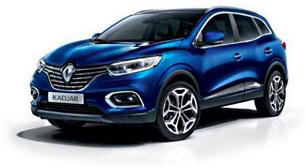
Yes, car spaces are small, or almost non existent, but the people that live there are as full-sized as people elsewhere and they often carry around just as much gear. What you need is a big, little car and the Renault Kadjar is that – a small SUV which is actually bigger than most.
The Kadjar is also French, and that’s appealing to us city folk because even though there are millions of us living in one square metre we like to think of ourselves as different, as individuals, cosmopolitan, metropolitan.
So the Kadjar looks perfect then, right?
Well, it’s good yes… in some ways, but after reading this you might prefer its Japanese cousin, the Nissan Qashqai. Let me explain...
So, you want an SUV with seven seats for the family (and maybe friends), but also want it to be premium and have a performance focus. There hasn’t been a model that fits the bill this side of six figures… until now.
Yep, Mercedes-Benz’s mould-breaking GLB mid-sizer has officially been given the AMG treatment. Enter the ‘entry-level’ GLB35, which is out to prove you can have your cake and eat it too, especially if you’re the above buyer.
But is the GLB35 trying to do too many things at once? Is it really a jack of all trades, or a master of none? As always, there’s one way to find out: put it to test. We’ve done exactly that, so please read on.
The Renault Kadjar Intens ticks a lot of the urban boxes. It’s small, which is good for navigating narrow city streets and parking in tight spaces, but it’s also spacious and practical. The Kadjar is fuel efficient for a four-cylinder petrol engine and it has that sophisticated French styling.
The Intens is expensive, though, and unless you absolutely have to have leather seats, a glass roof, and the Bose stereo I’d go for the mid-range Zen grade and save yourself $5K but still have all the same safety tech. That said the Intens has auto parking as standard which is a nice convenience for the city.
Safety could be better. The AEB system doesn’t have pedestrian and cyclist detection, rear cross traffic alert, or reverse emergency braking.
Finally, the dual-clutch automatic and 1.3-litre turbo-petrol engine while a fuel efficient combination, isn’t all that easy to live with and can make driving a less-than-smooth experience. The Nissan Qashqai’s combination of CVT auto and four-cylinder naturally aspirated engine is better suited to the urban jungle - something to think about there.
Now the scores, the Kadjar Intens gets the same mark for daily driving and its urban talents – it could be smoother to drive, but there’s still lots to like.
It’s easy to say the GLB35 doesn’t deserve to be called an AMG when looking at its credentials on paper, but get behind the wheel and it’s evident Affalterbach played a key role in making it feel as special to drive as it should be.
The GLB35 has all of the great qualities of the GLB250 and other GLB variants, but successfully adds a performance focus to make for an even more compelling package.
Indeed, the GLB35 proves you can pretty much have it all.
People talk about French design being good. Well if you want to see just how good take a look at the Nissan Qashqai, because the Kadjar is fundamentally the same SUV with Renault’s design spin applied.
Yep, as I mentioned about 15 seconds ago, Renault and Nissan are part of an alliance that allows them to share the same cars, but each brand has room to ‘make it their own’ with styling that delivers a very different look, inside and out.
Now, the Qashqai is not an ugly car, but I think the Kadjar is more stylish and premium looking in the same way the larger Renault Koleos SUV is gorgeous compared to the relatively straight-laced Nissan X-Trail it’s based on.
There’s no doubt the Kadjar is a Renault thanks to the giant diamond logo on the plunging grille. I like the way the front bumper rises up into the bonnet like it’s all one piece, but I’m not completely sold on the rear of the car which looks a bit like its shirt is tucked into the back of its pants, which makes no sense unless you look at the images.
Still, the tail-lights have a prestige feel and the Kadjar model name spelled out across the tailgate is a confident statement, also adopted recently by other brands such as Volkswagen (T-Cross) and Ford (Puma).
Telling the Intens apart from the other two grades is fairly easy, it has 19-inch wheels (the others have 17-inch rims), there’s the enormous glass roof, and it also has a chrome effect on the front and rear bumpers, side skirts, and around the fog lights. It’s a more premium look.
That higher-end feel goes into the cabin as well with the Intens’ black leather upholstery and colourful ambient lighting. The touchscreen is tiny, though, and there isn’t a great deal inside that you don’t get in the entry-grade Kadjar’s cabin, which is also almost as stylish.
The Kadjar is classified as a small SUV, which means nothing really when it comes to wondering if it’s going to fit in your garage or in the tiny parking spaces we’re faced with in the city.
So, I’ve mapped it out for you. The Kadjar’s dimensions are, 4449mm long, 2058 mm across (including the wing mirrors), and 1612mm tall.
Another interesting thing – each B-pillar is adorned with a little French flag. I’m not sure if they're a sign of Gallic national pride or to remind everybody that meets the Kadjar that Renaults are French.
Either way, you don’t see this type of thing on other cars and for many buyers the appeal of a Renault is having a car that’s not like everybody else’s.
With the boxy and therefore rugged-looking GLB laying some great foundations, it’s no surprise the GLB35 looks pretty damn good – to these eyes, at least.
Being an AMG model, it stands out from the crowd with an aggressive body kit, with the chunky bumpers, aerodynamic roof spoiler and racy rear diffuser all unique alongside the now-signature Panamericana grille insert.
A set of 20-inch alloy wheels with 255/40 tyres ups the ante at the side, where the carryover black plastic wheel-arch and skirt cladding serves as an obligatory reminder that this is an SUV.
Also of note are the nicely designed LED headlights and tail-lights, which literally light the way, but there’s no getting past the bespoke diffuser element, which integrates the sports exhaust system’s dual 90mm tailpipes.
Inside, the GLB35 is a technological tour de force, with a pair of 10.25-inch high-resolution displays proudly sitting side by side atop the dashboard, with one the central touchscreen and the other the digital instrument cluster.
Both are powered by Mercedes-Benz’s MBUX multimedia system, which arguably remains the best there is today thanks its speed and breadth of functionality and input methods.
The GLB35 is also properly premium. Lugano leather upholstery covers the seats and armrests, while Nappa trims the sports steering wheel. Even the door shoulders and inserts get ‘cow hide’, although theirs is of the artificial variety.
Soft-touch materials are used for the upper dashboard, leaving hard plastics to the lower sections, which is what you’d expect for the price.
While the black headliner makes for a dark cabin, brightness comes from the metallic trim used throughout, notably on the steering wheel, dashboard, doors and centre console. And let’s not forget the pop of colour provided by the addictive ambient lighting.
And mercifully, scratch- and fingerprint-hungry gloss-black accents are limited to the surrounds of the turbine-style front air vents, dual-zone climate controls and centre console.
Unique to the GLB35 are Carbon Structure trim and stainless-steel sports pedals, just in case you forgot you weren’t driving a regular GLB.
The Kadjar is a big-small SUV, in that it’s longer than many in the same segment at 4.4m with a wheelbase of more than 2.6m, which means more space inside for people and their stuff.
That said, don’t expect limousine legroom, but at 191cm (6'3") tall, I can sit behind my driving position with my knees only just touching the front seat back, which is pretty darn good for a small SUV.
Making life a bit more comfortable back there, too, are directional air vents, two USB charging ports and a 12V power outlet. There are another two USB ports and a 12V up front, too.
Cabin storage is okay. The door pockets in the back are big enough for a 500ml bottle, while there are larger ones in the front, along with two cupholders and another circular hole, which looks like it’s for coins, if anybody still uses those?
The centre console bin is pretty decent in size and so too is the boot which has a cargo capacity of 408 litres with all seats up and 1478 litres with the second row folded flat.
Measuring 4650mm long (with a 2829mm wheelbase), 1845mm wide and 1660mm tall, the GLB35 is more like the GLC43 in size than the GLA35, making it a mid-size SUV despite its small underpinnings. And that is good news for practicality.
Cargo capacity with the 50/50 split-fold third row stowed is more than solid, at 565 litres (VDA), but it can be increased to a cavernous 1800L with the 40/20/40 split-fold middle bench also not in use. If six or seven passengers are onboard, though, there’s very little room to move.
Nonetheless, the boot is still well packaged, featuring a huge aperture, no load lip, and a flat floor, which make loading and unloading bulkier items a hell of a lot easier. And even the load cover can be stored underfloor when out of action. How good.
There are also four tie-down points, two bag hooks, a side storage net and a 12V power outlet on hand to make matters even easier, while the rear seats can be stowed from the boot.
While we’re on the topic, Mercedes-Benz says the third row can accommodate passengers up to 168cm tall, with the middle bench able to slide fore and aft by up to 140mm.
Yes, I'm too tall, at 184cm, but I can still sit in the very back, although not in total comfort. All in all, about a centimetre of legroom and negligible headroom and toe-room are on offer there for me.
That said, getting in and out in the first place is the real challenge here, with the middle bench unable to tumble forward for easy ingress and egress. Yep, you’re not going to look smooth either way. Children can deal with it, but adults won’t be thrilled.
Therefore, the middle bench is the place to be, even when it’s slid all the way forward. Behind my driving position, it offers about a centimetre of legroom, but this can be increased to several inches by sliding it all the way back.
Either way, plenty of toe-room is available alongside more than an inch of headroom. The latter is more impressive when you consider that’s what you get with the standard dual-pane panoramic sunroof fitted.
Even better, the second row can seat three adults at a pinch, partly thanks to the low transmission tunnel, which means there’s the right amount of space for six fully grown feet across the two footwells. It goes without saying children will again be fine.
Speaking of which, four ISOFIX and five top-tether anchorage points are on hand for fitting up to four child seats across the second and third rows, which makes the GLB35 a serious option for families that like to be sporty.
There are plenty of in-cabin storage options, with the large central storage bin featuring a pair of USB-C ports, while the glovebox is also quite useful, even if it is oddly shaped. And there’s also a sunglasses holder in front of the rearview mirror.
The centre console’s cubby isn’t really designed for storage, with it basically taken up by two cupholders, another USB-C port and a wireless smartphone charger.
The front door bins can accommodate one small and two regular bottles each, which is great, while their rear counterparts can take one small and one regular apiece.
Second-row occupants also have access to a fold-down armrest with another pair of cupholders, but being of the retractable variety, they’re flimsy.
These passengers also have two USB-C ports, with the pair folding out below a small cubby and air vents, which are found at the back of the centre console. Storage nets are also fitted on the front seat backrests.
And don’t worry; the third row gets in on the action, with two cupholders (one regular, the other small) splitting the seats, which have individual USB-C ports and device straps to the sides.
The Intens is the highest grade of Kadjar you can buy and has a list price of $37,990. As a point of reference, the entry-grade Kadjar with an automatic transmission is $29,990. So, what are you getting for an extra $8K?
Well, the entry-level Kadjar comes with a 7.0-inch touchscreen with Apple CarPlay and Android Auto, cloth seats, dual-zone climate control, privacy glass and 17-inch alloy wheels. The Intens gets 19-inch alloys, leather seats (heated up front), a seven-speaker Bose sound system, leather steering wheel, panoramic sunroof, as well as LED headlights and fog lights.
The Intens also comes standard with auto parking, and even the most determined DIY parkers will appreciate that in the city.
The Intens also has more advanced safety equipment than the entry-grade, although the same tech also comes on the mid-spec Zen for $32,990.
You may already know this, but the Kadjar and the Nissan Qashqai are essentially the same car. Renault and Nissan have an alliance which lets them share technology and as well as entire models.
So, you might want to compare the Kadjar Intens to a Qashqai Ti which lists for $38,790. Other models to check are the Mitsubishi ASX and Toyota C-HR.
Priced from $88,535 plus on-road costs, the GLC35 currently sits atop the GLB range, above both the $59,900 GLB200 and $73,535 GLB250.
Standard equipment not already mentioned in the GLB35 includes dusk-sensing lights, rain-sensing wipers, power-folding side mirrors, black roof rails, rear privacy glass and a power-operated tailgate.
Inside, satellite navigation with live traffic, Apple CarPlay and Android Auto support, digital radio, a 225W sound system with nine speakers, keyless entry and start, power-adjustable front comfort sports seats with heating and memory functionality, auto-dimming mirrors, illuminated ‘AMG’ scuff plates and ‘AMG’ floor mats feature.
As is commonplace for Mercedes-Benz models, the GLB35 has plenty of options with most expensive, so you could drive away with a vehicle that’s dearer than you originally thought.
But aside from a spare wheel and some safety equipment we’ll cover in a moment, the GLB35 doesn’t leave much to be desired, which is always a good thing.
Nonetheless, our test vehicle was finished in $1490 Iridium Silver Metallic paintwork, which is one of eight extra-cost exterior colour options.
As mentioned, the GLB250 is a unique proposition, so it’s only comparable rival, the more affordable but less sporty Land Rover Discovery Sport P250 HSE ($78,432).
While the Renault Kadjar and Nissan Qashqai are essentially the same car, they don’t share the same powertrain. The Kadjar has a smaller but more powerful engine – a 1.3-litre turbo-petrol four-cylinder making 117kW/260Nm.
Shifting gears is a seven-speed dual-clutch auto. There’s no manual available, and all Kadjars are front-wheel drive.
Frankly, the Qashqai four cylinder with less grunt and CVT are a smoother combination. The dual-clutch auto and turbo lag means power delivery and acceleration are delayed, while low-speed gear shifts can be jerky.
The GLB35 is powered by an uprated version of the GLB250’s 2.0-litre turbo-petrol four-cylinder petrol engine, with the AMG-fettled version producing a more substantial 225kW of power from 5800-6100rpm and 400Nm of torque from 3000-4000rpm (up from 165kW/350Nm).
This version is also matched to an eight-speed dual-clutch automatic transmission as well as Mercedes-AMG’s front-biased but fully variable 4Matic all-wheel-drive system.
Thanks to this combination, the GLB35 can sprint from 0-100km/h in just 5.2 seconds with launch control enabled, while its electronically limited top speed is 250km/h.
Renault says after a combination of open and urban roads the Kadjar will have used 6.3L/100km. In my own testing I measured 6.5L/100km at the fuel pump. That’s outstanding.
The GLB35’s fuel consumption on the combined-cycle test (ADR 81/02) is 8.3L per 100km, while its carbon dioxide emissions are 186 grams per km. All things considered, both claims are pretty decent.
In our real-world testing, though, we averaged a high 14.1L/100km over 75km of driving split between highways and country roads, so not your typical mix, then. A heavy right foot also played into that result, so expect a better return after a regular run.
For reference, the GLB35’s 60L fuel tank can be filled up with 98RON petrol at minimum.
Renault’s Kadjar may be a better-looking version of Nissan’s Qashqai, but it doesn’t drive as well. This comes down to the engine and transmission Renault has gone with.
There’s turbo lag with that small four-cylinder and this delay is made more pronounced by a dual-clutch transmission that causes the vehicle to lurch during shifts.
This type of shemozzle is not uncommon, the Ford Puma and Nissan Juke behave in the same way with their similar powertrains.
There’s nothing wrong with them, it’s just that for a car that’s probably going to spend its life mainly in the city, the Kadjar won’t provide the smoothest driving experience.
The Qashqai has a CVT automatic and while these transmission aren’t as sporty feeling as a dual-clutch, they’re smooth and good for easy city driving.
The Kadjar does have a comfortable ride and good handling, so if you’re able to get used to the antics of the engine and transmission there’s more to like than not about the way this Renault drives.
Don’t let the GLB35’s family friendliness fool you, this is an SUV that can get up and go.
The engine’s extra power and torque over the GLB250 are immediately felt behind the wheel, with the GLB35 accelerating with the vigour of an all-wheel-drive hot hatch, which makes sense given their similar claims.
And if you have one of the sportier drive modes engaged, the booming noise generated is also special – even if a lot of it is of the artificial variety, pumped into the cabin to make occupants feel like things are getting serious.
What is genuine, though, is the well-rounded transmission, which is characteristically quick with its upshifts. At the same time, it’s also relatively smooth, even at low speed, which has proven to be a challenge for dual-clutch units over time, but not here.
To earn the AMG badge, the GLB35 goes even further with other mechanical upgrades, including sports tunes for the suspension and steering.
Specifically, the GLB35’s independent suspension set-up not only consists of MacPherson-strut front and trailing-link rear axles with adaptive dampers, but also introduces new steering knuckles, transverse control arms on the front axle, and a stiffened subframe.
The resulting ride is actually quite good. Yes, the extra firmness over the GLB250 is noticeable – particularly in the sportier drive modes that stiffen the adaptive dampers all the way – but it’s by no means a deal-breaker.
That said, it’s worth noting our test vehicle was fitted with the optional 21-inch alloy wheels ($1990), so the GLB35’s like to ride even better on its standard package.
This is remarkable considering the handling improvements made, with the GLB35 managing body roll and pitch better than the GLB250 when pushing hard into and around corners, coming out of which grip is plentiful thanks to the all-wheel-drive system.
Thankfully, the standard-fit high-performance braking package consisting of 350mm front and 330mm rear discs with four- and one-piston callipers respectively helped it wash speed away with ease when attacking the twisty stuff with intent, even with 1857kg (kerb) to deal with.
Also on hand is electric power steering, which is speed-sensitive and has a variable ratio in the GLB35. Basically, it’s quicker when you want it to be, remaining on the lighter side in hand until you engage one of the sportier drive modes and weight is increased markedly.
The Kadjar hasn’t been given an ANCAP safety rating, but it did score the maximum five stars when tested by its European equivalent Euro NCAP in 2015.
But beware, the Kadjar isn’t equipped with much in the way of advanced safety equipment. Yes, there is AEB on all grades, while the mid-spec Zen and top-of-the-range Intens come with blind spot monitoring and lane departure warning. But that’s about it. No lane keeping assist, or rear cross traffic alert, or adaptive cruise.
There are front and rear parking sensors, which are almost vital in the city, and a reversing camera.
It’s for this reason the score here is so low – charging $38K and not having anywhere near the level of safety tech on a new car that costs much less is disappointing.
For child seats there are three top tether anchor points across the second row and two ISOFIX points.
Under the boot floor is a space saver spare wheel.
ANCAP awarded the GLB range its maximum five-star safety rating in 2019.
Advanced driver-assist systems in the GLB35 extend to autonomous emergency braking (AEB) with pedestrian and cyclist detection, lane-keep assist, blind-spot monitoring, rear cross-traffic alert, traffic sign recognition, driver attention alert, tyre pressure monitoring, hill-descent control, hill-start assist, park assist, a reversing camera and front and rear parking sensors.
Is anything missing? Well, steering assist, adaptive cruise control, active blind-spot monitoring and front cross-traffic alert form the optional Driving Assistance Package ($1990), which definitely should be standard at this price point.
And let’s not forget the two other noticeable absentees: surround-view cameras and high-beam assist. They’re annoyingly part of the optional Vision Package ($1190), which was fitted to our test vehicle.
Nonetheless, other standard safety equipment includes nine airbags (dual front, front-side, curtain and rear-side plus driver’s knee), anti-skid brakes (ABS), electronic brake-force distribution (EBD) and the usual electronic stability and traction control systems.
The Kadjar is covered by Renault’s five-year/unlimited kilometre warranty.
Service intervals are every 12 months or 30,000km and capped at $399 for the first three services, followed by $789 for the fourth then back to $399.
There’s also up to five years roadside assistance, if you service your Kadjar with Renault.
As with all Mercedes-AMG models, the GLB35 comes with a five-year/unlimited-kilometre warranty, which currently sets the standard for the premium market. It also comes with five years of roadside assistance.
The GLB35’s service intervals are long, at every 12 months or 25,000km (whichever comes first). Better yet, it’s available with a three-year/75,000km capped-price servicing plan, but it costs $2750, with the third visit alone incurring a $1300 charge.