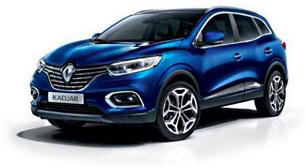
What's the difference?
Don’t let people talk you into buying a tiny car just because you live in the city. That’s what I’ve learnt from being a car reviewer and living about eight kilometres from the CBD.
Yes, car spaces are small, or almost non existent, but the people that live there are as full-sized as people elsewhere and they often carry around just as much gear. What you need is a big, little car and the Renault Kadjar is that – a small SUV which is actually bigger than most.
The Kadjar is also French, and that’s appealing to us city folk because even though there are millions of us living in one square metre we like to think of ourselves as different, as individuals, cosmopolitan, metropolitan.
So the Kadjar looks perfect then, right?
Well, it’s good yes… in some ways, but after reading this you might prefer its Japanese cousin, the Nissan Qashqai. Let me explain...
Kia Australia has big expectations for its littlest EV.
Not only is the small SUV priced to take on some of the very popular offerings from China, but it’s also packed with enough features to make a Euro buyer think twice. In fact, it starts from less than $50,000 drive-away.
We drove it at its global launch in South Korea and came away pretty impressed, so now the big question is - does it hold up now that its rubber is on the road here in Australia?
The Renault Kadjar Intens ticks a lot of the urban boxes. It’s small, which is good for navigating narrow city streets and parking in tight spaces, but it’s also spacious and practical. The Kadjar is fuel efficient for a four-cylinder petrol engine and it has that sophisticated French styling.
The Intens is expensive, though, and unless you absolutely have to have leather seats, a glass roof, and the Bose stereo I’d go for the mid-range Zen grade and save yourself $5K but still have all the same safety tech. That said the Intens has auto parking as standard which is a nice convenience for the city.
Safety could be better. The AEB system doesn’t have pedestrian and cyclist detection, rear cross traffic alert, or reverse emergency braking.
Finally, the dual-clutch automatic and 1.3-litre turbo-petrol engine while a fuel efficient combination, isn’t all that easy to live with and can make driving a less-than-smooth experience. The Nissan Qashqai’s combination of CVT auto and four-cylinder naturally aspirated engine is better suited to the urban jungle - something to think about there.
Now the scores, the Kadjar Intens gets the same mark for daily driving and its urban talents – it could be smoother to drive, but there’s still lots to like.
The GT-Line is relatively expensive, yes. The Air Standard Range isn’t groundbreaking even at under $50,000, no. But the sweet spot in the EV3 line-up is being able to pay $53,315 for the Air Long Range and come away with a roomy small SUV that can realistically cover almost 600km in the real world.
And it does everything properly, no big red flags or dealbreakers.
Its steering weight at speed on winding roads being the biggest complaint isn’t the end of the world for how otherwise comfortable the EV3 feels on-road.
Put it this way - I recently spent a few days in a Mini Aceman, a five-door electric SUV not too far from the EV3 in size. It is about as fast, and costs a little more, but it doesn’t have a lot more to offer in terms of features and it’s nowhere near as good on range with about 400km to its longer-ranged versions.
The EV3 might still have a bit of ‘sensible’ about it compared to some other electric small SUVS, but when it looks this cute and can get you an extra round trip out of the city compared to ‘Euro’ brands at the same price, it’s hard not to be impressed.
Note: CarsGuide attended this event as a guest of the manufacturer, with travel, accommodation and meals provided.
People talk about French design being good. Well if you want to see just how good take a look at the Nissan Qashqai, because the Kadjar is fundamentally the same SUV with Renault’s design spin applied.
Yep, as I mentioned about 15 seconds ago, Renault and Nissan are part of an alliance that allows them to share the same cars, but each brand has room to ‘make it their own’ with styling that delivers a very different look, inside and out.
Now, the Qashqai is not an ugly car, but I think the Kadjar is more stylish and premium looking in the same way the larger Renault Koleos SUV is gorgeous compared to the relatively straight-laced Nissan X-Trail it’s based on.
There’s no doubt the Kadjar is a Renault thanks to the giant diamond logo on the plunging grille. I like the way the front bumper rises up into the bonnet like it’s all one piece, but I’m not completely sold on the rear of the car which looks a bit like its shirt is tucked into the back of its pants, which makes no sense unless you look at the images.
Still, the tail-lights have a prestige feel and the Kadjar model name spelled out across the tailgate is a confident statement, also adopted recently by other brands such as Volkswagen (T-Cross) and Ford (Puma).
Telling the Intens apart from the other two grades is fairly easy, it has 19-inch wheels (the others have 17-inch rims), there’s the enormous glass roof, and it also has a chrome effect on the front and rear bumpers, side skirts, and around the fog lights. It’s a more premium look.
That higher-end feel goes into the cabin as well with the Intens’ black leather upholstery and colourful ambient lighting. The touchscreen is tiny, though, and there isn’t a great deal inside that you don’t get in the entry-grade Kadjar’s cabin, which is also almost as stylish.
The Kadjar is classified as a small SUV, which means nothing really when it comes to wondering if it’s going to fit in your garage or in the tiny parking spaces we’re faced with in the city.
So, I’ve mapped it out for you. The Kadjar’s dimensions are, 4449mm long, 2058 mm across (including the wing mirrors), and 1612mm tall.
Another interesting thing – each B-pillar is adorned with a little French flag. I’m not sure if they're a sign of Gallic national pride or to remind everybody that meets the Kadjar that Renaults are French.
Either way, you don’t see this type of thing on other cars and for many buyers the appeal of a Renault is having a car that’s not like everybody else’s.
Family resemblance is everything for Kia’s electric models, and the baby of the bunch so far definitely has lineage on show.
That’s a very good thing for the EV3, because as good as its specs are on paper, the way it looks is key to showroom (or on-road) appeal when it comes to convincing potential buyers.
At the same time as being seemingly made of sharp, angular elements, the EV3’s overall silhouette is relatively soft. Unfortunately, that means Kia’s ‘design philosophy’ (usually a relatively meaningless marketing line) is actually bang-on: Opposites United.
Inside and out, the EV3 is a direct descendant of the brand’s halo EV9 large SUV, and even in base Air specification looks like a properly premium small SUV.
Its narrow LED headlights and taillights were the stuff of Lamborghini concept cars just a few years ago, and its unique wheel designs and the use of contrasting coloured trim can impose either a modern, techy vibe or a bark-over-bite sporty image.
More marketing terms come out in the EV3’s face: Kia Star Map lighting and Tiger Face, respectively the way its lights seem to link ‘points’ together like a constellation map and the grille somewhat resembling a tiger’s nose.
There’s practicality in the design even from the outside - the gentle roof slope is only very slight to avoid eating into interior space, though it’s not the only way the car shrinks at the rear. The front track between the wheels is actually wider than at the rear, so the car is not only shorter but also narrower at the rear. It’s the first time Kia has ever implemented this ‘teardrop’ effect into a car, with the intention being to improve its aerodynamic efficiency.
Most of the colour schemes are decidedly subtle, the new Matcha Green hue looks better in person than can be captured on camera for example, but a new Teracotta colour is an earthy red that really stands out - I’m not sure it suits the car, personally.
In terms of colours inside, it's fairly muted and greyscale, but the mid-spec Earth comes with optional orange interior contrast trim that we weren’t sure would be available in the Australian market.
To invoke a cliche, the interior layout has the vibe of something you might imagine a spaceship cockpit looks like if you were a kid, but it doesn’t sacrifice any practicality by doing so. There are real buttons and switches visible, but only a few as the big screens dominate the driver’s side of the front row.
The look is helped by a series of recycled and “sustainable materials” including recycled PET and bio-based polyurethane. Kia’s aim is to “phase out the use of leather and continuously increase the use of bio-based materials”, so even the GT-Line doesn’t have real leather in it.
The Kadjar is a big-small SUV, in that it’s longer than many in the same segment at 4.4m with a wheelbase of more than 2.6m, which means more space inside for people and their stuff.
That said, don’t expect limousine legroom, but at 191cm (6'3") tall, I can sit behind my driving position with my knees only just touching the front seat back, which is pretty darn good for a small SUV.
Making life a bit more comfortable back there, too, are directional air vents, two USB charging ports and a 12V power outlet. There are another two USB ports and a 12V up front, too.
Cabin storage is okay. The door pockets in the back are big enough for a 500ml bottle, while there are larger ones in the front, along with two cupholders and another circular hole, which looks like it’s for coins, if anybody still uses those?
The centre console bin is pretty decent in size and so too is the boot which has a cargo capacity of 408 litres with all seats up and 1478 litres with the second row folded flat.
Along with its general design, the EV3 also has the same focus on space efficiency as the much larger EV5 medium SUV and EV9 large SUV.
Kia compared the EV3 to the BYD Atto 3 and Volvo EX30 upon its global launch in Korea, and it’s stuck with the same comparison as it launches here.
In many exterior dimensions, the EV3 is smaller than the Atto 3, a medium SUV by sales category, while it’s larger than the EX30 in almost every way. However, interior dimensions are reported by Kia as being bigger than both cars in most aspects aside from the first row legroom, but even there only by about 10mm.
The EV3 is 4300mm long, 1850mm wide and 1560mm tall, and has a 2680mm wheelbase, but inside does feel like it’s a category upwards in terms of space.
Along with the roomy interior dimensions, there are plenty of handy spots to put things - a big central storage area and a higher one under the armrest, the device charger, door bottle holders - these and all the controls are generally within reach.
The GT-Line loses a little bit of this storage space by turning the spot under the central armrest into a sliding table, which could be useful sometimes, but doesn’t seem to me as helpful as another place to put a drink, a wallet, keys, an avocado or whatever other trinkets you and your passengers may have.
The huge multimedia and driver display setup consists of two 12.3-inch screens and a 5.0-inch climate control screen in the middle. The centre climate screen is a little hidden by the steering wheel, but there are also physical climate controls also in the centre under the screen, so there’s nothing vital you can’t do in the EV3 easily.
There are also shortcuts to the main functions of the menu like navigation and media, Kia says tactile controls like that are important for keeping the car usable for a broad range of people.
In the second row, the EV3 feels pretty well suited to four adults for a reasonable trip - I’m 178cm and can sit behind my own seating position comfortably, though if I was too much taller my knees might rest on the hard plastic seat-back.
There is an armrest, places in the doors to put water bottles, and two USB-C plugs actually fitted into the seats. There’s also a little slot to put a phone that might be charging, though it could easily (and perhaps more usefully) fit other things instead.
Behind the second row is a generous 460L boot which puts other electric small SUVs to shame - the EX30’s is 318L and even the Atto 3’s is 440L. The EV3’s boot space extends to 1250L with the seats folded down.
The EV3’s boot floor can also drop down to accommodate taller items, plus there’s a 25-litre ‘frunk’ or under-bonnet storage space.
There’s no spare space-saver tyre, however, as is becoming disappointingly common.
The Intens is the highest grade of Kadjar you can buy and has a list price of $37,990. As a point of reference, the entry-grade Kadjar with an automatic transmission is $29,990. So, what are you getting for an extra $8K?
Well, the entry-level Kadjar comes with a 7.0-inch touchscreen with Apple CarPlay and Android Auto, cloth seats, dual-zone climate control, privacy glass and 17-inch alloy wheels. The Intens gets 19-inch alloys, leather seats (heated up front), a seven-speaker Bose sound system, leather steering wheel, panoramic sunroof, as well as LED headlights and fog lights.
The Intens also comes standard with auto parking, and even the most determined DIY parkers will appreciate that in the city.
The Intens also has more advanced safety equipment than the entry-grade, although the same tech also comes on the mid-spec Zen for $32,990.
You may already know this, but the Kadjar and the Nissan Qashqai are essentially the same car. Renault and Nissan have an alliance which lets them share technology and as well as entire models.
So, you might want to compare the Kadjar Intens to a Qashqai Ti which lists for $38,790. Other models to check are the Mitsubishi ASX and Toyota C-HR.
In the Kia EV3 line-up, pricing ranges from $47,600 before on-road costs for the entry-level EV3 Air Standard Range, up to $63,950 for the GT-Line Long Range.
Impressively, Kia says the Air Standard Range is available for less than $50,000 drive-away, even in WA where it just sneaks in at $49,990. In other states and territories it comes with a $48,990 price.
There are three trim levels but four variants, with the Air Long Range, Earth Long Range and GT-Line Long Range all joining the Air Standard Range.
Stepping up to an Air Long Range is a $53,315 (before on-roads) ask, though both come with the same extensive list of features.
On the outside, 17-inch alloy wheels, dusk-sensing LED headlights, daytime running lights (DRLs) and partial LED tail-lights as well as roof rails and heated folding mirrors show the entry-level Air to be well equipped for a small SUV.
Inside, there’s a two-tone cloth interior with LED interior lighting, a two-spoke synthetic leather steering wheel and, of course, the large arrangement for a multimedia touchscreen and driver display. Dual-zone climate control is also standard, with automatic window defogging.
Those two screens are 12.3-inch units, while there’s also a central 5-inch touchscreen for climate controls between them. There’s has in-built navigation, wireless Apple CarPlay and Android Auto, voice recognition and a six-speaker sound system.
The base model also has a wireless phone charger and USB-C ports in both the front and rear rows, a 12-volt outlet in the front and a household-style power outlet in the second row for powering appliances or equipment. In addition, there’s also an external adapter with the same household-style plug that connects to the charging port as standard.
The mid-spec Earth goes for $58,600 before on-roads coming in Long Range only (as with the GT-Line).
On top of everything already included in the Air, the Earth gains a set of larger 19-inch alloy wheels, synthetic leather seats with heating and ventilation, the driver’s side being 10-way electrically adjustable, a heated steering wheel, an electro-chromatic (or glare-dimming) mirror, and a power tailgate.
As previously mentioned, the GT-Line costs $63,950 before on-roads, and adds a stack of features on top of the Earth, including a series of exterior design changes like 19-inch GT-Line alloys wheels, satin silver front and rear bumpers, body-coloured side garnishes, a sunroof and tinted rear glass.
The GT-Line’s LED headlights are also cubed projection headlights, and the tail-lights are fully LED.
Inside, there’s a three-spoke GT-Line steering wheel, alloy pedals, specific two-tone GT-line seats with the passenger side seat also becoming 10-way electrically adjustable, ambient LED mood lighting, a head-up display and the central upper storage compartment under the armrest becomes a slide-out tabletop.
As well as things like rear-view camera (a surround-view set-up is bizarrely unavailable range-wide) and front and rear parking sensors, the safety equipment across all three variants is the same, too, but we’ll get into more details later in the review.
While the Renault Kadjar and Nissan Qashqai are essentially the same car, they don’t share the same powertrain. The Kadjar has a smaller but more powerful engine – a 1.3-litre turbo-petrol four-cylinder making 117kW/260Nm.
Shifting gears is a seven-speed dual-clutch auto. There’s no manual available, and all Kadjars are front-wheel drive.
Frankly, the Qashqai four cylinder with less grunt and CVT are a smoother combination. The dual-clutch auto and turbo lag means power delivery and acceleration are delayed, while low-speed gear shifts can be jerky.
All three versions of the EV3 have the same drivetrain, the only difference being the smaller battery in the Air Standard Range.
The EV3 is front-wheel drive only, with a single motor at the front wheels putting out 150kW and 283Nm.
Differing weights between variants result in different 0-100km/h times, the quickest being the entry-grade Air Standard Range at 7.5 seconds, likely thanks to a smaller and lighter battery.
The Air Long Range takes 7.7 seconds, while the Earth and GT-Line both take 7.9 seconds.
Renault says after a combination of open and urban roads the Kadjar will have used 6.3L/100km. In my own testing I measured 6.5L/100km at the fuel pump. That’s outstanding.
There are two battery sizes for the EV3, the 58.3kWh unit for the Air Standard Range and the 81.4kWh battery each of the Long Range variants is equipped with.
Of course, the Air Standard Range has the shortest electric driving range - 436km under WLTP testing. Its power consumption is a claimed 14.9kWh/100km.
The Air Long Range is the variant with the furthest electric driving range of the bunch, at 604km, as well as the same power consumption as the Standard Range at 14.9kWh/100km.
The Earth and GT-Line both wear the same set of figures, albeit lower distances and higher consumption than their more affordable counterparts. With 563km of electric range and 16.2kWh/100km consumption figures, they’re still able to cover very usable distances for real-world use.
Charging is the same across the line-up, with the supplied Type 2 AC charger working at a maximum 6.9kW on single phase or 10.5kW on three-phase power, and taking five hours and 20 minutes for Standard Range variants, or seven hours and 15 minutes for a Long Range from 10 per cent to 100 per cent.
On DC fast charging, with a CCS Type 2 charger, the EV3 charges as quickly as 29 minutes from 10 to 80 per cent in Standard Range, or 31 minutes in Long Range, when using a 350kW fast charger.
While we didn’t get a chance to properly run down the battery and test the EV3’s range, the drive route was relatively demanding with power consumption yet the EV3’s range didn’t plummet like you might expect on fast, steep and winding roads.
Renault’s Kadjar may be a better-looking version of Nissan’s Qashqai, but it doesn’t drive as well. This comes down to the engine and transmission Renault has gone with.
There’s turbo lag with that small four-cylinder and this delay is made more pronounced by a dual-clutch transmission that causes the vehicle to lurch during shifts.
This type of shemozzle is not uncommon, the Ford Puma and Nissan Juke behave in the same way with their similar powertrains.
There’s nothing wrong with them, it’s just that for a car that’s probably going to spend its life mainly in the city, the Kadjar won’t provide the smoothest driving experience.
The Qashqai has a CVT automatic and while these transmission aren’t as sporty feeling as a dual-clutch, they’re smooth and good for easy city driving.
The Kadjar does have a comfortable ride and good handling, so if you’re able to get used to the antics of the engine and transmission there’s more to like than not about the way this Renault drives.
The EV3’s arrival on Australian roads is not only important because it means we can test it in right-hand drive, but also because it’s had a localised ride and handling tune. Time for the proper judgement.
Kia Australia's local program lead for this is, as it has been for years, Graeme Gambold, and according to the brand he aimed for neutral balance with confidence-inspiring and responsive handling, and a linear, natural steering feel. And it’s pretty close to nailing all of that.
In town and on backroads, its ability to soak up bumps and handle rough surfaces is impressive. Not a lot of noise comes into the cabin in either case, too, a feat given the road surfaces. In fact, even with the radio off, the EV3 feels pretty well insulated from the outside, including wind noise.
It's cornering and handling is nice and predictable. It feels designed to be safe if you misjudge a corner, only gently understeering when you've come in a bit spicy.
The body doesn't roll or pitch dramatically, so the car feels planted and, as intended, flat through the bends.
But there’s one aspect to the tune in which the EV3 feels like it could do with a little more attention - its steering.
At low speeds, the steering is light enough, but at higher speed it feels a little heavy. I’m not sure if Gambold’s been going to the gym or if it’s that I haven’t really, but it feels like there’s some unnecessary resistance, regardless of drive mode or camber on the road, requiring a bit more input on the wheel than you'd like.
It does let the car down in terms of driving out on country roads, but fortunately it's not a dealbreaker on highways or in its intended city or suburban environments.
Otherwise, the EV3 is extremely pleasant, with its outputs and delivery feel about right for a small electric SUV, never feeling too slow or unruly. It doesn’t spin its wheels with too much torque, even on wet roads and when hustling out of a corner.
The paddles which allow you to adjust the intensity of the regenerative braking also mean you barely need to use the left pedal, which is a plus for increasing the available driving range.
Speaking of the left pedal, a sudden stop thanks to a surprise slow car around a blind corner went smoothly thanks to a decent set of brakes.
In all, the car is ergonomically sound from the drivers seat, with the positioning for the seat and steering wheel feeling comfortable and easy to adjust, though slightly better vision out the rear sides would be good.
The Kadjar hasn’t been given an ANCAP safety rating, but it did score the maximum five stars when tested by its European equivalent Euro NCAP in 2015.
But beware, the Kadjar isn’t equipped with much in the way of advanced safety equipment. Yes, there is AEB on all grades, while the mid-spec Zen and top-of-the-range Intens come with blind spot monitoring and lane departure warning. But that’s about it. No lane keeping assist, or rear cross traffic alert, or adaptive cruise.
There are front and rear parking sensors, which are almost vital in the city, and a reversing camera.
It’s for this reason the score here is so low – charging $38K and not having anywhere near the level of safety tech on a new car that costs much less is disappointing.
For child seats there are three top tether anchor points across the second row and two ISOFIX points.
Under the boot floor is a space saver spare wheel.
As this review is published, there’s no ANCAP or equivalent score for the EV3 yet, though Kia seems confident it should score well. Of course, we can’t just take the brand at its word before the result arrives in Q2, but the EV3 does have a pretty comprehensive list of safety features, and all are standard across the range.
The small SUV comes with seven airbags including a front-centre airbag, adaptive cruise control, autonomous emergency braking, lane-keep and lane-follow assist, highway driving assist, speed limit assist, rear occupant alert, downhill brake control, hill-start assist, multi-collision braking, blind-spot and rear-cross traffic alert, driver attention warning and a tyre pressure monitor. There’s also the aforementioned front and rear parking sensors, and the rear-view parking camera – but no surround-view option.
In terms of on-road behaviour, the speed and driver alert warnings are overzealous and need to be turned off each time you start the car. They’re requirements for the EU, and that means we get them here, too.
As usual in a Kia these days, you can set the ‘star’ shortcut button on the steering wheel to head straight to the menu to turn it all off, but when it comes to the usual active stuff like lane-keep and cruise control, it’s all well-sorted and behaves predictably, feeling trustworthy.
The Kadjar is covered by Renault’s five-year/unlimited kilometre warranty.
Service intervals are every 12 months or 30,000km and capped at $399 for the first three services, followed by $789 for the fourth then back to $399.
There’s also up to five years roadside assistance, if you service your Kadjar with Renault.
Kia’s seven-year, unlimited-kilometre warranty applies to the EV3, and though that was once industry-leading, it’s now being matched or overtaken by many rivals.
Roadside assistance is covered for one year but can be extended to up to eight years if serviced with an authorised Kia dealer.
Kia also backs the high-voltage equipment in the car with a more specific seven-year or 150,000km warranty, whichever comes first.
Australian servicing costs are pretty minimal in the EV3, with Kia offering well-priced pre-paid plans of three ($674), five ($1285) or seven years ($1897). Certainly some points for Kia on that one.
Service intervals are on the shorter side for an EV, at every 12 months or 15,000km, whichever comes first.