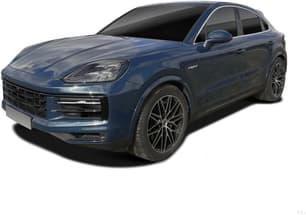
What's the difference?
The Porsche Cayenne Turbo GT needs a better name. This is the king of Cayennes and quite possibly the ruler of all super SUVs.
Well, the Cayenne Turbo GT is the fastest SUV around the Nurburgring Nordschleife. Not just that, it has such colossal power and torque it'll be side-by-side with a Porsche 911 GT3 RS in a sprint from 0-100km/h. No, a better name for this SUV would be the Cayenne GT3.
Which is perfect for me because I'm at the point in my life where although I love full-on and noisy cars I also have a full-on and noisy family.
We lived with the Cayenne Turbo GT for a week to find out if this super SUV was also a super family car - from practicality to safety.
We're also a family with ridiculously high expectations of luxury SUVs having lived with and tested each of the Cayenne Turbo GT's rivals - from the Lamborghini Urus and Bentley Bentayga to the Aston Martin DBX and Alfa Romeo Stelvio Quadrifoglio.
It’s been in Australia since 2019 and despite the arrival of a comprehensively upgraded version in late 2023, the Tesla Model 3’s once gargantuan popularity has been declining in recent years.
A seemingly never-ending influx of pure-electric alternatives, primarily from China, has eroded the mid-size sedan’s positioning as the go-to, best-value EV choice.
But to its credit Tesla has again evolved the Model 3 proposition with the introduction of this Long Range Rear-Wheel Drive grade in October last year, at the time positioning it as “the longest-range EV in Australia”.
Since then, Tesla has adjusted the model grade name to Premium Long Range Rear-Wheel Drive.
Some additional tweaks, made in response to customer feedback, also illustrates the EV pioneer’s determination to step up in the face of increasingly fierce competition.
So, does this latest Model 3 do enough to earn a spot on your electric vehicle shopping list? We spent a week behind the wheel to find out.
Of all the super SUVs I've piloted, the Porsche Cayenne Turbo GT is the best all-rounder in terms of performance, comfort, cabin technology and style.
As a family car it's roomy, practical and easy to use and drive daily.
As a performance car the Turbo GT is stupidly quick, with the agility of a sports car. Sure, a 911 would leave it behind on a twisty race track, but this SUV is close to having that sportscar experience and keeping your family, as well.
Tesla has done enough with the introduction of this Premium Long Range RWD variant to keep the Model 3’s head well and truly above water in an increasingly competitive segment. After more than six years it still looks good, with a pleasant cabin environment, plenty of performance and leading energy efficiency. Safety is top-shelf and it stands up well in terms of practicality and driving dynamics.
That said, the ownership proposition is average, the determination to make so many functions screen-based is frustrating and the optional Full Self-Driving system is unconvincing. With the Model S and Model Y now discontinued globally it will be interesting to see how the Model 3 continues to evolve.
This might be a personal thing but to me nearly all Porsches look better from the back than the front.
It's the wide stance and powerful haunches, the hunkered down suction-capped-to-the-road look that does it for me and the Cayenne Turbo GT, despite being an SUV, passes this important Porsche checklist item.
The GT aero kit only serves to make this SUV look more of a beast, and the gold-bronze looking satin Neodyne wheels are a Porsche theme that I've not always been a fan of, but I get the historic connection.
If only the Turbo GT could look a little less like other Cayennes from the front. This is the king of the SUV range and despite the apron and bumper already being exclusive to this model, there should be more.
Vents in the wheel arches, carbon bonnet with nostrils GT3-style perhaps? Or is that going too far? If you do want something more lairy then there's always the Urus.
The Cayenne Turbo GT's cabin is stunning in its plushness and modern surprises such as the passenger display, the hoodless instrument digital cluster, the lashings of Race-Tex upholstery everywhere. It's perfectly Porsche. High-performance meets high-end.
It's also highly practical. Let's talk about that.
After four years in market, a heavily upgraded version of the Model 3 arrived in Australia in 2023, the biggest visual changes being a reshaped bonnet, aero massaged overall profile and angular slimline headlights.
The boot lid now incorporates a lip spoiler and the tail-lights were remodelled to create a truncated, two-layer effect. And in true Tesla fashion, the standard 18-inch alloy rims are fitted with matt black-finish aero elements filling the gaps between the satin black wheel spokes. Two new body colours - ‘Stealth Grey’ and ‘Ultra Red’ - were recently added to the available palette. For reference, our test car's finish is 'Quicksilver'.
It’s still clearly recognisable as a Model 3, but these relatively minor design changes have helped the mid-sizer keep up with the slew of sleek newcomers it now faces.
The interior was also given a substantial makeover, the expansive 15.4-inch central display screen backgrounded by an all-new wrap-around dash and revised console treatment, the former featuring a raised insert and the latter a two-device wireless charging station.
Introduction of this Premium Long Range RWD model also brought the small but significant addition of a physical indicator stalk on the left-hand side of the steering column, replacing buttons on the steering wheel. Big ergonomic tick for that.
Customisable ambient lighting lifts the tone, soft materials look and feel good and the doorcards, bins and armrests have been reprofiled into a more sophisticated arrangement.
Our test car’s dark grey and white synthetic leather trim combination lifts the mood as does light from the huge, two-panel glass roof. But beware, while white trim looks dazzling on the showroom floor it takes some extra work to maintain its schmick appearance in the day-to-day grind.
After seven years in market the Model 3 has aged well and still looks sleek and contemporary.
The Porsche Cayenne Turbo GT only makes one compromise on practicality and that's the removal of the middle seat in the back, which, with just two kids isn't used all the time but on average we might need it once a week for school mates and cousins.
Instead of a middle seat there is a shallow tray, which will fit a phone or in our case leaves and rocks found at the park.
So, yes, the Turbo GT is a four-seater only, but this is a spacious, large SUV with good head and legroom, wide-opening doors for easy entry and exit, and air suspension which can raise and lower the height for easy access.
Storage is excellent with enormous door pockets in the front and back and there are four cupholders.
There's a wireless phone charger in the front and two USB-C ports as well, plus two USB-C sockets in the back.
Four-zone climate control means the kids in the back can set their own temperatures. They also have heated seats.
I was disappointed to see there aren't sunshades for the rear windows - pretty vital in Australia where it feels like we're only about 50 metres away from the sun.
The Turbo GT's 576-litre boot just managed to fit our pram and a week's shopping, which is our minimum standard for living. Any more space is a bonus.
At just over 4.7m long, more than 1.8m wide and a bit over 1.4m tall (with a 2875mm wheelbase) the Tesla Model 3 is a low-slung medium-size sedan.
There’s plenty of space up front, a feeling enhanced by the standard panoramic glass roof and our test car’s white trim brightening up the cabin.
There are long, wide bins on the front doors with enough room for large bottles, a slim glove box (which opens only via an on-screen button, which is annoying) and a generous lidded storage box between the seats that doubles as a centre armrest.
The console houses two cupholders with another storage cubby ahead of them (both with sliding covers over the top) and the dual device wireless charging bay on the lower part of the dash under the media screen.
Switching to the rear, at 183cm I have a surprising amount of foot, leg and headroom when sitting behind the driver’s seat set to my position. The rear door aperture is surprisingly large which helps entry and egress.
Technically able to accommodate three passengers, the back seat is best for two full-size adults on anything other than a mid-length journey, although the flat rear floor helps ease pressure on the centre occupant.
There's a well-hidden fold-down centre armrest with cupholders, there are useful bins in the doors and hard shell map pockets on the front seatbacks.
The crisp 8.0-inch rear screen is a welcome entertainment option for back-seaters and there are adjustable air vents underneath it.
For power and connectivity there are two USB-C ports and a 12-volt socket in the front compartment, a USB-A in the glove box (mainly for dash cam and ‘Sentry Mode’ data storage) and two USB-C ports in the rear under the vents.
Boot space is a ample at 682 litres (the bootlid is adjustable for opening height) with an 88L ‘frunk’ in the nose. And if you need to tow a relatively light load like a box trailer or Jet Ski (or two) you can hook up a 1.0-tonne braked trailer (750kg unbraked).
While we understand it helps maximise battery space and reduce weight, we’re not on board with Tesla’s policy of providing a repair/inflator kit rather than a physical spare tyre. Even though this is likely to be a primarily urban cruiser, it’s not good enough.
Then, there’s the Tesla app, an electronic Swiss Army Knife that facilitates everything from remote vehicle access and cabin ‘preconditioning’ to planning your route (complete with charging stops) and monitoring Sentry Mode (checking the vehicle’s surroundings and receiving alerts of potential threats).
The list of functions goes on and on, but suffice it to say the app is hugely handy. For example, ‘Dog Mode’ keeps the air con on with the car locked for the benefit of your four-legged friend and lets passers by know the doggo is safe via a bold message on the central screen. An internal camera, accessible via the app, lets you check-in remotely, too. Nice.
Given its overall size and despite its conventional sedan configuration, the Tesla Model 3 offers efficient packaging and a heap of thoughtful features to enhance everyday practicality.
The Turbo GT is the king of Cayennes, so it shouldn't surprise anybody that it's also the most expensive with its list price of $364,700.
Lamborghini's Urus lists for $409,744 and is the Cayenne Turbo GT's not-so-subtle Italian cousin, sharing the same platform and engine.
Both are in my mind the best performance SUVs on the planet. It just depends how conspicuous you want to be.
Then there's Bentley's V8 Bentayga which isn't blessed with the Porsche's good looks but would still be all over the Cayenne if the two happened to meet at a race track.
So, why is the GT Turbo the king of the Cayennes? What makes it better? For all the reasons you'd think - it's the fastest, most powerful, most luxurious and most equipped Cayenne in the range.
We'll get into mind-bending engine and performance specs soon, but first let me take you through the standard features on a car that's anything but standard.
Coming standard and exclusively to the Turbo GT are 22-inch 'GT Design' wheels in satin 'Neodyne' with full-colour Porsche centre caps, an active rear spoiler, Turbo GT front apron, dual titanium exhaust, rear apron with diffuser, 'SportDesign' side skirts, wheel arch extensions, a lightweight carbon roof and tinted LED HD-matrix headlights.
Inside, and also exclusive to this grade, is the 'GT Interior Package' with 'Race-Tex' upholstery throughout with 'Deep Sea Blue' stitching on the front seats and centre console and the armrests and dashboard.
There's also the 'Carbon Interior Package' which includes dashboard and door trim elements.
Race-Tex trim is applied to the 'GT Sports' steering wheel, roof lining and gearshift, too.
The adaptive active air suspension, which can lower the car by 15mm, is standard and only available on the Turbo GT, too.
The soft-close doors are standard (a cost option on lower grades), as are the stainless steel pedal covers.
The rest of the features are also found on lower grades and include the 12.65-inch digital instrument cluster, head-up display, proximity unlocking, 12.3-inch multimedia touchscreen with sat nav, wireless Apple CarPlay and Android Auto, digital radio, a 10-speaker Bose sound system, heated front seats, rear privacy glass and an auto tailgate.
Four-zone climate control is standard on the GT Turbo, too, and so are heated rear seats.
Our car had several options fitted such as the front passenger display ($2860) and the Deep Sea Blue Accent Package.
The passenger display is a crowd pleaser, but as a family car my kids felt like they were missing screens in the back seats, too. Well, in my day...
At $61,900, before on-road costs in NSW ($67,329, drive-away), the Tesla Model 3 Premium Long Range RWD sits in the same price ballpark as other pure-electric mid-size sedans like the BYD Seal Premium RWD ($58,798, BOC), Hyundai Ioniq 6 2WD ($67,300, BOC), MG IM5 Platinum RWD ($69,990, drive-away) and Polestar 2 Standard range Single motor ($62,400, BOC).
Broaden the consideration set to include medium EV SUVs and a dozen other options including the BYD Sealion 7, Kia EV5, Skoda Enyaq and Zeekr 7X enter the picture, many with a price-tag around $10K lower than the Model 3’s.
But price is one thing, value is another. Aside from the performance and safety tech we’ll get to shortly, let’s look at the Model 3 Premium Long Range RWD’s included features.
Standard spec highlights include LED exterior lighting, new design 18-inch alloy wheels, a 15.4-inch central display screen, synthetic leather seat trim, power-adjustable ventilated and heated front seats, tri-zone climate control, adaptive cruise control and nine-speaker audio.
There’s also ambient interior lighting, navigation (with real-time traffic updates), an 8.0-inch rear touchscreen for back seat climate and entertainment, a power boot lid, dual wireless phone chargers, surround parking sensors, keyless entry and start (plus a lot more through the Tesla app, which we’ll cover in the Practicality section) and 360-degree acoustic glass (including the standard glass roof). Still no Android Auto or Apple CarPlay, though.
Add in less obvious improvements like the extension of soft-touch materials throughout the cabin and this Model 3 stacks up well in terms of value relative to its cost-of-entry and direct competitors.
As a middle-aged parent with two children, a Porsche that I don't have to crawl into and out of like a cubby house is a great thing.
What's even better is that this ‘easy access' Porsche is every bit as brutally powerful and fast as the quintessentially ‘pure' Porsche, the 911. Actually, it's more powerful and faster.
The Turbo GT's twin-turbo 4.0-litre V8 petrol engine makes 485kW and 850Nm with drive going through an eight-speed transmission to all four wheels.
In comparison, a Porsche 911 GT3 RS, arguably the most brutal and anti-social 911, has 386kW/485Nm.
I haven't made a mistake. Those are the real numbers. And it's only when you step on the accelerator in the Cayenne Turbo GT, and it feels like somebody's sat down on your chest, that you realise what a big deal this is.
That is such a colossal amount of oomph that this 2.2-tonne family SUV can accelerate from 0-100km/h in 3.3 seconds.
The 911 GT3 RS can do it in 3.2 and it has a roll cage and a fixed rear wing the size of a bedroom door.
And yes, we're now coming into a digital age where Teslas and other electric SUVs are quick, too, but can they go around corners like a Porsche Cayenne Turbo GT?
Do they have the same rumble and roar as a twin-turbo V8 that's terrifying and enticing at the same time.
The correct answer is, absolutely not.
The Tesla Model 3 Premium Long Range RWD is powered by a single permanent magnet synchronous electric motor producing a handy 235kW and in excess of 400Nm.
It sends drive to the rear wheels only via a single-speed, direct-drive automatic transmission.
Kerb weight is 1747kg and Tesla claims 0-100km/h acceleration in a rapid 5.2 seconds.
Seriously? This is a 2.0-tonne twin-turbo petrol V8 with a 90-litre fuel tank. Even the Porsche specs sheet doesn't understand the question because in the column for fuel efficiency there are three letters - tbc.
My own testing saw me record 22.5 L/100km at the fuel pump, which means I enjoyed driving the car very much.
A little digging around reveals Porsche globally claims the Turbo GT will use 12.6L/100km, over a combination of open and urban roads.
You might not have as much fun as I did but easing back a little might get you closer to the 700km of range this more frugal consumption figure appears to offer.
While efficient it isn't, I'm not going to mark the Turbo GT too much here because compared to its petrol rivals the fuel consumption is what I'd expect from such a high-output heavy SUV.
Tesla claims a WLTP range of up to 750km for the Model 3 Premium Long Range RWD, the official EV term for which is… a lot.
As mentioned earlier, at the time of the car’s local launch in October last year Tesla claimed it as the longest-range EV in Australia and at the time of writing nothing had arrived to change that.
Unlike the standard Model 3, which is powered by a CATL-sourced LFP battery, the Long Range RWD is fitted with a lighter, more energy dense NMC pack from LG with a total capacity of 82kWh (78kWh usable).
In terms of energy consumption, Tesla claims 12.5kWh/100km on the combined (urban/extra-urban) cycle and on test we experimented with liberal use of the accelerator pedal, higher than average freeway running and keeping the car constantly chilled during extremely hot weather, which resulted in an average of 15.7kWh/100km.
Aside from that, more typical stop-start urban driving with occasional use of the ‘Chill’ (eco-focused) mode brings the number down to 13.1kWh/100km.
That’s an impressive performance, with even the upper test figure more than acceptable for a 1.75-tonne electric sedan.
Capable of accepting a 250kW fast charge, Tesla says the Model 3 Long Range RWD can take on 311km of range in 15 minutes, at that speed.
On a 150kW pylon we saw capacity go from 15-85 per cent (theoretically, 600km of range) in roughly 50min, although the charger fluctuated below peak output throughout.
Never have I met a car this powerful and superbly athletic that is as pleasurable to drive alone on great, fast roads as it is to pilot at 50km/h in the suburbs with a family on board.
It exceeds my understanding of engineering that something this large can move so quickly. That in an instant can turn and tip into a corner with such precision and effortlessness.
Yet it can switch seamlessly and happily to coping with speed bumps and potholes, delivering a ride so comfortable it'll send babies off to sleep. And it did.
The only issue, and this is such a tiny thing, is the dash-mounted gearshift, which means having to reach up and select Drive or Reverse or Park, which, when executing a three-point turn, is necessarily frustrating.
Still, I'm giving the Turbo GT a 10 out of 10 for driving under all conditions, and we didn't even go off-road, which of course you can do, as long as it's not too wild.
So, surprise, surprise, the Tesla Model 3 Premium Long Range RWD is quiet. But it’s quiet, even in the context of other EVs in this part of the market.
That’s thanks in part to acoustic glass in the front, rear and side windows as well as the dual-pane glass roof and the Bridgestone Turanza T005 EV tyres (235/45x18) featuring ‘B-Silent’ technology. Corny, but it works.
A kerb weight under 1.8 tonnes is relatively lightweight for an EV of this size and the Model 3 RWD is quick with 0-100km/h acceleration in a fraction over five seconds. There’s always plenty of pulling power under your right foot.
Suspension is double wishbone front, multi-link rear and ride comfort is respectable rather than exceptional. Smaller bumps and irregularities find their way into the cabin but never to an alarming degree.
Steering sits in the middle-of-the-road between tactile and wooden, which is par for the EV course, although it's accurate and pleasingly progressive. Body roll, even in enthusiastic cornering, is modest.
The physical brakes are ventilated discs front and rear although they don’t come into play all that often because the Model 3’s regenerative braking system is so good. Single-pedal operation soon becomes the norm.
Our test car’s optional ‘Full Self-Driving (Supervised)’ will set you back $10,100 as a one-off payment, or $149 per month and Tesla says when using it, “Under your supervision, your car will be able to drive itself almost anywhere with minimal driver intervention”.
We engaged it for a 30km trip through suburbia, across the Sydney Harbour Bridge and into the city’s inner south.
A rainbow-coloured magic carpet in front of the car graphic on the nav map tells you the system is engaged and although things went smoothly at first we soon sliced a bit off the inner oncoming lane as we turned right at a T-intersection, which was alarming.
The system also has a consistent tendency to stick to the far right-hand side of the lane, stay five to 10km/h under the signposted speed limit and it continued to operate without my hands on the wheel, although I kept them there for 99.9 per cent of the drive (which is tiring when you’re not doing the steering).
Having been squeezed to the point where we couldn’t merge safely into a particular arterial road the nav took us on what’s known in the trade as a wild goose chase that had to be nipped in the bud. If I hadn’t known my way around it could have been a huge waste of time and (vehicle) energy. As much a nav issue as an FSD one, but overall, let’s just say, I’m not convinced.
Under the heading of miscellaneous observations, I’m not a fan of the on-screen gear position slider in place of a physical control. It’s needlessly fussy, although its ability to automatically switch between D to R (and back) during slow-speed manoeuvres is helpful.
The software behind the car’s multitude of functions is exceptionally good, as is the ability to swipe in the vicinity of the temp and audio volume screen sliders, rather than having to hit them bang on and the blind-spot camera view which pops up on the screen when indicating on either side is handy.
The Porsche Cayenne Turbo GT hasn't been locally crash tested and so doesn't have an ANCAP rating.
That's quite normal for super high-end cars. But, when this third-generation model first arrived in 2017 it was tested by ANCAP's European equivalent, Euro NCAP, and was awarded the maximum five stars.
There's AEB which operates at city, urban and highway speeds, and lane keeping assistance, and lane change assistance which is a form of blind-spot warning, and adaptive cruise control. You can option rear cross-traffic alert, as well.
A space saver spare wheel is under the boot floor.
The Model 3 has a maximum five-star ANCAP rating from assessment in 2025, with outstanding scores across the independent body’s four key pillars: Adult Occupant Protection - 90 per cent, Child Occupant Protection - 95 per cent, Vulnerable Road User Protection - 89 per cent and Safety Assist - 88 per cent. Wow.
Active (crash avoidance) safety ticks a heap of boxes including AEB (operational from one to 150km/h with forward collision warning covering cars, cyclists, pedestrians and motorcycles) as well as rear AEB, lane keeping assist (car-to-car and car-to-motorcycle), lane departure warning, blind-spot monitoring, a 360-degree camera view, driver fatigue detection and more. None of them are overly intrusive in operation.
The airbag count runs to seven - front head and front side as well as full-length curtains, and a front centre bag to minimise head clash injuries between driver and co-pilot in a side collision. There’s also multi-collision brake (to reduce the chances of subsequent impacts after an initial crash).
For baby capsules or child seats there are three top-tether points across the second row with ISOFIX anchors on the two outer positions.
A super-impressive safety package that matches or betters anything in the category.
Worth noting our test car features Tesla’s ‘Full Self-Driving (Supervised)’ functionality which we’re positioning as a convenience feature rather than an outright safety factor. So, its performance is covered in the Driving section.
The Cayenne Turbo GT is covered by Porsche's three-year, unlimited kilometre warranty, which is lagging behind in terms of duration even compared to other luxury brands such as Mercedes-Benz, which offers five years.
Servicing is recommended annually or every 15,000km, although there isn't a capped price maintenance plan with final costs determined at the dealer level (in line with variable labour rates by state or territory).
From January 1, 2026 all new Teslas sold in Australia have been covered by a five-year, unlimited kilometre warranty (including roadside assistance for the duration), up from four years/80,000km, previously.
A big step forward, no doubt, but that just gets Tesla to a base, mainstream market level with a dozen brands now at seven years, several at eight and three at 10 years (conditional).
The drive battery is covered for eight years/192,000km, which is in line with the category norm. And a Body Rust Limited Warranty covers rust perforation for 12 years, unlimited kilometres, which is reassuring.
Tesla servicing is condition-based, so there’s no fixed schedule, with a summary on the car’s touchscreen providing a record of when vehicle maintenance was last carried out and prompts for when they should be performed next.
In the absence of a combustion powertrain the emphasis is on things like wheel rotation, balancing and alignment, brake fluid testing, air-con servicing, camera precision, radiator cleaning and high-voltage battery maintenance.
Theoretically, if a workshop visit is flagged in the car’s system, it could include actions like a ‘Vehicle Health Check’ ($270), ‘General Diagnosis’ (270 per hour), brake fluid flush ($240.80) and replacement of both cabin air filters ($106.60).
Things like air-con desiccant bag replacement ($89.18), tyre rotation ($81.00), a wheels check - if tyre wear is abnormal ($81) and a wheel alignment ($225) are also set inspection and service items. All prices exclusive of GST.
In the States, the brand provides a range of estimated annual service pricing of between US$257 - US$499 ($367-$712), based on data collected by car buying specialist CarEdge. The suggested service range is around 20,000km and the first five annual estimates are at US$300 ($430) or less.
Tesla has 25 stores in Australia, not surprisingly covering mainly urban and larger regional centres, including four each in Melbourne and Sydney, three in Canberra, two each in Adelaide, Brisbane and Perth as well as one in Hobart.