What's the difference?
The icon is electric. Well, kind of.
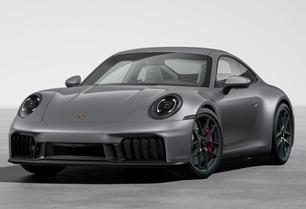
This is the new Porsche 911 Carrera GTS, which ushers in a facelift for the brand’s most famous model — and it’s one that introduces a pretty major change.
That faint whistling you hear is most likely the distant wails of the Porsche purists, because this new 911 is now a hybrid.
Yes, the Carrera GTS features Porsche’s clever T-Hybrid engine, which is the brand’s take on electrifying the world’s most famous sports car.
It’s faster than the model it replaces, but it also fundamentally alters the formula that has made the 911 the world’s most iconic sports car.
The question is, does it alter it for the better?
Big sedans are not in vogue at the moment and huge luxury sedans were on the way down before the humble Commodore and Falcon departed the upper end of the sales charts. The Germans, who have always done a spectacular job of these flagship sedans, cheerfully persist with these cars.
Absolutely loaded with fascinating technology that bleeds its way down to the more mainstream models, they represent the zenith of the brand's innovation and style. The A8 is certainly that.
What it isn't, is particularly sporty, but after two years since its launch, V8 power has reached the fourth-generation super-sedan to deliver the latest iteration of the iconic S8.
The more things change, the more they stay the same. The t-hybrid might be an entirely new propulsion system for the 911, but the net result is unchanged – power, poise and performance on tap.
Note: CarsGuide attended this event as a guest of the manufacturer, with travel, accommodation and meals provided.
The S8's existence is a source of joy for me because it's not a huge SUV. Yes, it's a huge sedan but it's a reminder that the technological flagship is alive and well, at least in Germany. And the important thing about these cars is the way the toys filter down through the rest of the range. That used to take years but we're seeing this cool stuff a lot more quickly, right down to the A1.
The S8 punches, and punches hard in this rarefied part of an already shrunken section of the market - the twin-turbo V8 matches its German rivals, it's lighter and it's as well-stacked as any of the three. What it doesn't do, however, is shout about itself the way the other two do. It's the incognito choice.
This facelift debuts a revolutionary exterior design that has completely reshaped the 911.
Just kidding. If it ain’t broke and all that. The front air vents and exhaust have changed, the former now an active intake system that deploys via vertical flaps, but elsewhere it’s largely evolution over revolution.
Instead, Porsche has focused most of the updates in then cabin. In here, you’ll find a new digital instrument panel, they’ve changed some of the levers and the steering wheel.
In true Porsche fashion, though, this new 911 mimics the older versions in that it's one of the more intuitive cabins you’ll ever sit in. Everything feels as though it’s exactly where it should be, and all feels entirely centred on the driver.
The sheetmetal is obviously very restrained given it's an Audi first, and secondly, it's just not done to go wild in this part of the market.
It's an A6 that's joined a gym, but didn't join that weird gym with men that can't run after you when you insult them (don't ask how I know this). Rolling on 21-inch wheels as standard, you can go up to massive 22s if you so choose.
The A8 created a subtle redirection of Audi's passenger car look, with the updated A4 and A6 both picking up on the horizontal bar between the rear lights and the huge grille framed by family lights with signature DRL patterns. The S8 builds on that with subtle S cues but nothing even vaguely shouty.
The interior acreage - or 'cabin', if you will - is very comfortable, but you already knew that. The multi-screen layout was first seen in the A8 and has now found its way into A7, Q8 and Q7 and is, as ever, brilliant to look at and use.
The MMI updates that have found their way into other cars are present and correct. Like the exterior, it's very restrained but not to the point of sparse minimalism, despite the lack of switches and buttons.
I really don't like the steering wheel, though, and I can't put my finger on why. It certainly isn't especially sporty-looking but I wonder if the standard flat-bottomed S wheel just looked stupid.
The materials are beautiful and everything fits together perfectly.
This probably falls under the ‘next question, please’ umbrella, given that, while the Porsche 911 is known for a lot of things, vast acres of space with loads of practicality perks just ain’t a part of its portfolio.
The new 911 measures a not-insubstantial 4533mm in length, 1852mm width and around 1294mm in height, and it rides on a 2450mm wheelbase. Luggage space is a paltry 135 litres under the bonnet, plus whatever else you can fit in your pockets.
There’s seating for four, should you not like the people you’re squeezing back there very much, but really the 911 is best enjoyed as a two-seat proposition – which is why you can also delete the backseat, should you wish.
It also weighs a minimum 1595kg, or up to 1745kg, but Porsche says the hybrid tech only adds about 50kg to the total kerb weight.
The cabin is clearly built with rear seat passengers in mind, with rear leg and headroom configured for those continent-crossing drives.
The S8 has plenty of comfort for two rear seat passengers and a few amusing options to while away the hours in traffic or on the autobahn.
That doesn't mean the front seat passengers are in purgatory, with huge but supportive seats adjustable in all conceivable directions.
Front and rear rows score a pair of cupholders and bottle holders while the boot is a handy, if not awe-inspiring, 505 litres.
Yikes. Perhaps I wasn’t paying close enough attention, because the Porsche 911 range now suddenly seems very expensive.
In fact, it inspired some research. Some 10 years ago, in 2015, the Porsche 911 range kicked off at around $208,000. Today, though, you’re looking at more like $280,500 for the entry-level 911, and if you want this bahn-storming Carrera GTS, you’re looking at more like, deep breath, $381,200, before on-road costs.
If you want four-wheel drive, a cabriolet roof, or both, the price climbs from there, with the GTS range topping out with the Carrera 4 GTS Cabriolet listing at $437,900.
Now in Germany’s defence, the Porsche has gotten progressively faster and more powerful over the years, and that’s true again with the T-Hybrid version, but we’ll come back to the tech stuff in a second.
Outside, it rides on staggered alloys (21 inch at the rear, 20 inch at the front), and there are standard matrix LED headlights, vertical-mounted active cooling flaps, and you can have it as a hard top, a Targa roof or as a full Cabriolet.
The biggest updates (apart from the driving stuff, of course, occur in the cabin, where the 911 has now push-button start, and introduces a new digital dashboard, which defaults as a digital version of the old analogue setup. The screen is 12.6 inches, and there’s a second 10.9-inch screen in the centre cabin which does your phone streaming.
There’s also a BOSE Surround Sound System, 14-way adjustable comfort seats, and digital radio.
For $260,000 there is a lot to get through, as there is on the less sporty A8. Start with huge 21-inch alloys, 17-speaker Bang & Olufsen stereo, panoramic sunroof, matrix LED headlights with laser lights, soft-close doors, acoustic glazing, leather trim, S front seats, extra leather over the A8, Alcantara headlining, carbon inlays, four-zone climate control, heated and cooled front seats, 'Virtual Cockpit' with S mode, and a tyre repair kit.
You also get active suspension, a sport version of the 'quattro' all-wheel drive system (with a sport differential), and a walloping great twin-turbo V8 to get you moving.
A massive touchscreen on the centre stack (familiar in Q8, A7 and Q7) hosts Audi's 'MMI plus' system, which is very good and does away with the console-mounted rotary controller. It also has wireless Apple CarPlay to go with the console-bin wireless charging pad. Android Auto is still USB. 'Audi Connect plus', now in full-featured glory, is also along for the ride.
Another technical highlight is the active noise cancelling which is meant to reduce the noise in the cabin the same way noise cancelling headphones do.
There's a clever rear seat remote control, which is a little detachable tablet to allow those who are being chauffered to faff around with various settings.
Our car had the $13,900 'Sensory Package', which adds a 1820-watt B&O 3D sound system with 23 speakers, electrically adjustable outer rear seats along with heating, cooling and massage function, and full leather.
A new (or at least, massively altered) 3.6-litre petrol engine has been developed for this T-Hybrid, which combines with two electric motors to produce a total 398kW and 610Nm. It’s only available with Porsche’s very good eight-speed Porsche Doppelkupplung (PDK) automatic, largely because the brand admits it would be… well… unpleasant to drive as a manual.
Now, there is lots of magic at work here, and I don’t want to bore you, but the Porsche setup sees a lightweight 1.9kWh battery placed basically in the middle of the front axle, and a 12-volt battery now behind the front seat. Then, a tiny e-motor lives as part of the gearbox (it’s just 55mm long) and delivers up to 150Nm at low speeds to supplement the petrol engine.
It’s joined by what Porsche calls an “electric exhaust gas turbocharger”, which essentially removes the spooling time from the turbo, delivering instant power.
The aim of the game here is excitement, not efficiency, and the launch-control-aided spring to 100km/h takes just 3.0 seconds. And it somehow feels, and sounds, faster.
The latter being important, with Porsche aware that if the new powertrain didn’t sound good, "nobody would like it”.
Under that long bonnet is a 4.0-litre twin-turbo V8 pumping out 420kW and a diesel-like 800Nm of torque.
That's a lot, even for this big bruiser. Obviously, being an Audi S-car, it has quattro all-wheel drive, which is fed by an eight-speed ZF automatic. Which is in everything now. Well, just about.
That huge torque figure is available between 2000rpm and 4500rpm while peak power arrives at 6000rpm. The 0-100km/h sprint is despatched in - gulp - 3.8 seconds.
As it's riding on the MLB platform, the mild hybrid system is a 48-volt set-up. A lithium-ion battery in the boot takes charge from the belt alternator/starter, which means the S8 can coast at higher speeds with the engine off and also cut out at 22km/h and under in traffic.
The system can also add up to 60Nm of torque in the right conditions for up to six seconds, and if it happened for me, I didn't notice it.
Porsche in Australia is yet to lock in local fuel use for the Carrera GTS T-Hybrid, but international testing has it at 10.5-10.7L/100km, C02 emissions of between 239-244g/km.
Those aren’t exactly Toyota Prius numbers. But again, that was never Porsche’s intention. The electric power on offer here is intended to improve acceleration, not fuel use.
It’s fitted with a 63-litre fuel tank, which should deliver a driving range of around 600km per tank.
The 10.5L/100km official figure is, shall we say, optimistic. The launch drive was mostly highway so there's no real information to be gleaned from that, so we'll have to wait for real world fuel figures.
I'd say 12-13L/100km is achievable if you don't like having fun, in which case, the lesser A8 is probably for you.
Audi says the MHEV system saves 0.8L/100km with an early cut-out for the stop-start and the ability to coast on the highway for over half a minute at a time.
Porsche did just about the Porschiest thing to ever Porsche in launching the 911 Carrera GTS T-Hybrid, in that we piled into cars in Melbourne, drove the many, many hours (well, it feels that long, at least) to the Phillip Island race circuit, beat the hell out of the cars on track and on the drag strip for several hours, then trundled back out on the road and drove them back to Melbourne.
The subliminal messaging here is pretty clear. This new 911 might have a new powertrain, but it can still deliver the road-track-road experience without breaking a sweat — or, more importantly, without breaking any expensive bits.
So let’s do this in order, shall we? On the road, this new 911 is every bit as sweet as it has ever been. Comfortable, quiet enough when you want it to be, and — save some road noise from those big wheels – quiet enough to let you forget you're driving something with one of Peter Dutton’s nuclear reactors hidden beneath its svelte metal work.
Mind you, that T-Hybrid powertrain will happily remind you of its presence every time you press the accelerator in anger, the exhaust erupting into life and the 911 genuinely rocketing into the future, but stay gentle with your inputs and this hybrid 911 is a genuinely comfortable, genuinely liveable daily driver.
Its split personality appears when you rumble out onto a race track though, where you quickly discover the electrified, and electrifying, Porsche is properly, properly rapid, both in a straight line or around Phillip Island’s fast and flowing circuit.
It’s so rapid, in fact, that it feels most closely related to a performance EV, like the Taycan. Of course it is louder and more engaging, but that’s the best way I can think of to describe the instant power on offer here. There’s no ICE-like lags or lumps in the way that 398kW and 610Nm finds its way to the tyres and into the tarmac. Instead it’s just this constant, savage flow of power that never seems to let up.
Porsche says this new powertrain is about 50kg heavier, but you’d need to be plugged into the race track like its the Matrix to ever feel it, with the T-Hybrid feeling lithe, grippy and athletic, aided by near-perfect steering, the best automatic gearbox in existence, and exactly zero roll through the body. In fact, the only thing that really moves when cornering hard in this new 911 is the driver, and I genuinely got out after several laps with a sore neck from trying to stay vertical.
Downsides? Well, it’s faster in a straight line (it will be some 7.0m further down the road after 2.5sec when compared to the older GTS) and faster around corners (8.7sec faster around the Nurburgring than its predecessor), but there’s something delightfully analogue about the outgoing car, which also manages to feel more aggressive under heavy acceleration, too, owing to the little ebbs and flows of power, and after driving both back-to-back, I still can’t decide which one I like more.
Driving any of the cars in this segment is a rare treat, whether it's the 'entry level' diesel or this top of the heap sports sedan. My day with the S8 was filled with the usual surprise and delight that only these tech-packed cars can deliver.
Heading out of the Sydney CBD in 'Comfort' mode, the car scans the road ahead and adjusts the active suspension accordingly. You already know it has active suspension because when you pull the door handle, the car lifts by 50mm to make it a bit easier to get in.
The suspension's party trick is flat-topped speed bumps - drive at one, brake a little and sense the way the body feels like it stays exactly where it is in the air but the suspension almost completely flattens the speed hump.
It's uncanny and almost unnatural, with just the tiniest change in altitude and no noise from the suspension.
It also manages the terrible narrow lanes of CBD thoroughfares with ease, the lane keep system letting you know if you're straying.
On to the motorway and you get a feel for its crushing performance. You won't hear much, though - the stereo's noise-cancelling system shuts out almost all tyre noise and consistent wind noise is largely banished, too.
I'm going to admit I gasped when I found some corners. Active suspension bodes well for the tricky stuff, as does the all-wheel steering. Both are exceptionally clever systems for making the car feel a lot smaller in town and in car parks but they're also really good if you want some fun.
But the way the rear-wheel steer adds agility to such a big car is hilarious and clever. While you can't quite chuck it around - and really, you're not buying an A8-sized car for that kind of nonsense - brisk progress is far from intimidating.
Now, obviously, a Ford Fiesta would drive away from the S8 in the really tight stuff but it would take some time to properly shake it. The colossal torque from the V8 hurls even this two-tonne-plus limo out of the corners in a most satisfactory manner.
It's surprisingly agile for a machine more than five metres long and two metres wide. If your passengers are corner enthusiasts, you'll all be having fun in near silence. It's oddly engaging to be moving at pace in such a hushed cabin.
This 911 arrives without an avalanche of active safety kit, but the key stuff is covered. There are airbags up front for the driver and passenger, side impact protection including thorax and curtain airbags, auto emergency braking (AEB) with pedestrian detection, a surround-view camera with parking lines, lane change assist, lane keeping assist, adaptive cruise control and a driver fatigue monitor.
The S8's considerable safety equipment list includes nine airbags, ABS, stability and traction controls, forward AEB (up to 250km/h), reverse cross-traffic alert, lane departure warning, various collision mitigation and protection systems, exit warning, lane keep assist, active cruise control and on, and on, and on.
The rear seat's centre airbag is terribly clever, popping up between passengers to stop you knocking heads. Another clever trick is the way the car detects a side impact is about to happen, boosting the height of the side about to cop it to try and get the sills to take more of the impact, rather than the door.
Given the relatively niche status of the A8, let alone the S8, there is no ANCAP crash test or safety rating. One imagines given the ton of safety gear a five star rating is all but assured. Even the US IIHS gave the A8 a miss.
The 911 Carrera GTS is covered by a pretty underwhelming three-year, unlimited-kilometre warranty, with servicing required every 12 months or 15,000kms. We don’t have the hybrid service pricing yet, but as guide, the last 911 split the services into minor and major, and charged either $785 or $1285 for each.