What's the difference?
Mid-sized (2.5 to 3.5-tonne) commercial van buyers have a variety of makes and models to choose from, even though most buy the venerable HiAce.
Latest VFACTS figures confirm Toyota’s long-standing dominance, as the HiAce commands just under 40 per cent market share with the remainder spread across ten competitors from Europe, China and Korea.
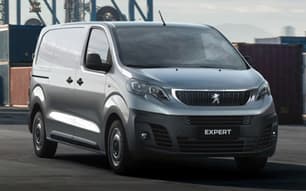
One of those is Peugeot’s Expert, which is available with a choice of wheelbases, transmissions and model grades. It currently represents just 1.3 per cent of sales in this segment, so we recently spent a week behind the wheel to see how it compares to the market leader.
The Toyota Camry is one of the few cars that really needs no introduction. It's been on our shores for 41 years and has proven itself to be steadfastly popular, enough for Toyota to launch a ninth-generation version.
The entry grade Ascent is one of the few 'base-models' still available for the mid-sized sedan segment and offers an upgraded hybrid powertrain and transmission, new tech and a fresh take on its design.
Old fans will love it and in this review we discover if there's something for families to get excited about.
Positives are higher payload and tow ratings than the Toyota HiAce along with superior fuel economy. Negatives are inferior safety, evidence of questionable build quality and a list price more than $3000 above a HiAce equivalent. So, whether the positives outweigh the negatives to justify its higher price, only a potential buyer can decide.
Ah, gotta love a sedan that knows its audience and the ninth-gen Toyota Camry Ascent proves once again why it’s a popular choice.
On top of the space and practicality, you get a shiny new design and technology. Overall the Camry Ascent is a well-rounded base-model - what’s not to love?
Our 'Long' example rides on a 3275mm wheelbase with 5309mm overall length, 1920mm width and 1948mm height, so compared to the HiAce it's slightly longer in wheelbase and overall length but narrower and not as tall. It’s also significantly lighter with a kerb weight that’s almost 500kg (or half a tonne) less than the Toyota; a big factor in its spirited performance and superior payload rating.
The Peugeot’s front-wheel drive underpinnings include MacPherson strut front suspension, coil spring semi-trailing arm rear suspension, rack and pinion steering and four-wheel disc brakes. Its 12.4-metre turning circle is also more than a metre larger than the HiAce.
The Pro’s work focus can be seen in its black plastic front and rear bumpers and side mouldings where most scrapes and dents occur in hard-working vans. There’s matching black on other high-wear surfaces like the door mirrors, door handles, hubcaps, rear wipers and rego plate shroud.
The cabin has seating for three with a driver’s bucket seat and separate two-passenger bench seat. Although all occupants have ample headroom, the dashboard’s protruding centre console leaves little legroom. In fact, the centre passenger must travel with both knees skewed to the left of this extension, which then encroaches on the outer passenger’s legroom. So, for a crew of three we’d recommend short trips. Our only other criticism was the lower dash panel on the passenger’s side, which kept popping loose despite repeated attempts to click it back into place.
There is a strong 'taxi'-association with the Camry because of how popular it is as a commercial fleet car and while the design has been updated and modernised, that vibe still remains. It's a Camry, after all.
But the new tapered nose with its slim LED headlights look sharper than the previous model and the rear slopes into a neat spoiler that accentuates a sharper rear end.
The new design looks far more modern and dare I say it: sporty.
A lot of the changes are in the cabin where the Camry benefits from a completely restyled dashboard that looks sleek and stylish, with the tech screens integrated into the panelling.
The cockpit still feels very driver-oriented, which is always appreciated, but now not at the expense of the front passenger.
The cloth seats look much nicer than the standard basic stuff you usually get and there are enough tactile dash and door panels to make it feel cosy, despite it's soft-touch points still looking too plasticky.
The overall feel for the cabin is one that is pleasant and well-built, although cloth seats always give me anxiety when kids are around.
Its relatively light 1743kg kerb weight combined with a 3100kg GVM allows for a sizeable 1357kg payload that’s almost 300kg more than the HiAce. It’s rated to tow up to 1800kg of braked trailer, which is also 300kg more than the Toyota. And with its 4900kg GCM, the Expert can legally tow its maximum trailer weight while carrying its maximum payload. These are excellent numbers for a multitude of working roles.
The cargo bay and cabin are separated by a stout steel bulkhead, which insulates the cabin from tyre noise emanating from the rear wheel housings and doubles as a cargo barrier. Its central window provides vision for the rear-view mirror and the ability to check on loads.
Lined to mid-height, the Expert’s cargo bay is accessed through large sliding doors on each side with handy 935mm-wide openings, while rear access is through glazed barn-doors which open to 180-degrees to aid forklift access. Each is equipped with its own windscreen wiper and demister.
The load floor is 2780mm long and 1628mm wide with 1258mm between the wheel housings, so it can carry up to three 1200 x 800mm Euro pallets or two 1165mm-square Aussie pallets, held in place by a total of eight floor-mounted load anchorage points. The 6.1 cubic metres of load volume splits hairs with the HiAce’s 6.2 cubic metres.
Cabin storage starts with a cavernous bin in the base of each front door that can easily hold a big 1.5-litre bottle and lots more. Each door also has two other compartments for smaller items. The dash-pad has a cup holder at each end and there’s a shrouded storage compartment in the centre. There are also two small storage nooks near the gearshift dial, plus on the passenger side is a glovebox and additional storage compartment (with 12V accessory plug inside).
The bench seat’s hinged base cushion also tilts forward to reveal two large storage bins below, with one thoughtfully lined with polystyrene foam to keep items either hot or cold.
Sedans tend to fly under the radar when people think of cabin space but that's a mistake. Head- and legroom in both rows will make taller occupants very happy and the transmission tunnel isn't massive, so middle seaters will still be able to get comfortable.
Despite being a low-profile car, access is easy enough and it's only the sloping roofline at the rear that might make you bump your head as you get in.
Seat comfort is excellent with thick padding and cushioning to be enjoyed. The front seats are manually adjustable but lack lumbar support, which you'll notice on a longer trip.
The window sills don't sit too high, so my seven-year old had a good view this week but the cloth seats have upped the anxiety as he tends to be messy. He also loves having directional air vents and that keeps him happy on hotter days.
Storage is great for the class with a 7.0L middle console, large glovebox that can hold a manual and other bits, two map pockets, four cupholders, four drink bottle holders, a sunglasses holder, and a functional centre console tray that has multiple cubbies to delight those that travel with lots of stuff.
The boot capacity hasn’t changed and sits at a large 524L capacity, which is decent for a sedan. The boot aperture isn’t too narrow either, so it's easy to access items that roll to the back. The rear seat has a 60/40 split, to open up storage as well.
The boot has a powered boot release that can be accessed via the key fob and while you have to manually close it, it's a super light lid to operate.
Technology feels well-rounded now with the upgrades and the touchscreen multimedia system sports the same system you'll find in Lexus models, which is far superior to the older Toyota software. Basically, it's simple to use and looks good, which is a great combo.
The phone mirroring apps are now wireless and that means one less cable to worry about and charging options are good with five USB-C ports (3/2), and a 12-volt socket but you do miss out on a wireless charging pad at this grade level.
Basically, the Camry now offers better technology and style but the practicality of the cabin remains at an all time high.
Our test vehicle is the Pro Long Auto variant. ‘Pro’ means it’s the lower-priced and more work-focused of two Expert model grades. ‘Long’ means it has the longer of two wheelbases and ‘Auto’ denotes auto transmission as opposed to the manual alternative.
Powered by the same 2.0-litre four-cylinder turbo-diesel shared by all Experts, it has a list price of $50,075 plus ORCs which is significantly more than its LWB HiAce auto equivalent at $46,760. And our example is finished in Artense Grey metallic, which is one of several premium colours available at extra cost.
The Pro Long Auto is built for work with 16-inch steel wheels and 215/65 R16C Michelin tyres plus a full-size spare. Useful workhorse features include rear parking sensors, 12-volt accessory socket, automatic headlights and wipers, front fog lights, cruise control and a multimedia system with 7.0-inch colour touchscreen and multiple connectivity including Apple CarPlay/Android Auto.
There are now only three model grades available for the Camry and they are all offered exclusively with a hybrid powertrain. The model on test for this review is the enrtry-grade Ascent.
With the hybrid powertrain and new tech, the entry price is $4939 dearer than before and it now carries a $39,990 before on-road costs price tag. Of the mainstream medium sedan rivals, only the ageing Mazda6 Sport sedan is more affordable at $36,290 MSRP.
What’s interesting to note is that some of its other rivals, the new Honda Accord e:HEV RS and Skoda Superb, are only offered in one highly-specified grade and they come with corresponding price points. The Accord sits at $64,900 drive-away, and the Superb at $69,990 drive-away. So, if you’re in the market for a sedan, there is a good sense of value for the Camry at the moment, despite its price hike.
Standard equipment for the new Camry includes cloth upholstery, an 8.0-inch touchscreen multimedia system with satellite navigation, Toyota Connect app, wireless Apple CarPlay and Android Auto, dual-zone climate control, keyless entry and start, 7.0-inch digital instrument cluster, digital radio and Bluetooth connectivity.
Practical features include 17-inch alloy wheels, temporary spare tyre, power-release boot lid, and manual release buttons for the rear seats in the boot area.
Strangely though, the base model still misses out on rain-sensing windscreen wipers for some reason.
The Expert’s punchy 2.0-litre four-cylinder diesel is one of its strengths. Turbocharged and intercooled, it has Euro 5 emissions compliance and produces 110kW at 4000rpm and 370Nm at 2000rpm. The eight-speed torque converter automatic has near-seamless shifting and offers the choice of sequential manual-shifting using steering wheel paddle-shifters.
The 2025 Camry has the new and improved hybrid system that Toyota is rolling out and a redesigned electronic continuously variable transmission (CVT) – both changes are welcome to the 2.5L four-cylinder engine.
This combo produces up to 170kW of power, which is up from the previous model but the torque remains the same at 221Nm.
Peugeot claims a combined average consumption of 6.3L/100km and the dash display was close to that at 7.6L after 386km of testing, which included about one third of that distance carrying a full payload. Our own figure calculated from fuel bowser and tripmeter readings came in higher again at 8.3L/100km, which is still outstanding economy for a vehicle of this size. So, based on our numbers, you could expect an extensive driving range from its 70-litre tank of around 840km.
The outgoing model had an excellent combined fuel cycle figure already but the new hybrid system improves it again to just 4.0L/100km. With the 50L fuel tank, that gives you a theoretical driving range of up to 1250km. Outstanding for a family car!
After doing 803km this week and those kilometres being mostly open-road driving, which is where hybrids are at their least efficient, my real-world figure was 4.4L, which is still great. Expect it to be even better in the city.
It has a comfortable driving position as the steering wheel is adjustable for height and reach, the bucket seat has a fold-down inboard armrest and there’s a prominent left footrest. Although the driver’s seat base has no rake adjustment, it’s long enough to provide good under-thigh support with enough rake to avoid sliding towards the front of it like some rivals.
The steering is responsive and nicely weighted, which combined with competent handling and braking makes the Expert feel sure-footed. The supple four-coil suspension provides a smooth unladen ride quality.
The energetic drivetrain with its 370Nm of torque has spirited acceleration and good agility in traffic. Although peak torque is at 2000rpm, the 2.0-litre turbo-diesel pulls cleanly from 1500rpm which showcases its flexibility.
The eight-speed automatic gets good results from this engine, but sequential manual-shifting using the paddle-shifters is handy when more driver input is required. The cabin is acceptably quiet at highway speeds, thanks to the cabin bulkhead and low tyre, engine and wind noise.
Our only major criticism is the absence of blind-spot monitoring and rear cross-traffic alert. In our opinion every van, particularly with solid side-walls and doors like this one, should at least have these active safety features as standard (like the HiAce which also has standard front parking sensors).
The Expert’s relatively small mirror on the passenger door is not sufficient in eliminating the large and potentially hazardous blind-spot over the driver’s left shoulder, particularly in heavy traffic and when reversing from driveways into busy streets.
Toyota really does the hybrid thing well – the engine and electric motor handle duties effortlessly between them, with minimal fuss like noise or gear changes.
The well of power feels deep enough to really let it loose on the highway, if need be, but that also makes it zippy in the city.
This is sure-footed in most scenarios and I like the comfort that brings to the driving.
The steering is direct enough to feel responsive but not sporty. It handles corners well and suspension is well-tuned, so you don’t wince when you hit bumps.
Being set low and having average-sized windows means visibility can be a little hampered when heading down a hill as you bob and weave to see around the rear-view mirror and thick pillars.
The Camry is 4920mm long (33mm longer than previous gen) and it fills out a space. With it's low profile, you have to be careful not to scrape the bottom on anything but it’s still relatively nimble in a car park because of its tight steering and clear 360-degree camera system.
No ANCAP rating and although it’s equipped with AEB, emergency brake assist and forward collision warning there are only front airbags for driver and passenger, which looks threadbare compared to the HiAce’s seven airbags. It also misses out on important active safety features previously mentioned.
The Camry has a brand-spanking new five-star ANCAP safety rating from this year (2024) and now sports eight airbags, including a front-centre airbag.
The safety features list is impressively long with all of the biggies included like blind spot monitoring, SOS call button, driver attention alert, safe exit warning, rear occupant alert, forward collision warning, LED daytime running lights, rear cross-traffic alert, lane departure alert, lane keeping aid, traffic sign recognition, intelligent seatbelt warning, a 360-degree view camera system, and front and rear parking sensors.
The adaptive cruise control has a new cornering feature, which will slow your speed down in corners but it didn't always activate and when it did, it slowed down too dramatically to make the system feel smooth to use.
All other systems feel well-tuned for daily driving.
There are ISOFIX child-seat mounts on the outboard seats and three top-tether anchor points but two seats will fit best.
The new Camry has auto emergency braking (AEB) with car, pedestrian, motorcycle, cyclist and backover function, which is operational from 5.0 to 80km/h (up to 180km/h for car).
The Expert is covered by a five years/200,000km warranty. Scheduled servicing every 12 months/20,000km whichever occurs first. Five years of capped-price servicing totals $3049 or an average of $609.80 per year.
The Camry comes with a five-year/unlimited kilometre warranty but that can be upped to seven years if you exclusively service with Toyota and on schedule, which is good for the class.
You get five-years capped-priced servicing at just $255 per service, which is extremely reasonable and intervals are good at every 12-months or 15,000km, whichever occurs first.
The Camry likes the good stuff though and only drinks a minimum of 95 RON unleaded petrol.