What's the difference?
French manufacturer Peugeot is at the cutting edge of electric commercial vans in Australia, having introduced its E-Partner small van (under 2.5-tonnes GVM) in 2023 before recently adding its new E-Expert in the popular mid-size segment (2.5 to 3.5-tonne GVM).
We recently spent a working week aboard the E-Expert to see if it has what it takes to provide a genuine zero-tailpipe-emissions alternative to Toyota’s dominant diesel-only HiAce.
When the GWM Ora showed up in Australia last year, it seemed to rely somewhat on its divisive cutesy looks and sub-$40K entry price to draw attention - and to some extent it worked.
Convincing Australians to buy an electric car is hard enough for any car company, let alone one that doesn’t have the brand cachet of Tesla or the traditional companies.
But an entry price under $40,000 doesn’t apply here, this is the GWM Ora GT: the top of the range for the small electric car.
It’s just had a massive price cut, but is it worth paying more than $10,000 over the price of a base Ora for some extra goodies when simplicity and fun styling was the original selling point?
The driving comfort and competent load-carrying ability of the E-Expert in a daily short-haul working role would be well suited to both tradies and fleets, if equipped with the convenience of back-to-base overnight charging at home or depot. However, its zero-tailpipe-emissions technology comes at a high price, requiring careful cost-benefit analysis by potential buyers.
The GWM Ora is a solid electric car for the city with an extremely competitive price, balanced with some flaws that might frustrate some - Android phone owners especially. But the GT variant doesn’t offer enough to justify how much more expensive it is than the variants below.
It has a slightly lower range, no more performance (not that it needs more power), a features list almost identical to the Ultra and arguably loses its appealing cutesy looks.
While the rest of the Ora line-up has its strengths and a cute but daring design, the GT effectively offers only its bark-over-bite styling changes.
If the Ora is on your shopping list, it’s certainly worth checking out the $43,990 Ultra, or even the $40,990 Extended Range if its list of features suits you. But if you for some reason enjoy the GT’s styling, that extra spend might be worth it.
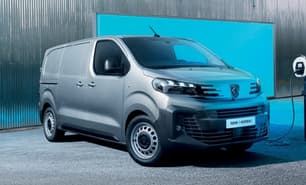
Externally the E-Expert adopts the new look of the Peugeot light commercial range, featuring an elaborate grille design with the brand’s equally new emblem proudly displayed at its centre.
The three-seater cabin design has also been upgraded, with Peugeot claiming extensive revision of the driving position for greater comfort (see Practicality).
The E-Expert rides on a 3275mm wheelbase with 12.4-metre turning circle and combines MacPherson strut front suspension with semi-trailing arm/coil-spring rear suspension, rack and pinion steering with electric power-assistance and four-wheel disc brakes.
Its 1948mm height ensures it can easily access height-restricted areas like underground loading docks and multi-storey car parks.
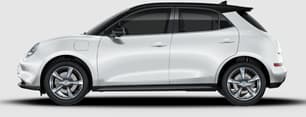
Yep, as a step-up from the Ora Ultra, the GT’s main selling point is its styling. For a car with a 400km driving range, it’s so non-threatening it looks like it would get beaten up and have its lunch money stolen by dual-cabs if it left the city - but cute works, just ask Mini or Fiat.
Its headlights have a splash of Porsche 911 in them. There are some angles that even look a little like someone had an Abarth explained to them then tried to draw it. More than one friend has told me it reminds them of a VW Beetle.
None of that bothers me in particular, but the GT-specific additions to the Ora make it feel like a deeply unserious car.
The fake carbon trim is tacky on a car that has no performance improvement over its base variant sibling, the red strip under the number plate looks like a tongue poking out under an overbite, the wheels look like Tony Stark designed them, and the rear ‘wing’ and diffuser just don’t feel at home.
One thing that didn’t bother me as much as I thought it would was the lack of ‘traditional’ tail-lights, instead a light bar under the rear window takes that role.
The rest of the Ora range is cute, fun, and looks at home in the city where the Ora is at its best. The GT’s features are mostly the same as the Ultra, so the extra $3000 for the GT exterior doesn’t really feel like value.
Inside, however, the design is less in-yer-face. A tidy set-up features a Mini-style row of switches (for some of the climate control) under a bar that spans the dash with the vents integrated.
The steering wheel is big, arguably too big, behind it is the 10.25-inch driver display attached to the central multimedia display. Everything’s very tidy and minimalistic inside, even the gear selector is a round dial.
It looks like a reasonably fashionable interior, but when it comes to the functionality, it starts to fall apart.
A highlight of the E-Expert’s design is its conspicuously low published tare (unladen) weight of only 2052kg, which is considerably lighter than not only its LDV eDeliver 7 LWB Low Roof rival at 2365kg but also the segment-leading diesel HiAce (in LWB Auto Barn-Door spec) at 2245kg.
This figure is largely the result of weight-saving chassis technology, given that its diesel Expert equivalent’s tare weight is an athletic 1698kg. As a result, given the E-Expert’s 3053kg GVM, it has a substantial 1001kg payload rating, so it’s a genuine one-tonner.
It’s also rated to tow up to 1000kg of braked trailer, but given Peugeot does not publish a GCM (or how much it can legally carry and tow at the same time) we can't confirm how much payload it can carry while towing its maximum trailer weight.
The cargo bay, which with the standard bulkhead/cargo barrier has a competitive 6.1 cubic metres of load volume, is accessed through sliding doors on each side with 935mm openings or from the rear through symmetrical barn-doors with 180-degree opening to enhance forklift and loading dock access.
The cargo bay offers 2780mm of floor length and 1628mm width, which combined with 1258mm between the rear wheel-housings means it can carry two standard Aussie pallets, or up to three Euro pallets, secured with a choice of eight load-anchorage points.
The cargo bay floor length partially extends to more than 4.0 metres by opening the load-through flap at the lower left-hand side of the bulkhead and raising the outer passenger seat-base into its vertical storage position.
This allows long lengths of timber, copper/PVC pipe, carpet/lino rolls etc to slide through and be carried internally. There’s also an additional load-anchorage point in the passenger footwell. Overall, this is a practical design feature.
The bulkhead window is protected by a sturdy mesh guard, the cargo bay doors and walls are lined to mid-height and internal lighting is provided front and rear.
A tough liner to protect the load floor from scrapes and dents is not included as standard equipment, but is available as an accessory.
The cabin can seat up to three occupants with a combination of a driver’s bucket seat and two-passenger bench seat. All seats are trimmed in two-tone ‘Mica Grey' fabric and equipped with full lap-sash seatbelts.
Although this cabin design offers wide door access and good comfort for the driver and outer passenger, the centre passenger is compromised by the large central-dash protrusion that houses the gear-selection and drive-mode controls.
The only option for those seated in the middle is to position both legs on the passenger side of this protrusion, which ensures their feet intrude into the outer passenger footwell. So, trips with two passengers should only be short ones.
Another criticism is the lack of hinge detents or struts to hold the rear barn-doors open in their 180-degree positions, given that a gust of wind when loading/unloading can slam them shut with potential injury for the operator (we reckon lock-open devices should be mandatory for all vans equipped with barn-doors).
The cabin includes two tiers of storage in each front door, comprising a slender shelf at mid-height for small items and a large-bottle holder and big storage bin at the base for larger items.
On top of the dash-pad are a small-bottle/cupholder on each side and a large clamshell-lidded compartment in the centre. There’s also a glove box with another open storage compartment below, while the centre console offers a smartphone cradle.
The centre seat’s base-cushion, which is hinged at the front, can be tilted forward to reveal a deep compartment below that’s lined with insulating polystyrene foam to keep small items of food and/or drink hot or cold.
The centre seat’s backrest can also fold forward and flat to reveal a mobile office space, with a small desk that can be rotated to provide a comfortable working angle. It also has a shallow tray for holding pens etc and an elastic strap to hold documents in place.
I can see the appeal of the Ora, but there are some glaring issues that I suspect many will find frustrating over time during ownership.
I’ll start with the big one - Android Auto. Or the lack thereof. Apple CarPlay is available however, even wirelessly.
Being a car journalist in 2024 involves a lot of playing around with in-car tech, and it’s been an awfully long time since I wasn’t able to mirror my phone to a car’s central screen where those with an Apple iPhone could. About 70 per cent of the world uses a phone running Android, by the way. Mostly Samsungs, like mine, but pretty much anything else that isn’t an iPhone too.
It wouldn’t be as major an issue if there was a navigation function in the car’s native multimedia system, but there isn’t. Having only a Bluetooth connection and no map felt a little like taking a step back in time, with an old iPad tacked onto the dash. No Fruit Ninja though.
Smaller things come down to basic ergonomics. The touchscreen itself and the system on it are simple and easy enough to use, if a little unresponsive. The driver display is fairly simple and doesn’t fall too far into the trap of sub-menus on sub-menus.
Physically, the cabin is almost there - the seat and steering wheel adjustment, however, made it a little tricky for me to find a comfortable driving position.
I’m pretty much dead-on the average height of an Australian man, and the lack of tilt for the base of the seat meant no under-thigh support if I was to be the right distance to have a proper hold on the steering wheel - not telescopically adjustable, by the way.
Another interesting ergonomic fail is the placement of the drive mode select button (one of the GT’s few unique features) being to the right side of the steering column, near where you’d expect rarely-used controls like the headlight height adjust to be - or in this case a couple of centimetres from the button that kills the power to the battery if pressed while not in motion.
This caused severe embarrassment at a set of lights while searching for the drive mode switch, with no obvious way to start the car again, short of opening and closing the driver door.
Oh, and switching through the drive modes elicits a unique videogame-style chime or jingle for each mode. Gimmicky at first, potentially rather irritating after some time.
A positive of the interior layout, however, is the space in the rear seats is fairly generous for a small car - at almost six-feet tall behind my own seating position, I wasn’t lacking space to move and the seat itself is comfortable enough for a decent trip.
Behind that, a relatively limited 228-litre boot is probably less useful for a decent trip, though its 858L of space with the rear seats folded down is more handy in a pinch.
Our test vehicle, to use its full name, is the E-Expert Pro Long Auto. It’s available only as a long wheelbase variant with single electric motor, 75kWh battery and single-speed automatic transmission for a list price of $79,990.
That’s $18K more than LDV’s eDeliver 7 LWB Low Roof electric rival and more than $29K dearer than both its diesel Expert equivalent and Toyota’s LWB Auto Barn-Door HiAce.
Our example is also finished in 'Titanium Grey' metallic paint ($690 option) which pushes the list price over $80K.
Standard equipment on our test vehicle includes 16-inch steel wheels with black hubcaps, 215/65 Michelin tyres and a full-size spare.
There’s also a solid bulkhead between cabin and cargo bay with load-through flap (see Practicality), front/rear parking sensors, daytime running lights, a 180-degree reversing camera, demister/wiper on each rear barn-door, a Mode 3/Type 2 charging cable in a Peugeot storage bag and more.
Inside are two USB ports and two 12-volt sockets plus an electric parking brake, dual-zone climate control, heated steering wheel with multi-function controls, heated driver’s seat and a 10-inch digital driver’s display.
There’s also a 10-inch central touchscreen to control the four-speaker multimedia system which includes voice recognition, digital radio and wireless Apple/Android connectivity.
The GWM Ora GT was once a mid-$50K car, once you got it on the road. Its former sticker price of $51,990 before on-roads has, along with every other variant in the range, been dramatically knocked into a more budget-friendly shape: $46,990 drive-away.
That’s pretty cheap for a top-spec electric car, or for an electric car in general in Australia, but it’s still $11,000 more expensive than the entry-level Ora Standard Range ($35,990 DA).
The Ora GT also shares most of the key draw cards on its features list with the Ultra.
Its panoramic sunroof, electric tailgate, heated and ventilated seats with massage function and its heated steering wheel are all available in the Ultra for $3000 less.
One of the only things the GT has in terms of functionality in the cabin is a light for the driver visor vanity mirror.
There are a couple of differences when it comes to driving functionality, and we’ll get to that in a later section of this review, but the rest of the tech in the cabin is standard across the range.
The 10.25-inch touchscreen and same-sized driver display, six-speaker sound system, wireless phone charger, electrically adjustable synthetic leather seats - it’s all in the base-level Ora.
What is missing, very notably, is Android Auto functionality. The Ora does however feature wireless Apple CarPlay.
The E-Expert’s single electric motor, which drives the front wheels through a single-speed automatic transmission, produces 100kW of power and 260Nm of torque. It also offers three grades of regenerative braking/battery charge replenishment, using paddle-shifters on the steering wheel.
All four variants of the Ora have the same outputs from its front-mounted electric motor - 126kW and 250Nm. Yes, even the GT.
What the GT does have over at least the base model is a larger battery shared with the Long Range and Ultra variants, but despite having the same weights and outputs, the GT is, on paper, claimed to be a tenth of a second slower to 100km/h than the rest of the range: 8.5 seconds versus 8.4sec for the cheaper models.
Peugeot claims an official WLTP driving range of up to 330km from its 75kWh lithium-ion battery, which is mounted in a cradle beneath the load floor to maintain the same cargo bay load volume as its diesel sibling.
Our test vehicle was fully charged on collection and we drove 214km on that single charge, of which 50km was hauling a near-maximum payload on our city/suburban test route. We also switched between the three drive modes, but most driving was done in 'Normal' mode.
At the completion of our test, the dash readout was claiming average energy consumption of 25kWh/100km. So, based on these figures, a ‘real world’ driving range of up to 300km is credible, with potentially more using 'Eco' mode exclusively.
Peugeot claims the E-Expert can be charged from 0-100 per cent using a three-phase (11kW) wall-box in about 7.5 hours, or 0-80 per cent in 45 minutes using (100kW) DC quick-charge facilities.
That aforementioned larger battery is a 63kWh lithium-iron phosphate (LFP) battery, over the 48kWh unit in the Standard Range base variant.
According to GWM’s brochure, the GT’s electric driving range under WLTP is 400km, 20km less than the Long Range and Ultra (and like the acceleration time, for no obvious reason).
With a 400km claimed range and 63kWh battery, the Ora GT should return a power consumption figure of around 15.75kWh/100km, though on test we saw 16.4kWh.
GWM claims charging with 11kWh AC power will take 6.5 hours to jump from 10 to 80 per cent charge, while 80kW DC charging takes 50 minutes to do the same.
Thanks to adjustable lumbar support, a height/reach adjustable steering wheel with flat lower rim to allow extra torso/legroom and a decent-sized left footrest, it’s easy to find a comfortable driving position. The door mirrors, although smaller than some rivals, are adequate given their active blind-spot monitoring assistance.
The steering feel is responsive and nicely weighted, combined with sure-footed handling and supple unladen ride quality from its four-coil suspension.
It provides smooth and near-silent performance at speeds up to 80km/h, with tyre and wind noise becoming more intrusive at highway speeds. We drove most of the test in 'Normal' drive mode, which provides more than adequate city and suburban performance given the E-Expert’s relatively light kerb weight.
The energy-saving Eco mode causes a noticeable drop in response, as you’d expect. The 'Power' setting has the opposite effect, using more energy but producing improved acceleration even with a heavy load on board.
Adjustment of regenerative braking ('Low'/'Mid'/'High') using the steering wheel paddles produces noticeable differences in retardation across the three modes. In High mode, the effect is strong enough to require minimal use of the brake pedal.
To test its GVM rating we forklifted 770kg into the cargo bay, which combined with our two-man crew equalled a payload of 950kg which was only 50kg under its one-tonne limit.
Even so, the coil-spring rear suspension only compressed 40mm under this load, leaving more than 30mm of static bump-stop clearance that ensured no sharp bottoming-out over bumps.
On our congested 50km city/suburban test route, where mid-sized electric vans would typically operate, it handled this load with considerable ease in Normal mode with no requirement to use the Power setting.
The extra weight had a minimal effect on handling and braking response, with the E-Expert proving to be a competent load-hauler within its driving range.
Our only criticism is the positioning of the centre seat’s large headrest, which even when fully lowered blocks a large portion of the central mirror’s view through the bulkhead window and rear doors. As a result, we removed it and stored it away when not carrying a centre passenger.
As is the case with the GT’s outputs and features, there’s nothing to suggest the GT would be fundamentally better to drive than any other variant. Unless all those kids at school were right about red bits making cars go faster.
The Ora’s front-drive layout paired with relatively immediate electric torque delivery, however, means you probably wouldn’t want it to be much more powerful with this particular mechanical setup.
The Ora, as a city car, does its job reasonably well in standard drive modes, though its sport mode is possibly a little too eager for day-to-day affairs - and the way it quite conservatively understeers on corners suggests there’s not much ‘sport’ driving to be done in this cute EV.
The steering itself feels fairly numb (again, fine day-to-day) and becomes heavier or lighter in different drive modes, but with no real advantage - the wheel itself is also a little on the large side.
Its suspension tune is comfortable enough for the low-speed streets on which this car is likely to find itself most often, where most city cars aren’t exactly riding on clouds, though can more obviously start to feel a little underdone on rougher roads at high speed.
It’s not a light car, after all, a hatchback that weighs 1580kg and has a short wheelbase isn’t going to be a dynamic masterpiece, though it does at least feel stable enough through corners thanks to its low centre of gravity.
It’s not going to encourage any heroic driving, but it’s also more likely to deter rather than outright punish any silly behaviour behind the wheel.
No ANCAP rating but it comes standard with front, side and curtain airbags for driver and passenger plus AEB, lane-keeping, forward collision warning, blind-spot detection (but no rear cross-traffic alert), tyre pressure monitoring, traffic sign detection and more.
It also features what Peugeot calls the 'Acoustic Vehicle Alerting System' (AVAS), which generates sound that can be heard outside the vehicle when travelling at low speed, to enhance pedestrian safety.
The GWM Ora’s safety features are almost all standard across the range, which is great even if you don’t opt for the GT.
This means its seven airbags (dual frontal, side chest, curtain and centre) are all standard, as well as autonomous emergency braking, secondary collision avoidance, rear cross-traffic alert and forward collision warning, lane keep assist, traffic jam assist and even a surround-view parking camera. The Ultra and GT are the only variants with a front parking sensor and auto parking assist.
The features are all there, but some finer tuning when it comes to some driver assistance could be looked at - thus the slightly lower side of the scoring scale for a car that’s ticking all the boxes on paper.
E-Expert comes with a five-year/200,000km Light Commercial Vehicle (LCV) specific warranty, plus eight-year battery warranty, 12-year corrosion warranty and three-year paint warranty.
Scheduled servicing is every 12 months/25,000km whichever occurs first, with capped-price for the first five scheduled services totalling $1846, or an annual average of $369. Pre-paid service plans up to five years offer considerable savings.
GWM offers a seven-year/unlimited kilometre warranty, as well as an eight-year/unlimited kilometre battery warranty. The former is quite decent for the industry, the latter relatively par when it comes to battery warranties.
Five years or 150,000km of roadside assistance is also included.
The Ora’s first five services, each coming in at 12 month/15,000km intervals, are capped price, all at $99.