What's the difference?
Here in 2021, it finally seems like Australia is ready to adopt electric cars, with interest on the rise and many, many new models of various shapes and sizes on the horizon.
Nissan, though, has been quietly chipping away at the EV market with its Leaf, which first launched in Australia way back in 2012 and was then refreshed with a new-gen model in mid-2019.
But even the latest Leaf is beginning to look a little dated compared to the likes of the Kia EV6 and Hyundai Ioniq 5, so what is Nissan to do?
Introduce the new Leaf e+ of course, which features a larger battery for increased driving range, as well as a more potent electric motor for peppier performance.
But is the Nissan Leaf e+ the electric car to buy?
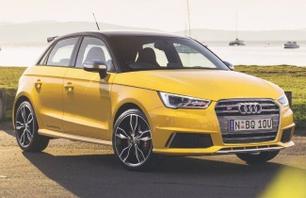
Spoilt. That's what we are. If you're in the market for a hot hatch, you can have your pick of German-built and French ones from as little as $27,000. There isn't a dud among them now that the VW Polo GTI has had a bit of an update and you can pick and choose your style. Audi's S1 is aiming to be king of the kids with its stiffly-priced S1.
Set the finances aside and consider for a moment what's on offer. As it turns out, a lot.
If you’ve never driven an electric car before, the Nissan Leaf e+ is the perfect starting point.
It looks and feels for the most part like a conventional car, and it doesn’t throw any of its tech in your face.
It might sound like a criticism, but the Leaf e+ is easy-to-use and unintimidating, which is refreshing in a world dominated by TikToks, smart watches and cryptocurrency.
With a boosted driving range and a bit better performance, the Nissan Leaf e+ certainly puts a strong case forward as your next – or first – EV.
Cars this small shouldn't be this fast and useable at the same time, but the Audi S1 is. It isn't without its problems - the ride is harder even than the Fiesta ST which might weary some prospective buyers.
It's also a bit difficult to justify the price - in its basic form it's missing a few creature comforts that you'd expect in a $50,000 car - reversing camera, high-res screen, that sort of thing.
However, in the hot hatch world, those things don't matter. It has the bragging rights, the tech and the outright blinding speed to take on the bonkers Focus ST and equally zany Megane RS. And even the Audi S3.
If you were expecting all electric cars to look like something out of Star Wars or Blade Runner, you might want to lower your expectations a tiny bit with the Nissan Leaf.
From the outside, the Leaf looks just… fine?
You can tell it’s an electric car because there aren’t big gaps in the front grille to let in air, and the sharp, angular styling helps the Leaf better cut through the air to maximise its driving range.
Step to the side and you’ll see a silhouette of a small hatchback, but spruced up with ‘Zero emissions’ badges and 17-inch wheels with low-rolling-resistance tyres.
The blacked-out C-pillar is kind of cool, and pinches the rear end a bit for a more stylish and even coupe-like roofline.
That roof is finished off with a subtle spoiler that carries down into the half-blacked-out tailgate and sharp tail-lights. There’s also a little diffuser down there and, being an electric car, there are no exhaust outlets to ruin the plastic.
Inside, once again, the Leaf looks just fine.
The biggest thing that really stands the Leaf e+’s cabin apart from a conventional small hatchback is the shifter, which is now a small puck-like thing.
It still functions the same, you pull it towards you and down to chuck the Leaf in drive, it’s just not a gear stick, and is one of the only giveaways that the Leaf is an EV from the inside.
The 8.0-inch touchscreen dominates the centre stack, and it's great to see that, despite the Leaf’s futuristic feel, there are still buttons and switches for the climate controls, rather than being an all-touchscreen affair.
It might sound like I'm a fan of the way the Leaf e+ looks, but it doesn’t really break the mould in terms of styling.
Whether that is a good thing or a bad thing is completely up to you, as some would rather a more traditional looking vehicle, but I’d prefer a bit more zing in the style department.
The A1 is so small it starts to strain Audi's design language. When you cram on the S-style bumpers and raccoon-eyed trim on the hatchback, it's starts to look a bit busy.
It isn't quite a shrink-wrapped A3 - Ingolstadt's designers know better than that - but it's full of Audi design cues, such as the strong, light-catching character lines, distinctive LED daytime running lights and fondness for big wheels.
Inside is along the themes of the A3, with what are becoming Audi's trademark; round eyeball air-con vents, the manual fold-down screen familiar to Q3 owners (but smaller) and a good clear dash. The handbrake jars slightly as it feels cheap to hold and wobbles a bit.
The S Sport seats are big and comfortable, and the top half of the backs are capped in plastic, which was colour-coded on our car. The rear passengers will certainly get an eyeful of whatever terrifying hue you've chosen, so choose wisely.
Despite the five doors, the back seats are occasionals, like the Mini the A1 is gunning for, and the boot is very small, but okay for shopping for couples or singles.
New tech is always going to cost a premium, just look at how the latest flagship smartphones have crept well over $1000!
So, if you’re expecting to pay a little more for an electric car than a petrol or diesel-powered model, you’d be right on the money.
You can get into a base Nissan Leaf for $49,990 before on-road costs, but the new 2021 e+ raises the bar to $60,490. Ouch.
There is quite a long list of equipment to justify the price though, but both Leaf and Leaf e+ actually mirror each other in spec, meaning the $10,500 difference in price is due to the latter’s improved driving range, performance and charging – but more on those in a bit.
As standard, the Leaf and Leaf e+ comes with 17-inch alloy wheels, keyless entry, rear privacy glass, heated front and rear outboard seats, heated steering wheel, and a leather and suede interior trim.
Drivers are also treated to a 7.0-inch multifunction display, which can be customised to show driving range, energy consumption and more.
Handling multimedia duties is an 8.0-inch multimedia touchscreen, with Apple CarPlay and Android Auto functionality, seven-speaker Bose sound system, digital radio and satellite navigation.
There are some noticeable omissions on the spec list, however, which are especially jarring given the Leaf e+’s forward-facing powertrain.
There’s no wireless smartphone charger and there’s no head-up display, plus the park-brake is foot-operated, which is a big disappointment in a new car in 2021.
Starting at $49,900, Audi S1 is by far the priciest of the small-hatch based hotties, at least until Mini's madcap JCW arrives. This price is just almost double that of VW stablemate's forthcoming 2015 Polo GTI.
Standard on the manual-and-five-door-only S1 is a ten speaker stereo, climate control, ambient lighting, remote central locking, cruise control, satnav, headlight washers, auto headlights with xenon low beams, partial leather seats, leather-bound steering wheel, auto wipers and rear parking sensors.
Our Misano Red ($990 option) came with two extra packs. The Quattro Exterior Package ($3990) adds bi-xenon headlights with red trim, red brake calipers, spoiler, quattro logos on rear doors (ahem!) and five-spoke 18-inch alloys that are part matt black, part polished.
The Quattro Interior Package ($2490) adds S Sport front seats with Nappa leather and red backrest capping with quattro logo (ugh), more nappa around the cabin with contrast stitching, flat bottom steering wheel and red rings on the air vents.
There's an S Performance Package that brings the best of these two packs together for $4990, saving about $1500 and the embarrassment of the quattro logos.
Our test car also had aluminium air vents ($220), black contrasting boot lid ($300) and black roof ($720).
The A1 is so small it starts to strain Audi's design language
The grand total is a sobering $58,610. There's a couple more options that'll easily pop you over $60,000.
Audi's MMI is dash-mounted in the A1 as there's no room on the narrow centre console. As ever, it works well and doesn't take much getting used to. The satnav is a bit grainy on the smaller screen but is otherwise a competent unit.
Sound is from a ten-speaker stereo and you can stream across Bluetooth or plug in a memory card. The sound was good but the system did take a while to find the phone whenever we came back to the car.
Under the bonnet of the 2021 Nissan Leaf e+, you will find the electric motor and inverter, which drives the front wheels via a single-speed automatic transmission.
The Leaf e+’s electric motor produces 160kW of power and 340Nm of torque, which is a noticeable step up over the standard Leaf’s 110kW/320Nm output.
As a result, the Leaf e+ is quicker in the 0-100km/h sprint, needing just 6.9 seconds, compared to the Leaf’s 7.9s time.
This is where the action is. The S1's tiny body packs a 2.0-litre turbocharged four-cylinder producing 170kW and 370Nm of torque. The S1 will streak to 100km/h in 5.9 seconds thank to the traction aid of quattro all-wheel drive.
All Audi S1s come with a six-speed manual
Despite a pretty solid hammering during its week with us, including more time than we'd have liked in Sydney traffic, the stop-start function helped deliver a pretty reasonable 10.2L/100km, however that's a long way over claimed 7.1L/100km.
All Audi S1s come with a six-speed manual, so dual-clutch haters can save the whining. The only downside from not having a self-shifter is the ECU can't deliver the boy racer farts, parps and crackles of the other S cars.
If you’ve never driven an electric car before, there is a bit of a learning curve. For starters, the torque is available instantaneously, and there isn’t any exhaust or engine noise to contend with.
But don’t worry, because Nissan has made it really easy to just get into the Leaf e+ and go.
Firstly, there is nothing intimidating about the cabin. The layout for all the controls and switches is well thought out, and everything is just where it should be and does what it's meant to do.
This means that, despite having an electric drivetrain, the Leaf e+ feels familiar – and that’s important to some.
Turn the car on, put it in Drive and – just like a regular car – push on the throttle to move. But even though torque is available right away, the Leaf e+ never shoots forward at a mind-blending or uncontrollable pace.
Can you tell the Leaf e+ has a peppier engine than the base offering? It’s hard to say without driving the Leaf and Leaf e+ back-to-back, but Nissan’s new electric hatchback offers spritely enough performance.
What is noticeable is the boost to driving range.
While an extra 110 or so kilometres might not seem like that much in the grand scheme of things, it means you don’t have to worry about plugging in and recharging as often, and it's always nice to look down at the range-remaining display and see a three-digit figure.
In our week with the car, we only charged up once, and there was never a moment where we stressed about running out of juice before getting the car back to base.
And if you really are worried about your range, or are into hypermiling, there is always the Eco mode, or Nissan’s e-Pedal, to play around with.
The former will just dial back performance to add about 15km to the overall range, while the latter allows the Leaf e+ to be operated with just the throttle pedal.
Lift off the right foot, and the Leaf e+’s aggressive regenerative braking will kick in to recoup energy and slow down the car, forcing you to think about and be careful with your inputs.
It might sound like a marketing gimmick, but it really is the best way to drive the Leaf e+ if range is a concern.
The Nissan Leaf e+ isn’t the last word on dynamics by any stretch, turn the wheel and the car will travel where you direct it, but it does so without any great flair or panache.
No, the 2021 Nissan Leaf e+ is a not dynamic wunderkind, but it absolutely nails being a comfortable, familiar and unintimidating step into the world of electric cars.
If you're buying the S1 as a comfortable urban runabout with a cool badge, you're half right. While the seating for front passengers is certainly supportive, the hard suspension tune will ensure you're well aware of road surface imperfections.
The S1 is a rocket
Thankfully, what it missed out on in the ride department it makes up for in every other way - the S1 is a rocket. The 2.0-litre turbo jammed under the bonnet has almost no lag and is paired with a slick six-speed manual that is terrific fun to manhandle through the gears.
The way the S1 picks up speed when it's on boost is addictive and licence-endangering. A flattened accelerator in second or third will obliterate just about anything this side of $100,000 and you'll be having more fun in this than big brother S3 because the chassis is more adjustable and there's a bit more life.
You can hear the turbo sing to accompany the bassy exhaust growl. Hit the massive brakes hard and the car remains stable even over rutted roads. Turning the wheel brings almost-instant turn-in, mashing the throttle again a fun little wriggle. It's superb.
It's tremendous fun point-to-point on a twisty road
You'll have to be a bit patient with the throttle to get the wriggle, though - give it too much too early and it will want to push wide, the quattro system shuffling power around to try and quell understeer while the electronic diff fiddles with the braking system to do the same thing. It gets there in the end, but you're better off meting out the power with your right foot for maximum rewards.
It's tremendous fun point-to-point on a twisty road - despite being a bit heavy for its size (1415kg), it's as chuckable as the next best thing, the Fiesta ST.
The Nissan Leaf e+ wears a maximum five-star ANCAP safety rating from the testing of the regular Leaf in 2018.
The Leaf scored notably high on the adult and child occupant protection tests, with six airbags as standard.
Advanced safety technology also extends to autonomous emergency braking with pedestrian detection, adaptive cruise control, lane-keep assist, blind-spot monitoring, traffic-sign recognition, high-beam assist, driver-attention alert, tyre pressure monitoring, front- and rear-parking sensors, and rear cross traffic alert.
Our favourite feature, though, is the surround-view monitor, which helps you nail that parallel park without curbing the wheels.
Six airbags, stability and traction control, ABS, brake assist and distribution all add up to a five star ANCAP rating.