What's the difference?
Road testing the Nissan 370Z in 2011, I noted it was getting on. Yes, the rear-wheel drive two-seater had been given a design freshen up and a bigger engine a couple of years prior, but the 350Z it was based on had hit the local market way back in 2003. And it wasn't unreasonable to expect replacement or retirement in the not-too-distant future.
Okay, so that was seven years ago, which means if you (like many) consider the 370Z to be an update of the 350Z (the transition happening in 2009), this car has been on sale for 15 years straight. Can you imagine Apple trying to sell any one product without entirely reinventing it for that long?
You might say that makes it a modern classic; so good it's only required an occasional touch up to keep it on the Sports Car Most Wanted list. And in recent years, a consistent average of 30 Aussies a month have slotted a shiny new 370Z in their driveway.
But a less-charitable type will tell you time waits for no car, and with arch rival Toyota about to lob a Supra-shaped hand grenade over the parapet, this enduring campaigner is under the pump.
So, Nissan's reached into its bag of tricks and given the 370Z yet another cosmetic tszuj-up and added a high-performance clutch to the manual version.
Is it enough to keep Nissan's eternal Z-car flame burning?
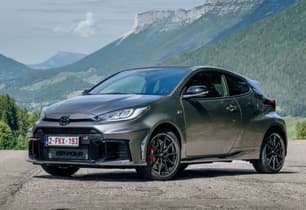
Thank the automotive gods cars like the GR Yaris still exist.
Not only are hot hatches the funnest way to drive, but in a world that’s obsessed with electric vehicles, these combustion-powered beasties remind us what we’ve got before it's gone.
The GR Yaris arrived in 2020 and won praise for its rally-car-for-the-road feel with Toyota’s high-performance division Gazoo Racing heavily modifying the docile Yaris hatch - while adding a bit of Corolla - to create this little monster.
In early 2025 Toyota added more power and torque, along with an automatic transmission for the GR Yaris and now a new variant has been launched - the GTS Aero Performance Package and this is what we are testing.
It's hard not to be ageist when it comes to the current Nissan Zed, because 15 years in market (nine if we're generous) is a lengthy stretch in anyone's book. But somehow the 370Z is more than the sum of its parts. It has fantastic front-engine/rear-drive balance, an increasingly rare atmo engine, and a beautiful manual 'box. The value equation is decent, and it's nicely put together. Just don't expect to be dazzled with the latest safety, driver-assist and multimedia technology.
The GR Yaris GTS with the Aero Performance Package is a so wonderfully special with its brilliant engineering, mind-blowing dynamics and fun-to-drive nature. The new aero package makes an already angry beastie look furious, making it the perfect enhancement that's also functional.
The only lower marks here are for warranty, fuel use and practicality. But if there was a score for fun it'd be a 10/10.
If you want to go all the way back, the 370Z clearly takes its design direction from Datsun's star of the '70s, the original 240Z.
Inspired by Ferrari, and (along with the Toyota 2000GT) a sports-car breakthrough for the Japanese industry, the first Zed's front-engine, long-nose proportions have remained largely intact in successive iterations over the decades.
With a broad, flat nose, distinctively jagged headlights, and steeply raked rear profile, there's no mistaking the 370's signature stance, with pumped-up guards sitting over fat, 19-inch alloy rims.
Sharp-eyed car-spotters will notice the update's new design RAYS forged wheels, smoked front and rear lights, and a similar smoked finish on the exterior door handles.
A new colour, 'Cherry Red' also replaces 'Bordeaux Black' in an eight-shade colour palette. Our test example was finished in 'Gun Metallic'.
Inside, echoes of Zeds past abound, with a trio of hooded gauges (clock, voltmeter, oil temp) sitting in the centre of the dash top, and the tachometer in the middle of a cowled, three-instrument main cluster shaded by an exaggerated tube.
And aside from consciously retro design touches, some elements have been present inside the car for so long they're just... ancient.
For example, old-school orange graphics for the odometer, gear position and trip computer are dated, and the small (7.0-inch touchscreen) multimedia display has the feel of an early noughties edition of Tekken 6.
Forget a digital speedo or head-up display. A CD slot still sits proudly in the centre stack, and matt silver highlights scattered around the cabin are as on-trend as double denim.
And the steering wheel (joined with the instrument binnacle) adjusts for height, but annoyingly, not reach.
That said, friends and family who rode in the car during the week I had the keys all commented on the swoopy exterior and cozy cockpit feel of the interior. So, what do I know?
The GR Yaris exists so that Toyota could go racing in the World Rally Championship. As with many racing series it required Toyota to build a road-going version of their Yaris race car, also known as a homologation vehicle. It’s a good deal, they get to race, you get a race car for the road. And so the GR Yaris was born.
Wildly different from a regular five-door garden variety Yaris, the GR Yaris is a hand-built three-door hatch with a wider track, wider and lower body and the use of forged carbon and aluminium for lightweight construction.
The GR Yaris already looks very angry, but the GTS Aero Performance Pack makes it look furious. It adds a huge adjustable rear wing, fender ducts that channel air, a front spoiler lip that aids stability, a giant bonnet scoop to help release air, and rear bumper ducts to reduce drag.
The GR Yaris’s cabin was redesigned for the 2025 update and that saw the dashboard angled more to the driver much like in a race car, but it's more functional than fancy and it’s all very plain.
Still, we’re not complaining. The seats are lovely and the red stitching is a nice touch but this isn’t a Lexus. It’s supposed to favour function over form and so the design is absolutely fitting. And by function I mean dynamics and not practicality.
Two seats means practicality is a relative term when applied to the 370Z. For example, getting in and out is an athletic exercise requiring gymnastic levels of flexibility and poise. As with most low-lying coupes, I found the outer hand on the A-pillar technique helps with swinging down into the car, or lurching up out of it.
Once ensconced behind the wheel, you're confronted with a relatively modest amount of storage space, running to a medium-size glove box, a lidded bin at the rear of the dividing console, a single cupholder, and door pockets incorporating recesses for small bottles only.
There are two lined recesses for soft bags or coats behind each seat, including a fold-out map pocket, but they're not exactly convenient for retrieving things when you're on the move. What's missing is a tray where you can easily stow things likes keys, coins or a phone.
There are also two 12-volt power outlets, a USB port and an aux-in audio connection.
Rear load space is limited to 195 litres, mainly due to the boot's shallow floor (an alloy space-saver spare sits underneath). It does incorporate a cargo blind and four tie-down hooks, but we only managed to squeeze in the largest (105-litre) suitcase from our three-piece hard set, or a combination of the two smaller ones (35 and 68 litres).
We also had a crack at stuffing in the CarsGuide pram (there is a top-tether hook provided for child seat fitment) and managed it with only a couple of beads of perspiration expended.
Forget the nappy-bag paraphernalia, though. The soft bags with all the baby stuff would have to go in the storage bays in the cabin behind the seats.
The regular Yaris is small, the GR Yaris is smaller at 3995mm end-to-end and with two fewer doors. As a tall person (I’m 1890mm end-to-end) the space on board is adequate up front with just enough knee, head and elbow room.
The GR Yaris is a four seater with the two rear seats accessed through the front doors. There’s not much room in there for adults and not even my lanky 11-year old would be happy in there. Still if you need to carry three other people, technically you can.
Cabin storage is limited to fairly large door pockets and two cupholders between the front seats. There is a little shelf carved into the dashboard which is great and a small glovebox below it.
Boot space is tiny at 174 litres but again this is a small car with other priorities.
The arrival of the tricked-up 370Z NISMO in August last year, offered Nissan Australia an opportunity to reposition the regular model, dropping the MSRP for the manual version from $56,930 to $49,990.
Aside from adjusting the car's value-for-money proposition (and pissing off those who'd bought one in July), that close to seven grand haircut delivered more pricing headroom up to the Roadster (starting at $60,990), and NISMO (from $61,490) versions.
For that money the standard equipment list includes, keyless entry and start, cruise control, climate control air, go-fast alloy finish pedals, 'HDD' (Hard Disc Drive) sat nav with 3D mapping, a 7.0-inch colour multimedia touchscreen, and Bose eight-speaker audio with 9.3GB 'Music Box' hard drive.
You'll also pick up sports seats with lots of features. First, they're 'leather accented', which is code for genuine hide in all the places you regularly contact, and a faux equivalent everywhere else. Not uncommon, and not necessarily unpleasant. Then they're heated and four-way power-adjustable, (with manual lumbar and height adjustment for the driver).
The steering wheel and gear knob also cop the 'leather accented' treatment, plus you can expect LED DRLs and tail-lights as well as auto headlights. It's worth noting that the headlights are garden-variety xenons, and things you might expect in a $50k coupe, like, rain-sensing wipers, dual zone climate, Apple CarPlay and Android Auto connectivity or tyre-pressure monitoring are 100 per cent absent.
Lining up direct competitors for the 370Z isn't easy, because there aren't any. But the closest is arguably a 2.3-litre EcoBoost version of Ford's Mustang at $45,990 for the manual. A further stretch of the imagination could haul in the Mazda MX-5 RF ($43,890) or the 86 GTS+ ($39,440) and Subaru BRZ tS ($39,894).
The GR Yaris GTS Aero Performance Pack sits at the top of the model range with the six-speed manual version listing for $64,990 before on-road costs, while the automatic is $67,490. That’s $4500 more than the standard GTS without the aero pack
The aero pack significantly toughens up the look of the GR Yaris, and also improves its dynamics. So if you plan to use the GR Yaris as a track car and drive it hard and fast, the kit will help.
That's thanks to improved down force from the giant rear wing, air ducts in the fenders to improve steering under braking, a front splitter for stability, underbody cladding to maximise airflow and a bonnet scoop to help release hot air from the engine bay.
The rest of the high-performance equipment comes on the regular GTS including a Torsen limited slip differential, high performance suspension tune and 18-inch forged wheels with Michelin Pilot Sport 4S tyres.
Standard features are the same as the regular GTS and include heated GR sports front seats with suede leather upholstery, a 12.3-inch digital instrument cluster, leather-wrapped steering wheel, aluminium pedals, dual-zone climate control, proximity unlocking and push-button start.
There's also an eight-speaker, eight-inch media screen with Apple CarPlay and Android Auto, and an eight-speaker JBL sound system.
The value is actually great considering all the high-performance engineering around you in the GR Yaris, and it will save you money from being tempted to go down the aftermarket route and buy equipment that hasn't been designed for the car by the people who made the car.
There are some nice comforts, too, like the leather seats, although the media screen is small.
The 370Z is powered by an all-alloy, 3.7-litre (VQ37VHR), naturally aspirated, quad-cam V6, producing 245kW at 7000rpm and 363Nm at 5200rpm.
Serving in a vast array of Nissan, Infiniti, Renault and Mitsubishi models, the VQ V6 engine series has been around in various displacements for over 20 years.
It features the 'Continuously Variable Valve Timing Control System' (CVTCS) with 'Variable Valve Event and Lift' (VVEL) on the intake side. And while all that may sound new and ultra-high tech, it was actually introduced in 2007.
Transmission choice is between a seven-speed auto (with manual mode and paddles) or six-speed manual gearbox, as tested here. And this 2018 upgrade brings a high-performance clutch from Japanese specialist Exedy.
Drive goes to the rear wheels via a carbon-fibre composite drive shaft, connecting with a viscous limited slip differential (LSD).
Additional features that won't necessarily be music to purists' ears include 'Active Noise Cancellation', and 'Active Sound Enhancement'.
The former monitors and measures engine sounds, using the audio speakers to produce "acoustically opposing signals to cancel undesirable sounds". So, okay, maybe filtering out the messy noise is a good thing.
But at the same time Active Sound Enhancement employs "digital signal processing to enhance the engine note, using the vehicle's sound system to augment or modify the spectrum of select powertrain sounds in the cabin". Yuck.
I can cop a tube that channels a bit of genuine engine noise into the interior, but in this context, the phrase 'digital signal processing' is a turn-off.
It still boggles my mind how 221kW and 400Nm is extracted from a 1.6-litre three-cylinder petrol engine but here we are. The GR Yaris has this set up with this output, along with all-wheel drive.
Thanks to lightweight materials such as forged carbon and aluminium the GR Yaris weighs nothing in car terms - just 1300kg - so acceleration from 0-100km/h is a rapid 5.1 seconds.
I’ve already detailed the juicy engineering bits the GTS Aero Package is fitted with, from the limited slip diff to the adjustable rear wing, and it’s not an exaggeration to say that not many small hatches are this gifted with this kind of genius.
Our test car has an eight-speed automatic, which is easy to drive in city traffic. However, I'd opt for the six-speed manual because if you've come this far you may as well go the whole way.
Claimed fuel economy for the combined (ADR 81/02 - urban, extra-urban) cycle is 10.6L/100km, the 370Z emitting 249g/km of CO2 in the process.
Over roughly 250km of city, suburban and freeway running, we averaged 15.6L/100km, at the bowser. Far from miserly.
Minimum fuel requirement is 95 RON premium unleaded, although Nissan says "for optimum performance" you should stump up for 98 RON. And just to rub it in, you'll need 72 litres of it to fill the tank.
The GR Yaris is a hungry beastie that eats through its 50L petrol tank fairly quickly and then wants more. Toyota says you should see 9.1L/100km of 98 RON used in the automatic and 8.2L/100km with the manual over a combination of driving conditions.
Stop-start city driving in traffic saw fuel use increase dramatically to 13.0L/100km in the auto. According to our car's trip computer, my own testing used an average of 14.5L/100km after mainly suburban driving.
The Nissan 370Z is actually the car many want the Toyobaru 86/BRZ to be. I can sense some of you spluttering out a sweary response to that notion. But hear me out.
If you, like many others, think the 86/BRZ would be perfect with an extra 50kW/80Nm, just bolt on a turbo or supercharger, and voila. You'll get that extra grunt, but remember, the 86/BRZ was conceived to be light, tactile, and, not least of all, affordable.
Up the outputs and you light the wick on an engineering arms race that should also lead to bigger brakes, an engine with more exotic pistons and a tougher bottom end, a stronger gearbox and clutch, a beefier diff, sturdier chassis, fatter rims and rubber... the list goes on, and on. Until you end up with something very much like the spec, weight, and price of the 370Z.
That's not to say this car isn't a fun drive. It is. Just don't expect the quick reflexes of an MX-5 or 86/BRZ.
Despite light-weighting tricks like an aluminium bonnet and all-alloy suspension, the 370Z weighs in at a not inconsiderable 1467kg. And although its 3.7-litre V6 develops a solid 245kW/363Nm, first impressions are dominated by its hollow mid-range.
Much as I love the free-revving nature of a naturally aspirated engine, there's no denying a modern turbo typically delivers lots of torque low down, with peak power also available within a useful rev range.
All the action here is at the top end, with maximum torque arriving way up at 5200rpm, and peak power taking over at a nose-bleed 7000rpm (the rev ceiling is 7500rpm). Not exactly an easily accessible sweet spot.
The gearbox is a sweet reminder of what a pleasure it is swap ratios in a top-notch close-ratio manual.
But there's still so much to like about this evergreen Zed. Its classic front engine/rear-drive layout results in a 53/47 front to rear weight distribution and the car feels balanced and beautifully predictable.
Suspension is double wishbone front, multi-link rear, and ride comfort, even over choppy bitumen surfaces is surprisingly good. On the flip-side, rumble coming up from the Bridgestone Potenza RE050A rubber (245/40 f / 275/35 r) is always noticeable, and often intrusive.
The steering is supported by old-school hydraulic power assist and while connection with the front wheels is impressive, overall feel is light. Hello 'Merica.
The gearbox is a sweet reminder of what a pleasure it is swap ratios in a top-notch close-ratio manual, and hats off to Exedy for producing a wonderfully progressive clutch. Personal preference was to turn off the standard 'SynchroRev Match' function, because I like having a go at the ol' heel 'n' toe tap dance myself.
Brakes are ventilated front and rear with almost equal size rotors (355mm f / 350mm r) clamped by four-piston calipers up front and two piston units at the rear. They are reassuringly powerful and consistent.
Age has not wearied the 370Z's ergonomics. Although the lack of a digital speedo and no reach adjustment for the steering column is annoying, the sports seats are snug and comfortable, the moderately chunky wheel feels great, and all the major controls are simple to use. Who needs slick screens and 'piano black' finishes?
There’s been a multitude of electric cars through the test garage over the past six months and the GR Yaris is like a diamond found in a tub of Lego when it comes to driving.
So much sound. The three cylinder snarls on start up sending vibrations into the cockpit and up through the steering wheel, the transmission can be heard engaging gears, the big brakes creak as they’re released. And we’re hardly even moving yet. There’s so much theatre. It’s all real and I love it!
I even love that in the first 10 minutes of driving, a message appears on the instrument cluster asking that excessive acceleration be avoided while the engine is cool. You don’t get that beautiful inconvenience in an electric car.
But when you can excessively accelerate (on a race track of course, right?) it's wonderful and it's loud. Lift off, and the wastegate lets out a little "weeee!" in excitement.
I don't need to tell you that the GR Yaris handles better than just about anything in this price range and while the ride is firm and speed bumps feel like you’ve hit a gutter I still drove the GR Yaris every day, even to do the school run, because it is so much fun. Meanwhile my hybrid long0term test car looked lonely in the driveaway all week...
Being an automatic makes it easy to drive in traffic and the small size makes finding parking spots quick and simple.
Visibility is good, steering is excellent, the seats are big enough to accommodate me but snug enough to offer good lateral support, too.
The 370Z must feel like a wall flower at the crash-test disco because it currently isn't rated for safety performance by ANCAP, its Euro NCAP affiliate, JNCAP in Japan, or the USA's NHTSA (National Highway Traffic Safety Administration) or IIHS (Insurance Institute for Highway Safety).
That said, in terms of active safety features you'll find ABS, BA, EBD, traction control, 'Vehicle Dynamic Control' (stability control), and a rear-view camera with 'Predictive Path' guidance lines.
But if you're looking for more current active tech, look elsewhere, because things like AEB, blind-spot monitoring, rear cross-traffic alert, active cruise, lane-keep assist, auto high beam or any kind of pedestrian detection are missing-in-action. They're not even available on the options list.
If all else fails and a crash is unavoidable, primary passive safety runs to active head restraints and eight airbags (driver and passenger front and side airbags, plus roof- and door-mounted curtain airbags).
The GR Yaris has not been crash tested by ANCAP and the score for the regular Yaris can't be applied to the GR version.
Still the GR Yaris comes equipped with an array of advanced safety tech such as auto emergency braking (AEB), lane keeping assistance and a blind spot warning.
There are six airbags, two child seat ISOFIX points and two top tether anchor mounts in the rear row.
Nissan offers a three year/100,000km warranty, which isn't exactly ground-breaking in the age of Kia's seven year/unlimited km commitment.
But it does include 24-hour roadside assistance for three years, and Nissan's 'myNissan Service Certainty' capped-price servicing program applies for up to six years/120,000km.
The scheduled maintenance interval is six months/10,000km, with charges ranging from a low of $283, to a high of $831 (100,000km), averaging out to roughly $428 per service.
The GR Yaris is covered by Toyota's five-year/unlimited-kilometre warranty which is lacking compared to many other mainstream manufacturers’ seven-year-plus warranties. The good news is that the engine and driveline is covered by an extra two-year warranty.
Servicing is capped at about $300 for the first six visits, although services are six months apart which means that after three years you’ll run out of capped-price servicing.
Still, Toyota’s reputation for reliability does provide some peace of mind.