What's the difference?
How much of a vehicle’s personality is determined by its tech? I’m pretty certain a Porsche 911 is still a 911 despite now being turbocharged, liquid-cooled and fitted with electric power-steering.
And surely a Toyota Corolla is still the spiritual equal of the original Corolla of the 1960s, despite the current car being front-drive, roughly the same size as an early Camry and fitted with a hybrid driveline and CVT transmission.
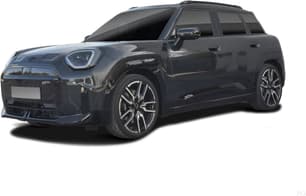
But what about our old friend the tiny, two-door Mini first seen in the late 1950s? Specifically, can the new Aceman variant still claim all (or, indeed, any of) its Mini-ness?
Okay, it’s still front-wheel drive and retains a few crucial visual clues. But let’s be clear here, it’s not only built in China as part of a joint venture between parent company BMW and Great Wall Motors, it’s also now a five-door hatchback and uses nothing but volts to get around. Can there be any Mini left in it?
Mini also claims the Aceman is part of a spearhead attack to take the brand towards an EV stance. Fitting in between the Mini Cooper two-door EV and the Countryman EV in both front and all-wheel-drive form, the Aceman theoretically broadens that range but, in reality, is more or less a replacement for the discontinued Clubman badge.
And despite the five-door layout, Mini is also happy to maintain that the original Mini’s genius in rewriting the book on interior-space-to-footprint ratio still shines through here. Maybe. At least it’s smaller than the hulking (by Mini standards) Countryman.
So here’s how it pans out: If you want a five-door, electric Mini that isn’t as big as a Countryman, the Aceman is your, er, man.
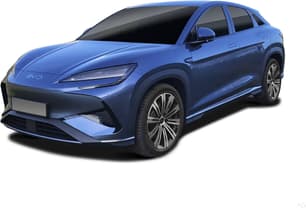
Looking across BYD's line-up, you'd think you were reading the attractions for the local aquarium! And now the Sealion 7 has entered the splash zone, or more accurately, the most popular car segment - the mid-size SUV.
It fights for pole position against the long-running electric favourite, the Tesla Model Y but newcomer Cupra Tavascan also offers some sporty competition.
For this review we're testing the flagship Performance grade to see whether or not it offers family-friendly fun.
In many ways - range, performance and purchase price, for instance - the Mini Aceman is decent value, somewhat par for the course and would give its logical competition a proper marketplace run. But it’s better than that. The car’s big point of difference is its retro charm and the fact that it’s been tuned to be a fun drive rather than the non-confronting experience some carmakers strive for.
The performance is strong and the handling and steering serve up a bit of entertainment as well as giving the car a particular flavour. Which, as electric drivelines threaten to homogenise cars even further, must count for something.
Yes, some of what you’re paying goes towards that arguably nebulous notion of 'driving-spice' but once you’ve driven it, you’ll probably know what we’re talking about. A new car purchase is always special, so why not make that specialness last a bit longer with a car that will still be an entertainer long after the showroom thrill has worn off.
Meantime, it’s easy to see why Mini has already begun to run-out stocks of the cheaper E model. The SE still manages to play on that cheeky charm, but offers a more mature vehicle into the bargain. Not a bad trick, really.
Note: CarsGuide attended this event as a guest of the manufacturer, with accommodation and meals provided.
The BYD Sealion 7 Performance is well-priced and well-equipped. It more than holds its own against its mid-size electric SUV rivals. It has great motor outputs and it handles comfortably on the road. There's a lot to like here but some of the technology needs to be tweaked.