What's the difference?
An SL sports car has been part of the Mercedes-Benz line-up since the early 1950s, and when I think of this model I see that golden years of Hollywood star (with the great hairstyle) Yul Brynner, in the late 1950s cruising the French Riviera in his 300SL roadster. Or Sophia Loren regularly posing with her 300SL Gullwing coupe around the same time.
Over seven iterations and more than seven decades it has stood for performance, glamour and exclusivity. And after a two-year hiatus the Mercedes-AMG SL63 roadster has made a comeback to the Australian market.
With Ferrari leaving the Fiat-Chrysler family and becoming an independent entity in 2016, Maserati was left without a technology partner.
Suddenly, the Trident brand had to go it alone and come up with its own engines for the first time in more than 20 years. The MC20 sports-car is the result of that rebirth.
While there’s no doubt the Maserati brand has the currency to pull this off, the MC20 is also a big step outside the company’s usual grand-tourer box.
The new coupe is aimed at McLaren, Porsche and even Ferrari buyers, so can the first true Maserati sports car since the MC12 of 2004 walk the walk? And let’s not forget that the MC12 was Ferrari Enzo-based…
No-compromise cars are often the ones that impose the most compromises, and in that sense, the MC20’s shattering on-paper performance means its greatest attributes can’t be enjoyed on a public road.
That’s why this review was conducted entirely on Philip Island’s 4.4km Grand Prix layout. As a result, we can’t tell you much about parking ease or highway fuel consumption. But as for the things that give a super-sports car its identity, read on.
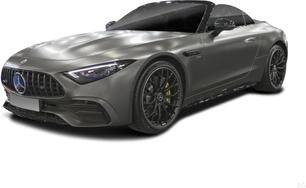
The new Mercedes-AMG SL63 4Matic+ is guaranteed to turn heads for decades to come. But there’s enormous design and engineering substance underpinning this car’s undoubted good looks. Stunning performance, superb dynamics and top-shelf safety make this a powerhouse GT to be reckoned with.
Note: CarsGuide attended this event as a guest of the manufacturer, with accommodation and meals provided.
With a 320km/h-plus top speed and the ability to get from rest to 100km/h in under three seconds, there’s no doubting the MC20 meets or exceeds its performance brief. But when you’re paying these prices, there must be more than just the measurable stuff going on.
And there is. The MC20 brings a big dollop of purity to the ranks of current supercars, doing away with all-wheel drive and hybrid tech and relying instead on and old-school approach in terms of handling and overall feel.
Anybody who wants to argue that call has plenty of alternatives to the MC20 from other manufacturers, and for some of us, that less-is-more thing will ring true.
Note: CarsGuide attended this event as a guest of the manufacturer, with meals provided.
Rather than a strict two-seater, this time around the SL adds the flexibility of ‘+2’ rear seating while the previous 'Vario’ folding hardtop has been binned, the new car returning to a traditional, electrically-folding and weight-saving (-21kg) soft top.
Mercedes-Benz design chief Gorden Wagener started the new model’s development from a ‘clean sheet’ and Mercedes-AMG says “not a single component comes from the predecessor SL, or any other model such as the AMG GT Roadsters”.
Always a subjective call, but I think this car’s proportions are just about perfect. The lengthy bonnet with its twin longitudinal ‘Power Domes’, raked windscreen and fat haunches create a wide stance and presence that’s almost impossible to ignore.
Aggression, as with the sinister headlights and 21-inch rims, is subtly combined with soft curves along the flanks and around the rear. Note the seamless door handles.
And it’s not all about aesthetics. Active aero has been integrated into the front apron and retractable rear spoiler. Plus the ‘Z-fold’ roof design does away with the need for a separate cover.
The interior is sub-zero cool with slick screens, an 11.9-inch display covering multimedia and a 12.3-inch unit for instrumentation ahead of the driver, being particular highlights.
Turbine-style air-vents at the leading edge of the split-level dash and alloy trim elements are a tip-of-the-hat to SLs past and the deft mix of large flat surfaces with complex curves oozes design confidence.
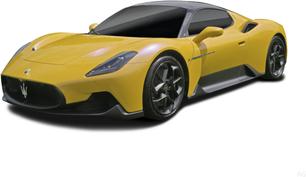
Perhaps the most striking thing about the MC20’s design is that it’s so restrained. You won’t find wings, vents, fins and diffusers all over the car, but rather an overall shape that creates downforce, rather than that job falling to tacked on additions.
And, like any modern supercar worth its salt, the MC20 is based around a carbon-fibre tub for rigidity and low weight. From that tub structure are hung aluminium front and rear subframes which, in turn, mount the suspension and other mechanical bits.
The wind tunnel still got a huge workout in the car’s development, of course, but the aim was to integrate the downforce-inducing elements rather than having them demanding your optical attention.
As a result, the whole car is an upside-down wing, if you want to simplify it. But a very pretty upside-down wing.
This gives the MC20 a smooth, sleek look that stands it apart from the rent-a-racer crowd and supports the theory that sometimes, less is, indeed, more.
Some of the detailing is lovely, too. The vents cut into the Perspex rear windscreen form Maserati’s trademark trident shape, there’s lots of visible carbon-fibre inside the door jambs, there’s lashings of Alcantara inside and the two-tone body kit breaks up the shape perfectly.
Elements we’re not so sure about include the 'Park' button mounted way down low under the dashboard, and the swing-up, scissor-type doors, which, if your more than about 180cm tall, still require you to duck under them.
On the upside, the carbon-and-leather steering wheel with its integrated controls is gorgeous to hold and gaze at.
In the context of a high-performance GT, practicality is pretty impressive.
At just over 4.7m long the SL is a sizeable machine and much of its lengthy (2700mm) wheelbase is devoted to making the driver and front passenger comfortable.
There’s plenty of space for that pairing and just enough storage to cope with the ‘things’ they’ll typically bring with them.
Door pockets offer enough room for a few odds and ends, although you’ll struggle with even a medium-size bottle unless you’re willing to lay it down horizontally along the top of the aperture.
A handy lidded bin between the front seats doubles as a centre armrest, there are two cupholders under a sliding lid in the centre console and the glove box is a decent size.
Power and connectivity options run to four USB-C ports, a 12-volt socket and the wireless device charging pad.
Then there are the rear ‘+2’ seats, and Mercedes makes no bones about the fact they’re intended for occasional use only, even suggesting a 1.5m occupant height limit.
And there’s no doubt they offer a handy emergency seat or a fun kids’ zone. Just ask a Porsche 911 Carrera owner how much this kind of seating arrangement increases a sports car’s flexibility.
At 183cm I gave the back seat a crack, which meant sliding the front (passenger) seat way forward with the backrest close to upright. But I squeezed in, and there was just enough legroom for a person in front at the same time.
With the roof in place there’s the added pleasure of cranking your head over to around 45 degrees. But it’s do-able!
No storage, adjustable ventilation, or power back there. But that’s fair enough, especially given there are USBs available in the front centre storage box.
Boot volume is 240 litres with the roof up and 213 litres with it folded, which is enough for some light luggage, and not too shabby when you think a Toyota Corolla hatch offers up just 217 litres (with all seats up).
There’s a 12V socket in there, but don’t bother looking for a spare, in the event of a flat your only option is a repair/inflator kit.
Although the MC20 has a front and rear luggage compartment, they’re both small enough to be pretty much useless. This is a shame, because as a long-weekend getaway car, the Maserati otherwise makes a strong case for itself.
The other area that suffers for the car’s art is the interior practicality. While the driving position is great and the pedals and wheel relationship is spot on, when it comes to storing anything, you’re on your own. Best the MC20 can offer is a single cupholder at the rear of the central tunnel.
The mid-engined layout also means there’s precious little vision through the back window. To counter that, Maserati has fitted the MC20 with an interior rear-view mirror that can act as a conventional mirror (you can still see only the engine) or as a screen for the rear-mounted camera.
The catch is the image projected to the 'mirror' lacks depth of field and forces the driver to refocus on the image rather than simply glance at it.
Priced at $373,370, before on-road costs, the new SL63 4Matic+ will be battling top-shelf performance soft tops including (in ascending dollar order) BMW’s M850i xDrive Convertible ($307,100), the Porsche 911 Carrera GTS Cabriolet ($386,900) and even exotics like the Lamborghini Huracan RWD Evo Spyder ($422,606).
Value for money is a relative concept in this part of the market, although equipment highlights include a head-up display (with augmented reality nav), 11-speaker, 650-watt Burmester surround sound audio, ambient lighting (choice of 64 colours), hectares of Nappa leather trim, dual-zone climate control, an 11.9-inch central multimedia screen (running Merc’s latest ‘MBUX’ software), 12.3-inch configurable digital instrument display and 21-inch forged alloy rims.
There’s also the ‘Digital Light System’ built around three high-power LEDs in each headlight, refracted and directed through 1.3 million ‘micro-mirrors’ to create a combined resolution of 2.6 million pixels.
The ‘Neck Scarf’ function is added to the top of the front seats to keep your neck and the back of your head warm as the temperature drops, the heated, ventilated and massaging front seats feature eight-way electric adjustment and three memories, there’s a heated steering wheel, Android Auto and Apple CarPlay connectivity, wireless device charging and more.
Worth noting the big 21-inch rims in a ‘10-twin-spoke’ design are standard issue with an alternate ‘multi-spoke’ pattern available as a no-cost option.
But if all that’s not enough you can opt for ‘AMG Performance seats’ ($2490) which grip you even more securely but delete the massage function.
Or there’s the ‘AMG Night Package’ ($6990) which adds wheels in matt black (with “high-sheen finish rim flange”), darkened head- and tail-lights, an aero package, black badging, black radiator fins and interior trim elements in black chrome.
Then you can go the whole hog with the ‘AMG Carbon Fibre Package’ ($11,990) which brings the wheels in matt black, exterior carbon elements, carbon mirrors, carbon interior trim and a steering wheel in a combination carbon-fibre and Dinamica (synthetic microsuede).
Maserati has followed the lead of many a high-end carmaker by using the options list to ramp up the profitability of the MC20. Of course, that’s after the MSRP of $438,000 has been dealt with by your accountant.
The point is that you kind of need to suspend disbelief when it comes to supercars and their value-for-money credentials. By any sane, conventional measure, they’re seriously over-priced, but within its peer group, the Maserati is neither the cheapest nor the most expensive way to go this fast.
But back to those options: Again, it’s all a case of throwing away what you think you know, because there are several options for the Maserati that cost more than a good, brand-new hatchback.
The carbon-fibre engine cover alone will cost you a staggering $13,164, and according to Maserati management, it’s a popular option.
Then, there are the carbon-fibre brakes which not only cost $28,961, but if you want the yellow-painted calipers, that’ll be another $2962.
The hydraulic front-lifter which allows you to deal with driveways and speed humps is a monstrous $8721, but at least there’s some engineering in that. Unlike the black-roof option which is, er, a black roof at $10,202. And the external carbon-fibre kit? A cool $92,806!
This new ‘4Matic’ all-wheel-drive SL63 features AMG’s (M177) 4.0-litre twin-turbo V8, superseding the previous rear-wheel-drive SL’s similarly configured 5.5-litre unit.
Hand built by one AMG technician from start to finish, it produces 430kW (around 580hp) from 5500-6500rpm and 800Nm across a broad plateau from 2500-5000rpm.
It’s something of a mechanical masterpiece, and the previous seven-speed auto transmission, driving the rear wheels only, has been replaced by a nine-speed dual-clutch auto (with wet multi-disc start-off clutch) sending drive to all four wheels via Merc’s ‘4Matic’ AWD system.
Previous generations of Maseratis borrowed Ferrari (both brands were once part of the extended Fiat Chrysler family) technology for their drivelines in a deal that allowed both brands to share the cost of development.
And since having a Ferrari-built engine in your car was never seen as a sale hindrance, it was a sweet deal for Maserati. But when Ferrari was spun off and became a publicly-owned company in 2016, Maserati’s supply of engines dried up.
The solution was to take engine design in-house and the twin-turbocharged 3.0-litre V6 in the MC20 is one of the first fruits of that.
While it’s undoubtedly a high-tech powerplant, in other respects it’s fairly conventional. Maserati, for instance, has a long history with the V6 layout, and there’s no hybrid element to the driveline. Nor is there a hybrid option.
Maserati claims the V6 is the world’s most powerful six-cylinder production-car engine and, with no less than 463kW at 7500rpm and 730Nm between 3000 and 5500rpm, that’s a credible statement.
Technical details that you won’t see on most road cars include a dry-sump lubrication system (where the engine oil lives in a remote tank rather than the hot sump of the engine itself) and a sophisticated fuel injection system with two injectors per cylinder.
The real trick, however, is an ignition system with two spark plugs per cylinder. There are also effectively two combustion chambers, the first ensuring multiple flame fronts to achieve a more complete burn of the fuel in the main combustion chamber.
The rest of the driveline is similarly aimed at the purists out there; the transmission is an eight-speed dual-clutch, driving not all four wheels, but only the rears through a mechanical limited-slip differential.
Selectable drive modes from GT (the default setting) through to 'Wet', 'Sport', 'Corsa' (Track) and 'ESC Off' tailor the shift points, throttle sensitivity and suspension behaviour, but still allow for full engine power.
Mercedes-AMG’s official fuel economy number for the SL63 on the combined (WLTP) cycle is 13.9L/100km, the 4.0-litre twin-turbo V8 emitting 319g/km of CO2 in the process.
On the roughly 300km launch program we covered urban, B-road and some freeway running, returning an (indicated) average of 17.5L/100km. And that reflects some enthusiastic driving along the way.
The fuel tank requires 70 litres of 98 RON premium unleaded to fill it which translates to a theoretical range of around 500km, dropping to 400km using our real-world number.
Fuel economy is probably not going to be top of mind for most MC20 buyers, but the official combined figure of 11.6 litres per 100km is still pretty greedy by 2022 standards.
Balanced against the available performance, however, and an engine making more than 600 old-fashioned horsepower with that combined fuel-economy number is still cause to reflect on modern technology and efficiency.
The MC20 has a 60-litre fuel tank, making it a handy cross-country car for weekends away.
I recall driving the AMG SL65 around the backroads of Tassie a few years ago and that twin-turbo V12 monster famously packed 1000Nm of torque, while this car ‘only’ has 800.
But there comes a point where enough is enough… and this is enough!
With maximum torque available from 2500-5000rpm and peak power (430kW) on call from 5500-6500rpm there’s always stupendous acceleration available with a squeeze of your right foot.
Claimed 0-100km/h time is supercar fast at 3.6 seconds, while top speed is a toupe-troubling 315 km/h. And that’s electronically limited!
A typically ferocious engine noise and howling exhaust note accompany rapid progress and shifts from the nine-speed dual-clutch transmission are quick and positive, not to mention especially enjoyable using the steering wheel-mounted paddles.
There are six ‘AMG Dynamic Select’ drive programs from Comfort through to Race, the latter including a Drift Mode, which we didn’t experiment with. Nor did we dip into the ‘AMG Track Pace’ system for circuit-focused mapping and timing
However, far from drifting, the grippy Michelin Pilot Sport 4S rubber (275/35 fr - 305/30 rr) plants the car securely with the all-wheel-drive system and electronic locking rear diff playing their part.
I found the perfect set-up was in the ‘Individual’ mode with the engine, transmission and steering in racier settings and the suspension in ‘Comfort’. The adaptive damping in this configuration mixes smooth ride compliance with sharp dynamic response.
The car’s aluminium space frame chassis is part of a body structure mixing aluminium, magnesium, fibre composites and various strength steels.
Torsional rigidity is claimed to have been improved by 18 per cent and despite the lack of a roof the SL feels tight and solid.
Suspension is by alloy double wishbones front and rear with adaptive damping and active hydraulic anti-roll stabilisation standard (so, no physical anti-roll bars).
At the same time the 4Matic AWD system is able to vary torque distribution up to 100 per cent to the front or rear axle depending on where drive can be put to best use.
The speed sensitive, variable ratio, electronically controlled steering is accurate and turns in beautifully with good road feel. No doubt assisted by electric rear steering able to adjust the angle of the rear tyres by up to 2.5 degrees.
All this adds up to a hugely impressive package that, despite its 1970kg kerb weight, feels agile, athletic and able to attack corners like an overgrown hot hatch, putting its power down with unwavering authority.
While indecently fast the SL63 can also stop rapidly with the AMG high-performance braking system standard.
Huge composite ventilated and cross-drilled discs (390mm fr - 360mm rr) are clamped by six-piston fixed alloy calipers at the front and single-piston units at the rear. They wash off speed calmly and consistently with perfect pedal feel.
Even at highway speeds, particularly with the windows up, normal conversation is easy with the roof down. But if you need to raise (or lower) it, the operation takes 15 seconds and is possible up to 60km/h.
Under the heading of miscellaneous observations, the turning circle is a not insubstantial 12.8m, so beware in the car park.
A front axle lift function is a welcome standard feature, raising the car’s nose 30mm with the press of a button. And lift locations are stored in GPS data, so the car will subsequently remember to lift itself at the same place, even if you don’t!
Heating and cooling for the front seats combined with the heated steering wheel and Air Scarf neck warming makes winter top-down driving a pleasure.
The digital instrument display is not only crystal clear, it can be changed through multiple configurations, including a tunnel-like graphic for engine revs as well as specific readouts for speed, g-force, the lot.
At the same time, the central media screen’s angle can be adjusted to better cope with reflections and the windscreen wiper system Merc calls ‘Magic Vision Control’ channels fluid along the wiper arms onto the rubbers, which isn’t new, but works spectacularly well here.
Here’s where your half-a-million bucks has gone.
The MC20’s acceleration is absolutely shattering and is all the more amazing for the fact the car uses neither all-wheel drive grip nor hybrid torque to achieve its sprinting abilities.
While the V6 is not the most sonorous of powerplants, it does manage to sound high-end and pretty sophisticated and it’s never as shouty as some of its opposition which seem to confuse decibels with kiloWatts.
While the sheer thrust confirms the existence of two turbochargers, the lack of lag (or throttle delay) and the ability to charge into the rev limiter in the lower gears does not.
Even though power peaks at 6500rpm (as with many a modern turbo motor) the MC20 will happily smash on to the redline at 8000rpm; sometimes too happily if you don’t have your finger over the upshift paddle. As with other good modern turbocharged units, this one doesn’t actually feel overtly turbocharged.
The transmission shifts relatively smoothly in GT mode, but as you crank up the mode selector to Sport, the shifts become very fast with an accompanying jolt through the backrest as each gear clicks home. The shifting process is fairly foolproof, although you do get full over-ride, so you need to pay attention.
Both the cars we were able to sample at Philip Island were sporting the optional carbon-ceramic braking package, and one was also fitted with the optional 'birdcage' alloy wheels which are lighter.
Each of them needed a firm shove on the pedal to slow things down, but it’s true the lighter wheels seem to be worth their almost-$3000 ask as that car required less leg-pressure for the same result.
The lack of a hybrid element to the driveline, as well as the rear-drive layout, suggests a degree of purity of purpose in the car’s design. And that’s backed up by its behaviour in the first corner.
Fundamentally, instead of just hurling it at an apex and allowing the electronics to sort it all out for you, the Maserati requires a more 'classical' technique if it’s to really shine.
It doesn’t, for instance, reward trail-braking (where you continue to brake once you’ve turned into a corner) and would much prefer you get your braking over and done with before applying any meaningful steering lock.
Ignore this, and the rear weight bias of the mid-engined layout can see the car try to yaw, with the rear end becoming light and the vehicle over-rotating (which is a spin, to you and I).
Similarly, getting on the power before you’ve actually got the MC20 turned, can unload the front end and send the front wheels ploughing (ploughing is an exaggeration, but at the speeds we’re dealing with here, even a small degree is a big deal) towards the outside of the turn.
Ultimately, then, the technique becomes a text-book case of brake, turn and then power out, at which point the MC20 reveals itself to be huge fun and incredibly fast. The only thing to deal with then is the knowledge that whatever happens next is going to happen extremely quickly.
No independent ANCAP safety assessment at this stage but the SL63 is fitted with the ‘Driving Assistance Package Plus’ which includes a heap of active (crash-avoidance) tech including AEB (with pedestrian detection), active cruise control, lane keeping assist, lane change assist, traffic sign assist, ‘Active Traffic-assist’ and ‘Active Steering Assist’.
There’s also tyre pressure monitoring and the ‘Active Parking Assist with Parktronic’ self-parking system supported by a 360-degree camera view and multiple sensors.
If a crash is unavoidable the airbag count runs to eight, including side bags for rear occupants. There are ISOFIX anchor points for child seats or baby capsules in the two rear and front passenger seat positions. And an active bonnet is designed to reduce injuries in the case of a pedestrian impact.
Neither ANCAP nor Euro NCAP have tested the MC20 for crash safety, so we can’t give it a star rating.
But the lack of standard safety gear such as rear-cross traffic alert and blind-spot monitoring (it’s optional at $2797) can’t go unmentioned. That’s especially concerning when you consider the mid-engined layout makes for very poor rear visibility.
The SL63 4Matic+ will be covered by Mercedes-AMG’s five-year/unlimited km warranty, with roadside and accident assistance included for the duration, both of which are expected in this category.
Maintenance intervals are 12 months/20,000km, and a fixed-price service plan lists an average of $1583 for each of the first three visits to the workshop. Not exactly small change, but not unheard of in this part of the market.
High-end cars often disappoint on the details, and the Maserati is no different here, offering just a three-year factory warranty (albeit with unlimited kilometres).
That trails even the most humble commuter cars these days, and suggests there’s still a degree of indifference from some carmakers. And, possibly, their customers.
There is, however, the option of fixed-price servicing for the MC20 with the first three years’ worth of servicing costing $4000.
Scheduled services are every 15,000km or 12 months, whichever comes first.