What's the difference?
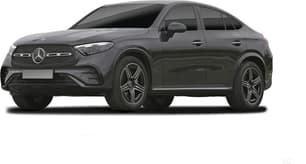
Just seeing a coupe SUV in the traffic makes some people very cranky, but others love the sight of them and it’s these fans that Mercedes-Benz is hoping to woo with its new GLC300 Coupe.
This new-generation GLC Coupe arrives six months after the regular SUV version of the GLC landed in Australia and goes head-to-head with the BMW X4 and Audi’s Q5 Sportback.
The coupe style with the ‘cut-down’ roofline which slopes towards a low tailgate means practicality is compromised and if you’re thinking of putting one in your family’s driveway then it might be an idea to read how this writer’s family coped with the GLC300 Coupe for a few days.
It’s still early days for battery-electric workhorses in Australia but Chinese brand Foton is making a concerted push into the zero-tailpipe-emissions commercial-vehicle market with its T5 EV.
The Beijing-based manufacturer, which has topped commercial-vehicle sales in China for almost two decades, is offering the ‘new energy’ electric T5 cab-chassis with a choice of GVM ratings: 4500kg for car licence operation or 6000kg for Light Rigid truck licence holders.
With a claimed fully-loaded driving range of 180km and unique-for-EV 3500kg braked tow rating, Foton says the T5 EV can also provide fleets with upfront and operational cost reductions of around 20 per cent compared to diesel. And it can be fitted with a wide variety of service bodies, including its own ready-to-work Tipper variant.
Foton is aiming to expand local sales by focusing on customers involved in last-mile logistics, local councils, construction and infrastructure support, for which this vehicle is best suited. We recently trialled a T5 EV to see how it stacks up as an alternative to diesel.
The GLC300 Coupe isn't quite as great when it comes to being a family car as the regular SUV version of the GLC, and that's purely down to the sloping roofline which not only makes access more difficult to the second row but reduces boot capacity.
That said, the GLC300 Coupe makes a much better family car than a Mercedes-Benz C-Class sedan, or any sedan.
Easy and enjoyable to drive, packed with great features and still practical, the GLC300 Coupe would still cut it as a good family car.
The T5 EV would be best suited to short-haul city and suburban tasks, with daily back-to-base operations ensuring the convenient and dependable charging infrastructure required (compared to the lottery of public charging). Given Foton’s claim of upfront and operational cost reductions, the T5 EV could be what some commercial fleet managers are looking for.
Coupe SUVs aren’t for everybody… they’re not even for lots of people. But the design of an SUV with its roof cut down so that it meets the tailgate at an almost sportscar-like angle appeals to more than a few fans. The thing is they don’t just like the look, they love it, and they also probably enjoy how much the styling makes other people cranky.
To my eyes the GLC300 Coupe is the best execution of the bodystyle compared to those of BMW and Audi. There’s an elegance to the GLC300 Coupe and the AMG-line adds a tough look that only enhances the solid, powerful but pretty look.
The GLC Coupe is a mid-sized SUV and this new generation model is a bit bigger the previous one and now measures 31mm longer at 4763mm end to end, it’s 1890mm wide, 1605mm tall and has a wheelbase of 2888mm.
It’s also more aerodynamic than ever. No seriously, it’s drag coefficient is now 0.27 and it looks like a bar of soap - and it's about as slippery as one, too.
More curved surfaces await inside with a dashboard that pours down into the large centre console and it's adorned with a sloping and large portrait-style media screen.
At night or in tunnels the ambient lighting glows through the air vents and skirts the edges of the door trims, console and dashboard.
It’s a minimalist and high-tech cockpit with modern sports seats up front and a Nappa leather wrapped steering wheel with its twin blade design.
So, how does the coupe design work for family practicality? Let’s take a look.
The T5 EV has a 3360mm wheelbase and steel ladder-frame chassis, with a leaf-spring solid front axle, leaf-spring rear axle and rear-wheel drive. Braking is by front discs and rear drums.
Its 81.14kWh of energy capacity is provided by two 60Ah lithium-ion batteries, one on each side, mounted in long parallel cradles. Drivetrain maintenance items, including motor and battery cooling systems, are accessed by unlocking and tilting the hinged cab forward.
The cab offers sufficient head, shoulder and legroom for up to three occupants, including tall people in the often-compromised centre seat. However, the centre seat is only equipped with a lap-belt.
SUVs are the most practical cars for families because of the better access to the cabin thanks to their large doors and slightly elevated ride height, their big boots with wide and tall hatch openings and their high flat rooflines. They’re essentially raised station wagons.
A coupe-style SUV still has four doors but they are less boxy due to the sloping roofline which falls away quickly to meet the tailgate at a lower point. The effect is a sporty-looking shape but practicality is lost in this exercise of form over function.
The second row doorways aren’t as large as those on the regular SUV. I did a side-by-side test and felt like I had to duck under the sloping roof when getting out of the back seat.
The smaller opening also made it trickier to lift my toddler daughter into her baby seat.
The sidesteps are also surprisingly handy for bigger kids and my eight-year-old used them every time when climbing into the car.
Cabin storage is outstanding with huge door pockets and cupholders in both rows, and while the 545-litre boot in the GLC300 Coupe is 80 litres smaller than the cargo capacity of the regular GLC SUV, it's bigger than the previous version of the Coupe.
As for people space, there’s enough headroom for me at 189cm tall in the back seat and heaps of legroom, even behind my driving position.
I’ve mentioned the lack of climate control in the second row, but also should point out that there are no USB ports back there either.
There are USB ports in the big centre console box upfront and a long cord should be able to make it to the second row.
There’s a wireless phone charger but it's housed in the bowels of the centre console too, and you’ll need to weave your hand while clasping the phone under the shiny black trapdoor, past the cupholders possibly with drinks in them and almost under the dashboard.
With a maximum claimed kerb weight of 2500kg, the T5 EV has a 2000kg payload rating for car licence operation and up to 3500kg for drivers with a Light Rigid truck licence (these payloads include the weight of service bodies).
Its 8000kg GCM (how much it can legally carry and tow at the same time) means car licence drivers can tow up to 3500kg of braked trailer while carrying its maximum payload. For Light Rigid drivers, the maximum trailer weight drops to 2000kg, given the larger payload allowance.
The Pantech body fitted to our test vehicle has twin rear doors, with 270-degree opening and sturdy hooks on the body sides to hold them in place.
Cabin storage includes narrow bins but no bottle-holders in the doors, an overhead storage shelf on the driver’s side, a small compartment with spring-loaded lid in the dash and a single glovebox.
The centre console only offers a single bottle-holder. However, the centre seat backrest folds forward and flat to reveal a small desk on the back of it, complete with a hidden storage compartment and two cup/bottle-holders.
Mercedes-Benz is offering Australia just the GLC300 grade in both the SUV and Coupe body styles.
High-performance AMG variants are out overseas now and will arrive in Australia soon, too.
You can expect to pay more for these AMG beasts - a lot more than the $113,900 list price of the GLC300 Coupe.
Still the GLC300 Coupe does come standard with an AMG Line body kit and 20-inch AMG alloy wheels. LED headlights are also standard, so is the panoramic glass roof, tinted rear glass, proximity unlocking and a power tailgate.
Inside there’s synthetic leather Artico upholstery, sports heated front seats, Nappa leather steering wheel, an 11.9-inch media display with Apple CarPlay and Android Auto, a 12.3-inch digital instrument cluster and a head-up display. There’s also dual-zone climate control and wireless phone charging.
The value is good in terms of features, although the price is slightly higher compared to the rivals such as the BMW X4 xDrive30i ($106,400) and Audi Q5 Sportback 55TFSI ($110,200).
It’s worth pointing out, too, that the GLC300 Coupe is about $10K more than the GLC300 SUV version. Why? The coupe versions of prestige SUVs always tend to be pricier than their regular more boxy SUV siblings. Somebody in marketing will be able to explain why.
Having lived with the GLC300 Coupe with my family over the past few days I can say the proximity unlocking which works by touching even the back door handles is excellent, the tinted windows are dark and cut out much of the sun's glare, but there’s no climate control in the second row. There are air vents back there, which is good.
I found that on hot days the semi-transparent shade on the glass roof couldn’t stop the cabin from heating up quickly.
The T5 EV cab-chassis comes equipped with a single electric motor and 81.14kWh battery capacity for MSRP of $139,450 plus GST.
Standard equipment includes 16-inch alloy wheels (dual rears) with 205/75R16 LT tyres and a full-size spare, seating for three, remote central-locking and height/reach adjustable steering wheel.
There’s also a reversing radar and camera, cabin roof air-deflector, lower rear and side guards, 24-volt dash socket and basic multimedia including radio, Bluetooth and MP3/MP5 connectivity.
The GLC300 Coupe has a 2.0-litre four-cylinder turbo-petrol engine making 190kW of power and 400Nm of torque.
There’s also an overboost function which allows the engine to make an extra 17kW and 200Nm just for a brief moment, but that extra dollop of grunt combined with the regular output provides impressive acceleration (0-100km/h in about 6.3 seconds) for overtaking or moving quickly when you need to.
A smooth nine-speed automatic transmission sends the drive to all-four wheels.
The GLC300 Coupe is all-wheel drive and while there’s a setting for rougher terrain, along with one for comfort, eco and sport, but I’d make sure that it doesn’t get any more adventurous than tame gravel and dirt roads.
Mercedes-Benz refers to the GLC300 Coupe as a mild hybrid and this is because it has a 48-volt system and an integrated starter-generator.
This type of hybrid doesn’t use electric motors, doesn’t drive the wheels and won’t save much fuel, but it will provide efficiencies by supporting the engine and when coasting, plus will reduce petrol consumption to a small degree.
The T5 EV’s single electric motor has a peak power output of 115kW and maximum torque of 300Nm. It also offers two drive modes: ‘Eco’ which minimises energy use with a top speed of 73km/h and ‘Power’ which uses more battery charge but increases top speed to 94km/h (both speeds achieved during our test).
As we mentioned above the GLC300 Coupe's 48-volt mild hybrid system is not the kind of hybrid that will allow you to drive miles on electric power, nor will it dramatically reduce fuel consumption in the way a parallel, series or plug-in hybrid will. But every bit of efficiency helps.
Mercedes-Benz says the GLC300 Coupe will use 7.7L/100km after a combination of open and urban roads.
We had the GLC300 Coupe for just two days, but in that time my family covered 176km of regular daily usage which took in motorways but mainly suburban duties such as the school run, supermarket dashes, that sort of thing.
In our fuel test we measured 14.48 litres at the fuel pump which works out to be an on-test fuel use figure of 8.2L/100km and not far off the manufacturer’s claim.
While this fuel consumption isn’t overly high, a plug-in hybrid or even a parallel or series hybrid could return about 5.0L/100km or less.
Mercedes-Benz has dropped plug-in hybrids from its Australian range which is a shame because it would be good to see more efficient options in the GLC range. Of course if you want more efficiency from a Benz of the same size, there is always the fully electric EQB or EQC.
Foton does not publish an official kWh/100km consumption figure, but claims a fully loaded driving range of 180km from its 81.14kWh battery capacity.
According to the dash readouts at the end of our test, which we did on a single charge, we drove 142km with 38km of estimated range remaining. Our displayed average consumption was 51.3kWh/100km, so based on that figure you could expect a driving range of around 160km, which is less than the dash estimate.
Our testing was conducted without a load (see Driving) but it did include considerable freeway travel required to collect and return the vehicle, so regenerative braking was minimal. And we had to use Power mode to maintain freeway speeds.
Foton claims that DC fast-charging allows for a full recharge in 1.5 hours, while the 11kW onboard AC charger takes 7.2 hours which is suitable to overnight turnarounds.
There’s a lot to like here but the short version is the GLC300 Coupe has a comfortable ride, but good handling, with a responsive engine, although rear visibility through the small back window is poor.
If we drill down a bit further I can tell you that excellent cameras around the car will help you check to make sure kids aren’t running around behind you and that forward and side visibility through the window is good.
An important takeaway is that the GLC300 Coupe is easy to drive with light steering and an engine that’s mild and controlled in its power delivery.
The gear shifter is mounted on the steering column, in the same way an indicator lever is. So putting the car into Drive, Reverse and Park is so easy and means you don’t have to take your hands off the steering wheel.
As a family car I liked the good body control and composed ride. We have a small toddler that we can sometimes only get to sleep by taking her for a drive and we found that she could nod off and not be woken by potholes and speed bumps or too much leaning in the corners.
There are large handles on the windscreen pillars to assist climbing aboard and the driving position offers adequate comfort, with its steering wheel adjustments and left footrest. However, some rake adjustment in the flat base cushion would be welcome, as it can feel like you're sliding forward at times.
The drive selector dial on the console has three settings (Reverse, Neutral, Drive) marked by the letters R-D-N, so it’s simple to use. Because of its near-silent operation at low speeds, the T5 EV is equipped with an audible pedestrian warning system. This activates at speeds below 30km/h and makes a unique sound that defies description.
We drove in Eco mode when not on the freeway and found that its quiet and smooth surge of acceleration was more than adequate for a vehicle weighing more than 2.5 tonnes. We did briefly try the Power mode but did not detect a significant boost in performance.
It has good steering feel (with electric power assistance) and its noticeable lightness at low speeds is appreciated when manoeuvring in tight spots. The brake pedal provides vigorous response and a strong regenerative effect (as displayed on the energy gauge) that optimises battery range.
The instrument display shows drive mode, estimated driving range, battery charge and temperature, energy use, average energy consumption and other useful data relating to drivetrain operation. Useful enhancements would be speed-sign recognition and a clearer image for the reversing camera.
Although almost silent under 60km/h, increased noise at freeway speeds includes some faint drivetrain hum and wind-buffeting around the large door mirrors, which compensate by offering excellent rear vision.
We didn’t get to do our usual GVM test, due to a software glitch in the public charging facilities we arranged to use on the day. Back-to-base operations with in-house charging would avoid these issues.
The GLC was given the maximum five star ANCAP rating in 2022. There’s AEB, active lane keeping assistance and active blind spot warning and nine airbags including a centre airbag.
As mentioned above I especially liked the surround-view camera systems - which let you look right around the car - good for driveway safety and kids.
For child seats you’ll find two ISOFIX mounts and three top tether anchor points in the second row.
I was also impressed to see a space-saver spare wheel under the boot floor and not just a puncture repair kit.
Includes driver and passenger airbags plus AEB, lane departure warning, hill-start assist, traction control and other active safety features. There’s also the low-speed pedestrian warning system, reversing camera/radar/buzzer, fire extinguisher, unlocked cab warning and more. The lap-belt for the centre passenger seat, though, needs upgrading to a full lap-sash type.
The GLC300 is covered by Mercedes-Benz's five-year, unlimited-kilometre warranty.
Services are annually or every 25,000km. And you can buy a three-year service plan for about $3000.
Five years/200,000km warranty plus an eight years/300,000km traction battery warranty. Also 24/7 roadside assist. Scheduled servicing every 12 months/20,000km whichever occurs first. Total scheduled servicing cost for five years/200,000km is $7850 or a pricey average of $1570 per year. No capped-price servicing is offered.