What's the difference?
Buuuuuuuur, parp, buuuuuuuuuuuur, parp. Anyone who knows anything about cars immediately recognises the sound of a 45-engined A-class derivative. It's the sound you hear in a tunnel as old mate blasts past with a giant carbon-fibre wing atop his hatchback. It's the sound you hear at 3:00am on a summer morning (if your suburb has no speed bumps, of course).
In short, that sound means big power from a 2.0-litre turbocharged engine, a seven-speed transmission, and a bunch of Germans who clearly had a sense of humour in charge of tuning the exhaust note.
Sure, the GLA compact SUV is probably a slightly unexpected source of all that noise. But then, Merc's Ingolstadt rivals stuffed Audi's stupendous five-cylinder engine into a Q3 to make the hugely improbable RSQ3, so why not do the same with their skirts-lifted A-Class?
To be honest, my expectations for this car were low. So do I owe Mercedes a grovelling apology? Or can I still claim the moral high ground after a week of GLA 45 "ownership"?
The sixth-generation of Subaru’s Forester has landed and while the new hybrid versions constitute the biggest news of this batch, the petrol-only variants should not be ignored.
The five-seat mid-size SUV has a 2.5-litre four-cylinder 'boxer' engine, Subaru’s well-regarded 'symmetrical all-wheel drive' system and some new changes inside and out.
So, does the top-spec Touring offer the best value-for-money in the petrol Forester line-up?
Read on.
My wonderful wife, who is not really into this kind of car, admitted to me in a quiet voice that she really liked the GLA45 as long as it was in Sport + mode. And I have to agree. While I'm very fond of the ridiculous Audi RSQ3 (that turbo five-cylinder sounds amazing), I think I'd stump up the extra for the GLA.
Importantly, it can be comfortable, it can be quiet and it's a better fit for most humans than the A or CLA. It is getting on a bit and could do with a further clean-out of the poor ergonomics, but in what is likely its final year on sale, it's still a belter.
The MY26 Subaru Forester packs plenty of punch in terms of standard features, a roomy and functional interior and overall driveability. Sure, it’s not the most exciting vehicle to drive on- or off-road but to get stuck on that is to miss the point entirely. This is a decent all-rounder with a solid background and an AWD system that long ago set the gold standard for vehicles of this type.
In a tough mid-size SUV market segment aimed more at those intent on driving through car parks rather than adventuring through national parks, the Forester offers greater versatility than most and should not be ignored.
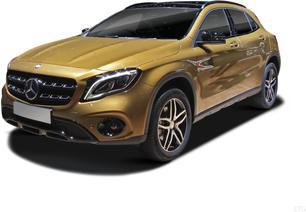
The GLA45 isn't a looker, but then, none of the GLAs are. There's a certain blobbiness to it. A bit of Teletubby mixed with...um, another Teletubby. It's not ugly, it's just not particularly attractive. The 20-inch wheels do much to lift the appearance and negate the effect of the raised ride height compared to the A45/CLA45.
The body kit stops just short of lairy, which is heartening. So if you want to stand out, venture out into the aftermarket world.
Inside was a mild surprise. The last time I drove a CLA 45 I used the word "gaudy". While the GLA isn't amazingly better, the texture of the Alcantara replacing the brushed metal-look plastic, or the carbon of the option pack, was much more pleasant. The brightwork in the cabin is still a bit odd looking, and it's still overcooked with its red detailing, but it is an otherwise beautifully built and well-detailed interior.
This Forester is 4655mm long (with a 2670mm wheelbase), 1830mm wide and 1730mm high.
The new generation retains more than enough of the previous Forester – blocky profile included – to remain clearly recognisable.
Traditionalists may chafe at the slicker, more citified appearance of this Forester over previous generations but the overall package is inoffensive enough to not elicit any howls of outrage from passers-by on the street.
The Forester’s interior maintains a similar cabin look and feel as before but with a 11.6-inch portrait-oriented multimedia touchscreen dominating up front, a mix of physical and on-screen buttons, as well as soft-touch surfaces and durable plastics.
The front seats are utterly brilliant and feel as good as they look. On first acquaintance they may feel under-padded, but once you've adjusted them to your liking, you never want to leave. The AMG cars also feature one vast improvement over a normal GLA - the ergonomic disaster of a column-mounted shifter is removed, with a console-mounted shifter added where a small cubby once lived. It's so much better, although the Park button is oddly difficult to press.
When luxuriating in those snug front seats, you'll have access to two cupholders and door-mounted bottle holders, as well as a console bin (where the USB ports are) and a tray under the climate controls. Rear seat passengers will find legroom tight but headroom good, even with the huge sunroof.
The GLA's boot holds an entirely reasonable 421 litres, rising to 1235 when you drop both rear seats.
The Forester is quite roomy for a mid-size SUV and this is the top-spec variant so there’s leather everywhere.
The interior layout is neat and tidy and lands firmly on the correct side of being practical and familiar, with all controls easy to locate and operate.
The touchscreen offers mostly simple intuitive functionality with infrequent need to cycle through numerous menus and sub-menus to access what you want.
The aforementioned mix of physical and on-screen buttons, as well as soft-touch surfaces and durable plastic are welcome here because, you know... real life.
The front seats offer ample support and the driver is able to dial-in their preferred position via power controls on the eight-way power-adjustable seat (with dual memory). The front passenger has an eight-way power-adjustable seat. Both seats are heated and ventilated.
The 60/40 split folding second-row seats aren’t too shabby either, in terms of comfort and amenities, with a fold-down arm-rest with cupholders and directional air vents etc.
Cargo volume is 496 litres (with rear seat in use) and 1174 litres (with the rear seat down, 1667 litres to ceiling.
The tailgate is powered and hands-free with a kick sensor (apparently). But I never tried that, instead opting for the tailgate-mounted button to open and close it.
The GLA 45 lightens your wallet by no less than $89,211 - more than double the GLA 180 front-wheel drive, and about $5000 more than the bonkers (and ancient) RS Q3.
Packed into the GLA's kit bag are 20-inch alloy wheels, a 12-speaker stereo, dual-zone climate control, comprehensive safety gear, reversing camera, keyless entry and start, front and rear parking sensors, electric and heated front seats, sat nav, auto LED headlights, auto wipers, leather trim (some real, some not), auto parking, powered and heated folding mirrors, a massive sunroof and dynamic dampers. There's no spare tyre, just a tyre-repair kit.
The multimedia system is Mercedes' COMAND unit and it is as user-unfriendly as ever. It does, however, power a very decent stereo, and also offers Apple CarPlay and Android Auto.
Thankfully our car was bereft of both the carbon-fibre package ($990) and the aerodynamics package ($1990).
The Forester AWD Touring (petrol) is priced at $50,990 MLP while its hybrid sibling is $55,990.
Standard features include an 11.6-inch multimedia touchscreen (with wireless Android Auto and Apple CarPlay), 18-inch alloy wheels, auto LED headlights, dual-zone climate, heated front seats and electric folding rear seats as well as a wireless phone charger.
Top-grade additions include a sunroof, low-profile roof rails, a digital driver display, leather-accented seats, a leather auto-shifter, ventilated front seats and a 10-speaker Harman Kardon audio system.
It also has power-adjustable front seats, sat-nav, auto-dipping and folding door mirrors and a hands-free tailgate.
Exterior paint choices include 'Crystal White Pearl', 'Ice Silver Metallic', 'Magnetite Grey Metallic', 'Crystal Black Silica', 'Crimson Red Pearl', 'Brilliant Bronze Metallic', 'Daybreak Blue Pearl', 'Sapphire Blue Pearl', 'Cashmere Gold Opal', 'Autumn Green Metallic' and 'River Rock Pearl'.
AMG's fabled 2.0-litre turbo four lurks under that higher bonnet, still kicking out an improbable 280kW and 475Nm. Drive reaches the road via Merc's own seven-speed twin-clutch transmission and all four of its wheels.
All that power and grip translates to a 4.4-second dash to 100km/h for the slightly tubby (over 1600kg) GLA, but just between you and me, anything under five seconds feels scorchingly quick.
The Forester has the line-up’s 2.5-litre four-cylinder naturally aspirated boxer engine (producing 136kW at 5800rpm and 247Nm at 3700rpm) matched to a constantly variable transmission (CVT), which some people detest, and some people couldn’t give a rat’s whether it’s there or not.
Also onboard is Subaru’s all-wheel drive system, driving modes (including 'Normal', 'Deep snow/Mud', and 'Snow/Dirt') and 'X-Mode' “that constantly monitors the traction available to each wheel and centralises the control of key components including the engine, transmission, drivetrain and brakes to help manage slippery conditions”, according to Subaru.
The official combined-cycle figure suggests the GLA45 will consume 7.5L/100km. Obviously that figure is largely irrelevant, and not just for the usual reasons, but because you don't buy a GLA45 to potter about in. I got, uh, 12.5L/100km, so you can imagine how much I was enjoying it.
As you might expect, you'll need to feed it 98RON.
Official fuel consumption on the combined (urban/extra-urban) cycle for the Forester is 7.9L/100km and it uses 91RON 'standard' unleaded petrol at a minimum.
On this test, I recorded 8.1L/100km. But fuel consumption was as low as a dash-indicated 1.7L/100km while driving the Forester with adaptive cruise control engaged.
The Forester has a 63-litre fuel tank, so, going by our on-test fuel-use figures you could reasonably expect a driving range of almost 780km from a full tank. However, as with any vehicle, once you’ve loaded the Forester with any real-world burdens (e.g kids, dogs, camping gear, etc) you’ll soon see the fuel consumption increase.
When the 45-badged cars first launched, they were something of a revelation. BMW's turbo six-cylinder fans sniffed at the 2.0-litre's staggering outputs and all-wheel-drive chassis, but this car really captured the imagination. The GLA45 might be slightly unexpected, but it's better in almost every way as a daily driver than the A or CLA.
For a start, its higher ride height seems to translate to a much better ride quality. Anything on 20-inch wheels should have an appalling ride, but the GLA45 manages to be firm yet comfortable. Put the other two in Race mode and you'll need to up your private health insurance extras to include osteo, physio and whatever "o"-ending specialist fixes your back.
The improved ride quality meant I was far happier to chuck this car around. While it doesn't have the same ultimate overall performance of the lower cars, it's far more comfortable whether you're on it or just driving around. The front seats are supportive and comfortable, and the steering is excellent.
As for the engine...well, it still farts like toddler during a moment of silence at a funeral, but you can't deny its technical brilliance and huge power outputs. I remember the CLA45's engine as being a bit highly strung. Perhaps I couldn't separate the overall high-strung nature of the car from the engine, but I felt the same engine in this car wasn't as jumpy.
The way it propels this car into triple figures is tremendous fun. It's not as charismatic as the Audi five-cylinder, perhaps, but that doesn't matter in the end - it's properly fast, attached to a better chassis and offers a cabin with a driving position fit for humans.
The Forester feels comfortable and composed on sealed surfaces and offers some degree of dynamism to the driving experience – so in line with previous generations.
It feels more refined, sharper to steer and more responsive than before. There’s ample visibility to the front but a substantial B pillar obscures the driver’s vision back over their right shoulder.
The Boxer engine and CVT work well together, power and torque outputs are more than adequate in this package, and that much-maligned transmission is not intrusive if the Forester is driven with care and common sense.
However, acceleration from a full stop is sluggish.
The suspension set-up – MacPherson struts up front and double wishbones at the rear – yields a firm but not jarring sense of ride and handling.
The 1662kg Forester proved nimble to manoeuvre around the Big Smoke, the suburbs and in the bush (more about that soon) with a neat 10.8m turning circle.
All-wheel drive vehicles are capable of tackling off-road adventures in their own right but, for safety’s sake, AWD drivers should avoid anything beyond well-maintained dirt tracks in dry weather. AWD cars are designed for use on bitumen roads with some dirt or light-duty off-road use.
And so it was with our test of this Forester. On-test off-road terrain equalled firm-packed sand and gravel/dirt bush tracks in dry weather, although we did drive through one shin-deep mudhole with no trouble.
The Forester has a listed 220mm of ground clearance, the suspension held up well over a brief stint on mild corrugations and Subaru AWD proved more than up to the task when things became a little trickier, providing improved grip and traction in slippery conditions that demanded to be driven at very low speeds.
If push comes to shove, it’s capable of more than light off-roading, but the Forester’s ground clearance and off-road angles ultimately limit its off-road capabilities.
The Forester’s 'all season' tyres – Falken Ziex Z001A A/S (225/55 R18 98V) – are fine for light to moderate off-roading but anything more difficult than that and you’ll need to get a set of more aggressive all-terrain tyres. It does have a full-sized spare onboard.
It has maximum towing capacities of 750kg (unbraked trailer), 1800kg (braked) and a maximum towball download of 180kg. GVM is 2223kg; GCM is 4023kg.
Some niggles: The driver awareness system is annoyingly over-reactive.
The GLA comes with nine airbags (including driver's knee), blind-spot sensors, lane-departure warning, lane-keep assist, forward-collision warning and mitigation and driver-attention detection.
The GLA does not have its own ANCAP rating, but the A-Class on which it is so heavily-based scored five stars in 2013.
The Forester has the maximum five-star ANCAP safety rating from testing in 2024.
It has nine airbags (dual front, dual front side, dual curtain, driver’s knee, far side and front passenger seat cushion), adaptive cruise control, emergency lane-keep and centring (with departure warnings), pre-collision braking, auto emergency steering, a 360-degree view monitor system, and a driver monitoring system which includes a ‘safe stop’ feature that – if the vehicle detects that the driver is non-responsive – will bring the vehicle to a gradual, you guessed it, safe stop.
The Mercedes standard warranty is three years/unlimited kilometres with roadside assist to match. Service intervals are a very reasonable 12 months/20,000km.
The company also offers capped-price servicing - first service is $576 but the second and third are a whopping $1152 each. Three years will set you back $2880.
The MY26 Subaru range is covered by a five-year/unlimited kilometre warranty, five-year/75,000km capped price servicing, and 12 months roadside assistance.
A service is required every 12 months or 15,000km, whichever occurs soonest. After your free “1 Month Health Check and Chat”, cost per service is $347.95 (at the 15,000km/12 month mark), $520.45 (30,000km or 24 months), $393.10 (45,000km or 36 months), $679.30 (60,000km or 48 months) and $358.20 (75,000km or 60 months). Average over the five years is $459.80.
Subaru Australia has more than 140 dealerships across the country with a decent spread over metro and regional areas. Foresters may be serviced at those dealers or by approved mechanics.