What's the difference?
Imagine jumping in the time machine, zapping back to the late 1970s and bringing the team that produced the original Mercedes-Benz G-Wagen into 2025 and showing them where their creation has landed close to half a century later.
They’d be amazed a vehicle looking so much like their military-focused, first-generation model even existed! And once they’d absorbed that incredible fact they’d be stunned to see what lurks under its familiar bodywork.
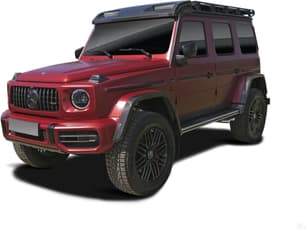
Because this is the most recent iteration of what’s now referred to as the G-Glass, the pure-electric G580 featuring four individually controlled electric motors - one at each wheel - collectively producing enough energy to power a small town.
Stay with us as we explore this take-no-prisoners EV 4WD that has multiple show-stopping, high-tech party tricks lurking up its sleeve.
Ford has given its Ranger ute range a mild facelift. And mild is the word. If you look closely, you might notice some small visual changes, but the real news is under the bonnet where a new entry-level powerplant lives.
And however you look at it, this new engine that addresses the ownership issues experienced by some Ranger buyers since the bi-turbo diesel engine was released back in 2018, was probably overdue.
But the new powerplant comes at a cost; in terms of power and torque, even though the vital towing statistics remain for the Ranger.
The other changes that come with this facelift include some new tech, and the availability of the V6 turbo-diesel (which is unchanged) across the entire Ranger 4X4 dual-cab line-up.
For this review, we’ve concentrated on the new engine as being the major point of difference, and we’ve driven it the base-version XL trim specification. That means this is potentially the lightest variant, and heavier specifications might blunt the performance a little. But overall, this is representative of the new powertrain and represents the biggest point of difference in what is otherwise a very minor facelift.
As per the 1979 original, the current G-Class is produced by Magna Steyr in Arnie’s home town of Graz in Austria. And many fundamental things haven’t changed since then. But clearly this EV monster’s exotic electric powertrain is a huge departure.
It retains impressive off-road ability and straight-line speed. But will it hit the mark with top-end luxury 4WDers? Short story, this thing is wild, and it will be irresistible for a likely narrow band of tech-focused ‘must have the latest and greatest’ buyers. Nothing like impressing friends and family with a tank turn.
Note: CarsGuide attended this event as a guest of the manufacturer, with travel, accommodation and meals provided.
Our time with the new Ranger was limited in terms of distance driven and the number of variants we could sample. We were also unable to test the vehicle with a trailer attached, so we’re unsure as to how well the new, lower-powered engine will cope with towing duties.
We do know the new engine is being welcomed by owners and fleets who held concerns over the technical layout of the previous 2.0-litre powerplant, but only time will tell if the reduced performance is seen as being balanced by the technical upgrades.
We can also tell you there’s nothing inherently wrong with the new 2.0L in the context of normal driving on normal roads and its refinement is still an improvement on a lot of its competitors’ offerings.
Note: CarsGuide attended this event as a guest of the manufacturer, with meals provided.