What's the difference?
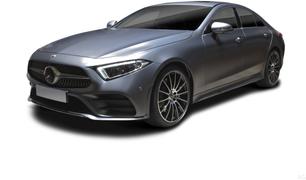
There are people who probably wish the Mercedes-Benz CLS would just go away. Call security, have it escorted off the premises. That’s probably because they don’t agree with its styling. For them, it’s not how a large four-door Mercedes-Benz should look, with its ‘rude’ coupe roofline.
But for some of you those looks are exactly why you want it, and there’s enough of you out there for Mercedes-Benz to tell us at the launch of the new-generation CLS that the model is here to stay.
“You don’t surrender a segment… a vehicle has to do 100 units to justify bringing it – this will do 100 units no problem sat all,” were the exact words from Benz’s head of communications David McCarthy.
You could say Benz created the four-door coupe segment when it launched its first-generation CLS 14 years ago, triggering its rivals to fire back with their own four-door coupes - the Audi A7 and BMW 6 Series Gran Coupe.
Far from surrendering, the CLS has evolved again with this third-generation bringing new engines and styling. So, what do you gain and what will you have to surrender (for lack of a better word) if you choose to go down the non-traditional route of the CLS?
I found out when I drove the new CLS 450 4Matic for the first time on Australian roads at its recent launch.
Far from just another mid-size SUV offering, the Lexus RZ bares the burden of much of the Japanese premium brand’s future.
While Lexus has been a trailblazer in the past, offering a wide range of hybrid luxury vehicles before every other brand, it’s a little late to the party with this car; it’s first ground-up electric vehicle.
The question is, has all this extra time given Lexus the luxury of perspective, or is it too little too late for the RZ to make a meaningful impact on the mid-size luxury SUV space? Stick with us as we find out.
The Mercedes-Benz CLS has proven to be a niche hero, creating a segment and then evolving into something even more elegant, while keeping its unique appeal. A beautiful, modern cabin and the new engine in the CLS 450 provides the swiftness to match those looks.
There are sportier EVs out there, there are more tech-savvy EVs out there, but few adhere to the luxury promise quite like the Lexus RZ, particularly at its price point.
It’s this primary characteristic which sets the RZ apart from the pack for me, and while it might not be for every first-time EV adopter, it nails the brief for the existing Lexus buyer while providing a ‘luxurious’ alternative to many of its firmer, sportier and less approachable rivals.
The new-generation CLS has arrived looking slipperier than a cake of soap on the bottom of the bath. This model has always had svelte styling, but things have become even smoother with Benz’s design chief Gorden Wagener insisting more lines be removed in the creation of this latest version.
So, while there’s the familiar profile of that roof tapering down into the boot lid, the long rear overhang and that sliver of a window opening arching and turning down sharply at the rear, it's a more flowing design now that there are less edges to break it all up.
A new ‘shark nose’ grille opening, and broad bonnet adds a hunk of muscle car toughness to the CLS’s face. But it’s refined thuggery, with that single-louvered ‘diamond studded’ grille flanked by flush-mounted headlights. The tail-lights, too, are so contoured to the body around them they look painted on.
As CarsGuide senior editor Matt Campbell pointed out in his review of the CLS at the international launch, the car looks far better in the metal than it does in any photo.
The CLS is based on the E-Class, sharing its platform and technology, but it’s about 20mm longer (at 4988mm) end-to-end. That’s almost 50mm longer than the previous generation CLS, too. At just over 1.4m tall the CLS is low-slung but wide at 1.9m across (almost 2.1m including mirrors).
The CLS’s cabin mirrors that of the E-Class, too, with a sweeping dashboard which flows through into the doors, two large landscape displays for your instruments and media, an oversupply of air vents and some darn sexy lighting. It’s a luxurious, stylish, comfortable, but snug setting cocooned by padded leather and polished surfaces.
The Australian CLS has been fitted standard with the AMG interior and exterior packages.
You can pick from 11 colours – eight of which are no-cost options and include, 'Polar White', 'Obsidian Black', 'Iridium Silver', 'Citrine Brown', 'Graphite Grey' and 'Cavansite Blue'. Optional colours include 'Hyacinth Red' and 'Selenite Grey Magno'.
I don’t think the RZ will be for everyone, but it has some very cool details and interesting angles, regardless.
It maintains the signature Lexus face, but this time has sunk the ‘spindle’ pattern deep into its plastic grille, making for a clean nose, but perhaps one which is a little too blank for some. No doubt it needs this smooth look to maintain as low a drag coefficient as possible.
Closer inspection reveals clever detailing, like the way the spindle pattern fades into the corners, and the whole look is lifted by how wide the car is.
Sports Luxury versions are lifted further with contrast panels accentuating the width and shape.
My favourite angle of the RZ is the rear three-quarter. The coupe window line, split spoiler design, and cool strip tail-light, complete with three-dimensional Lexus branding, looks as contemporary as it gets, not to mention sportier and more intriguing than even some of its rivals.
Savvy EV buyers might know the RZ shares its platform and overall shape with the upcoming Toyota bZ4X and its Subaru Solterra spin-off, and while those two cars look near-identical from the outside, Lexus has clearly had a lot more creative licence with the design of its take on the formula.
Inside is perhaps where this car feels the most Lexus, however. The interior design is almost entirely unrecognisable when compared to the bZ4X, with Lexus going to town with its curvy, intricate design language, and plush detailing throughout.
Padded synthetic leather trims, which match the seats, adorn the doors, which are swapped out for ultrasuede in the case of the higher-grade Sports Luxury.
And Lexus has opted for a deep-set digital dash and massive touchscreen in place of the small column-mounted screen and tablet multimedia of its Toyota and Subaru relations.
Everywhere you look, though, there’s attention to detail, with interesting material choices from the wacky carpet to the detailing on the centre console and in the door cards. It’s unmistakably Lexus, and feels premium.
Remember how I said you were going to have to surrender something if you wanted a CLS? Well, yes, you’ve have to surrender your hard-earned money, but you’ll also have to give up quite a bit of practicality.
That swooping roofline makes entry into the front seats a bit precarious for people of my height (191cm) trying to swing themselves into the cockpit without clocking their heads on the A-pillar.
The impracticality only gets worse with entry into the back seats, and legroom in there for me is tight, too.
I can only just sit behind my driving position thanks to the contoured seat backs. Headroom is also limited.
It’s worth pointing out that this time the CLS is a five-seater – the previous generation sat just four.
Storage isn’t bad, running to a deep centre console bin with a split lid, there are two cupholders up front and another two in the rear fold-down armrest along with another covered drawer, and all doors have small bottle holders.
The CLS’s boot capacity is 520 litres, and the rear seats fold 40/20/40 to provide extra space.
The RZ benefits from its electric-from-the-ground-up 'e-TNGA' platform, which offers an almost flat floor, wide, spacious cabin (despite its coupe-look rear) and there are plenty of clever touches throughout to enhance practicality.
The doors each offer a pocket with integrated bottle holder up front, there’s a wide centre console with a set of large bottle holders, and the clever dual-hinged armrest console which appears in other Lexus products, and a large bay under the multimedia unit which houses additional storage alongside the wireless charger.
Interestingly, the RZ doesn’t have a glove box on the passenger side, as this area is reserved for the infra-red projector in the Sports Luxury grade.
Instead, the car has a cutaway underneath the bridge-design centre console for additional storage. It’s a welcome and surprisingly large area which also houses a 12V power outlet. However it’s a little tricky to reach when seated up front.
Adjustability feels good for the driver with decent leg and headroom, alongside a tilt and telescopic steering column.
There are dials for the climate controls and a centre dial for the volume adjustment, although there are still many functions - from drive mode to essential safety toggles - that are buried more than one menu deep in the touchscreen, and therefore a little clumsy to jab at while you’re driving.
The back seat offers excellent space for someone my size. At 182cm tall I had leagues of knee room and decent headroom, and of course all the soft trims continue.
Bottle holders appear in the doors and drop-down centre armrest, and rear passengers score dual adjustable air vents and two USB-C power outlets.
There are map pockets on the back of the front seats, and the higher-end Sports Luxury grade offers dual heated seats and a separate fixed sunroof panel for the enjoyment of rear passengers.
One interesting piece, however, is the high floor. Designed to facilitate the batteries, the high floor means you feel tilted back in the rear seats, like your knees are far off the ground.
The boot, meanwhile, is also surprisingly spacious given the raked rear window. At 522 litres it outranks most mid-size SUVs, and while it seems deeper than it is tall, it should be more than sufficient for the airport run or trips to the local Golf course.
An underfloor storage area is convenient for the stowage of your charging cables.
Benz has dropped the 250d grade, which means you can no longer have your CLS with a diesel engine. That also means the new entry fee is higher with the CLS 350 kicking the line-up off at $136,900 (list price).
You’ll be rewarded with a decent amount of equipment for the outlay, though. Coming standard on the CLS 350 are those two 12.3-inch screens, a head-up display, a 13-speaker Burmester stereo, sat nav, Apple CarPlay and Android Auto, digital radio, surround view camera, leather upholstery, heated front seats, 'Brown Ash' wood trim on the centre console, wheel-mounted shifting paddles, AMG exterior and interior packages, auto-parking, 20-inch AMG wheels, air suspension, proximity key and privacy glass.
The CLS 450 4Matic lists for $155,529 and adds air filtering in the cabin, power closing doors, a sports exhaust system and all-wheel drive.
At the top of the three-grade range is the Mercedes-AMG CLS 53 4Matic+ for $179,529. The extra money buys you nappa leather upholstery, wireless charging, the ‘Night’ body kit, an AMG exhaust system, and of course, a lot more grunt which you can read about below.
The RZ arrives in Australia in just one 450e all-wheel drive variant, with two trim levels to pick from. Either the entry-point Luxury grade ($123,000, before on-road costs), or the top-spec Sports Luxury ($135,000, before on-roads).
It’s entering a hot market, which every luxury brand wants a slice of. Rivals include the outgoing Audi e-tron, ($138,323) which is set to be replaced by the presumably more expensive Q8 e-tron imminently, base BMW iX ($135,900), Genesis GV70 Electrified ($127,800) or the smaller GV60 ($107,700).
Soon it will also have to duke it out with the Polestar 3 which is higher performance, starting from $132,900, and there’s always the spectre of the Tesla Model Y, which is a comparative bargain at $98,415 for the go-fast Performance version.
In terms of premium-badged rivals, though, it’s at the lower end of the price-scale, following the Lexus model of providing relative value in its space.
The entry-level Luxury grade comes standard with 18-inch alloy wheels, LED headlights and tail-lights, a massive 14.0-inch multimedia touchscreen with Apple CarPlay and Android Auto connectivity, built-in sat-nav, connected services, wireless charging, a digital instrument cluster, synthetic leather interior trim, dual-zone climate control, push-start ignition with keyless entry, a 360-degree parking camera, a 10-speaker premium audio system, and the full safety suite. More on that later.
For the extra spend to get into the Sports Luxury grade, the wheels are upgraded to massive 20-inch units, then you can count on adaptive headlights, acoustic glass, contrast styling panels on the exterior (with a two-tone paint option), ‘ultrasuede’ interior trim with ‘Tsuyasumi’ ornamentation, interior LED ambient lighting, an electrochromatic sunroof, ventilated and heated front seats with infra-red ambient heating for front passengers, rear outboard heated seats, memory driver’s seat, a head-up display, touch-sensitive wheel controls, and a 13-speaker Mark Levinson audio system.
Some of these features are very cool. The sunroof and ultrasuede interior trim options with the detailed ornamentation, and even wacky carpet trim in the Sports Luxury grade, are enough to take you aback, helping this Lexus make its mark on the luxury mid-size EV market.
Will it be enough to offset some notable omissions like the lack of vehicle-to-load systems or household power outlets on the interior?
This will depend on the buyer, but I think objectively this Lexus is playing into its existing loyal customer base more than it is the new-age tech savvy buyer.
If you’ve skipped straight to this bit you’ll have missed news that there’s no longer a diesel engine in the CLS line-up. Instead you have a choice of three petrol engines – one for each grade and all of them are new to the model.
The CLS 350 has a 2.0-litre four-cylinder turbo-petrol engine producing 220kW/400Nm. That grunt is delivered to the rear wheels via a nine-speed automatic.
The CLS 450 4Matic has a 270kW/500Nm 3.0-litre in-line six-cylinder engine with a twin-scroll turbo and like the Mercedes-AMG 53 above it has an integrated electric motor called an EQ Boost. While it’s a hybrid system of sorts the electric motor doesn’t drive the wheels, instead it recuperates kinetic energy and charges the battery.
The CLS 450 uses the nine-speed auto, as well, and is all-wheel drive.
The Mercedes-AMG CLS 53 4Matic has the same transmission and engine as the CLS450 but has been given a heftier twin-scroll turbo charging system and tuned to produce even more grunt at 320kW/520Nm. The 'EQ Boost' performs the same function as in the CLS 450, but also provides power to an electric turbocharger. The Mercedes-AMG CLS 53 4Matic is also all-wheel drive and uses a nine-speed automatic.
The RZ is only available with one powertrain choice, a dual-motor all-wheel drive set-up dubbed the 450e.
Unlike some systems, this dual-motor arrangement is far from symmetrical, with by far the majority of power sent to the front wheels.
Total system output is rated at 230kW/435Nm, consisting of 150kW/266Nm from the front, and just 80kW/169Nm from the rear.
Interestingly, this is significantly more punch than the Toyota bZ4X, further setting this Lexus apart.
The RZ uses a clever torque-vectoring system to make the most of this set-up when cornering, and debuts some interesting new tech like computer-balanced brakes to keep the car level under heavy deceleration as well as new adaptive pistons in the suspension to help the car adjust to different surfaces.
This is a good place to remind you (again) that only one CLS grade was available to drive at the Australian launch – the CLS 450, and we were only given the claimed fuel economy figures for that model.
After 197km through, on a route that bumper to bumpered its way out of Melbourne CBD and headed the long way to the airport via Woodend. our car’s trip computer was reporting close to an average of 10.0L/100km.
Quoted range for the RZ is 470km, however this is to the more lenient NEDC testing cycle, as accepted by the Australian Design Rules.
However, its real-world range is more like 400km, which is as it is more accurately measured to the WLTP standard.
The 71.4kWh battery pack is supported by a 150kW max DC charging speed, allowing a 10-80 per cent top-up in 30 minutes.
On a slower public AC charger, the RZ can pull a maximum speed of 11kW for charging in around six and a half hours, while single-phase charging, as you might get from a home wallbox system, at a rate of 7.0kW allows a charge time in around 10 hours.
Lexus throws in a public Type 2 charging cable, home wallbox installation, and a three-year Chargefox subscription (covering free fast charging) as part of an RZ purchase. Clever.
Officially the RZ consumes 18.7kWh/100km on the combined cycle according to the WLTP standard and I was surprised to find our car consumed 18.6kWh/100km during the test drive loop.
For context, anything under 20kWh/100km is reasonably impressive in the premium EV space.
A reminder again, folks – Mercedes-Benz only had the CLS 450 available to drive. Okay? On with the review…
Nobody likes a traffic jam, apart from maybe taxi drivers. But sitting in a CLS deep in Melbourne’s CBD, stuck in road-work-infested roads, choked with cars going nowhere was as pleasant as the experience could be.
Plush seats, pretty lighting, air filtered and fragranced, air suspension cushioning the patchy tarmac underneath as we wriggled our way north towards Mount Macedon and country roads.
If you read another review calling out a large degree of wind noise filtering into the cabin, they’re right and wrong. See, the weather was apocalyptic as we hit the motorway. Trees doubled over kind of windy, and sure you could hear it rushing past the windows when we were at 110km/h, but you could also hear it clearly when we were at 30km/h.
I like gadgets and so it was about 15 seconds into the motorway stint that I tested out the active cruise control, and automatic lane changing, which works near perfectly.
As the roads became more winding, I switched drive modes to 'Sport', firming up the suspension and steering, at the same time prompting the transmission to kick back into a lower gear.
This is a stable-feeling car, well balanced and effortless to steer. Smoothness is a word for everything it does, including covering the ground quickly.
While that acceleration is rapid, it’s not quite exhilarating, and the engine note under load is a little high pitched for a thug like this.
CLSs of the past were known for being a bit more aggressive and feistier, but this one seems to have mellowed in its third generation. I don’t see any issues with this. There are other angrier Benzs if that’s your thing.
Usually EVs, even premium ones, have a particular formula to the way they drive.
Hefty, firm, and usually break-neck fast is the default position, with seemingly every manufacturer trying to remind buyers they too can be as fast as a Tesla.
However, the RZ breaks with the premium pack, offering a car which leans more into the luxury promise than maybe any other right now.
It’s a relatively serene space in the cabin, with notably limited wind or tyre noise, and a gentle steering tune which makes the car effortless to pivot into corners.
This combines with the clever torque vectoring system, and lenient suspension to have the RZ simply wafting through corners.
The ride is interesting in that it is so far from the norm for the EV space. It is the opposite of firm and aggressive, with the car gently leaning into bends and barely feeling the texture of the road.
Small, rough bumps and high-frequency corrugations are dispatched with ease, the car simply floating over them, even when loaded up in corners, although, on the flip-side, longer undulations have it bouncing up and down a bit after-the-fact, perhaps a consequence of the doughy ride having to deal with the well-hidden weight of its batteries.
Despite efforts to deal with body-roll, there’s a notable amount, a consequence of the forgiving ride.
While these characteristics make the RZ a far more luxurious proposition on the road than many of its rivals, it is notable in how much it lacks a feel for the road.
The steering is so electrically augmented it feels almost simulated, no matter which drive mode you select, and little of the road surface is communicated well to the driver.
Even the brake pedal feels lifeless and distant, as it combines regenerative braking with the actual discs in a purely digitised progression.
The steering, acceleration and regenerative braking are all heavily altered by drive mode, with the car lacking a single-pedal drive setting, instead being fairly hands-off with the system.
Some, looking for a particular EV drive experience, may be happy with this, others will appreciate how ‘normal’ the RZ feels in this department.
While the car feels disconnected in a sense, there’s no doubt the brakes work, the steering is effective, and it is deceptively quick.
Its soft character might have you assuming it's slow, but a hot-hatch baiting 5.3 second 0-100km/h sprint time seems alarmingly achievable in the Sport mode.
One thing is for sure - everything described here is deliberate. Lexus has made a choice to go against the grain and do something different when it comes to the way this mid-size EV feels.
To many existing Lexus loyalists, there will be a lot which is familiar, while providing a slice of the future, yet it might be far from the most engaging EV to drive. It certainly provides a gentler and more luxurious - if a little lifeless - alternative to the sporty status quo.
The second generation CLS was never crash tested and this new one has yet to be as well. So, while it hasn’t been given an ANCAP star rating, given it shares so much with the five-star rated E-Class we’d expect it to score nothing less than that, too.
Along with nine airbags, ABS, and traction and stability control the level of advanced safety equipment onboard the new CLS is seriously impressive. There’s the 'Driving Assistance package Plus' which brings AEB with cross traffic function, evasive steering, blind spot warning with an active function and lane keeping assistance.
For child seats you’ll find two ISOFIX mounts and three top ether anchor points.
Safety comes standard on the Lexus RZ, with even the base Luxury trim-level scoring high-speed radar-based auto emergency braking (which detects vulnerable road users at night), lane keep assist (with lane departure warning), blind-spot monitoring (with rear cross-traffic alert), as well as driver attention alert, adaptive cruise control, and a tyre-pressure monitoring system as standard.
The only item reserved for the higher-grade Sports Luxury is the advanced adaptive high-beam suite.
The RZ also scores an impressive complement of 10 airbags, as well as the most recent crash structures in its fresh e-TNGA frame, however the EV mid-sizer is yet to be rated by either ANCAP or Euro NCAP.
The CLS is covered by Mercedes-Benz’s three-year/unlimited kilometre warranty. Servicing is recommended every 12months/25,000km for the CLS 350 and CLS 450, while the CLS 53, like all AMGs needs to visit at 12month/20,000km intervals.
Mercedes-Benz says a capped price servicing plan will be available, but has yet to release the prices. We’ll update this as soon as the costs have been announced.
One of the key Lexus selling points is its ‘Encore’ ownership promise, which is at its best on its EV models.
For the RZ this includes a complementary 7.0kW home wallbox charger installation for those with garages, the inclusion of a wall socket and public Type 2 charging cables, a three-year Chargefox subscription keeping even your high-speed charging free for the duration.
The warranty is five years, unlimited kilometres, with roadside assist included.
Capped price servicing is available over five years, weighing in at $395 per 12 month or 15,000km interval, whichever comes first.
Lexus will also organise to pick up and drop off a loan vehicle at service time, while the high-voltage battery is covered by up to 10 years of warranty if the logbook is adhered to at an authorised Lexus workshop.
The brand also offers extra benefits through its ownership program, like deals at hotels and restaurants, as well as invites to events like track or golf days.
This is an impressive above-and-beyond suite of offerings befitting a premium brand, although it should be pointed out some premium EV rivals offer service intervals which are twice as long, and even free servicing for the entire warranty period.