What's the difference?
If you're after a hot hatch with a boot, you can't have one because it wouldn't be a hatch anymore.
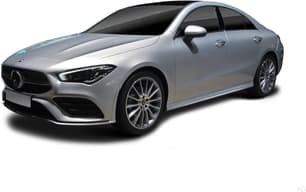
What you can have is this little beast - the new, second-generation Mercedes-AMG CLA 45 S, a small coupe-style sedan sharing its high-performance DNA with the hot as bubbling lava A 45 S hatch.
Packing 300kW – that's just over 420hp – and 500Nm its 2.0-litre engine is claimed to be the most powerful series production turbo four ever made.
And Australian deliveries are scheduled for early 2020, with a likely price tag in the mid-$90k bracket.
Mercedes-AMG invited us to the car's global launch in Madrid, Spain, where we got behind the wheel on road and track.
Don’t let people talk you into buying a tiny car just because you live in the city. That’s what I’ve learnt from being a car reviewer and living about eight kilometres from the CBD.
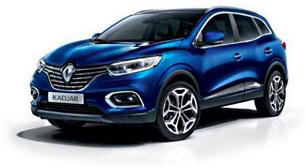
Yes, car spaces are small, or almost non existent, but the people that live there are as full-sized as people elsewhere and they often carry around just as much gear. What you need is a big, little car and the Renault Kadjar is that – a small SUV which is actually bigger than most.
The Kadjar is also French, and that’s appealing to us city folk because even though there are millions of us living in one square metre we like to think of ourselves as different, as individuals, cosmopolitan, metropolitan.
So the Kadjar looks perfect then, right?
Well, it’s good yes… in some ways, but after reading this you might prefer its Japanese cousin, the Nissan Qashqai. Let me explain...
The Mercedes-AMG CLA 45 S is more glorious madness from the hot-rodders in Affalterbach. A design and engineering master-class putting a slightly more mature spin on the fast and furious small AMG formula. But only slightly. It's brilliantly outrageous.
The Renault Kadjar Intens ticks a lot of the urban boxes. It’s small, which is good for navigating narrow city streets and parking in tight spaces, but it’s also spacious and practical. The Kadjar is fuel efficient for a four-cylinder petrol engine and it has that sophisticated French styling.
The Intens is expensive, though, and unless you absolutely have to have leather seats, a glass roof, and the Bose stereo I’d go for the mid-range Zen grade and save yourself $5K but still have all the same safety tech. That said the Intens has auto parking as standard which is a nice convenience for the city.
Safety could be better. The AEB system doesn’t have pedestrian and cyclist detection, rear cross traffic alert, or reverse emergency braking.
Finally, the dual-clutch automatic and 1.3-litre turbo-petrol engine while a fuel efficient combination, isn’t all that easy to live with and can make driving a less-than-smooth experience. The Nissan Qashqai’s combination of CVT auto and four-cylinder naturally aspirated engine is better suited to the urban jungle - something to think about there.
Now the scores, the Kadjar Intens gets the same mark for daily driving and its urban talents – it could be smoother to drive, but there’s still lots to like.
Claimed to blaze from 0-100km/h in 4.0 seconds the second-generation CLA 45 has the performance credentials of a mid-engine supercar, wrapped in a relatively unassuming three-box body. And while it might look mild-mannered from a distance, this devil's differences are in the detail.
Like it's A 45 sibling the CLA 45 S features AMG's now signature Panamericana grille with 12 vertical louvres, a winged front spoiler treatment, extra aero bits around the front air intakes and 'Power Dome' bumps in the bonnet.
The side skirts are wider, and the 19-inch twin five-spoke rims are standard. While at the back the diffuser treatment is more pronounced than the hatch, but the fat 90mm exhaust pipes are the same, and the lip spoiler is on the boot lid rather than the roof.
The interior is virtually identical to the hatch, the biggest difference being the four-door coupe's frameless doors.
A combination of Merc's 'Artico' faux leather and 'Dinamica' microfibre trim is accented with racy yellow highlights, with a nappa leather and Dinamica AMG Performance wheel and sports pedals completing the picture.
And the twin widescreen MBUX instrument and media display boasts AMG-specific read-outs on everything from gear selection, warm-up menu, car set-up, a G-metre, race timer and engine data. The standard 'Track Pack' even includes specific circuit layouts and data.
People talk about French design being good. Well if you want to see just how good take a look at the Nissan Qashqai, because the Kadjar is fundamentally the same SUV with Renault’s design spin applied.
Yep, as I mentioned about 15 seconds ago, Renault and Nissan are part of an alliance that allows them to share the same cars, but each brand has room to ‘make it their own’ with styling that delivers a very different look, inside and out.
Now, the Qashqai is not an ugly car, but I think the Kadjar is more stylish and premium looking in the same way the larger Renault Koleos SUV is gorgeous compared to the relatively straight-laced Nissan X-Trail it’s based on.
There’s no doubt the Kadjar is a Renault thanks to the giant diamond logo on the plunging grille. I like the way the front bumper rises up into the bonnet like it’s all one piece, but I’m not completely sold on the rear of the car which looks a bit like its shirt is tucked into the back of its pants, which makes no sense unless you look at the images.
Still, the tail-lights have a prestige feel and the Kadjar model name spelled out across the tailgate is a confident statement, also adopted recently by other brands such as Volkswagen (T-Cross) and Ford (Puma).
Telling the Intens apart from the other two grades is fairly easy, it has 19-inch wheels (the others have 17-inch rims), there’s the enormous glass roof, and it also has a chrome effect on the front and rear bumpers, side skirts, and around the fog lights. It’s a more premium look.
That higher-end feel goes into the cabin as well with the Intens’ black leather upholstery and colourful ambient lighting. The touchscreen is tiny, though, and there isn’t a great deal inside that you don’t get in the entry-grade Kadjar’s cabin, which is also almost as stylish.
The Kadjar is classified as a small SUV, which means nothing really when it comes to wondering if it’s going to fit in your garage or in the tiny parking spaces we’re faced with in the city.
So, I’ve mapped it out for you. The Kadjar’s dimensions are, 4449mm long, 2058 mm across (including the wing mirrors), and 1612mm tall.
Another interesting thing – each B-pillar is adorned with a little French flag. I’m not sure if they're a sign of Gallic national pride or to remind everybody that meets the Kadjar that Renaults are French.
Either way, you don’t see this type of thing on other cars and for many buyers the appeal of a Renault is having a car that’s not like everybody else’s.
At just under 4.7m long (248mm longer than the A 45 S hatch), a bit under 1.9m wide, and fraction over 1.4m tall the A 45 S in the dimensional bullseye for a compact four-door.
The CLA A 45 S driver is presented with the same sleek 'MBUX' widescreen display found in the Mercedes-Benz A-Class, and storage runs to two cupholders in the centre console, a lidded bin/armrest between the seats (including twin USB ports), decent door pockets with room for bottles and a medium-size glove box.
In a swap to the rear, sitting behind the driver's seat set to my (183cm) position, I enjoyed adequate knee and foot room, although headroom isn't as generous.
A centre fold-down armrest incorporates two cupholders, again there are generous pockets in the doors with room for bottles, and adjustable ventilation outlets are set into the back of the front centre console is a welcome inclusion. No map pockets on the racy, hard shell sports front seats, though.
There are three belted positions across the rear, but the adults using them for anything other than short journeys will have to be good friends and flexible. Best for two grown-ups, and three kids will be fine.
Boot volume is a healthy 460 litres (VDA), expanding further with the 40/20/40 split-folding rear seat down. There are tie-down hooks, a 12-volt outlet and elasticised storage pockets either side of the load space to further enhance useability. But beware, the Merc-AMG CLA 45 S is a no-tow zone.
The Kadjar is a big-small SUV, in that it’s longer than many in the same segment at 4.4m with a wheelbase of more than 2.6m, which means more space inside for people and their stuff.
That said, don’t expect limousine legroom, but at 191cm (6'3") tall, I can sit behind my driving position with my knees only just touching the front seat back, which is pretty darn good for a small SUV.
Making life a bit more comfortable back there, too, are directional air vents, two USB charging ports and a 12V power outlet. There are another two USB ports and a 12V up front, too.
Cabin storage is okay. The door pockets in the back are big enough for a 500ml bottle, while there are larger ones in the front, along with two cupholders and another circular hole, which looks like it’s for coins, if anybody still uses those?
The centre console bin is pretty decent in size and so too is the boot which has a cargo capacity of 408 litres with all seats up and 1478 litres with the second row folded flat.
The new CLA 45 is launching in the premium S variant only (a 'base' non-S version is offered in other markets). The outgoing model was tagged at $93,800, before on-road costs, prior to its discontinuation in January this year, and Mercedes-Benz Australia has hinted strongly that a price increase is likely. So, expect a list price in the mid-$90k range.
We'll cover active and passive safety tech in the safety section, and although final Australian specification is yet to be confirmed you can expect the stand ard features list to include the 19-inch alloys, 'Artico' faux leather and 'Dinamica' microfibre trim upholstery, the 'MBUX' widescreen cockpit display (two 10.25-inch digital screens) and 'MercedesMe' voice recognition, heated and electrically-adjustable sports front seats, auto adaptive LED headlights, LED tail-lights and DRLs, keyless entry and start, auto-dimming rear-view mirror, dual-zone climate-control, sat-nav, multi-function sports steering wheel, active cruise control, rain-sensing wipers, Active Parking Assist' (with ultrasonic proximity sensors front and rear), rear privacy glass, plus premium audio with digital radio, as well as Apple CarPlay and Android Auto.
The Intens is the highest grade of Kadjar you can buy and has a list price of $37,990. As a point of reference, the entry-grade Kadjar with an automatic transmission is $29,990. So, what are you getting for an extra $8K?
Well, the entry-level Kadjar comes with a 7.0-inch touchscreen with Apple CarPlay and Android Auto, cloth seats, dual-zone climate control, privacy glass and 17-inch alloy wheels. The Intens gets 19-inch alloys, leather seats (heated up front), a seven-speaker Bose sound system, leather steering wheel, panoramic sunroof, as well as LED headlights and fog lights.
The Intens also comes standard with auto parking, and even the most determined DIY parkers will appreciate that in the city.
The Intens also has more advanced safety equipment than the entry-grade, although the same tech also comes on the mid-spec Zen for $32,990.
You may already know this, but the Kadjar and the Nissan Qashqai are essentially the same car. Renault and Nissan have an alliance which lets them share technology and as well as entire models.
So, you might want to compare the Kadjar Intens to a Qashqai Ti which lists for $38,790. Other models to check are the Mitsubishi ASX and Toyota C-HR.
The A 45 S's all-new 2.0-litre (M139) engine is claimed to be the most powerful series production turbo four ever made, pumping out 310kW at 6750rpm and a monumental 500Nm, peaking between 5000-5250rpm. . That's up from an already impressive 280kW/470Nm on the out-going model.
It's an all-alloy, closed deck design fed by a combined direct and port fuel-injection system, with a single, twin-scroll turbo featuring low-friction roller bearings for quick spool up.
It's transversely mounted, but compared to the previous model has been spun 1 80-degrees on its vertical axis so the turbo's near the firewall and the intake system sits at the front to simplify and shorten ducting on the intake and exhaust sides.
The cylinder linings are treated with Merc's patented 'Nanoslide' coating, which delivers an ultra-hard, mirror-like surface for less friction and greater durability. And 'Camtronic' variable valve control sits on the exhaust side.
Drive goes to all four wheels via an eight-speed 'AMG Speedshift DCT 8G' dual-clutch auto, with manual shift paddles attached to the steering wheel.
While the Renault Kadjar and Nissan Qashqai are essentially the same car, they don’t share the same powertrain. The Kadjar has a smaller but more powerful engine – a 1.3-litre turbo-petrol four-cylinder making 117kW/260Nm.
Shifting gears is a seven-speed dual-clutch auto. There’s no manual available, and all Kadjars are front-wheel drive.
Frankly, the Qashqai four cylinder with less grunt and CVT are a smoother combination. The dual-clutch auto and turbo lag means power delivery and acceleration are delayed, while low-speed gear shifts can be jerky.
Claimed fuel economy to the combined cycle NEDC (New European Driving Cycle) standard is 8.1L/100km, the engine emitting 186g/km of CO2 in the process. Figures for the Australian (ADR 81/02) standard will be issued at the time of the car's local launch in early 2020.
Stop-start is standard, minimum fuel requirement is 98 RON premium unleaded, and you'll need 51 litres of it to fill the tank.
Our combination of furious hot-lapping on the circuit and relatively enthusiastic open road driving on the launch program means we'll wait until we test the car on home soil to log a real world average.
Renault says after a combination of open and urban roads the Kadjar will have used 6.3L/100km. In my own testing I measured 6.5L/100km at the fuel pump. That’s outstanding.
Mercedes-AMG invited us to the Jarama race circuit just outside Madrid in Central Spain, and the twisting B-roads nearby, to sample its latest pride and joy.
In the AMG tradition the engine is assembled by hand, by one technician. And hats off to the spanner twirlers, they do a great job. It's a spectacular unit. Torque delivery is shaped to mimic a naturally aspirated engine, with the maximum figure arriving between 5000-5250rpm.
But that's not to say it's hollow in the mid-range. Around 90 per cent of that peak number is available from below 3000rpm and low-end throttle response is brilliantly crisp and linear, helped in no small part by roller bearings on the turbo for a quicker spool up.
Merc-AMG claims 4.0 seconds for the sprint from 0-100km/h, which is supercar fast and with drive going to all four wheels entertainment is the name of the game.
The eight-speed dual-clutch auto is positive and sharp, especially in manual mode where shifts flick through in much less than the blink of an eye.
And as the A 45 S beefs up the A-Class on the outside, it's the same underneath the skin with body reinforcement including an alloy sheering plate under the engine, a front strut tower brace, extra reinforcement between side members and A-pillars, and diagonal struts on the front and rear of the underbody.
So, the strut front, four-link rear suspension has an extra stiff platform to hang from, and the three-mode 'Ride Control' active damping can transform the ride from soft and compliant to tightly buttoned down.
The speed-sensitive, electromechanical steering is specifically tuned for this car, and it points accurately with good road feel and pleasantly firm weight in Sport and Sport+ modes.
Rubber is Michelin Pilot Sport 4 S, and it grips hard. On the fast and technical Jarama circuit they performed flawlessly, helping the A 45 S transform its prodigious power into maximum forward velocity without fuss.
The icing on the dynamic cake is 'AMG Dynamic Select' with six modes from 'Comfort' to 'Race' adjusting the engine, transmission, steering, suspension, and exhaust.
On top of that 'AMG Dynamics' uses the ESP and torque vectoring (by braking) to vary the level of stability and slip through four levels from 'Basic' up to 'Master'.
We played with all the toys including 'Race Start' and a 'Drift Mode' made possible by a new rear axle featuring two multi-disc clutches - one for each rear wheel.
Torque is split variably between front and rear axles with a default setting of 50/50 rising to around 70 per cent to the rear when pushing hard. Drive is also continuously managed across the rear axle, and like a swan gliding across the lake all the action happens seamlessly out of sight, turning you into a track hero in the process.
The first-gen A45's exhaust was a mass of pops, bangs and crackles, while this car's more rasping and rorty exhaust note is controlled by a flap in the system adjusted by engine speed and load. It's also amplified by the 'AMG Real Performance Sound' system, which puts some actual engine and exhaust noise (nothing is synthesised) through the speakers.
Open road ride comfort in the softest setting is surprisingly good, with rough surfaces unsettling the car only slightly despite the big 19s and high-performance rubber. Body control is S and S+ settings is spot-on, the car feeling planted, predictable and ultra-responsive on tight, twisting backroads.
Braking power is professional grade with six-piston calipers at the front and single piston rear, on vented and perforated rotors all around. Even following session after session on the track there wasn't a hint of fade.
Renault’s Kadjar may be a better-looking version of Nissan’s Qashqai, but it doesn’t drive as well. This comes down to the engine and transmission Renault has gone with.
There’s turbo lag with that small four-cylinder and this delay is made more pronounced by a dual-clutch transmission that causes the vehicle to lurch during shifts.
This type of shemozzle is not uncommon, the Ford Puma and Nissan Juke behave in the same way with their similar powertrains.
There’s nothing wrong with them, it’s just that for a car that’s probably going to spend its life mainly in the city, the Kadjar won’t provide the smoothest driving experience.
The Qashqai has a CVT automatic and while these transmission aren’t as sporty feeling as a dual-clutch, they’re smooth and good for easy city driving.
The Kadjar does have a comfortable ride and good handling, so if you’re able to get used to the antics of the engine and transmission there’s more to like than not about the way this Renault drives.
Although final Australian spec is yet to be finalised, you can expect a host of active safety tech including ABS, BA, EBD, stability and traction controls, a reversing camera (with dynamic guidelines), 'Active Brake Assist' (Merc-speak fo AEB), 'Adaptive Brake', 'Attention Assist', 'Blind Spot Assist', 'Cross-wind Assist', 'Lane Keep Assist', a tyre pressure warning system, the 'Pre-Safe' accident anticipatory system, 'Traffic Sign Assist' and 'Adaptive Highbeam Assist'.
If all that fails to prevent an impact you'll be protected by nine airbags (front, pelvis and window for driver and front passenger, side airbags for rear seat occupants and a driver's knee bag), and the 'Active Bonnet' automatically tilts to minimise pedestrian injuries. A first-aid kit and hi-vis vests in the boot are thoughtful additions.
The A-Class was awarded a maximum five ANCAP stars in 2018, and for smaller occupants there are three child restraint/baby capsule top tether points across the back seat, with isofix anchors on the two outer positions.
The Kadjar hasn’t been given an ANCAP safety rating, but it did score the maximum five stars when tested by its European equivalent Euro NCAP in 2015.
But beware, the Kadjar isn’t equipped with much in the way of advanced safety equipment. Yes, there is AEB on all grades, while the mid-spec Zen and top-of-the-range Intens come with blind spot monitoring and lane departure warning. But that’s about it. No lane keeping assist, or rear cross traffic alert, or adaptive cruise.
There are front and rear parking sensors, which are almost vital in the city, and a reversing camera.
It’s for this reason the score here is so low – charging $38K and not having anywhere near the level of safety tech on a new car that costs much less is disappointing.
For child seats there are three top tether anchor points across the second row and two ISOFIX points.
Under the boot floor is a space saver spare wheel.
The Mercedes-AMG range is covered by a three year/unlimited km warranty, which, like Audi and BMW lags behind the mainstream market where the majority of players are now at five years/unlimited km, with some at seven years.
On the upside, Mercedes-Benz Road Care assistance is included in the deal for three years.
Service is likely to be scheduled (as per the out-going CLA 45) for 12 months/20,000km (whichever comes first) with pricing available on an 'Up-front' or 'Pay-as-you-go' basis.
For the first-gen CLA 45 pre-payment delivers a $500 saving with the first three services set at a total of $2950, compared to $3650 PAYG. Fourth and fifth services are also available for pre-purchase.
The Kadjar is covered by Renault’s five-year/unlimited kilometre warranty.
Service intervals are every 12 months or 30,000km and capped at $399 for the first three services, followed by $789 for the fourth then back to $399.
There’s also up to five years roadside assistance, if you service your Kadjar with Renault.