What's the difference?
Once upon a time, people would dream about owning a Mercedes-Benz 450SLC – the C107 sports/luxury coupe flagship of the 1970s.
Sexy, stylish, secure and incredibly solid, it embodied the brand’s ‘Engineered Like No Other Car' mantra of the era.
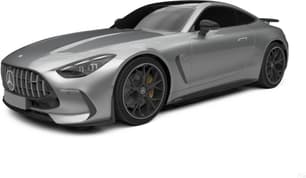
Today’s all-new, second-generation, C192 AMG GT Coupe is something of an indirect descendant of this sort of thinking, changing tack from its supercar-esque 2014 C190 predecessor, with more space, more seats, more sensibility and, conversely, even more steak and sizzle from its glorious V8.
A modern-day SLC? The Porsche 911, Aston Martin DB12, Maserati GranTurismo and Bentley Continental GT’s worst nightmare? Or something else entirely?
These questions and more are answered below.
This story has been updated in February 2022 to reflect market changes and pricing adjustments for the MG3. It was originally published in the first half of 2020.
My time at CarsGuide started in October 2017, and since then I’ve booked literally thousands of cars across Australia. One car that has eluded me - and the CarsGuide team - over that period is the one you see here: the MG3. Or the MG MG3, or MG 3, if you wish.
Despite asking MG’s Australian arm countless times to loan an MG3 hatchback over that period, the company in charge of the brand’s PR in Australia refused to agree to loan us a vehicle to test. Now the company has an in-house PR team with a pretty decent fleet of press cars, yet still, no MG3.
Over the years, our desire to review the MG3 hatch - and to help you decide whether it's right for you or not - has only gotten stronger because sales have skyrocketed. Back in late 2017 the brand was averaging only a handful of cars per month - indeed, just 52 examples of the MG3 were sold in total in 2017.
Since then, the MG3 has skyrocketed, and it is the best-selling light car in Australia. In 2021, the brand moved more than 13,000 MG3s - meaning it is averaging 250 cars sold per week. Makes the paltry 2017 numbers look a bit meagre. In becoming the number-one seller in the segment, it has beaten big-name rivals including the Kia Rio, Mazda 2 and now defunct Honda Jazz, while also being well clear of the cheaper Kia Picanto, which is what many people will be shopping this car against if price is a key driver for their decision.
And that's the case in point, really - a lot of its success comes down to the price of the Chinese-built, British-badged city car. It’s cheap - but is it a cheerful experience? We got the chance to find out in 2020, thanks to a friendly MG dealership in NSW - and this review has been updated with the most current pricing, because nothing else has changed.
The GT63 4Matic+ is a breathtaking example of everything that Mercedes-Benz and AMG are.
Ferociously fast, incredibly agile and superbly sophisticated, it should be on anybody’s shortlist, if that also includes a Porsche, Aston Martin, Maserati or even a Lamborghini. And it’s definitely much more than yesterday’s SLC ever was – for similar money in today’s terms, as it turns out.
But, around Tasmania’s glorious roads at least, the Mercedes-AMG lacks the ride comfort and road noise isolation to be a fully-rounded-out GT, and that’s a disappointment for a brand with such formidable history in making such cars.
Aside from its safety shortcomings and underwhelming powertrain, it’s easy to see why the MG3 has become a successful part of the brand’s line-up. If you’re driving around a rural centre like I was, it makes a lot of sense.
Whether you choose the Excite model, which has a bit more visual pizzazz, or the Core model, which is our pick of the range, the MG3 is well priced, has the media tech buyers are after, is a charming looking thing that comes in a range of great colours, and is smartly packaged, too.
Thanks to the team at Orange MG for assisting us with this the loan vehicle for this review. Head to Orange MG for more information.
This is still clearly a Mercedes AMG GT coupe, like the 2014 C190 original, but a ground-up redesign sees it subtly yet significantly altered.
Some 270kg heavier than before, the larger-in-every-dimension body combines aluminium, steel, magnesium and fibre composite materials for improved rigidity and a lower centre of gravity. Length (4729mm) and wheelbase (2700mm) have been stretched by 177mm and 70mm respectively. Width (1984mm) and height (1352mm) are also up.
The nose treatment is similar to before, especially with the bulgy bonnet and signature vertical slatted grille fitted. These, combined with the LED digital headlight shape effect, is reminiscent of, but far-better executed than, the goofy-looking MG5’s face.
Underneath, it's an all-new platform shared with the SL, with the rear transaxle of the old car replaced by a permanent AWD system, leading from 46:54 front/rear weight distribution to 50:50 as a result.
That aggressive, exaggerated cab-backward/ultra-long bonnet silhouette that visually connected it with the SLS gives way to more-conventional and practical coupe proportions that is striking if not especially original, since they do look quite 911-esque. Along with the longer wheelbase and wider tracks, the result allows for two small rear seats to be fitted, while liftback cargo access remains.
Similarly, in the name of way-more usable interior packaging, Mercedes-AMG says it pushed the driving position nearly 180mm forward compared to the previous GT. Let’s see what that all looks like inside.
It’s a fresh looking thing, the MG3.
From its attractive front-end with “London Eye” LED daytime running lights, its Euro-look angular front bumper and chrome-trimmed grille, and its angular window lines, it really does have a distinct personality.
It looks a lot more modern and enticing than the first version of the MG3 sold here, and I have no doubt that a lot of buyers of the MG3 have been attracted by its sharp styling first and foremost. MG has done a tremendous job of creating a family look - it just happens that the family looks like it has been taking good care of itself, keeping active and trim, too.
The rear end isn’t quite as attractive, with the vertical tail-lights making it seem taller than it is. It’s still a nicely sculpted back-end, though.
On the Core model you’ll get some lower blacked-out design trim bits, and the wheels fitted are 15-inch alloys.
The Excite model seen here is a little more, dare we say it, exciting to look at. That’s down to its body kit, consisting of lower chrome elements on the front bumper, a set of black side skirts, and a hatch-mounted rear spoiler. You get 16-inch alloy wheels, too.
In terms of dimensions, it’s closer in size to the Kia Rio than it is the Picanto. With a length of 4055mm (on a long-for-its-size 2520mm wheelbase), a width of 1729mm and height of 1504mm, it’s a pretty chunky little unit.
It is rather conventional in the way its interior is designed, however - there’s no sliding second row (like the Suzuki Ignis) or flip-folding seats (a la the Honda Jazz). Check out the interior pictures below to see for yourself.
The first impression inside is that of space, despite the falling roofline and coupe-like upsweep of the side windows and you look back. While, again, similar to a 911s, a kink at the door gives the GT a unique character.
Even larger people will appreciate the generous amounts of room up front, with space to stretch, sat in sumptuously comfy bucket seats. Note that the standard ones are better than the racier but firmer Sports versions.
The driving position is perfect, ahead of a dashboard that is very typical modern Mercedes in appearance and layout.
To that end, the tablet-style integrated touchscreen (11.9 inches) is clear, fast and intuitive once time is taken to learn it. And points are also won for the multi-configurable electronic instrumentation, that allows for a variety of screens, including track, classic and minimalist views.
The trademark turbine air vents, the quite beautiful material and trim finishes and just the general solid feel are further typical contemporary Mercedes cabin treatments, as are the excellent ventilation and ample storage options.
And while rear vision isn't great, that's what cameras are for. It's all pretty much on brand.
It is a shame, given how elevated the Mercedes-AMG engineering is underneath, that the GT’s interior look and ambience is so similar to those of a (albeit higher-spec) C-Class or GLE. It's simply not as special as some of the company’s previous sports cars.
More annoyingly, the ride is too firm and bumpy for a GT, and this has the unhappy effect of provoking random rattly trim sounds within the cabin. It’s a bit like scrunched-up cellophane. In a $420K (as tested) Merc, that’s very disappointing, especially as it can be heard over the copious amount of road and tyre noise droning through, particularly on coarser bitumen surfaces.
Further back, the rear seat is strictly two-plus-two, and nobody over 150cm tall is recommended to travel there by Mercedes itself. That sloping roofline is the culprit. That said, brief trips with a bowed head are possible, as the fixed cushions and split-folding backrests are actually surprisingly comfy. But only for short journeys. Kids should love it though, and the second row does open up the GT’s usefulness enormously.
As does a near-doubling of the AMG’s cargo capacity, jumping 146 litres to 321L with backrests erect, to a whopping 675L (+325L) in two-seater mode. The flat floor is accessed via a large electrically-operated liftback door, offering quite a large aperture for easy loading/unloading.
Having no spare wheel helps here, with a tyre inflation kit included in lieu of that.
Meanwhile, at the front, under the bonnet, things have definitely changed for the better as well.
If you’ve owned the same old car for years and you’re setting foot in an MG3 for the first time, you’ll probably feel amazed that you can get an interior with interesting finishes, a high-tech screen and decent materials at this price point.
Earlier versions of the MG3 were nowhere near as good inside as the current model, which has been on sale since 2018. It’s not perfect, but there are plenty of things to like.
The seats offer plenty of adjustment, including a huge amount of height adjustment for shorter drivers. The seat is comfortable, though some drivers might find it hard to get the right position: there is no reach adjustment for the steering wheel (only rake adjust), and you can’t adjust the seatbelt height, either.
I really like the seat trim which is a broad tartan design (with “synthetic leather” bolsters and contrast stitching in the top-spec Excite), mirrored by an etched tartan aluminium trim piece on the dashboard - it looks really smart, even if my OCD radar was set off by the fact the trim wasn’t aligned to match perfectly between the cushion sections. Take a look at the interior pictures to see what I mean.
There are some really nice elements to the cabin. Things like the 'lock' and 'unlock' button on the driver’s door, which looks like it has been stolen directly from Audi’s parts catalogue. The same can be said for the speedo instrument font.
There’s no doubt that it’s built to a price, but it doesn’t feel anywhere near as cheap as you might expect. We’ve criticised Audi, VW and Skoda for cutting costs with hard plastic trims on doors and dashboards, and the MG has plenty of hard plastics, too - but it’s expected at this price, not double it.
There’s a standard 8.0-inch touchscreen media system with AM/FM radio and Bluetooth phone and audio streaming, plus USB connectivity and smartphone mirroring - meaning you get Apple CarPlay, essentially negating the need for sat nav if you use an iPhone. You can option a GPS navigation system on the Core model, but satellite navigation comes standard on the Excite. There's no Android Auto mirroring available at all, though.
In previous models from the SAIC stable - including the LDV T60, and MG ZS - I had troubles with the media screen, but the version in the MG3 Excite I drove was quick and problem free, even when disconnecting and reconnecting my phone multiple times.
There are other little things that could be improved, like the fact the trip meter is difficult to navigate, and there’s no digital speedometer. Also, the digital climate control in the Excite model shows up on the media screen, though by way of a graphic rather than a temperature number. In the base model Core there’s a simpler manual a/c system.
The steering wheel has a part leather trim with perforated edges which makes it look and feel a little bit sporty – and it has a flat bottom as well, which will appeal to the sporty-minded buyer. There are stereo and cruise control buttons on the wheel, but the stalks behind are “back to front”, with the left stalk for indicators and lights, and the right for wipers.
As for storage, up front there is a single cup holder between the seats, a couple of small storage sections including a trench for a wallet, and another storage section in front of the gear selector - that’s where the MG3’s single USB port is, too.
The front door storage includes bottle holders, and there are soft padded elbow pads on the front doors - which is more than we can say for some of those aforementioned Euro brands.
With the driver’s seat set in my position (I’m 182cm tall), I had enough back seat space to be comfortable. There was enough knee room and toe room, and reasonable headroom if I sat perfectly still - although the slightest tilt of my head to the outer side of the car saw my noggin contact the headlining. Rear seat comfort is okay - the backrest is a firm, but there’s good visibility out the windows. There are dual ISOFIX child seat anchor points, and three top-tether points for baby seats.
In the back the storage is minimal. There are two map pockets, but no door pockets, and there’s no flip-down centre armrest with cupholders. But there is one large pocket in front of the middle-seat rear passenger which would do for a bottle. The back seat also misses out on soft elbow pads on the doors.
Boot space is good for a car in this size segment. You’ll only really do better if you buy a Honda Jazz or Suzuki Baleno, as the MG3 offers a deep and boxy cargo zone, with a cargo capacity of 307 litres to the cargo cover.
Need more luggage capacity? The back seats fold down in a 60:40 split, alleviating 1081L of space - though the load-through is limited as the seats don’t fold completely flat. Or you could fit a roof rack.
Starting from $370,400 (all prices are before on-road costs), the Mercedes-AMG GT63 4Matic+ is priced and positioned as something of an eagle amongst some pretty delectable doves, given its combination of four seats, 430kW of power, 800Nm of torque and four-wheel drive.
No rival equivalents can match the Mercedes on paper. The 398kW/610Nm 911 Carrera 4 GTS T-Hybrid offers less power but starts from $400,000-plus. The 410kW/650Nm GranTurismo Trofeo begins at $450K, the 500kW/800Nm DB12 from $455K and the 404kW/470Nm Continental GT from $460K.
Only the 460kW/750Nm BMW M8 Competition comes closest to the Mercedes-AMG, from $380K.
Side note, today’s GT is only slightly more expensive than what the 450SLC was nearly half a century ago when adjusted for inflation.
And, just like with that classic old Benz, it shares much with the brand’s legendary SL convertible stablemate – including, in this case, standard all-wheel drive and active rear-axle steering… aka 4WS to select third and fourth-generation Honda Prelude owners out there.
What else does $400K-plus buy you? As you’d expect, the GT63 4Matic+ comes choc-full of standard equipment, much of it typical of the luxury coupe breed, with leather-covered and electrically operated everything.
How about a front-axle lift system with GPS-enabled memory that automatically raises the GT’s nose to help clear bumps and then remembers to do so next time?
There are climate-controlled AMG sports seats with inflatable bolstering and massaging functionality, a fixed glass roof, a head-up display, augmented-reality satellite navigation, 360-degree surround views, performance telemetry data as part of an extensive multimedia system, an 11.9-inch portrait touchscreen, 11-speaker Burmester audio, a handsfree-powered tailgate, 21-inch alloys and cutting-edge driver-assist safety tech. More on that in the Safety section below.
Then there are the myriad option packs, bumping the GT63’s price up towards $500,000. These include a $2.7K seat trim package; a $10K AMG Night Package that adds darker trim treatments (often where chrome was); an aerodynamics package with fixed spoiler replacing the standard active spoiler; a $2.6K AMG Performance Seat package; a $13K Carbon Fibre package and $13.2K Ceramic Brakes.
Now, while the new GT does ditch the previous model’s unique rear transaxle spaceframe pioneered by the gull-winged SLS of the early 2010s, the resulting longer wheelbase and shorter overhangs do provide less outlandish and more practical design.
Let’s check that out in more detail.
The success of the MG3 in Australia has been largely driven by its price.
And no wonder - pricing for cars of this size has increased steadily, and plenty of brands have found their light cars in the "too hard" basket as a result.
But the MG3 is still relatively cheap. Prices have jumped over the time since we drove this particular car, but they're still sub-$20K for all models in the range.
For context, the 2020 model started at just $16,490 drive-away for the Core model and topped out at $18,490 drive-away for the top-spec Excite, and those prices were the RRPs listed on MG’s site at the time.
But now the MG3 has become a bit pricier - the current pricing for the range is up, with the base model Core now $18,490 drive-away, while the Core with Nav model costs $18,990 drive-away, and the top-spec Excite grade is a Macca's meal short of twenty grand at $19,990 drive-away.
Wondering what features you get when it comes to the models in the range? It's pretty simple, so let’s run through what each model gets.
The Core gets 15-inch alloy wheels, cloth tartan finish seat trim, auto on/off halogen headlights with LED daytime running lights, manual air conditioning, electric windows, electric mirrors, and a leather steering wheel with audio and cruise control buttons. There’s a space-saver spare wheel, too.
The media system includes a 8.0-inch touchscreen with USB connectivity, Apple CarPlay (no Android Auto), Bluetooth phone and audio streaming, and AM/FM radio. There’s no CD player, and the Core model gets four speakers. If you're keen on sat nav, you can step up to the Core Nav model, which adds $500 to the bill.
Stepping up to the Excite nets you a few extras like 16-inch two-tone alloy wheels and a body kit, body-coloured mirrors, vanity mirrors in the sun-visors, and synthetic leather trim on the seats with contrast stitching.
The Excite also includes GPS sat nav as standard, and steps up the sound system to be a six-speaker unit with “Full Vehicle Yamaha 3D Sound Field”.
Interested in the safety spec inclusions? Read the safety section below for what’s included, and what’s missing.
Our friendly MG dealer let me know that he can’t get enough of the Tudor Yellow models, and that colour - as well as Dover White and Pebble Black - are no-cost optional hues. You should bare in mind that Regal Blue metallic, Scottish Silver metallic and Bristol Red metallic (as seen here) will set you back an additional $500. Looking for orange, green or gold paint? Sorry, no can do.
As for accessories, beyond floor mats there’s not a lot to speak of. Oh, and those wishing for a sunroof? No chance… unless you’re handy with a Sawzall. Note: do not cut a hole in the roof of your car.
While the prices have gone up since we originally published this review, the MG3 still scores strongly for pricing and specs, because the market has moved up, too, and like-for-like it's still cheaper than almost all of its rivals - Picanto excluded.
There’s a plaque signifying which engineer “handcrafted” the GT’s engine – in this case, the famous M177 in 3982cc, 4.0-litre twin-turbo intercooled V8 petrol guise.
Delivering 430kW of power at 6500rpm and 800Nm of torque from 2500-4500rpm, it sends drive to all four wheels via a nine-speed multi-clutch transmission (dubbed MCT in AMG-speak), catapulting the GT63 4Matic+ from 0-100km/h in just 3.2 seconds, on the way to a top speed of 315km/h.
How does it do that?
With AWD, the GT is now nearly 15 per cent heavier than before, but it still manages a punchy 218kW/tonne. Active aerodynamics over, inside and under a more-rigid body structure also helps.
The AMG 4Matic+ AWD system goes from 50/50 front/rear, to 100 per cent rear, variable torque distribution according to conditions and settings, and backed up by an electronic limited-slip differential. Among the many driving settings are Race Start, Drift Mode and good-old Comfort, if it all becomes too much.
Also keeping all that performance in check is a high-performance composite brake setup with improved cooling for faster responses.
Interlinked active roll bars improve body control, the five-link independent suspension features adaptive dampers for a softer ride.
And, as for that 4WS tech, the rear wheels steer opposite to the fronts at up to 100km/h (by some 2.5 degrees) for tighter and tidier handling, or 0.7 degrees in the same direction above 100, for greater stability and road-holding.
Its effect on the way this near-two-tonne coupe zigs and zags around corners is something you need to experience to really appreciate.
Keen to know the engine specs for the MG3? Well, it’s pretty simple on the specifications front.
There’s just one motor available: a 1.5-litre four-cylinder non-turbo petrol engine, dubbed NSE Major by MG.
It has class competitive outputs of 82kW (at 6000rpm) and 150Nm (at 4500rpm). It is only available with a four-speed automatic transmission and front-wheel drive. There’s no manual transmission available anymore - it was available in the earlier MG3s, but no more.
While some competitors offer higher-powered flagship variants that act as the horsepower hero of the range, there’s no such variant in the MG3 range. Not yet, anyway. For now there’s just one engine size, no turbo, and no diesel or EV models to speak of either.
The tare mass/tare weight for the MG3 hatch is 1170kg, which is a bit heavier than a Mazda 2, but pretty much on par with a Kia Rio.
Considering a caravan holiday with your new MG3? Maybe think twice - the maximum towing capacity is just 200kg.
If you’re worried about engine problems, clutch problems, or have questions about the battery, gearbox, or the oil requirements, be sure to stay tuned to our MG problems page. And if you're curious about whether it has a timing chain or timing belt? It's a chain.
Actually, the GT’s economy isn’t horrendous considering how fast it can go.
Even blasting a few times around beckoning country roads, we managed an indicated 13.0L/100km, which is an improvement on what Mercedes-AMG says the GT averages the 14.6L/100km average that Mercedes-AMG officially states.
That translates to a carbon dioxide emissions rating of 334g/km.
Using 98 RON premium unleaded petrol, an average of just under 480km between refills of the 70L tank is possible. The urban run sees consumption rocket to 21.8L/100km (for just 321km of range), or 10.4 out on the highway run, meaning that over 670km is possible should you decide to drive in a docile manner.
The combined cycle fuel consumption claim - which is what the brand claims the vehicle should use across a mix of driving situations - is the same across the MG3 line-up: 6.7 litres per 100 kilometres.
During my time with the car - which consisted of exactly 100km of mixed driving - I saw an at-the-pump fuel economy return of 7.7L/100km, which is decent.
The fuel tank capacity of the MG3 is 45 litres - meaning a theoretical mileage per tank of about 580km. It runs on regular unleaded (91RON), too.
Just be aware, the filler neck of the fuel tank is a little less angled than some other cars, so you might find it can splash back when it ‘clicks’ the first time.
Nobody will drive the GT63 4Matic+ and think, ‘Oh, this is OK’, because its breadth of performance is phenomenal.
No matter which mode you're in, from Comfort through to track-tuned Race, the Mercedes-AMG blends forceful pace and commanding control without ever breaking a sweat.
Flex your right foot and the two-tonne coupe bounds into action like a giant on a mission, striding past posted speed limit signs in nanoseconds and way, way faster than the law will stand if diligence isn’t exercised.
And there’s no point relying on seat-of-your-pants sensations, either, because the chassis below embraces the road with an almost zealous devotion. Which is astounding, given how agile the four-wheel steering-enhanced handling is.
The 63’s super power is exactly that – it dulls your sense of speed. One tester admitted to exceeding 150km/h before noticing. An odd confession considering the sonic boombox that is the bi-turbo V8’s howl.
But jailbait performance is not even the 63’s most lingering joy. That would be its steering perfection, that delivers that rare trifecta of keenness, crispness and communication. The wheel feels eager and alive in your hands, even when powering between tight turns, backed up by sensational grip and control. How can a two-tonne GT handle so sharply?
Warm, dry roads were the order of the day, so we can’t tell you how the 4Matic+ permanent AWD system deals with wet or slippery surfaces, but the slick multi-clutch transmission, seamless torque-vectoring tech and sticky tyres more than cope with the 63’s formidable outputs.
So, that's the gushing part out the way, then.
Despite the adaptive dampers, rigid architecture and exquisitely sophisticated suspension, the ride is simply too stiff in Comfort mode, and downright jittery on some of the Tasmanian roads we tested on, for the 63 to be considered a true luxury grand tourer. It just isn't comfortable, luxurious or supple enough.
Plus, grippy as they are, the 21-inch wheels transmit too much road and tyre noise through to the cabin, meaning that the GT isn't as quiet as you'd hope. Add the aforementioned trim squeaks, and the expected cocooned silence isn’t always there.
The upshot is that the 63 possesses more of a sports car character than a luxury GT character. Great news if you're a 911 type buyer and are seeking a high-performance 2+2 alternative, but a disappointment if comfort and refinement are priorities.
Still, it is impossible not to be deeply moved by this Mercedes-AMG.
You might think of MG as a sports car brand - that’s what they built back in history, after all, and those are the reminiscences the company is hoping you’ll have when you see the famed octagonal badge.
And of the current crop of models that MG sells in Australia, the MG3 is undoubtedly the sportiest.
That comes down to its driving manners, steering and ride - but not the engine and transmission.
The powertrain feels to be lacking enough power and torque to make it feel light and zippy when accelerating. The automatic transmission doesn’t make the greatest use of the engine, and can be indecisive when climbing hills or when you ask more of the car. Oh, don’t even think about a 0-100 performance claim - no such number exists.
In urban driving at lower speeds it’s fine. Between traffic lights and encountering roundabouts, and there’s not much to complain about. It doesn’t have any lag or lurch from a standstill, and is smooth and quick enough to get away from rest, too.
It’s just once you start to ask more of the engine and transmission that you notice that things could be better. There is, at least, a manual shift mode for the transmission to allow you to take control of the shifts, and there’s a sport mode too, which will hang on to gears and quell the indecision of the transmission to a degree.
On the open road it gets along fine, sitting at the speed limit without much fuss - although once you encounter a hill, you will notice the speed drop off a little. And the cruise control seemingly has a bit of a mind of its own, with a set speed displayed at 100km/h, I noticed the speed varying between 90km/h and 110km/h, depending on the terrain.
It’s the road holding, grip, handling and steering that help it live up to the badge, with steering that has a nice hefty weight to it and good directness at pace or around town. It even offers a little bit of feel through the wheel, which is welcome. That grip was surprising given the tyres fitted to the Excite’s 16-inch alloy wheels (Giti GitiComfort 228 tyres in 195/55/16 size).
The ride is tuned with a firmer character to it than you might expect. It’s not to the point of discomfort, and nor is it fidgety or clumsy over potholes or sharp edges. And that tune for the Macpherson strut front suspension and torsion beam rear suspension means that it feels plenty grippy in corners. Over my drive loop - incorporating sweeping bends and tighter twists - the MG3 stuck itself to the road commendably, with no noticeable skittishness to speak of.
Indeed, I kept thinking that the suspension tune reminded me of a VW, Skoda or Audi city car - assured, confident, and ultimately a bit of fun.
The braking performance was good, too - it pulled up true and straight under heavy braking, and offered decent response at city speeds, too.
One minor criticism was some noticeable wind noise from around the windscreen pillar / mirror area, which was evident at speeds from 70km/h up.
While the GT doesn’t score an ANCAP rating – probably because it’s too expensive to crash test – we’d wager that it would be above-average, given Benz’s track record as a pioneer in this field.
That’d due to the scores of active, passive and driver-assist safety features fitted, from multi-faceted autonomous emergency braking (AEB) and lane-support systems to Mercedes’ PRE-SAFE tech that anticipates a crash and then prepares the car for impact.
More specifically, the GT includes Active Lane Change/Keep Assist, adaptive high beam as part of its megapixel LED set-up, adaptive cruise control, Cross-Traffic Assist, Evasive manoeuvre support, an emergency services call-out system, 360-degree camera views, pedestrian protection bonnet and eight airbags.
In other Mercedes products of today, AEB operating parameters are 7-80km/h for vulnerable road users like pedestrians and cyclists, and from 7-250km/h for vehicle-to-vehicle, while the lane-keep support systems operate between 60-200km/h.
Finally, there are ISOFIX child-seat anchorages in the front passenger seat and two in the rear seats.
Safety technology is the MG3’s biggest shortfall. There’s no ANCAP crash test safety rating to speak of, and the MG3 doesn’t come with any form of auto emergency braking (AEB), which is disappointing given the tech has been available on affordable city cars since 2013 (the VW up! was an early benchmark).
Even the facelifted Mitsubishi Mirage has AEB with pedestrian detection, but the MG3 doesn’t. Nor does it come with lane keeping assist, lane departure warning, blind spot monitoring, rear cross-traffic alert or rear AEB.
So what do you get? The range comes standard with a reversing camera, rear parking sensors, electronic stability control, and six airbags (dual front, front side, full-length curtain). And that may be enough for you, but we know you can get more safety tech in rival cars, so it can’t score well against this criteria.
Where is the MG3 built? It’s made in China.
What’s the GT like to own?
Mercedes-Benz offers a five-year/unlimited km warranty, with five years of roadside assistance. This is average for most mainstream and luxury brands, but superior to most sports-car makers like Porsche and Lamborghini.
Intervals are every 12 months or 20,000km, and while no capped-priced servicing is offered on the GT, pre-paid three-, four- or five-year service plans are available, ranging from $5165, $7700 and $8665 respectively.
Big performance demands big maintenance bills, it seems.
I kept thinking about one particular thing over my time in the MG3 - the warranty. It’s such a great peace of mind move from the company to back its cars with a seven-year/unlimited kilometre warranty plan.
If your brain works like mine, you could calculate it out and see the purchase of the MG3 completely differently: what about thinking of it as a $2500-ish-per-year investment, and at the end you get a free car…! The same can be said of the Kia Picanto and Rio, though.
That warranty should put your mind at ease when it comes to reliability, problems, common faults and issues, as any required fixes are set to be covered by the brand over that period. And buyers get seven years of roadside assistance included, too.
Maintenance is required every 12 months/10,000km, whichever comes first. That’s a bit more regular than some rivals (most have 15,000km intervals), but the brand backs its cars with a seven-year fixed service cost plan. Servicing costs averaged out over the first seven years/70,000km of ownership equate to $382 per visit (before GST), which isn't cheap, but nor is it expensive.
Here's a rundown of the recommended service costing (all prices pre-GST): 12 months/10,000km: $231.76; 24 months/20,000km: $385.23; 36 months/30,000km - $379.72; 48 months/40,000km - $680.74; 60 months/50,000km - $231.76; 72 months/60,000km - $533.19; 84 months/70,000km - $231.76.
Keep the service logbook stamps up to date in your owners manual - it’s a ticket to better resale value.