What's the difference?
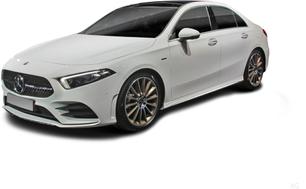
Meet the world’s most aerodynamically efficient passenger car. Mercedes-Benz says the drag co-efficient for this new sedan version of its fourth-generation A-Class is the lowest ever measured for a passenger vehicle.
Which is quite a claim, but you only have to look at it to see how much work has gone into marrying good looks with slippery aero performance.
The A-Class sedan is substantially longer and fractionally taller than its hatchback sibling, but does that mean it’s better, or simply different?
Subaru struck gold when it first launched the BRZ in 2011.
It, alongside the related Toyota 86 (now GR86), has been the standard for budget two-door sports cars for 15 years now. Nothing besides the MX-5 convertible is in the same class.
However, buyer’s preferences have changed dramatically over the years and sports cars are at risk of becoming more mundane and vanilla to please the general public. It’s great that Subaru continues to offer the BRZ, importantly with the availability of a manual gearbox. Hallelujah.
Last year Subaru made some slight tweaks to the BRZ, including adding active safety tech and a ‘Sport’ mode to the manual trims, plus a full-size spare wheel on the top-spec tS grade.
Speaking of, we’ve got the BRZ tS manual on test here, so let’s see how it fares in 2026.
Mercedes-Benz knows its way around a sedan, and this A-Class is a well-equipped, comfortable and efficient city-sized four-door.
But more than that, to my eyes anyway, it’s a perfect example of restrained form matching aero function with beautiful results.
Note: CarsGuide attended this event as a guest of the manufacturer, with travel and meals provided.
The Subaru BRZ is a classic modern-day sports car that is a driver’s car through and through. This top-spec tS tester with the litany of accessories is a great example of what’s possible straight from the dealer, but it’s definitely not the best bang for your buck.
Thankfully you still get virtually every benefit the BRZ offers in the entry-level model. You’ll save thousands of dollars which you can use to pay for fuel on a road trip or modify your car exactly how you’d like.
A global carmaker can’t hold its head up in public without a formal design strategy, and Mercedes-Benz uses ‘Sensual Purity’ as a guiding principle in developing the look and feel of its current models. It may sound airy-fairy, but I for one reckon it’s accurate in describing the A-Class sedan.
The overall form is flowing and minimalist, the major exception being a hard character line running down the side of the car from the trailing edge of the angular LED headlights and along the top of the doors to link with the tail-lights.
A rear-biased glasshouse emphasises the length of the bonnet, at the same time delivering a broad, muscular stance with short overhangs front and rear.
Ultra-fine panel gaps, careful sealing around the headlights and curved strakes either side of the bonnet keep the look clean and simple, not to mention super-slippery.
The interior has been styled to within an inch of its life, the dash dominated by the slick twin 10.25-inch widescreen ‘MBUX’ display covering instruments, ventilation, media and vehicle settings.
Five signature, turbine-style air vents (three in the centre, and one at each edge) lift the dash’s visual interest, and the quality of fit and finish is top-shelf.
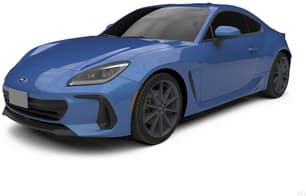
The Subaru BRZ has a timeless exterior design that screams dynamic sports car from every angle.
Even though the second-generation BRZ is around halfway through its lifecycle now, the design is aging like fine wine. It’s also a lovely evolution of the original which dates back to 2011.
The BRZ is low slung, has an aggressive front fascia plus the rear has prominent exhaust pipes. All of this stacks up to make a tough-looking car.
Thankfully this test example is also finished in 'WR Blue' exterior paint, which in my books is still the best colour for a Subaru performance car.
Adding all the genuine accessory goodies onto this car not only amplifies its street appeal, but also harnesses its racing intent. The carbon rear wing in particular has a swan neck design much like the Porsche 911 GT3. Many interested car-spotters craned their necks to get a good look.
Despite this, all the accessories are too flashy for my taste, especially for a car likely to be driven daily. I’d go for the stock look to retain resale, or something subtle like a small rear lip spoiler.
Inside the BRZ has all of the hallmarks of a sports car, as well. These include a steering wheel with minimal buttons, a prominent rev counter and contoured seats.
The manual gear shifter in this car is prominent and nice to hold. It’s great to still see manual options as they’re slowly but surely falling out of favour with buyers.
The manual handbrake is also a nice touch from a design perspective, but it limits overall interior practicality. More on that in a bit.
You can tell the interior is getting a little dated due to the older central multimedia system. But at the end of the day sports cars are more about the driving experience than the flashy tech.
At a bit over 4.5m long, a fraction under 1.8m wide, and close to 1.5m tall the A-Class sedan is 130mm longer and 6.0mm higher than the hatch version.
The A-Class sedan driver is presented with the same sleek widescreen display as found in the hatch, and storage runs to two cupholders in the centre console, a lidded bin/armrest between the seats (including twin USB ports), decent door pockets with room for bottles and a medium-size glove box.
In a swap to the rear, sitting behind the driver’s seat set to my (183cm) position, I enjoyed adequate knee and headroom, although stretching up a to a straight-back position led to a scalp to headlining interface.
In the A 200 a centre fold-down armrest incorporates two cupholders, again there are generous pockets in the doors with room for bottles, and adjustable ventilation outlets are set into the back of the front centre console. Always a plus.
There are three belted positions across the rear, but the adults using them for anything other than short journeys will have to be good friends and flexible. Best for two grown-ups, and three kids will be fine.
One snag is the size of the rear door aperture. Okay for taller people on the way in, but a limb-unfolding gymnastic exercise on exit.
But of course the reason we’re all here is the boot, and the sedan’s extra length translates to an additional 60 litres of luggage space for a total cargo volume of 430 litres (VDA).
Extra space is one thing, but usability is another. The benefit of a hatch is a large opening that allows bulky stuff to find a home, and Merc has pushed the sedan’s boot aperture to just under a metre across and there’s half a metre between the base of the rear window and the lower edge of the boot lid.
That’s made a big difference and access is good, with the rear seats folding 40/20/40 to add extra flexibility and volume. There are also tie-down hooks at each corner of the floor (a luggage net is included) and a netted pocket behind the passenger side wheel tub (with 12-volt outlet).
At the time of writing Mercedes-Benz wasn’t quoting towing specifications, and don’t bother looking for a spare wheel, the tyres are run-flats.
Hopping into the BRZ you’re immediately aware you’re getting into a sports car. It’s low-slung and the driving position feels like you’re almost sitting on the road. Perfect for this kind of machine.
The front seats are beautifully contoured and lock you in for when you’re driving through the twisties. Thankfully, the bolstering isn’t too aggressive and it’s still comfortable for everyday driving.
Ahead of the driver, the leather-wrapped steering wheel has a thin rim and is lovely to hold and turn. There aren’t many buttons but the few that remain are purposeful and have a lovely tactile click.
Behind this there is a 7.0-inch digital instrument cluster that permanently displays the rev counter in the middle. It’s a cool set-up that almost has a retro look to it, plus you’re able to configure the content that is displayed on the left-hand side.
Moving across, the central touchscreen multimedia system is classic Subaru. Nothing revolutionary, but I appreciate the physical shortcut buttons and dials on both sides of the screen.
It’s very easy to navigate around the screen, though as the photos show it is prone to glare, especially in bright scenarios.
Disappointingly there is only wired Apple CarPlay and Android Auto, with no wireless versions offered. You need to plug your phone in with a USB-A cable in a slot under the split-fold centre armrest.
While this means your phone will reliably charge, rather than having your phone overheat on a wireless charger, there’s no nice spot to put your phone given the physical handbrake takes up so much valuable centre armrest space.
You can put your phone in one of the cupholder spots, but when you do you don’t get a centre armrest. It’s too compromised for my liking.
While I’m on the topic of storage, there isn’t a great deal of it. There’s a small glove box and if you want, you can technically use the backseat area as they’re way too compromised for adults to fit into.
The rear seats are so small I didn’t even bother trying to fit as in my default driving position there is zero legroom. Even kids would struggle.
In terms of boot space, there is 201L available with the rear seats upright. It’s a fine space, though it’s impeded by the full-size spare wheel poking above the load floor. As a result you need to pack around the wheel.
Folding the rear seats makes the boot space more usable, though the envelope to slot things into the boot is narrow.
While the full-size spare wheel impedes the boot area, I’m glad it’s there because it’s much more usable than a dinky space-saver spare wheel or nothing at all. It gives you peace of mind in the event you have a puncture in the middle of nowhere.
The A-Class sedan is launching with two variants, the A 200 at $49,400, before on-road costs, and an entry-level A 180, arriving in August 2019 at $44,900.
We’ll cover active and passive safety tech in the safety section, but above and beyond that standard equipment for the A 180 runs to 17-inch alloy wheels, ‘Artico’ faux leather upholstery, the ‘MBUX’ widescreen cockpit display (two 10.25-inch digital screens), auto LED headlights and DRLs, keyless entry and start, auto-dimming rearview mirror, climate-control, sat nav, multi-function sports steering wheel, cruise control, rain-sensing wipers, ‘Active Parking Assist’ (with ultrasonic proximity sensors front and rear), tinted glass, plus nine-speaker, 225W audio with digital radio, as well as Apple CarPlay and Android Auto.
The A200 steps up to 18-inch alloy rims, and adds a dual exhaust system, four-way electrical adjustment for the driver’s seat (with lumbar support), a folding rear armrest (with twin cupholders), adaptive high-beam assist, and a wireless device charging bay.
The 2026 Subaru BRZ line-up starts at $47,890, before on-road costs, for the entry-level model regardless of whether you opt for the manual or automatic.
On test here, however, is the flagship tS trim which starts from $52,790, before on-roads. That's $4100 more expensive than it was when it first launched in 2024.
It’s worth noting this is overlooking the limited-edition tS Kiiro ($53,590, before on-roads) with its bright yellow paint.
As a base, the BRZ comes with a solid amount of kit. This includes 18-inch alloy wheels, LED headlights, power-folding side mirrors, an 8.0-inch touchscreen multimedia system with wired Apple CarPlay and Android Auto plus dual-zone climate control.
One of the few things missing is wireless Apple CarPlay and Android Auto. This is becoming commonplace in many cars and while it can be a hassle to plug into a USB port, it also means your phone will reliably charge.
You need to step up to the S trim if you want features like leather-accented upholstery and heated front seats. The top-spec tS in particular gains STI-tuned suspension, Brembo front and rear brakes, black door mirror covers and tS badging.
Adding to this, our particular tester comes equipped with a wealth of optional accessories. These include an STI body kit, STI alloy wheels and an STI carbon boot spoiler, totalling just over $14,500 fitted… Goodness me. For reference, the carbon rear wing is almost half of that.
Altogether, this kitted-up BRZ tS tester costs around $67,300, before on-road costs. While this is much more than the top-spec Toyota GR86 and Mazda MX-5, it’s still less than an entry-level Ford Mustang Ecoboost or BMW 2 Series.
Both models are powered by the same 1.3-litre (M282) direct-injection four-cylinder turbo-petrol engine as the hatch, the A180 tuned to deliver 100kW (at 5500rpm) and 200Nm (at 1460rpm), with the A 200 bumping that up to 120kW (at 5500rpm) and 250Nm (at 1620rpm).
Drive goes to the front wheels only via a seven-speed dual-clutch automatic transmission.
Claimed fuel economy for the combined (ADR 81/02 - urban, extra-urban) cycle is 5.7L/100km for both models, with a CO2 emissions figure of 130g/km.
Over roughly 250km of open highway driving on the launch program the A 200’s on-board computer coughed up a figure of 6.3L/100km. So, the real-world highway cycle figure is higher than the claimed combined number. Which is a miss, but not a massive one, and fuel-efficiency is still pretty impressive.
Minimum fuel requirement is 95 RON premium unleaded, and you’ll need 43 litres of it (plus a 5.0-litre reserve) to fill the tank.
Subaru claims the BRZ manual consumes an average of 9.5L/100km on the (ADR 81/02) combined (urban/extra-urban) cycle.
We almost matched this during our largely urban-based testing, achieving an average of 9.7L/100km. There’s a 50L fuel tank which means there’s a total theoretical range of 515km using our as-tested fuel consumption.
A minimum of 98 RON premium unleaded petrol is required which isn’t uncommon for sports cars, but it still hurts your hip pocket nerve.
Three things stand out on first meeting with the A-Class sedan – ride comfort, steering feel, and road noise, or rather the lack of it.
The ‘biggest’ compliment you can pay a small car is that it rides like a bigger one, and behind the A 200’s wheel you’d swear the wheelbase was appreciably longer than the 2.7 metres it actually measures.
Over long undulations, even higher frequency bumps and ruts, the A-Class remains stable and composed thanks to a thoroughly sorted (strut front, torsion beam rear) suspension, with beautifully progressive damping a particular highlight.
Electromechanically-assisted steering points accurately and delivers good road feel without any undue vibration. And despite the A-Class launch drive loop covering typically coarse-chip bitumen roads through rural Victoria, overall noise levels remained impressively low.
Acceleration is brisk rather than properly sharp, but in the A 200 there’s more than enough oomph to keep things on the boil for easy highway cruising and overtaking.
With maximum torque available from just above 1600rpm, and a seven-speed dual-clutch auto transmission keeping revs in the sweet spot, the A 200 breezes through the cut and thrust of city traffic, too.
Auto shifts are smooth and quick, with manual changes via the wheel-mounted paddles adding even more direct access to your ratio of choice. And the bonus is no sign of the slow-speed shuntiness sometimes exhibited by dual-clutch autos, especially in twisting, three-point parking manoeuvres.
Special call-out for the cruise control which responds to adjustments quickly (including 10km/h jumps up or down with a firm press of the thumb) and rapidly retards downhill speeds.
Several unbroken hours in the front seat couldn’t generate a twinge of discomfort, the brakes are strong, and over-shoulder visibility is marginally better than in the hatch (not that it’s a weakness in the latter).
Add the sleek and intuitive multimedia system, high-quality audio, plus excellent ergonomics and you have a neatly resolved compact sedan that’s easy to use in the city and suburbs, keeping solid road-tripping ability up its sleeve as well.
This is where the BRZ has always excelled and this kitted-out tS manual is no exception.
Firing up with a cold engine, you’re immediately aware this is powered by a horizontally-opposed 'boxer' engine. It has that classic high idle that eventually simmers down once the engine has warmed up a bit.
Setting off you need to acquaint yourself with how this manual gearbox works. Every manual is a little different, however this BRZ is easy to pick up and understand quickly.
I particularly like the notchy and direct gear throw. It makes changing gears easy, fun and engaging.
If I am to be critical, the clutch bite point is a little high and there is a touch too much rev hang when changing gears, especially in the ‘Sport’ drive mode, but you get used to it eventually.
In everyday driving scenarios there is enough power available. Some more wouldn’t go astray due to the lack of a turbocharger, but this constraint makes the car more fun to drive as you have to work harder with the gears.
Speaking of, the gearing is short, which means you will be shifting gears quickly. At 60km/h, for example, the car can be driven around in sixth gear, which is clearly focused on maximising efficiency.
Once you’ve reached your set speed there’s enough torque to maintain it without having to dive back through the gears. This is nice because you don’t have to shuffle through the gears to keep up with traffic.
Out on the open road is where the BRZ comes into its own. The steering in particular highlights how balanced and poised the car feels. It’s so fun to chuck around on twisty bends and feel the weight transfer.
The STI-tuned suspension in this particular trim also highlights how sporty and dialled-in this car is. It can feel a little rough and taut on pimpled urban roads, though you need to remind yourself this is a sports car, not a comfort-oriented SUV.
In a similar vein, at higher speeds there is a lot of road and tyre noise that transfers into the cabin. This is made worse when the rear seats are folded. While more sound insulation would likely fix this, I like it being left out in the name of lighter weight (kerb weight is only 1.3 tonnes).
Think automotive safety and Mercedes-Benz will be one of the first names to pop into your mind, and the A 180 offers in impressive suite of active features including ABS, BA, EBD, stability and traction controls, a reversing camera (with dynamic guidelines), ‘Active Brake Assist’ (Merc-speak for AEB), ‘Adaptive Brake’, ‘Attention Assist’, ‘Blind Spot Assist’, ‘Cross-wind Assist’, ‘Lane Keep Assist’, a tyre pressure warning system, the ‘Pre-Safe’ accident anticipatory system, and ‘Traffic Sign Assist’. The A 200 adds ‘Adaptive Highbeam Assist’.
If all that fails to prevent an impact you’ll be protected by nine airbags (front, pelvis and window for driver and front passenger, side airbags for rear seat occupants and a driver’s knee bag), and the ‘Active Bonnet’ automatically tilts to minimise pedestrian injuries.
The A-Class was awarded a maximum five ANCAP stars in 2018, and for smaller occupants there are three child restraint/baby capsule top tether points across the back seat, with ISOFIX anchors on the two outer positions.
The current-generation Subaru BRZ hasn’t been crash-tested by ANCAP and is therefore unrated.
In 2025, the manual BRZ joined the auto version when it gained Subaru’s 'EyeSight' camera system, which brings autonomous emergency braking (AEB), lane departure warning and even adaptive cruise control. It’s rare for manual-equipped vehicles to feature the latter.
This is above and beyond the seven airbags, blind-spot monitoring, rear cross-traffic alert, lane change assist, reverse camera and tyre pressure monitoring.
It’s worth noting manual versions of the BRZ do not have any parking sensors, front or rear, as standard. Automatic versions gain rear parking sensors and a rear AEB system.
There are two ISOFIX anchors and two top-tether points for child seats in the second row, though space is rather limited.
Mercedes-Benz covers its passenger car range with a three year/unlimited km warranty, like the other two members of the German ‘Big Three’ (Audi and BMW) .
That lags behind the mainstream market where the majority of players are now at five years/unlimited km, with some at seven years.
On the upside, Mercedes-Benz Road Care assistance is included in the deal for three years.
Service is scheduled for 12 months/25,000km (whichever comes first) with pricing available on an ‘Up-front’ or ‘Pay-as-you-go’ basis.
Pre-payment delivers a $500 saving with the first three A-Class services set at a total of $2050, compared to $2550 PAYG. Fourth and fifth services are also available for pre-purchase.
Subaru BRZ owners are covered by a five-year, 100,000km warranty which is now commonplace in the mainstream segment. Many carmakers are now extending their coverage out to seven years and beyond.
Logbook servicing is required every 12 months or 15,000km, whichever comes first. The first five services cost a total of $2595.51, which averages out to around $519 per service. For the performance car space this isn’t cheap but not as exorbitant as more premium offerings.
Subaru has a total of 128 dealers around Australia, with a spread across metro, rural and regional areas.